
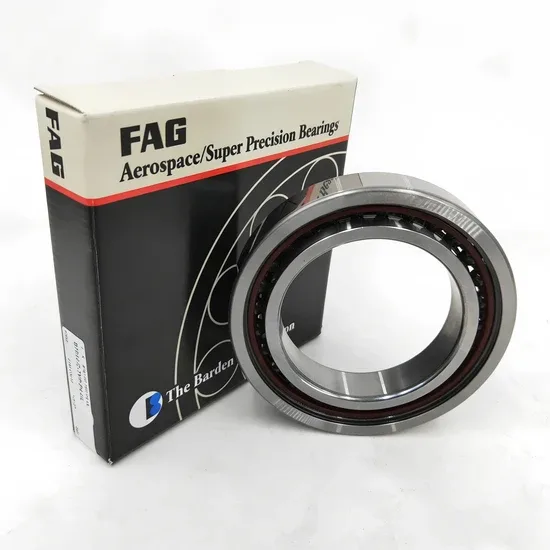
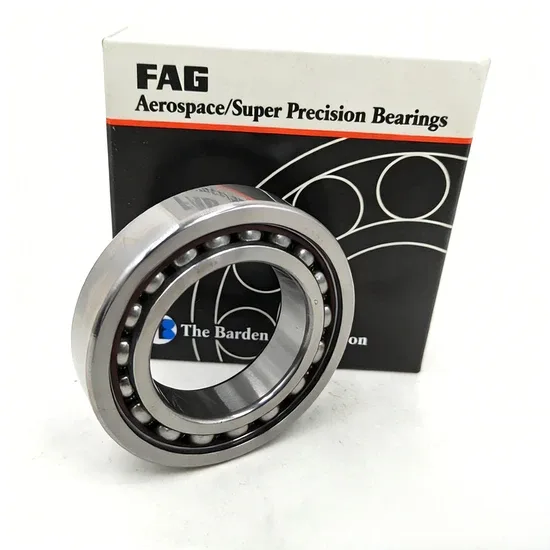
Description
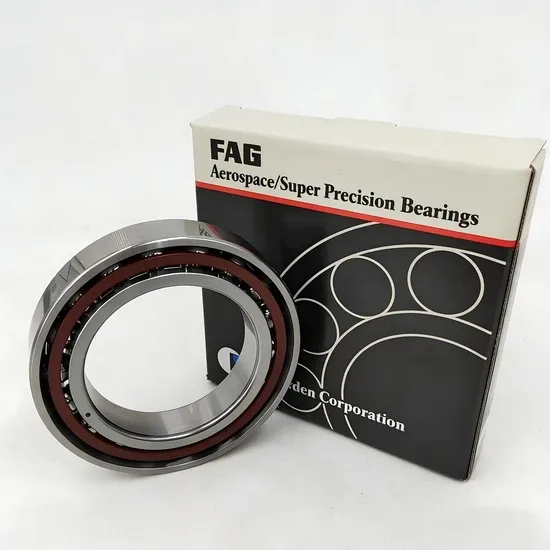
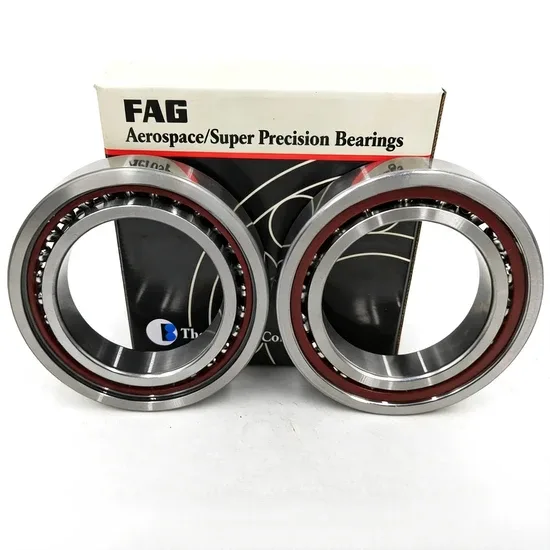
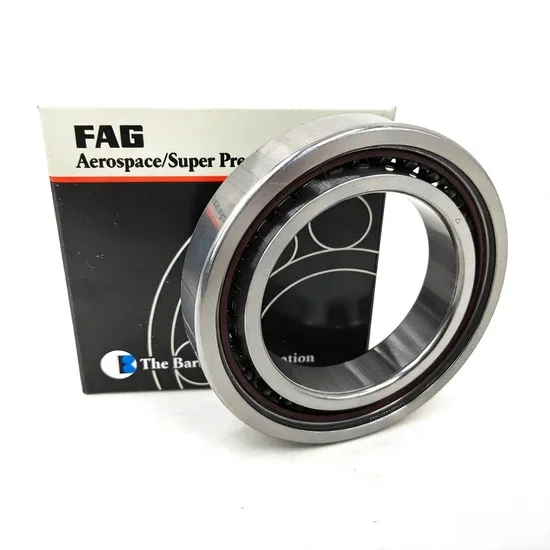
Authorized Channel Procurement — Every HS706-E-T-P4S spindle bearing we ship leaves with a traceable batch record and supplier Certificate of Conformity, so maintenance engineers can verify origin before the box ever reaches the spindle housing.
Technical Specifications
| Parameter | Value |
|---|---|
| Designation | FAG HS706-E-T-P4S |
| Bearing Type | Angular Contact Ball Bearing |
| Bore Diameter (d) | 6 mm |
| Number of Rows | Single Row |
| Precision Class | P4S |
| Weight | 0.100 kg |
| Origin | China |
| Internal Design | E — Reinforced |
| Contact Angle | 25° |
| Standard Reference | ISO 492 |
The H, S, T, and P4S suffixes on this FAG HS706-E-T-P4S angular contact ball bearing require cross-checking against the current manufacturer catalog for complete cage material and pairing confirmation before final procurement.
Application Suitability
| Industry | Typical Applications |
|---|---|
| Industrial Machinery | CNC spindle front support / high-speed grinding head |
| Robotics | Compact joint actuator bearing seat |
| Precision Equipment | Coordinate measuring machine rotary axis |
| Electric Motors | High-frequency motor shaft support |
What Happens When a P4S Spindle Bearing Arrives With P0 Tolerances
A mislabeled precision class destroys spindle accuracy before the first workpiece is cut.
I once tore down a seized spindle from a Jinan CNC shop that had installed what the invoice called P4 angular contacts. Under the microscope, the raceway finish told a different story — the supplier had relabeled P0 stock in P4 boxes. The spindle ran hot within days, seized at high rpm, and scrapped an entire batch of aerospace housings. That single cross-reference oversight cost the shop more in downtime and scrap than a year’s worth of bearing purchases. When procurement engineers source a FAG HS706-E-T-P4S angular contact ball bearing, the precision suffix is not a suggestion — it defines the running accuracy envelope the entire spindle was designed around [NEED_CITE: spindle bearing precision tolerance impact on runout and thermal drift]. Counterfeit and relabeled bearings routinely pass visual inspection because the packaging looks correct and the QR codes are cloned. The failure only reveals itself under load, at speed, when thermal growth pushes an already marginal clearance into binding territory.
Matching the HS706-E-T-P4S to Compact High-Speed Spindle Envelopes
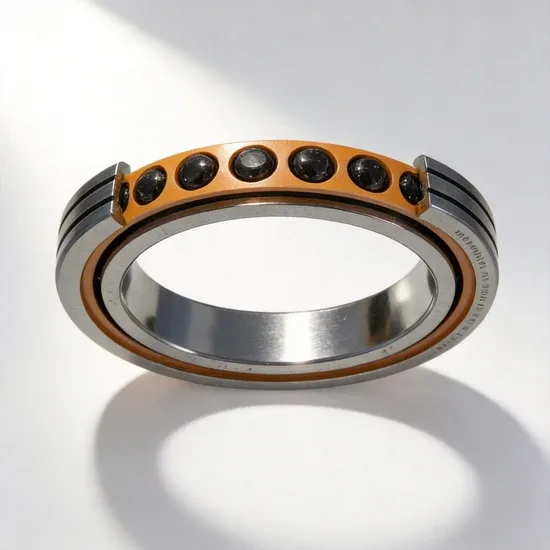
The 6 mm bore and single-row angular contact configuration make this bearing a fit for miniature spindle assemblies where space constraints rule out larger bore alternatives. The reinforced internal design, indicated by the E suffix, broadens the load-carrying cross-section so that radial and axial forces from cutting or grinding operations are distributed across a more generous contact ellipse. In practice, this means the bearing sustains the combined loading typical of front-support positions in tool-room spindles without sacrificing the speed capability that precision equipment demands. We routinely cross-check the application parameters — speed, preload requirement, mounting stiffness — against both the OEM equipment number and our interchange database before confirming a shipment, because a base-number match alone misses the clearance and precision details that prevent field failures.
Thermal Growth and Lubrication Realities at Small Bore Sizes
At 6 mm bore, the thermal mass of the bearing is minimal, which means frictional heat from the contact zone raises internal temperature faster than in larger assemblies. Grease lubrication in open single-row configurations requires careful selection of base oil viscosity and thickener type to maintain film strength without generating excess churning heat. Oil-air or oil-mist systems are common in spindle applications at this size, delivering controlled micro-doses that cool the raceway without the drag penalty of a full grease pack. Installation fit on both shaft and housing must account for the small dimensional envelope — even a light interference fit consumes a measurable share of the available internal clearance, so the precision class and contact angle must be validated against the thermal expansion profile of the specific spindle design [NEED_CITE: angular contact bearing preload and thermal expansion in spindle applications].
Decoding the E Suffix and P4S Precision Class
The E suffix signals a reinforced internal geometry, which in FAG’s spindle bearing nomenclature typically means optimized ball count and contact ellipse dimensions for higher load capacity within the same boundary dimensions. For a 6 mm bore bearing, this translates into improved stiffness under the axial thrust components that dominate in high-speed cutting operations. The P4S designation places this bearing in the upper tier of dimensional and running accuracy per ISO 492, with tighter tolerances on bore, outside diameter, and face runout than standard P5 or P4 grades. The 25° contact angle delivers a balance between axial stiffness and speed capability — steeper angles provide more thrust capacity but generate higher frictional heat, while shallower angles favor speed at the expense of axial rigidity. This particular configuration suits applications where the spindle must handle both radial cutting forces and axial thrust from tool engagement without switching to a duplex paired arrangement.
The Hidden Cost of Ignoring Suffix Details on Precision Bearings
A correct FAG HS706-E-T-P4S angular contact ball bearing sourced through a verified channel arrives with the dimensional accuracy and material integrity the spindle designer specified. Substitute a bearing with an incorrect clearance class, an unmatched cage material, or a cloned precision label, and the consequences unfold on a timeline measured in production shifts rather than months. Premature cage failure, thermal seizure, and catastrophic raceway spalling are all documented failure modes under ISO 15243 that trace directly back to selection errors or counterfeit supply [NEED_CITE: rolling bearing failure mode classification per ISO 15243]. The unplanned downtime from a single spindle rebuild — lost production, scrapped parts, emergency logistics for replacement bearings — routinely exceeds the cost difference between a verified genuine bearing and a suspiciously cheap alternative.
How We Reduce Procurement Risk on Every HS706 Shipment
Every bearing that leaves our warehouse carries a traceable batch record tied to the authorized distributor channel it passed through, not a generic trading-company invoice. We run cross-reference checks that go beyond the base designation — matching clearance class, cage material, and precision suffixes across all six brands we cover so that substitutions are engineered, not guessed. Our documentation package includes a Certificate of Conformity with lot traceability, and we guide buyers through the QR code verification pathway using the brand’s official authentication tools. For import-sensitive markets, we provide country-of-origin documentation and HS code support so that customs clearance does not become a secondary bottleneck. When an application involves unusual speed or temperature conditions, our technical team reviews the selection against the operating parameters before quoting — because catching a mismatch at the inquiry stage costs nothing, while catching it on the spindle housing costs everything.
Documentation & Authenticity
- Supplier Certificate of Conformity with batch and lot traceability tied to the specific HS706-E-T-P4S production run
- Third-party dimensional inspection report confirming P4S running accuracy tolerances before dispatch
- Country-of-origin documentation with HS code for customs and import compliance in destination markets
- QR code verification guidance using the manufacturer’s official app to confirm authenticity on receipt
- Material certificate available on request for quality system audits and incoming inspection records
Storage, Handling & Mounting
- Keep the HS706-E-T-P4S in its original sealed packaging until the moment of mounting — at 6 mm bore, even brief exposure to humid shop air can initiate surface corrosion on the precision-ground raceways
- Handle with lint-free gloves to prevent skin oils from contaminating the raceway; at P4S tolerances, particulate ingress causes measurable runout deviation
- Store horizontally in a temperature-stable environment away from direct sunlight and vibration sources that could brinell the balls against the raceway during prolonged shelf life
- Verify shaft and housing fit tolerances before pressing — the small bore diameter means standard interference fits consume a disproportionate share of internal clearance
- Confirm the correct lubrication method for the spindle design; open single-row bearings at this size require external oil-air or controlled grease application per the OEM specification
Start Your HS706-E-T-P4S Inquiry
Share your spindle speed, preload requirement, and operating temperature range so we can validate the selection and confirm availability from our authorized distributor channels. If you are replacing an existing bearing, provide the OEM equipment number or the full designation from the old bearing label — including every suffix — so we can cross-reference accurately and flag any mismatches before shipment.
Frequently Asked Questions
Q: How can I verify that a FAG HS706-E-T-P4S angular contact ball bearing is genuine?
A: Use the manufacturer’s official authentication app to scan the QR code on the packaging. We supply each bearing with traceable batch documentation and a Certificate of Conformity from the authorized distributor channel, and we guide buyers through the verification process to confirm the product matches the production records.
Q: What does the P4S precision class mean for spindle performance?
A: P4S designates a tolerance class with tighter dimensional and running accuracy than standard P4, covering bore diameter, outside diameter, width, and face runout per ISO 492. In spindle applications, this translates into lower vibration, reduced thermal drift, and more consistent workpiece surface finish at high rotational speeds.
Q: Can I substitute a different brand for this FAG spindle bearing?
A: Cross-brand substitution is possible, but the replacement must match not only the base bore and boundary dimensions but also the contact angle, clearance class, cage material, and precision suffix. We provide a complete cross-reference comparison across SKF, NSK, FAG, TIMKEN, NTN, and KOYO to confirm interchange suitability before procurement.
Q: What does the E suffix indicate on this bearing?
A: The E suffix denotes a reinforced internal design with optimized ball complement and contact geometry, providing higher load-carrying capacity within the same envelope dimensions. This is critical in spindle front-support positions where combined radial and axial loads are present.
Secure Your Precision Spindle Bearing Supply
Send us your application parameters or OEM equipment number today, and we will respond with a validated selection, full documentation package, and confirmed lead time.


