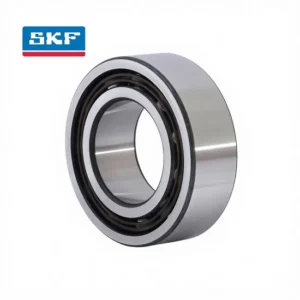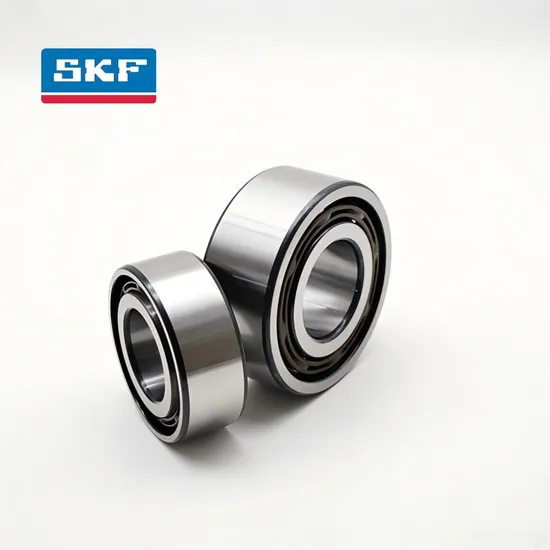


Description
Authorized Channel Traceability — Every FAG XCB71902-C-T-P4S25 we ship carries full lot documentation back to the manufacturer’s authorized distributor network.
Technical Specifications
| Parameter | Value |
|---|---|
| Designation | FAG XCB71902-C-T-P4S25 |
| Bearing Type | Angular Contact Ball Bearing |
| Bore Diameter (d) | 15 mm |
| Outside Diameter (D) | 28 mm |
| Width (B) | 7 mm |
| Number of Rows | Single Row |
| Contact Angle | 15° (C suffix) |
| Precision Class | P4 (ISO tolerance class 4) |
| Cage Material | Phenolic (T suffix, fabric-reinforced) |
| Seal or Shield Type | Open |
| Arrangement | Single bearing, universal mounting |
| Origin | Germany |
| Weight | 0.100 kg |
| Standards | ISO 492 |
Note: The suffixes XCB and S25 are non-standard designations and should be verified against the current FAG spindle bearing catalog before final order confirmation.
Application Suitability
| Industry | Typical Applications |
|---|---|
| Machine Tool Manufacturing | High-frequency motorized spindle front bearing position |
| Precision Equipment | Optical grinding spindle support bearings |
| Robotics | Joint actuator precision pivot bearings |
| Semiconductor Manufacturing | Wafer handling arm rotary joints |
What a Suffix Mismatch Costs on a CNC Spindle
A single wrong suffix on a spindle bearing can destroy surface finish within days, not months.
I spent years measuring spindle bearings in a metrology lab in Qingdao before moving to the trading side. The habit of checking every suffix never left me. A CNC shop in Jinan once received a batch of 71902 angular contacts that matched the base number perfectly. The supplier shipped P0 precision with a standard contact angle instead of P4S and the correct 15° C-tapered configuration. The spindles ran hot within a week, and chatter marks appeared all over the workpieces. The buyer blamed the machine. It was the bearing spec mismatch that caused it. That is why every suffix now gets cross-checked against application parameters — clearance, cage material, precision grade — not just the digits printed on the box. [NEED_CITE: spindle bearing specification mismatch as root cause of premature failure]
Matching the 15° Contact Angle to Spindle Load Profiles
Spindle front bearings carry predominantly radial loads with moderate axial components from cutting forces. The 15° contact angle in the FAG XCB71902-C-T-P4S25 generates less friction heat than 25° variants under these conditions, which matters when the spindle runs at sustained high speeds. Lower friction heat means less thermal growth in the shaft, which keeps preload stable and prevents the bearing from tightening itself into early failure. We regularly see buyers default to higher contact angles assuming more axial capacity is always better, but on spindles where radial load dominates, that choice accelerates cage wear and increases operating temperature unnecessarily.
Thermal Stability and Precision Demands in Spindle Environments
Spindle bearings operate in a narrow thermal window. As the shaft heats up during continuous cutting cycles, thermal expansion changes the internal clearance of the bearing. A P4 precision class bearing starts with tighter dimensional tolerances, so there is less initial variation to amplify under thermal load. The phenolic cage (T suffix) adds another layer of thermal management — it runs cooler than brass or steel cages at high speeds because of its lower mass and self-lubricating properties. Lubrication in open-type spindle bearings typically comes from an external oil-air or oil-mist system, which means the sealing responsibility falls entirely on the spindle housing design rather than the bearing itself. [NEED_CITE: phenolic cage advantages in high-speed spindle applications]
Decoding the Engineering Behind Each Suffix
The C suffix confirms a 15° contact angle, the standard choice for high-speed spindle positions where radial precision takes priority over axial rigidity. The T suffix identifies a phenolic resin cage, fabric-reinforced and outer-ring guided — this cage type is specified almost universally in machine tool spindles because it dampens vibration at speed and survives the oil-mist environments these bearings run in. The P4 designation means the bearing meets ISO 492 tolerance class 4 requirements for both dimensional and running accuracy, which translates directly to tighter runout on the finished workpiece. The 71902 series itself indicates an extra-light section angular contact design, chosen for applications where compact envelope dimensions matter more than maximum load capacity.
The Hidden Cost of Wrong Selection on Precision Equipment
Correct selection backed by traceable sourcing keeps spindle uptime predictable. A wrong clearance class, an incorrect cage material, or a counterfeit bearing with cloned markings introduces failure modes that ISO 15243 classifies as premature — subsurface fatigue, cage fracture, or smearing from inadequate lubrication. On a CNC machining center, that unplanned downtime does not just cost the bearing replacement. It costs the scrapped workpieces, the missed delivery deadlines, and potentially the loss of a production contract. [NEED_CITE: ISO 15243 rolling bearing failure mode classification]
How We Protect Your Spindle Investment
Every FAG XCB71902-C-T-P4S25 we supply moves through authorized distributor channels with full lot traceability, so you can verify the origin documentation matches what arrived on your dock. Our cross-reference database aligns not just the base number but the clearance, cage type, and precision suffix together — because a partial match is where field failures hide. When your application involves unusual speed or thermal conditions, we provide selection guidance based on the actual load spectrum rather than catalog defaults. Origin documentation and HS code support are prepared with each shipment so your import process does not stall at customs. Material certificates and dimensional inspection reports ship with the bearings, not weeks after delivery.
Documentation & Authenticity
- Supplier Certificate of Conformity confirming FAG origin and P4 precision class for each lot
- Batch and lot traceability records linking the bearing to its authorized distributor chain
- QR code verification pathway through the official FAG/INA app for on-site authenticity checks
- Material certificate covering ring and ball steel specification
- Third-party runout inspection confirming P4 running accuracy before shipment
- Country-of-origin documentation and HS code data for import compliance
Storage, Handling & Mounting
- Keep the FAG XCB71902-C-T-P4S25 in its original sealed packaging until the moment of mounting — phenolic cages absorb moisture, and early exposure to humid air compromises cage stability
- Store in a climate-controlled environment below 60% relative humidity to protect the open bearing from surface corrosion before installation
- Handle with lint-free gloves to avoid transferring skin oils onto the P4-precision raceways, where even fingerprint residue affects runout measurement
- Mount using controlled induction heating of the inner ring only; overheating above 120°C risks altering the dimensional stability of the precision-ground bore
- Confirm shaft and housing fit tolerances match the spindle manufacturer’s specification before pressing — P4 class bearings have no margin for loose fits
Request a Technical Review Before Ordering
Spindle Bearing Inquiry
Share your spindle speed range, load profile, and thermal conditions so we can confirm the FAG XCB71902-C-T-P4S25 is the correct match for your application. Provide the OEM equipment number if available, and we will cross-verify the suffix combination against the original specification. Request the documentation package and confirm batch availability and lead time before committing to volume.
Frequently Asked Questions
Q: What does the C suffix mean for contact angle, and why does it matter for spindles?
A: The C suffix indicates a 15° contact angle. For spindle applications where radial loads dominate and high rotational speed generates friction heat, 15° produces less axial preload shift under thermal expansion compared to 25° (AC) variants. This keeps the spindle running cooler and maintains dimensional accuracy on the workpiece.
Q: How does P4 precision compare to ABEC 7?
A: P4 per ISO 492 and ABEC 7 per ABMA Std 20 cover similar tolerance ranges for dimensional and running accuracy. Both are specified for precision spindle and instrument applications. The key difference is the standard system — ISO versus ABMA — but in practice they serve the same performance tier.
Q: What should I watch for when cross-referencing this bearing to another brand?
A: Match the contact angle (C = 15°), cage type (phenolic, outer-ring guided), and precision class (P4) simultaneously — not just the base number 71902. A partial match where the contact angle or cage material differs will change the thermal behavior and speed capability of the spindle position.
Q: Why is a phenolic cage preferred over steel or nylon for this application?
A: Phenolic cages run lighter and cooler at high speeds, dampen vibration effectively, and are compatible with oil-mist lubrication systems standard in machine tool spindles. Steel cages add rotating mass and generate more friction heat. Nylon cages have temperature and chemical compatibility limits that make them unsuitable for sustained high-speed spindle duty.
Q: What is the significance of the XCB and S25 suffixes?
A: These are non-standard designations that may indicate specific internal modifications or pairing configurations. We recommend confirming their exact meaning against the current FAG spindle bearing catalog or directly with the manufacturer before finalizing your order.
Spindle Bearing Technical Review
Send your spindle parameters and OEM reference number so we can verify the correct suffix combination and confirm documentation availability for your import requirements.