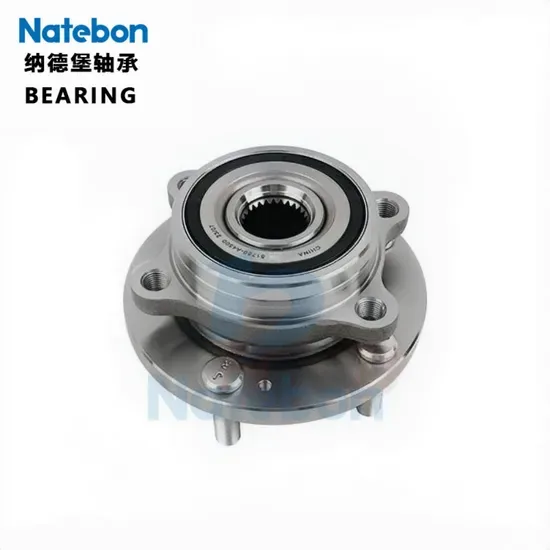
Description
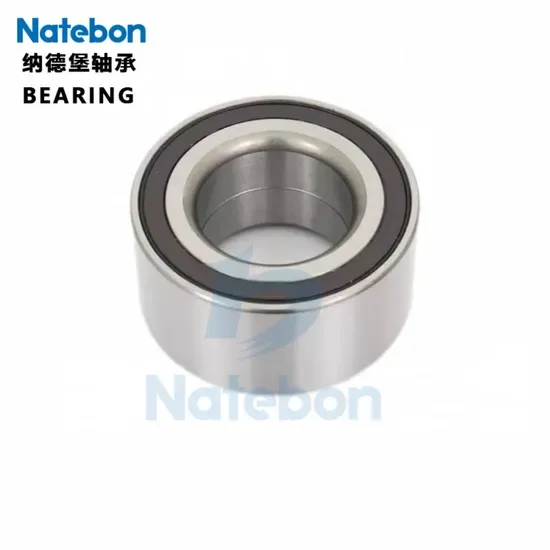
Authorized Channel Sourcing — Every Natebon Wheel Bearing P0 auto bearing ships with full batch traceability and supplier-issued documentation to support import clearance.
Technical Specifications
| Parameter | Value |
|---|---|
| Designation | Natebon Wheel Bearing P0 |
| Bearing Type | Deep Groove Ball Bearing (Wheel Hub Application) |
| Precision Class | P0 |
| Wheel Hub System | 3rd Generation Hub Unit |
| Steering System Compatibility | EPS Bearings |
| Application | Passenger/Commercial Vehicles, Powertrain System |
| Features | Safe, Long Lifespan, Lightweight, Eco-Friendly |
| Specification | Customized |
| Origin | China |
Note: "Wheel Bearing" is an application descriptor rather than a standardized bearing series suffix. Specific bore diameter, outside diameter, width, and dynamic/static load ratings are subject to customization per vehicle platform; please confirm exact dimensional data against the vehicle OEM specification or manufacturer catalog before ordering.
Application Suitability
| Industry | Typical Applications |
|---|---|
| Automotive and Heavy Vehicle Repair | Front and rear wheel hub assembly replacement on passenger vehicles |
| Automotive Powertrain Systems | Transmission and drivetrain shaft support bearings |
| Electric Power Steering (EPS) Maintenance | Low-friction steering column and pinion shaft bearings |
| Commercial Vehicle Fleet MRO | Hub unit replacement on light commercial transport (e.g., WuLing platforms) |
Why P0 Precision Is the Right Baseline for Fleet Wheel Hub Service
Most field failures on wheel bearings trace back to material hardness shortfalls, not precision class errors.
I pulled apart a batch of 32210 tapered rollers in Lagos that seized within three months of installation. The inner ring read HRC 58 on the hardness tester — well below the HRC 62 minimum. These were counterfeit units with cloned packaging that passed a casual visual check at the warehouse. For high-volume fleet maintenance and MRO buyers, the real risk is not whether a P0 tolerance band is tight enough for a wheel hub application; it is whether the bearing you receive actually meets the stated specification at all. A significant share of premature hub failures across West African and Latin American markets originate from unverified supply chains where soft rings and counterfeit markings are routine [NEED_CITE: rolling bearing failure mode classification per ISO 15243].
Matching the Bearing to Hub Load and Duty Conditions
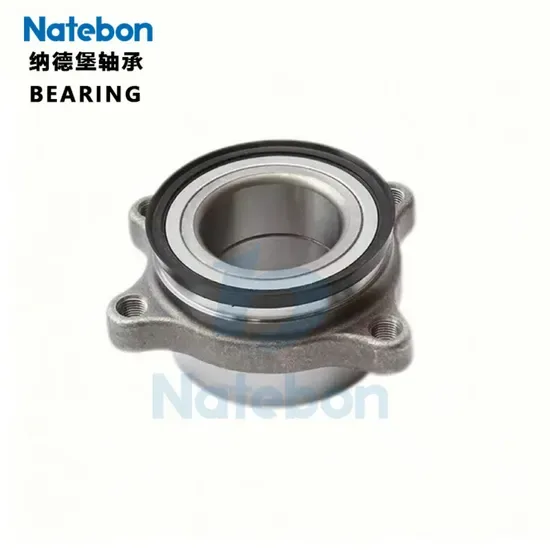
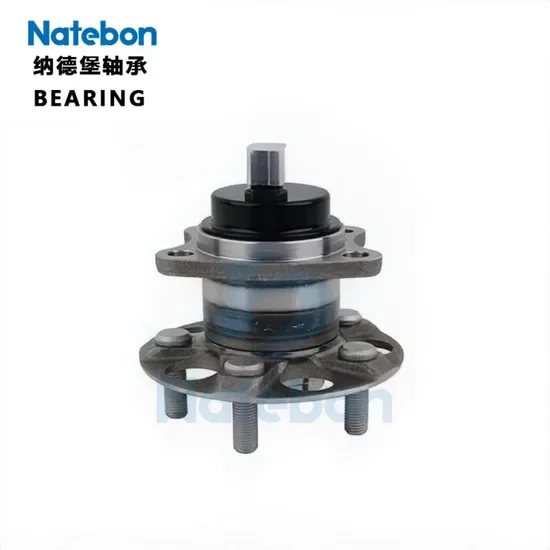
The Natebon Wheel Bearing P0 auto bearing targets 3rd generation hub units where the bearing and flange are integrated into a single assembly. This configuration simplifies installation and reduces the chance of misalignment during press fitting. For passenger vehicles and light commercial platforms, P0 tolerance provides adequate running accuracy for the rotational speeds and combined radial-axial loads typical of wheel positions. Our cross-reference process verifies bore, OD, width, and load rating alignment against OEM hub specifications so that replacement units match the original equipment envelope without modification.
Thermal, Contamination, and Seal Demands at the Wheel Position
Wheel hub bearings operate under combined loading with frequent shock impulses from road irregularities, and they must handle wide ambient temperature swings that affect internal clearance. Grease-lubricated, sealed-for-life hub units rely on the integrity of the seal lip to keep moisture and road debris out over the full service interval. Any compromise in seal material or contact geometry leads to grease washout and accelerated raceway wear. Temperature fluctuations also mean that internal clearance must accommodate thermal expansion without inducing preload that causes cage stress or, conversely, excess play that generates noise and vibration [NEED_CITE: thermal expansion effects on bearing clearance in automotive wheel applications].
Decoding the P0 Precision Specification
P0 is the standard precision class defined under ISO 492 for deep groove ball bearings. It establishes the baseline tolerance band for bore diameter, outside diameter, and running accuracy that general-purpose automotive applications require. For wheel hub positions on passenger and commercial vehicles, P0 precision is sufficient because the hub assembly’s structural rigidity and the relatively moderate rotational speeds do not demand the tighter runout control of P6 or P5 grades. The 3rd generation hub unit format further reduces sensitivity to precision class because the bearing races are integrated into the hub flange, minimizing stack-up tolerances. What matters far more at P0 level is material quality: ring hardness, steel cleanliness, and heat treatment consistency determine whether the bearing survives its expected L10 life or fails prematurely under normal operating loads.
The Hidden Expense of Unverified Wheel Bearings
Selecting a wheel bearing on price alone from an unverified source introduces costs that surface long after the purchase order closes. A soft inner ring will spall within weeks under normal vehicle loads, causing warranty claims and customer comebacks. Counterfeit packaging with cloned QR codes defeats spot checks, meaning entire batches can enter inventory undetected. Incorrect cross-referencing — matching only the base bore and OD while overlooking the hub flange bolt pattern or ABS encoder ring — results in fitment failures on the shop floor. ISO 281 life calculations assume genuine material properties; when those assumptions are violated by substandard steel, calculated service intervals become meaningless [NEED_CITE: ISO 281 bearing life calculation assumptions and material quality factors].
How Our Sourcing Process Protects Your Inventory
We source Natebon Wheel Bearing P0 auto bearing batches through authorized distributor channels with full lot traceability. Each shipment is cross-checked against the vehicle platform’s hub specification for dimensional accuracy, including flange geometry and sensor ring presence. Our cross-reference database matches not just base dimensions but also clearance class, seal configuration, and hub generation type so that substitutions between equivalent platforms are technically sound. Material certificates and hardness data accompany each batch, and country-of-origin documentation is prepared in advance to support your import compliance requirements.
Documentation & Authenticity
- Supplier Certificate of Conformity (COC) issued per shipment batch confirming Natebon Wheel Bearing P0 auto bearing origin and production lot
- Material certification covering ring steel composition and heat treatment hardness records (targeting HRC 60–64 for inner and outer rings)
- Third-party dimensional inspection reports verifying bore, OD, and width tolerances against P0 class limits per ISO 492
- Country-of-origin documentation and HS code classification prepared for customs clearance at destination
- Batch and lot traceability records linking each bearing unit to its production date, line, and inspection batch
- ABS encoder ring and hub flange bolt pattern verification specific to the target vehicle platform
Storage, Handling & Mounting
- Retain the original sealed packaging for each Natebon Wheel Bearing P0 auto bearing until the point of installation to protect the factory-applied grease fill from moisture ingress
- Store hub units horizontally on shelving to prevent brinelling of the raceway from the weight of the integrated flange assembly acting on a single contact point
- For 3rd generation hub units, use the specified flange bolt torque sequence and values from the vehicle service manual — uneven clamping distorts the outer race and induces premature noise
- Do not apply axial press force through the bearing rolling elements when installing the hub unit; load must be transmitted through the flange or outer ring only
- Verify ABS sensor air gap and encoder ring alignment after mounting, as misalignment causes intermittent fault codes that mimic bearing noise symptoms
- Handle sealed-for-life units with clean gloves to avoid contaminating the seal lip contact surface with workshop dust and metal particles
Request a Quotation with Your Platform Details
Share your vehicle platform list, OEM hub part numbers, or application parameters including load and speed conditions so we can confirm the correct Natebon Wheel Bearing P0 auto bearing configuration for each position. We will return a technical cross-reference review, availability confirmation, and complete documentation package scope with the quotation.
Frequently Asked Questions
Q: How can I verify the authenticity of auto wheel bearings and avoid counterfeit hub units?
A: Counterfeit hub bearings often feature cloned QR codes that redirect to fake verification pages. We recommend scanning codes only through the brand’s official app or website domain, checking hardness readings on the inner ring (should meet HRC 60 minimum), and requesting batch traceability documentation that links the bearing to a specific production lot and inspection record. Our shipments include supplier COC and material certificates for independent verification.
Q: Is P0 precision class suitable for all automotive wheel bearing applications?
A: P0 precision meets ISO 492 standard tolerance requirements and is appropriate for general passenger and commercial vehicle wheel hub positions where rotational speeds and running accuracy demands are moderate. High-performance or motorsport applications with sustained high RPM may require tighter P6 or P5 classes. For the vast majority of MRO and fleet replacement scenarios, P0 is the correct specification.
Q: What should I check when cross-referencing wheel bearings across vehicle platforms?
A: Beyond bore diameter, outside diameter, and width, verify the hub generation type, flange bolt pattern, ABS encoder ring presence and tooth count, and seal configuration. Matching only the base dimensions while overlooking these platform-specific features is a common source of fitment rejection. We review all of these parameters during our cross-reference process before confirming interchangeability.
Q: What installation practices are critical for 3rd generation hub units?
A: Always apply press or clamping force through the flange, never through the rolling elements. Follow the vehicle manufacturer’s torque specification and tightening sequence for the hub bolts. Confirm ABS sensor alignment and air gap after installation. Incorrect torque or misalignment causes noise and premature failure that is often misdiagnosed as a bearing quality defect.
Q: What documentation is available to support import customs clearance?
A: We provide country-of-origin certificates, HS code classification, and commercial invoices formatted for destination customs requirements. The specific documentation package is confirmed during quotation so that any additional certificates required by your importing country can be prepared before shipment.
Get Your Hub Bearing Sourcing Confirmed
Send us your OEM hub part numbers and target vehicle platforms to start the cross-reference and quotation process. Contact our technical sales team through your existing inquiry channel or request a documentation sample package to evaluate before placing your first order.