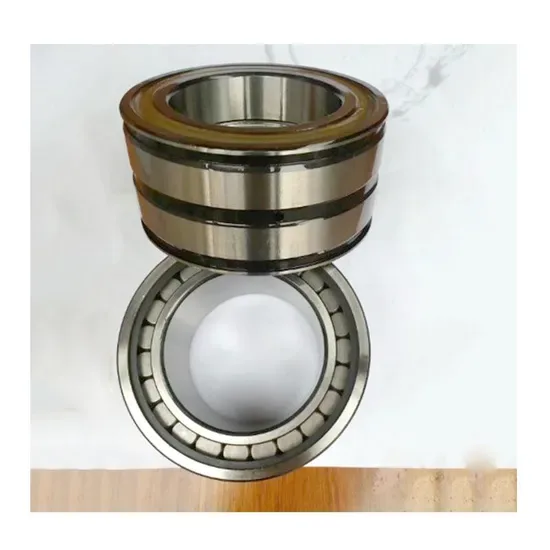
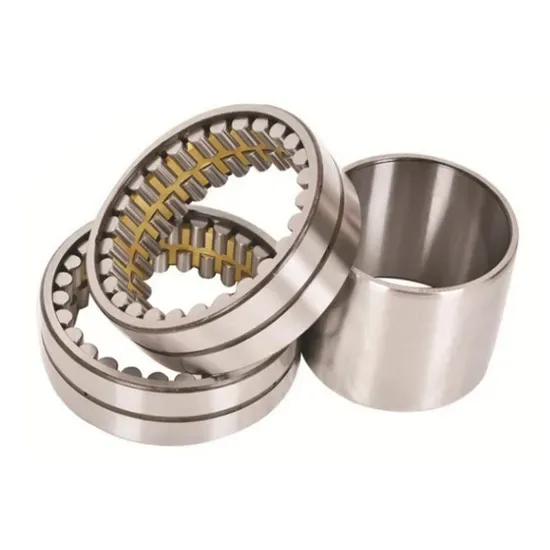
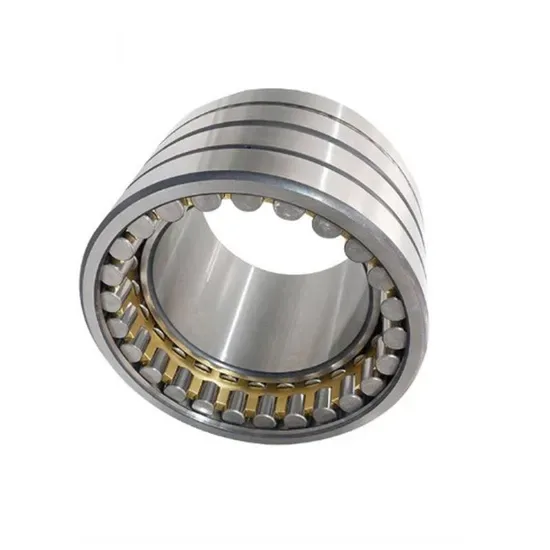
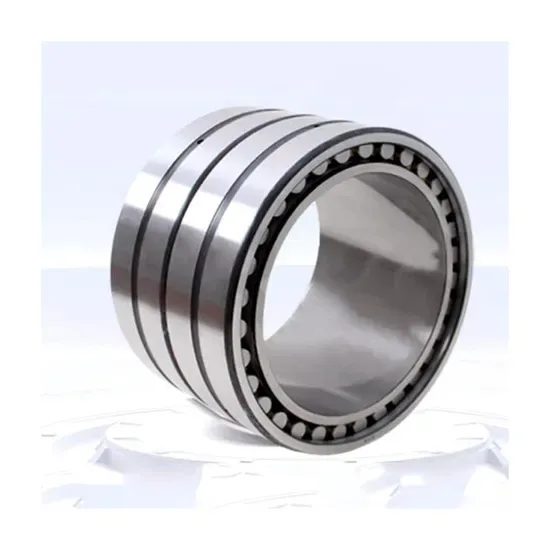
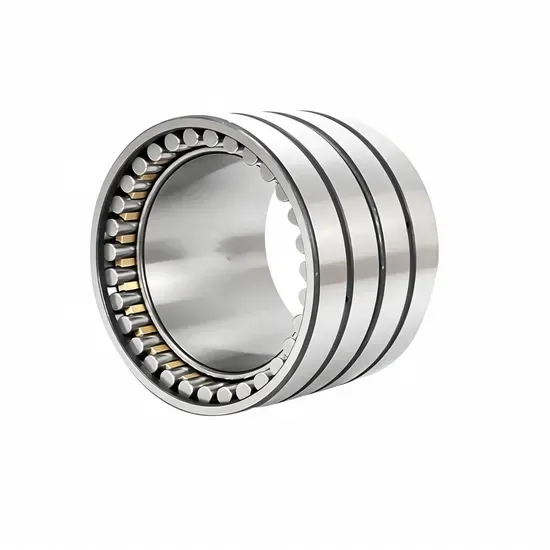

Description
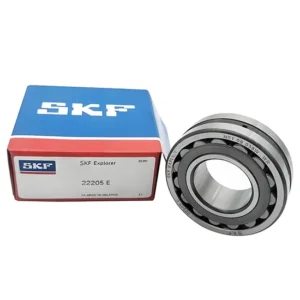
Traceable Sourcing Channels — Every 22238SWRCAg2ME4 spherical roller bearing we ship arrives with batch-level documentation linking it back through authorized distributor networks, not open-market gray stock.
Technical Specifications
| Parameter | Value |
|---|---|
| Designation | SKF 22238SWRCAg2ME4 |
| Bearing Type | Spherical Roller Bearing |
| Bore Diameter (d) | 190 mm |
| Outside Diameter (D) | 340 mm |
| Width (B) | 92 mm |
| Number of Rows | Double Row |
| Material | Bearing Steel |
| Seal or Shield Type | Sealed |
| Cage Material | Brass (CA suffix) |
| Bore Type | Cylindrical |
Suffixes SW, RC, and Ag2ME4 appear in the designation but are not fully decoded against the current SKF catalog at this time — confirm exact meaning with manufacturer documentation before finalizing application parameters.
Application Suitability
| Industry | Typical Applications |
|---|---|
| Steel & Metallurgy | Continuous caster segment rolls, run-out table guide rollers |
| Mining & Crushing | Vibrating screen exciter shafts, jaw crusher eccentric bearings |
| Pulp & Paper | Paper machine dryer cylinder journals, press section rolls |
| Material Handling | Heavy-duty conveyor pulley shafts, bucket elevator head shafts |
What Happens When a Sealed Bearing Loses Its Seal Integrity on a Caster Line
Contamination ingress is the silent killer of spherical roller bearings in steel mill zones — and a compromised seal on a 190 mm bore unit can shut down a continuous caster within weeks.
On a caster project I supported in West Africa, a maintenance team replaced a sealed spherical roller bearing on a segment roll with an open-design equivalent to save cost. Scale fines and coolant spray penetrated the cage pockets within a month. The bearing seized during a high-throughput casting sequence, forcing an unplanned line stop that idled the entire downstream cutting and cooling bed. The financial hit from lost tonnage far exceeded what the correct sealed unit would have cost. [NEED_CITE: contamination-related bearing failure modes per ISO 15243]
How the 22238SWRCAg2ME4 Spherical Roller Bearing Handles Caster Zone Demands
The 22238SWRCAg2ME4 spherical roller bearing for continuous caster service is built around a sealed enclosure that keeps scale particles, water spray, and mold powder away from the rolling elements. In continuous casting, segment rolls operate under heavy radial loads combined with moderate axial forces from strand bulging, and the double-row spherical geometry accommodates the misalignment that inevitably develops as roll segments deflect under ferrostatic pressure. The brass cage provides the fatigue resistance needed when vibration and thermal cycling are constant. We cross-check these application demands against the buyer’s specific caster radius and segment position to confirm the load ratings and clearance class are appropriate.
Thermal Shock, Scale, and Coolant: The Operating Reality
Continuous caster environments expose bearings to steep thermal gradients — roll surfaces see radiant heat from the strand while coolant jets hit the bearing zone with water at ambient temperature. This thermal cycling drives expansion and contraction that can push a standard CN clearance into preload territory if the original specification did not account for it. Lubrication in sealed units must be factory-filled to a volume and viscosity matched to the operating speed and temperature band, because re-lubrication is not possible once the seals are in place. [NEED_CITE: thermal effects on bearing internal clearance in steel mill applications] Installation on segment rolls typically involves induction heating of the inner ring to achieve the required interference fit, and the heating temperature must stay within limits that protect the seal material from degradation.
Decoding the Sealed Design and Brass Cage Choice
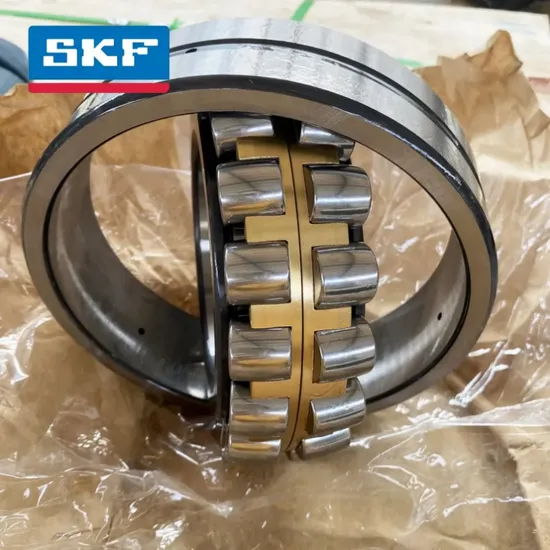
The sealed configuration on this bearing addresses the contamination problem at the source: integrated lip seals retain grease and exclude particulates without requiring external sealing hardware that adds friction and maintenance burden. Brass cages — designated by the CA suffix — are preferred in vibrating and shock-load applications because their machined structure resists cage pocket wear far better than pressed steel alternatives under the cyclic stresses that caster segment rolls generate. The 190 mm bore and 340 mm outside diameter place this bearing in the medium-large size range where handling during installation demands proper lifting equipment and controlled heating. Double-row spherical geometry gives the self-aligning capability that compensates for roll deflection and housing bore misalignment, protecting the rolling elements from edge-loading that would otherwise accelerate spalling.
The Price of Getting the Specification Wrong
A bearing that fails prematurely on a continuous caster does not just cost its replacement value — it costs the lost production of an entire casting sequence, the labor to cut out and re-thread the strand, and the downstream ripple through cutting, inspection, and shipping schedules. Substituting an open bearing where a sealed unit is specified invites contamination that ISO 15243 classifies as surface distress and abrasive wear, both of which progress rapidly once scale enters the load zone. Similarly, accepting a bearing with incorrect clearance — installing a CN unit where C3 was engineered for the thermal expansion profile — can cause the internal gap to close entirely at operating temperature, generating heat that destroys the cage and seizes the roll. [NEED_CITE: consequences of incorrect clearance selection in spherical roller bearings] These failures are entirely preventable with correct specification and verified supply.
What We Bring to the Procurement Process
Our sourcing model routes every order through authorized distributor channels, which means the 22238SWRCAg2ME4 spherical roller bearing you receive carries documentation that traces it back to the manufacturer’s production facilities. We run cross-brand interchange checks that verify clearance, cage material, and seal type — not just the base number — so substitutions are engineered equivalents, not guesswork. For import-dependent buyers, we prepare country-of-origin documentation, HS code references, and customs-ready paperwork that clears documentation bottlenecks before the shipment leaves. Authenticity verification support includes QR code scanning guidance through official brand applications, catching cloned codes and soft-ring counterfeits before they reach the maintenance storeroom. [NEED_CITE: counterfeit bearing detection methods in industrial supply chains] Our technical team reviews application parameters with your engineers at the inquiry stage, flagging suffix mismatches and clearance conflicts before an order is placed.
Documentation & Authenticity
- Supplier Certificate of Conformity linking the 22238SWRCAg2ME4 batch number to authorized channel records
- Dimensional inspection report verifying bore, OD, and width tolerances before dispatch
- Country-of-origin certificate formatted for customs clearance in destination markets
- Material certificate confirming bearing steel composition and heat treatment traceability
- QR code verification pathway through the brand’s official mobile application for on-site authenticity checks
Storage, Handling & Mounting
- Retain factory-sealed packaging until the moment of installation to protect the integrated seals from dust and moisture ingress during warehouse storage
- Store horizontally on a flat surface — the 190 mm bore and 340 mm OD make this a heavy unit that can deform the outer ring if stored vertically on its edge for extended periods
- Use induction heating for inner ring mounting, keeping temperature below the seal material’s thermal limit to avoid lip distortion
- Do not wash or degrease the sealed bearing before installation — the factory fill is matched to the expected operating temperature range
- Align the bearing carefully on the shaft seat before pressing home; misaligned forcing damages the seal lip and compromises the contamination barrier
Request a Technical Review Before Ordering
Share your continuous caster segment drawing or OEM equipment number so we can confirm the clearance class, cage material, and seal specification match your application requirements. We will return a cross-reference comparison, documentation package outline, and lead time estimate based on current authorized channel availability. If the SW, RC, or Ag2ME4 suffixes require catalog confirmation against your specific equipment revision, we handle that verification as part of the inquiry process.
Frequently Asked Questions
Q: How can I verify the authenticity of this spherical roller bearing before installation?
A: Scan the product QR code using the brand’s official mobile application — this links to batch-level production records that counterfeit packaging cannot replicate. We also supply Certificate of Conformity documentation and can arrange third-party inspection if your procurement policy requires independent verification before site acceptance.
Q: What does the CA suffix indicate, and why does cage material matter?
A: The CA suffix identifies a machined brass cage, which offers superior fatigue resistance under vibration and shock loads compared to pressed steel cages. In continuous caster and vibrating screen applications, brass cages withstand the cyclic stresses that cause pressed steel cages to fracture prematurely.
Q: Can this sealed bearing be re-lubricated in service?
A: Sealed spherical roller bearings are factory-filled with grease matched to the anticipated speed and temperature range and are not designed for re-lubrication. If your application requires frequent re-greasing due to extreme contamination or temperature, an open bearing with external seals may be more appropriate — discuss this during the technical review.
Q: How do cross-brand substitutions work for this bearing?
A: We match not only the base designation but also the clearance class, cage material, seal type, and precision level across SKF, NSK, FAG, TIMKEN, NTN, and KOYO catalogs. A substitution is only offered when all critical parameters align, preventing the field failures that result from partial matches.
Q: Are the SW, RC, and Ag2ME4 suffixes standard across all manufacturers?
A: These suffixes are designation-specific and may not map directly to other brands’ naming conventions. We verify their exact meaning against the relevant manufacturer catalog during the technical selection review to ensure the replacement unit meets the original equipment specification.
Confirm Your Application Match
Send us your equipment number, operating parameters, or existing bearing photo — we will return a verified specification comparison and documentation package within one business day.