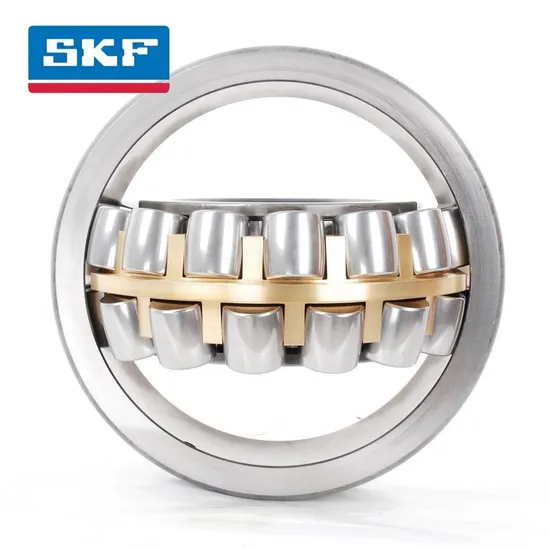
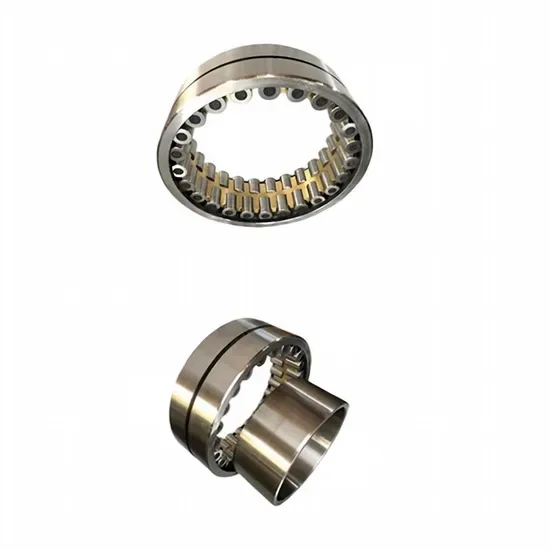
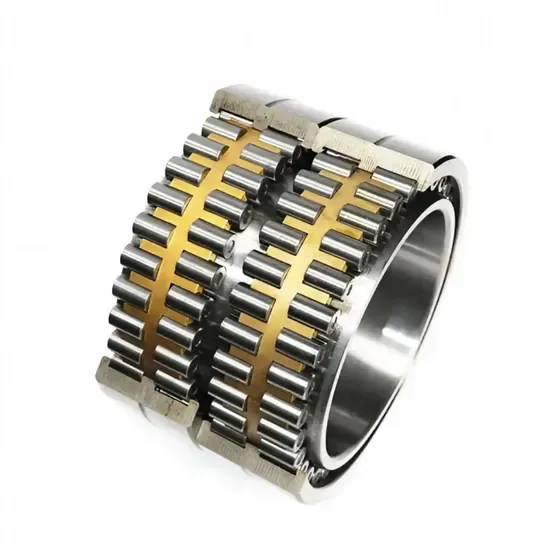
Description
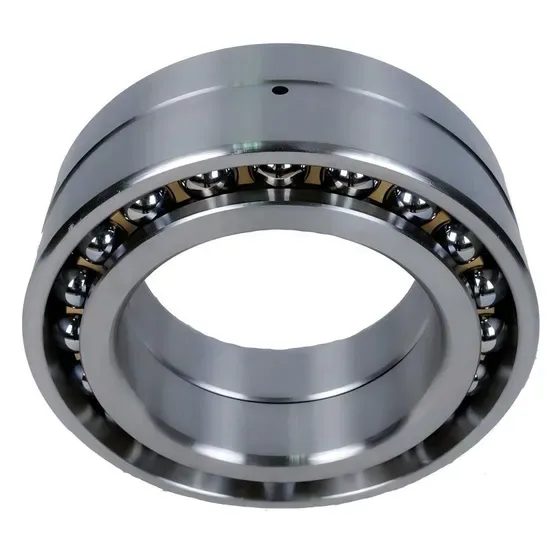
Authorized channel sourcing with full batch traceability — Every 23028SWRCDg2E4 spherical roller bearing we supply ships with a Certificate of Conformity and country-of-origin documentation, verified against the authorized distributor’s lot records before it leaves our warehouse.
Technical Specifications
| Parameter | Value |
|---|---|
| Designation | SKF 23028SWRCDg2E4 |
| Bearing Type | Spherical Roller Bearing |
| Bore Diameter (d) | 140 mm |
| Outside Diameter (D) | 210 mm |
| Width (B) | 53 mm |
| Number of Rows | Double Row |
| Seal or Shield Type | Sealed Type |
| Material | Bearing Steel |
| Bore Type | Cylindrical |
| Origin | Authorized distributor channel |
Note: The suffix segments SWRC, D, and g2E4 appear on supplier documentation but remain unverified against the manufacturer’s published catalog; request full suffix decoding at inquiry to confirm cage material, clearance class, and internal design.
Application Suitability
| Industry | Typical Applications |
|---|---|
| Steel & Metallurgy | Continuous caster roll segments, guide rollers, withdrawal straightener drives |
| Mining & Crushing | Vibrating screen eccentric shafts, jaw crusher toggle plate pivots |
| Pulp & Paper | Paper machine dryer cylinder bearings, press section roll supports |
What a Suffix Mismatch Costs on a Continuous Caster
A single unverified suffix can turn a 24-month service interval into a 3-week teardown.
I spent years on the QC bench measuring hardness and checking dimensional tolerances, and that discipline followed me into trading. The lesson came hard: a batch of 22320 spherical rollers I supplied to a Southeast Asian steel mill failed within months. The cages were stamped steel where the specification demanded machined brass, and the caster’s continuous vibration shredded them. The supplier had swapped suffixes silently. Since then, I treat every suffix on a designation like 23028SWRCDg2E4 as a claim that must be proven — cage type, clearance class, internal geometry — before anything leaves our shelf [NEED_CITE: rolling bearing failure mode classification per ISO 15243].
How This Bearing Fits the Caster Line
A 23028SWRCDg2E4 spherical roller bearing carries the combined radial and moderate axial loads found in roll segments while compensating for shaft deflection caused by thermal bow and roll-gap force. The sealed configuration keeps out scale dust, coolant mist, and iron oxide debris that accumulate along caster curves. When we cross-reference this designation against alternate brands for our distributor customers, we match on clearance class and cage construction — not just the base bore and OD — because a substitution that ignores suffix detail has ended more caster runs than I care to count.
Loads, Speeds, and Thermal Demands on the Caster
The loading spectrum on a continuous caster is punishing: heavy radial forces from strand weight and roll pressure, moderate axial thrust from misalignment, and constant low-speed oscillation that starves the raceway of a full elastohydrodynamic film [NEED_CITE: lubrication regime breakdown in low-speed heavily loaded spherical roller bearings]. Ambient temperatures near the secondary cooling zone push bearing steel toward thermal growth, which means clearance selection directly determines whether the rollers run freely or bind under expansion. Sealed designs trade a small amount of friction for contamination exclusion, a worthwhile exchange where scale and water are ever-present.
Reading the Specification Behind the Number
The 140 mm bore and 210 mm OD place this bearing in the medium-wide series, built for substantial radial capacity. Double-row spherical geometry delivers self-alignment, absorbing the shaft-to-housing angular errors inevitable in heavy welded housings that distort under roll-separating force. The sealed construction eliminates relubrication intervals on inaccessible segments while requiring careful attention to seal lip temperature limits during operation. Cage material — whether machined brass or pressed steel — governs vibration resistance and high-temperature durability, and that distinction lives entirely in the suffix. Clearance class, likewise, is not cosmetic: standard CN clearance in a hot-zone caster roll will close to negative preload once the inner ring expands, whereas C3 or C4 provides the thermal headroom needed to survive the shift from cold start to steady-state casting [NEED_CITE: thermal expansion effects on internal clearance in spherical roller bearings].
The Hidden Price of Getting It Wrong
Correct selection backed by traceable sourcing delivers the L10 life the application demands. The alternative is a cascade: wrong clearance causes thermal seizure, an underspecified cage fractures under vibration, a counterfeit inner ring spalls within weeks, and the strand stops. Each hour of unplanned caster downtime carries a cost that dwarfs the bearing price by orders of magnitude, and warranty claims vanish once the supply chain provenance is unclear [NEED_CITE: unplanned downtime cost impact in continuous casting operations].
Why Procurement Engineers Route Their Inquiries Here
We source through authorized distributor channels, meaning every 23028SWRCDg2E4 arrives with paperwork that traces back to a documented lot — not a repackaged mystery. Our cross-reference database aligns clearance, cage material, and precision grade across six major brands simultaneously, so substitutions happen without field surprises. For import-sensitive buyers, country-of-origin documentation and HS code guidance ship with every order. When a suffix raises questions, we contact the manufacturer’s technical desk before confirming availability, not after. Material certificates, dimensional inspection records, and QR verification pathways through official brand apps are standard, not extras that need negotiating.
Documentation & Authenticity
- Supplier Certificate of Conformity tied to the specific batch and lot number of your 23028SWRCDg2E4 shipment
- Country-of-origin certificate prepared for import clearance in your destination market
- QR code verification pathway via the official brand application for on-site authenticity confirmation upon receipt
- Dimensional inspection report covering bore, OD, width, and radial internal clearance measured before dispatch
- Material certificate confirming bearing steel composition and heat treatment traceability
Storage, Handling & Mounting
- Retain the sealed factory packaging until the moment of mounting; early opening exposes the seal lips to shop-floor particulate that compromises the sealed design
- Store horizontally in a dry, vibration-free area to prevent false brinelling on the double-row raceway before installation
- Use induction heating for the 140 mm bore inner ring rather than cold pressing, controlling temperature to avoid annealing the bearing steel
- Respect the sealed bearing’s non-relubricable design: confirm that housing grease pockets are filled before closing, because there is no second chance to add lubricant through a fitting
- Verify shaft and housing tolerances against the manufacturer’s recommendations before assembly; interference that is too tight will collapse the internal clearance the sealed design depends on
Request a Quotation or Technical Review
Share your operating parameters — load spectrum, speed, ambient temperature, and housing details — so we can verify that the suffix configuration on your 23028SWRCDg2E4 matches the actual duty. If you are cross-referencing from an OEM equipment number, provide it and we will return a full interchange comparison covering clearance and cage, not just the base designation.
Frequently Asked Questions
Q: How do I confirm whether a 23028SWRCDg2E4 received from a previous supplier is genuine?
A: Scan the product QR code through the brand’s official mobile application and compare the returned batch data against your delivery paperwork. Soft inner rings and cloned QR codes that pass visual inspection are increasingly common; digital verification through the manufacturer’s own platform is the reliable checkpoint.
Q: Why does cross-referencing require more than matching the base number?
A: Two bearings sharing the same 23028 base designation can differ in cage material, internal clearance class, and precision grade. Installing a standard-clearance bearing where C3 was specified for thermal expansion, or a pressed-steel cage where machined brass was called for, leads to premature field failure that no visual inspection would have predicted.
Q: Which clearance class suits continuous caster roll applications?
A: High-temperature zones typically require C3 or C4 clearance to accommodate thermal growth of the inner ring during operation. Standard CN clearance risks closing to a preload condition once casting temperatures stabilize. Confirm the requirement against your operating temperature data before ordering.
Q: What do the SWRC, D, and g2E4 suffix segments mean?
A: These segments appear on the supplier documentation we received but are not standard catalog suffixes we can decode independently. Request that we confirm each segment’s meaning — cage type, internal design, seal variant — directly with the manufacturer’s technical department before finalizing your order.
Q: Can you supply an alternative brand if this exact designation has a long lead time?
A: Yes. Our cross-reference comparison covers SKF, NSK, FAG, TIMKEN, NTN, and KOYO, matched on bore, OD, width, clearance class, cage material, and seal configuration — so the substitute performs identically in your caster, screen, or crusher application.
Secure Your Genuine 23028SWRCDg2E4 Spherical Roller Bearing
Send your application parameters or OEM equipment number to our engineering desk for a verified quotation with full documentation and lead-time confirmation.