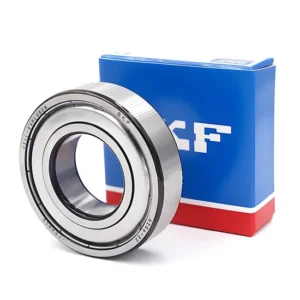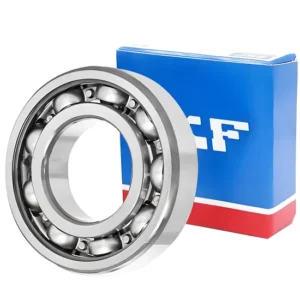


Description
Scan to verify authenticity — Every SKF 6205-2Z/C3 deep groove ball bearing we dispatch carries a factory-applied QR code readable via the official SKF Authenticate app.
Technical Specifications
| Parameter | Value |
|---|---|
| Designation | SKF 6205-2Z/C3 |
| Bearing Type | Deep Groove Ball Bearing |
| Bore Diameter (d) | 25 mm |
| Outside Diameter (D) | 52 mm |
| Width (B) | 15 mm |
| Cage Material | Sheet Metal |
| Seal or Shield Type | 2Z (Double shielded) |
| Clearance Class | C3 |
| Material | Bearing Steel |
Application Suitability
| Industry | Typical Applications |
|---|---|
| Electric Motors | Rotor shaft support in high-speed induction motors |
| Pumps | Impeller shaft stabilization in centrifugal water pumps |
| Gearboxes | Intermediate shaft mounting in helical gear reducers |
| Conveyors | Drive roller journal support in bulk material handling systems |
Overheating Risks When Sourcing the SKF 6205-2Z/C3 deep groove ball bearing for Hot Environments
Selecting the correct internal clearance prevents catastrophic thermal seizure.
Years ago in Dubai, I tore down a seized water pump motor that burned out in the desert heat. The original setup used a standard CN clearance bearing that simply could not accommodate the thermal expansion, locking the shaft solid. Specifying a C3 clearance variant eliminates this blind spot, ensuring the rolling elements maintain optimal operational gaps even when ambient temperatures spike [NEED_CITE: thermal expansion effects on bearing internal clearance].
Matching Shielded Designs to Dust-Prone Industrial Zones
When outfitting conveyors or agricultural gearboxes, contamination is the primary enemy of longevity. The SKF 6205-2Z/C3 deep groove ball bearing utilizes non-contact steel shields to block particulate ingress without generating the friction heat associated with rubber seals. Our sourcing network ensures these specific shielded configurations are pulled from genuine inventory, avoiding the delays typical of mixed-brand consolidation orders.
Navigating Radial Loads and Speed Thresholds in Electric Motors
Electric motor rotors subject deep groove architectures to sustained radial loads and high rotational speeds. At these velocities, the sheet metal cage minimizes centrifugal stress while maintaining low friction. The double-shielded construction retains the factory-filled lubricant for the component’s entire service life, which is critical when relubrication ports are inaccessible. However, operating beyond the thermal limit of standard bearing steel requires careful monitoring of the housing temperature to prevent lubricant degradation [NEED_CITE: lubricant life reduction at elevated temperatures].
Decoding the C3 Clearance and 2Z Shield Suffixes
The suffix architecture dictates how this component behaves under physical stress. The 2Z designation indicates double steel shields, offering a robust barrier against dust and moisture while allowing for higher speed limits compared to contact seals. Meanwhile, the C3 radial internal clearance is intentionally larger than normal. This extra gap compensates for the inner ring expanding faster than the outer ring when the shaft heats up during continuous operation. Without this engineered clearance, the thermal growth would squeeze the rolling elements, spiking friction and causing premature failure. Understanding these suffix variations is essential for cross-referencing equivalent models across different manufacturer catalogs.
The Operational Toll of Ignoring Suffix Details
Overlooking a single suffix character during procurement often triggers a cascade of mechanical failures. Installing a standard clearance unit in a high-heat application leads to internal preload, accelerating fatigue and causing catastrophic damage to the motor housing. According to failure mode classifications outlined in ISO 15243, such thermal seizure is entirely preventable with correct initial specification. The resulting unplanned downtime and voided equipment warranties far outweigh any perceived savings from substituting an incorrect variant [NEED_CITE: rolling bearing failure mode classification per ISO 15243].
Securing Traceable Inventory for Critical Maintenance Spares
Procuring the exact 2Z/C3 configuration is notoriously difficult, as suppliers frequently substitute open or 2RS variants to clear stock. We maintain massive spot inventory covering thousands of precise suffix combinations, ensuring you receive the exact shielded and clearance-rated unit required. Every shipment includes complete traceability documentation, protecting your facility from the risks of counterfeit components. Our technical team provides cross-brand equivalent model consultation if an urgent replacement is needed outside standard channels. Furthermore, flexible consolidation shipping allows you to mix this specific deep groove unit with heavy-equipment spherical rollers in a single container.
Documentation & Authenticity
- Certificate of Conformity matching the specific 2Z/C3 batch number.
- Original factory traceability records confirming the C3 clearance grade.
- Official app QR verification codes applied to the packaging.
- Dimensional inspection reports validating the 25x52x15mm tolerances.
- Material certification confirming standard bearing steel composition.
Storage, Handling & Mounting
- Keep the 2Z shields intact in original packaging to prevent moisture ingress before installation.
- Avoid using induction heaters on the double-shielded unit to protect the factory-filled lubricant.
- Store the C3 clearance bearings in a climate-controlled environment to prevent condensation inside the shields.
- Use clean gloves when handling the 25mm bore to avoid transferring corrosive salts to the steel.
- Verify the sheet metal cage orientation is undamaged before pressing the outer ring into the housing.
Engineering Data Required for Technical Verification
To confirm this specific shielded and clearance-rated model suits your application, please share your operational parameters. Providing the exact radial and axial loads, continuous operating temperatures, and rotational speeds allows our team to recalculate the L10 life. Additionally, supplying the OEM equipment part number enables us to perform a precise cross-reference check against alternative manufacturer designations.
Frequently Asked Questions
Q: How to verify the authenticity of the received inventory?
A: You can authenticate the components by scanning the QR code printed on the packaging using the official manufacturer app. This digital verification confirms the original factory batch and ensures the internal C3 clearance specifications have not been altered or counterfeited during transit.
Q: What is the difference between C3 and standard CN clearance?
A: The C3 designation provides a larger radial internal gap than the standard CN class. This extra space is crucial for applications involving high speeds or elevated temperatures, as it compensates for thermal expansion of the shaft and prevents the rolling elements from seizing inside the raceway.
Q: How to choose between 2Z shields and 2RS seals?
A: The 2Z steel shields offer excellent dust protection with minimal friction, making them ideal for high-speed electric motors. Conversely, 2RS rubber seals provide superior water resistance but generate more friction heat, making them better suited for lower-speed applications exposed to heavy liquid contamination.
Q: What are the recommended mounting practices for shielded units?
A: When installing double-shielded variants, apply mounting forces exclusively to the ring being press-fitted. Never strike the shields directly, as denting the sheet metal can cause it to rub against the rotating inner ring, leading to immediate friction damage and lubricant leakage.