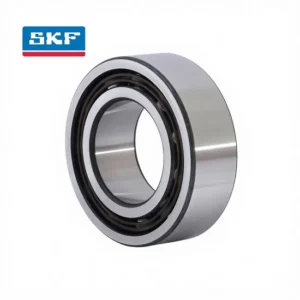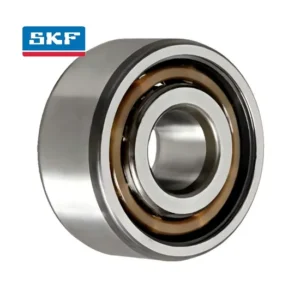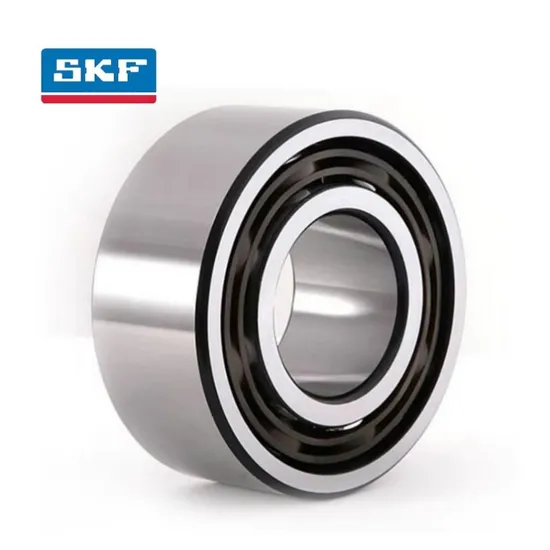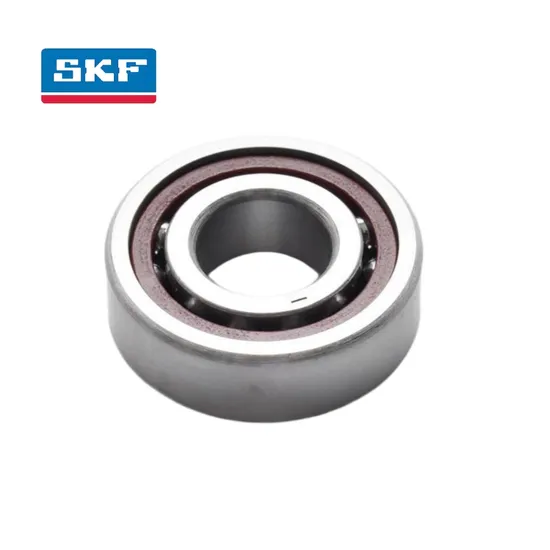

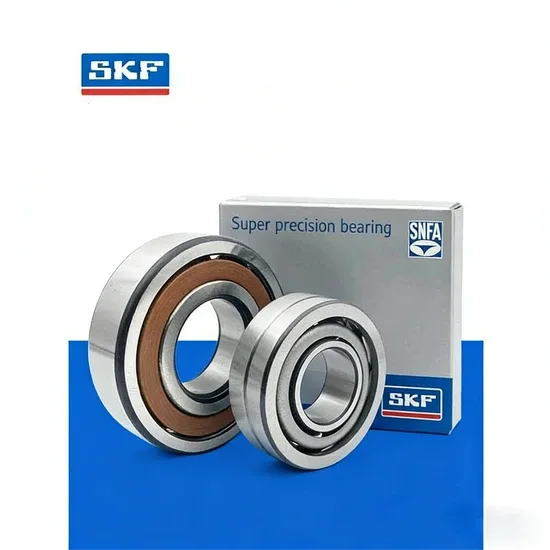
Description
Authorized Distributor Channels — Every SKF 7003 ACD P4A DBB pair ships with batch traceability documentation linking back to the manufacturer’s authorized distribution network.
Technical Specifications
| Parameter | Value |
|---|---|
| Designation | SKF 7003 ACD P4A DBB |
| Bearing Type | Angular Contact Ball Bearing |
| Bore Diameter (d) | 17 mm |
| Outside Diameter (D) | 35 mm |
| Width (B) | 10 mm |
| Number of Rows | Single Row |
| Contact Angle | 25° |
| Precision Class | P4A (ISO tolerance class 4 with additional running accuracy) |
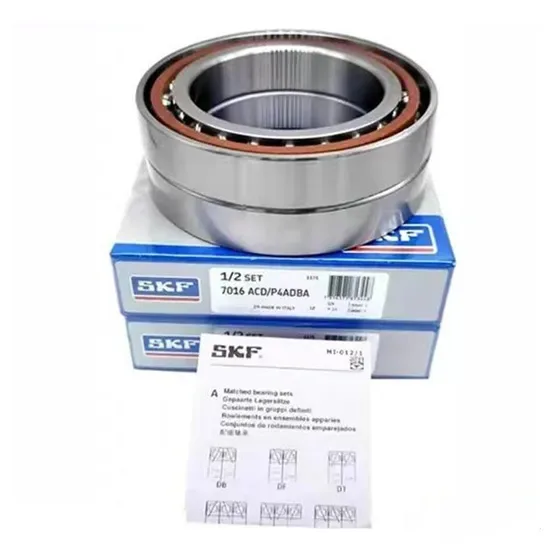
| Arrangement | Back-to-back pair (DB) |
| Weight | 0.100 kg |
| Origin | China |
The DBB suffix appears on the product label but its specific preload or configuration code requires confirmation against the manufacturer’s catalog.
Application Suitability
| Industry | Typical Applications |
|---|---|
| Machine Tool Manufacturing | CNC milling spindle cartridge, grinding wheel head spindle |
| Precision Equipment | Coordinate measuring machine rotary table, optical scanner drive |
| Robotics | Harmonic drive input shaft, articulated joint actuator |
What Happens When You Ignore the P4A Tolerance Band on a Spindle
A matched P4A pair holds runout within ISO class 4 — drop to P5 and you lose the tight running accuracy that keeps spindles cutting true at high speed.
Procurement teams often focus on the base number and assume any 7003 series bearing will fit the application. The reality on the shop floor is different. A CNC workshop once matched the 7003 bore and outside diameter correctly but installed a standard P0 single bearing into a spindle rated for 18,000 rpm. The result was thermal binding within two hours and a scrapped rotor. The contact angle, precision class, and preload arrangement all matter. When you source a SKF 7003 ACD P4A angular contact ball bearing, you are specifying a component where dimensional tolerance and running accuracy are verified together, not assumed from a generic catalog entry [NEED_CITE: ISO 492 tolerance class definitions and P4A running accuracy requirements].
Matching the 25° Contact Angle to Combined Load Profiles
Spindle cartridges in CNC milling machines face simultaneous radial cutting forces and axial thrust from tool engagement. The 25° contact angle in the SKF 7003 ACD P4A angular contact ball bearing provides a balance between radial load capacity and axial rigidity, making it suitable for applications where both load components are present but neither dominates. When we cross-reference this model against competing brands, we verify that the replacement also carries a 25° contact angle — not just the same bore and outside diameter — because swapping to a 15° variant would reduce axial stiffness and invite chatter marks on the workpiece.
Thermal Growth and Spindle Preload Stability
At sustained high speeds, the inner ring and balls heat faster than the outer ring, compressing the preload built into the back-to-back pair. The P4A precision class ensures that dimensional variation between the two bearings in the matched set stays within ISO class 4 limits, so the preload does not collapse or spike unpredictably. Temperature differentials across the spindle housing can shift clearance requirements; a DB arrangement handles moment loads better than face-to-face, which is why OEM spindle designers typically specify back-to-back for rigid cartridge mounting [NEED_CITE: angular contact bearing arrangement selection for machine tool spindles]. Lubrication intervals must account for this thermal behavior — grease degradation accelerates when preload rises above the design window.
Decoding the ACD and P4A Suffixes for Spindle Duty
The ACD suffix confirms a 25° contact angle with an optimized internal geometry designed to distribute load across a larger contact ellipse, reducing Hertzian stress on raceways during combined loading. The P4A designation goes beyond standard P4: it adds running accuracy specifications that cover inner and outer ring runout as well as side face runout, parameters that directly affect spindle vibration and surface finish on the workpiece. The back-to-back pair arrangement provides bidirectional axial location, essential for spindles that see reversing thrust during tool changes or contouring cuts.
The Hidden Cost of a Suffix Mismatch
Installing a bearing with the correct base number but wrong precision class or arrangement can trigger failures that do not show up immediately. A P5 bearing in a P4A seat may run for days before runout accumulates enough to cause chatter. A single bearing where a matched pair was specified will lack preload control, leading to ball skidding and cage wear. These failures fall under ISO 15243 classifications for material fatigue and electrical erosion patterns that mimic lubrication failure but actually stem from assembly errors [NEED_CITE: rolling bearing failure mode classification per ISO 15243]. Unplanned downtime, scrapped workpieces, and warranty disputes with the spindle OEM compound the original cost of the bearing many times over.
How We Keep the Supply Chain Honest
Our sourcing model relies on authorized distributor channels rather than parallel imports, which means every shipment carries traceable documentation from the brand’s official network. We verify authenticity through QR code pathways on the manufacturer’s official apps and provide batch-level certificates of conformity. When a buyer needs a cross-brand interchange, we do not just match the base designation — we confirm contact angle, cage material, precision suffix, and preload class align before proposing the substitution. Country-of-origin documentation accompanies each order for import compliance, and third-party dimensional inspection reports are available to confirm P4A running accuracy before the bearing leaves our facility.
Documentation & Authenticity
- Supplier Certificate of Conformity with batch and lot traceability linking this SKF 7003 ACD P4A pair to its production run
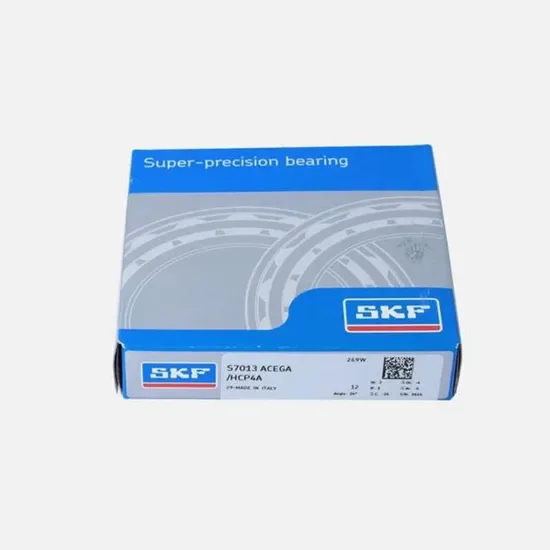
- QR code verification pathway through SKF official apps for anti-counterfeit confirmation on each bearing box
- Third-party runout inspection report confirming P4A running accuracy before the matched pair ships
- Country-of-origin documentation supporting import customs clearance and HS code classification
- Material certificate accompanying the batch for metallurgical traceability
Storage, Handling & Mounting
- Keep the matched DBB pair sealed in original packaging until the moment of mounting; opening early risks contaminating the factory-applied preload reference marks on the ring faces
- Store at stable temperature away from direct sunlight to prevent uneven thermal expansion that could alter the P4A dimensional tolerance band
- Use clean lint-free gloves when handling the 17 mm bore to avoid transferring skin oils onto the precision-ground raceway surfaces
- During spindle cartridge assembly, follow the OEM preload specification rather than relying on clamping force alone; the back-to-back arrangement requires controlled axial positioning
- After mounting, verify free rotation by hand before powering the spindle — any binding indicates preload over-compression or misalignment in the housing seat
Requesting a Quotation for Your Spindle Application
Start the Technical Conversation
Share your spindle model number, operating speed range, and load envelope so we can confirm whether the SKF 7003 ACD P4A DBB is the correct match or if an alternative preload class is needed. We will return a quotation with lead time, available batch dates, and the full documentation package for your review.
Contact our engineering team through the inquiry form on this page or reach us via the channels listed in our company profile.
Frequently Asked Questions
Q: How can I verify the authenticity of this SKF bearing through official channels?
A: Each bearing box carries a QR code that links to SKF’s official verification app. Scan the code to confirm the batch number, production facility origin, and distribution chain status. We also provide a Certificate of Conformity with every shipment as secondary confirmation.
Q: What does the ACD suffix indicate about the contact angle and internal design?
A: The ACD suffix specifies a 25° contact angle combined with an optimized internal geometry. This design distributes contact stress over a wider ellipse compared to standard AC variants, improving load capacity in combined radial-axial applications like machine tool spindles.
Q: What is the difference between P4 and P4A in running accuracy?
A: P4A meets all ISO tolerance class 4 dimensional requirements and adds running accuracy specifications covering inner ring runout, outer ring runout, and side face variation. Standard P4 covers dimensional tolerances but does not include the additional running accuracy band that P4A enforces.
Q: How do I select between DB, DF, and DT arrangements for my spindle?
A: DB (back-to-back) handles moment loads and provides rigid bidirectional axial location, which suits most cartridge-type spindles. DF (face-to-face) offers more tolerance to misalignment but lower moment stiffness. DT (tandem) doubles axial capacity in one direction only. The correct choice depends on your spindle housing design and load direction.
Q: What does the DBB suffix mean on this matched pair?
A: The DBB suffix on this product label requires confirmation against the manufacturer’s catalog for its specific preload or pairing configuration code. We verify the exact meaning before quoting to ensure the preload class matches your spindle OEM specification.
Verify Your Spindle Match Before Ordering
Send us your OEM equipment number or application parameters — we will confirm the SKF 7003 ACD P4A DBB cross-reference accuracy and return a documentation-backed quotation.