Description
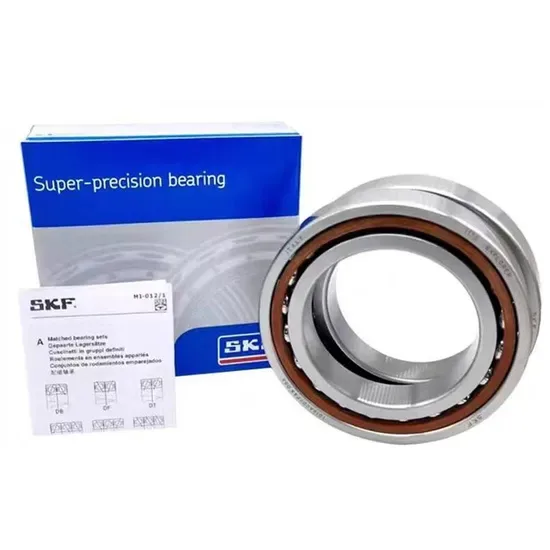
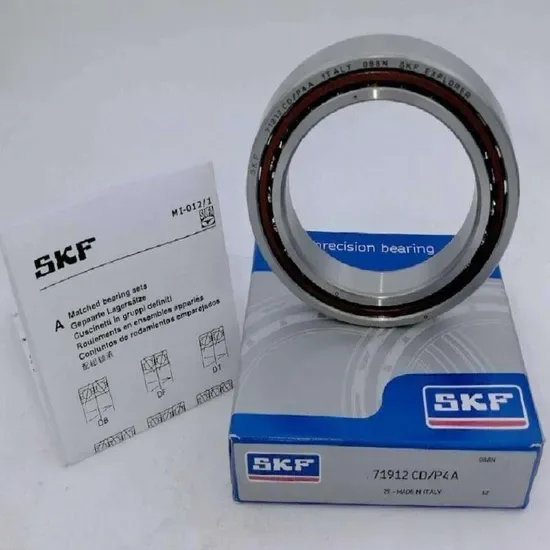
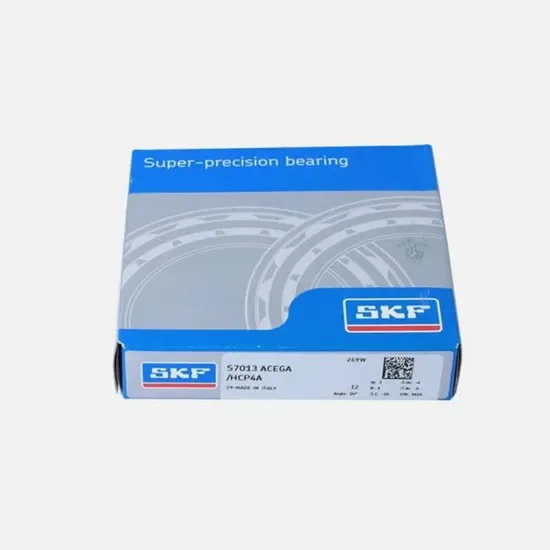
Sourced via authorized distributor channels with full batch traceability and QR-code verification. Every SKF 7013 CE/P4AQBCA we ship carries a verifiable chain of custody back to the manufacturer’s authorized network, ensuring the spindle shop receives a bearing whose P4A running accuracy and 15° contact angle are exactly what the nameplate declares.
Technical Specifications
| Parameter | Value |
|---|---|
| Designation | SKF 7013 CE/P4AQBCA |
| Bearing Type | Angular Contact Ball Bearing |
| Bore Diameter (d) | 65 mm |
| Number of Rows | Single Row |
| Contact Angle | 15° (CE suffix) |
| Precision Class | P4A |
| Cage Material | Polyamide or steel cage (CE suffix) |
| Arrangement | QBCA (see note below) |
| Bore Type | Cylindrical |
| Origin | China |
Note: The QBCA suffix combination requires confirmation against the manufacturer’s current catalog for precise pairing arrangement and preload class before final application approval.
Application Suitability
| Industry | Typical Applications |
|---|---|
| Machine Tool Manufacturing | CNC machining center spindles, high-frequency milling spindles |
| Robotics | High-speed rotary joints, precision actuator axes |
| General Industrial Machinery | High-speed pump shafts, precision grinder wheelheads |
| Automotive & Heavy Vehicle Repair | Turbocharger test rig spindles |
Why a 15° Contact Angle Matters When Your Spindle Runs at 12,000 RPM
Radial-dominant loads paired with high speed demand low-friction geometry — and that is exactly what the 15° contact angle on the SKF 7013 CE/P4AQBCA delivers.
In West African machining workshops, I have seen too many spindle rebuilds fail within weeks because someone swapped a 15° bearing for a 25° or 40° variant, chasing higher axial rigidity without considering the thermal consequences. A steeper contact angle generates more friction heat under predominantly radial cutting forces, and in a sealed spindle housing that heat has nowhere to go. The result is thermal growth that eats the preload, accelerates cage wear, and eventually seizes the bearing. The SKF 7013 CE/P4AQBCA angular contact ball bearing avoids this trap by keeping the contact angle at 15°, balancing axial capacity with the low-friction profile that high-speed spindle designers actually need [NEED_CITE: angular contact bearing friction heat generation vs contact angle].
Matching the Spindle Load Spectrum
A CNC spindle sees a specific load signature: continuous radial force from belt or motor drive, intermittent axial thrust from tool engagement, and occasional shock loads during rapid tool changes. The SKF 7013 CE/P4AQBCA angular contact ball bearing is engineered for this exact mix. Its 15° contact angle provides sufficient axial stiffness for moderate thrust while keeping radial friction minimal, and the P4A precision class ensures runout stays within the tight tolerances that finishing cuts demand. When I source high-precision bearings for spindle rebuilds, I always cross-check not just the base number but the full suffix string — contact angle, cage type, and precision grade must all align with the original spindle design intent.
Operating Environment and Performance Demands
Spindle environments are unforgiving. Speeds push into high-RPM territory where cage integrity and lubricant film thickness become critical survival factors. The polyamide cage option in the CE design reduces weight at the rolling elements, cutting centrifugal forces that would otherwise overload the outer raceway at elevated speeds. Temperature rise inside a sealed spindle housing can easily reach levels that degrade standard grease within months, making oil-air or oil-mist lubrication the preferred choice for these applications. The open bearing design of the SKF 7013 CE/P4AQBCA angular contact ball bearing supports external lubrication circuits, allowing maintenance teams to control oil flow and filtration independently. Installation demands equal care: induction heating is inappropriate for precision angular contact bearings with engineered cages, so hydraulic or mechanical press mounting with controlled axial force is the standard practice [NEED_CITE: precision angular contact bearing mounting methods and cage protection].
Decoding the Specification String
The CE suffix confirms a 15° contact angle with an optimized internal geometry and a cage material suited to high-speed operation — polyamide for lightweight performance or steel for higher temperature tolerance. The P4A precision class goes beyond standard ISO class 4 dimensional tolerances by adding tighter running accuracy requirements, which directly translates to lower vibration and better surface finish on machined workpieces. For spindle applications where chatter marks ruin part quality, this extra running accuracy specification is not optional — it is the difference between a spindle that holds tolerance and one that does not. The cage and internal design work together to maintain ball guidance stability at speed, preventing the cage pocket wear that leads to uneven load distribution and premature raceway spalling.
The Hidden Cost of Ignoring the Suffix String
I once traced a spindle failure in Lagos back to a bearing that matched the base number perfectly but carried the wrong precision class and contact angle. The replacement was P5 instead of P4A, and its different contact angle altered the preload balance in the paired set. Within weeks, vibration levels climbed, chatter marks appeared on every workpiece, and the bearing seized — taking the spindle shaft with it. That single procurement shortcut cost the workshop far more in unplanned downtime, scrapped workpieces, and emergency shaft replacement than the original bearing price difference. According to failure mode classification frameworks like ISO 15243, incorrect selection and mounting rank among the most common root causes of premature bearing failure [NEED_CITE: rolling bearing failure mode classification per ISO 15243]. The SKF 7013 CE/P4AQBCA angular contact ball bearing eliminates this risk by shipping with the full suffix string verified and documented.
How We Ensure What Arrives Matches What the Spindle Demands
Every SKF 7013 CE/P4AQBCA angular contact ball bearing we supply is sourced through authorized distributor channels, not gray-market resellers. We provide a Certificate of Conformity with each shipment, backed by material certificates and dimensional inspection reports that confirm P4A running accuracy before the bearing leaves our facility. Our cross-reference database checks not only the base designation but also contact angle, cage material, and precision suffix — so if a maintenance engineer provides an OEM equipment number, we can verify interchange compatibility across all six major brands with confidence. For import compliance, we supply country-of-origin documentation and HS code support, and every bearing can be verified through the manufacturer’s official QR-code authentication pathway. Batch and lot traceability accompanies every order, giving procurement teams the documentation trail their quality systems require.
Documentation & Authenticity
- Certificate of Conformity issued per shipment, referencing the specific batch number tied to this SKF 7013 CE/P4AQBCA angular contact ball bearing.
- Dimensional inspection report confirming P4A running accuracy and bore/OD tolerances before dispatch.
- Material certificate verifying bearing steel composition and heat treatment compliance with manufacturer specifications.
- QR-code verification pathway enabling end users to authenticate origin through the SKF official app.
- Country-of-origin documentation prepared for customs clearance and import compliance at destination.
- Batch and lot traceability linking each bearing to its production run for warranty and quality audit purposes.
Storage, Handling & Mounting
- Keep the SKF 7013 CE/P4AQBCA in its original sealed packaging until the moment of mounting; premature exposure risks contaminating the precision-matched raceways and compromising P4A running accuracy.
- Store in a clean, climate-controlled environment to prevent condensation on the bearing steel surfaces, which can initiate micro-corrosion invisible to visual inspection but catastrophic at 15° contact angle under high-speed rotation.
- Use lint-free gloves when handling the bearing to prevent fingerprint acid etching on the raceways — a contamination source that disproportionately affects P4A-class precision components.
- For paired arrangements indicated by the QBCA suffix, maintain factory pairing orientation marks during installation; mixing components from different sets destroys the matched preload and running accuracy.
- Mount using controlled axial press force rather than impact tools, protecting the polyamide or steel cage from deformation that would cause uneven ball spacing and vibration at spindle operating speeds.
Starting Your Spindle Bearing Inquiry
Share your spindle operating parameters — speed range, load profile, lubrication method, and target runout tolerance — so we can verify that the SKF 7013 CE/P4AQBCA angular contact ball bearing is the correct match for your application. If you have an OEM equipment number or a drawing reference, send it over and we will run a full cross-reference check including clearance, cage, and precision alignment. We can also prepare a documentation package preview and confirm batch availability and lead time for your project schedule.
Frequently Asked Questions
Q: What does each part of the CE/P4AQBCA suffix mean?
A: CE indicates a 15° contact angle with optimized internal design and a cage suited to high-speed operation. P4A specifies ISO tolerance class 4 dimensional accuracy with additional running accuracy requirements critical for spindle applications. QBCA relates to the bearing arrangement and preload pairing specification, though its precise definition should be confirmed against the current manufacturer catalog for your specific spindle configuration.
Q: Can I substitute a P5 precision bearing if P4A is not available?
A: Substituting P5 for P4A in a spindle application introduces higher runout, which directly degrades surface finish and can cause chatter at cutting speeds. The SKF 7013 CE/P4AQBCA angular contact ball bearing is specified at P4A for a reason — the spindle designer calculated the runout budget around that precision level, and downgrading compromises the entire machining system.
Q: How do I verify the authenticity of the bearing I receive?
A: Each bearing carries a QR code that can be scanned using the manufacturer’s official mobile application, linking the physical product to its production batch records. We also supply a Certificate of Conformity and dimensional inspection report with every shipment, providing multiple independent verification points beyond the QR code alone.
Q: What cross-reference checks should I perform before ordering?
A: Beyond matching the base number 7013, you must verify that the contact angle (15° for CE), precision class (P4A), cage material, and preload arrangement all match the original spindle specification. A mismatch in any single suffix can alter preload balance, thermal behavior, or speed capability, leading to premature failure even if the bearing physically fits the housing.
Q: What documentation comes with the bearing for import purposes?
A: We provide country-of-origin certificates, HS code information, and commercial documentation formatted to support customs clearance at your destination port. Batch traceability records and material certificates are included in the shipment package for your quality management system.
Get Your SKF 7013 CE/P4AQBCA Spindle Bearing Quotation
Send us your spindle parameters or OEM reference number, and we will respond with a verified specification match, documentation preview, and delivery timeline. Contact our engineering team to begin your inquiry.