

Description
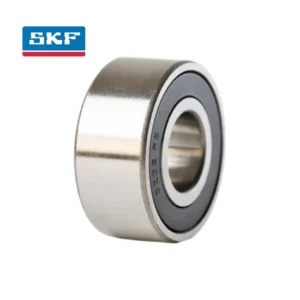
SKF 7014 Angular Contact Ball Bearing Wholesale Supplier
Authorized Channel Traceability — SKF 7014 angular contact ball bearing sourced via licensed distributor networks with full batch documentation and origin verification available before shipment.
Technical Specifications
| Parameter | Value |
|---|---|
| Designation | SKF 7014 |
| Bearing Type | Angular Contact Ball Bearing |
| Number of Rows | Single Row |
| Bore Diameter (d) | 70 mm |
| Seal or Shield Type | Open |
| Clearance Class | Normal (CN) |
| Precision Class | Normal (P0) |
| Contact Angle | Standard (suffix-dependent, confirm 15°, 25°, or 40° with supplier) |
| Weight | 0.100 kg |
| Origin | China |
| Arrangement | Single |
Note: The specific contact angle suffix (C, AC, or B) is unverified from the current supplier batch data; confirm with our technical desk before finalizing preload calculations.
Application Suitability
| Industry | Typical Applications |
|---|---|
| Machine Tool Manufacturing | Main spindle rear support, high-speed milling head bearings |
| Robotics & Automation | Joint actuators, precision rotary tables |
| General Industrial Machinery | High-speed pump shafts, compressor rotors |
| Precision Equipment | Optical measuring device spindles, indexing heads |
What Happens When a 7014 Spindle Bearing Fails Prematurely?
A single mismatched contact angle can turn a precision spindle into a heat generator within days.
In São Paulo, I watched a shop install a 40° contact angle bearing where the spindle designer specified 15°. The base number matched, but the axial rigidity curve was completely wrong — the spindle ran hot within a week, scrapped a batch of aerospace components, and cost the operator unplanned downtime that dwarfed the bearing price. That failure mode repeats constantly in the field: procurement teams match the base designation and overlook the suffix stack, then wonder why the cage fails or thermal binding sets in [NEED_CITE: angular contact bearing thermal failure modes per ISO 15243]. Counterfeit angular contact bearings with soft inner rings and cloned QR codes continue to infiltrate unverified supply chains, compounding the problem for buyers who lack traceability documentation.
Matching the 7014 to High-Speed Spindle Demands
The SKF 7014 angular contact ball bearing handles combined radial and axial loads simultaneously, which is precisely what machine tool spindles demand during cutting operations where axial thrust reverses with tool engagement direction. At 70 mm bore, this size sits in the mid-range spindle envelope common across vertical machining centers and precision grinders. When sourcing replacements, I always pull the OEM equipment number and cross-check whether the original spec called for a specific clearance class or cage material — because swapping a standard CN clearance into an application that thermally expands into C3 territory causes the races to bind and the lubricant to degrade. Our cross-reference database covers SKF, NSK, FAG, TIMKEN, NTN, and KOYO interchange data, aligned on cage type and precision class rather than just the base number.
Load Spectrum, Speed Envelope, and Thermal Behavior
Angular contact bearings live under preload in paired or multi-bearing spindle arrangements, meaning the internal contact stress distribution depends entirely on how the assembly was designed. Radial loads from belt drives or gear mesh combine with axial cutting forces, and the contact angle determines how much of each the SKF 7014 angular contact ball bearing can absorb before contact stress exceeds the fatigue threshold. Operating temperature drives thermal expansion of the shaft relative to the housing, which shifts the operating clearance — a standard CN clearance may collapse entirely in a high-speed spindle where shaft growth outpaces housing expansion [NEED_CITE: thermal expansion effects on bearing internal clearance]. Lubrication selection matters equally: open-type bearings like this 7014 require the machine builder to specify oil-air, oil mist, or grease based on the speed factor (n·dm value) and contamination risk at the seal interface.
Decoding What the Suffix Stack Tells You
The absence of a printed suffix on this batch means standard P0 precision, open type, and CN clearance — but for spindle applications, that baseline is rarely the final answer. Contact angle selection follows a clear engineering logic: 15° (C suffix) favors high-speed, light axial load scenarios where minimal friction heat is critical; 25° (AC or ACD) balances speed capability with moderate axial stiffness; 40° (B or BE) maximizes axial rigidity for heavy cutting but sacrifices speed ceiling due to increased sliding friction at the ball-race contact. Cage material — typically machined brass (M), polyamide (TN9), or pressed steel (J) — determines the maximum operating temperature and the vibration signature the bearing will exhibit at speed. For a 70 mm bore spindle running above the typical grease speed limit, an open bearing with oil-air lubrication and a machined brass cage is the conventional pairing, though polyamide cages offer quieter running in precision grinding applications where surface finish matters.
The Hidden Expense of Getting the 7014 Specification Wrong
Correct specification paired with a verifiable supply source protects the spindle rebuild interval; the alternative is catastrophic. A bearing with wrong internal clearance that thermally binds will destroy the shaft journal and the housing bore, turning a scheduled bearing swap into a multi-week machine rebuild. Counterfeit bearings with through-hardened rings that should have been case-carburized fail under shock load, scattering debris through the lubrication system and contaminating downstream bearings [NEED_CITE: counterfeit bearing failure patterns in industrial applications]. Precision mismatch is subtler but equally costly: a P0 grade installed where the spindle designer specified P5 will generate vibration that transfers to the workpiece, producing surface finish rejects that accumulate for weeks before the bearing is identified as the root cause. The ISO 281 life calculation framework assumes correct specification and genuine materials — neither assumption holds when sourcing skips the verification step.
How We Reduce Procurement Risk on Angular Contact Orders
Every SKF 7014 angular contact ball bearing we supply traces back to authorized distributor channels with documentation that survives import audits. Our technical review starts before the quote: we pull the application speed, preload requirement, and OEM equipment number to confirm whether the standard P0/CN configuration actually matches the spindle design, or whether a C3 clearance and P5 precision class is what the machine needs. Cross-brand interchange requests get the same treatment — we match cage material, contact angle, and precision suffix together, not just the base designation. For buyers managing import compliance, we provide country-of-origin documentation and HS code details before shipment so customs clearance does not stall at the port. Batch and lot traceability means you can verify any unit against the manufacturer’s production records, and our QR code verification walkthrough uses the brand’s official app rather than third-party tools that miss cloned codes.
Documentation & Authenticity
- Supplier Certificate of Conformity — issued per batch, linking the SKF 7014 serial markings to the authorized distributor chain with invoice traceability back to the brand’s regional warehouse.
- QR Code Verification Walkthrough — step-by-step guidance using the SKF official mobile app to confirm authenticity, catching cloned codes that pass visual inspection but fail digital validation.
- Country-of-Origin Documentation — formal origin declaration suitable for customs filing and import compliance, preventing shipment holds at destination port.
- Pre-Shipment Dimensional Verification — bore, OD, width, and runout checked against SKF 7014 tolerance class before dispatch, with inspection report included in the documentation package.
- HS Code and Import Support — harmonized system classification provided with proforma invoice to streamline customs processing in destination markets.
Storage, Handling & Mounting
- Sealed Original Packaging Until Mounting Day — this open-type 7014 bearing has no integrated seals, so the factory-applied rust preventive must remain intact; opening early in a humid shop environment starts surface corrosion on the polished raceways before installation.
- Clean Gloves and Handling Protocol — the 70 mm bore and precision-ground raceways are vulnerable to fingerprint acid etching; nitrile gloves prevent moisture transfer during inspection and mounting preparation.
- Induction Heating for Interference Fit — for the 70 mm cylindrical bore, induction heating to the recommended temperature differential allows slip-fit mounting without hammering, which would brinell the raceway and create vibration signatures that emerge at operating speed.
- External Sealing Responsibility — because this is an open-type bearing, the machine housing must provide effective labyrinth or contact seals to prevent coolant and swarf ingress; the bearing itself has zero contamination defense.
- Lubrication Specification Alignment — confirm whether the spindle design calls for oil-air, oil mist, or grease before first run; flushing the wrong lubricant out after startup risks running the 7014 dry during the critical break-in period.
Start Your Technical Review
Share your spindle speed, preload specification, and OEM equipment number so we can confirm whether this standard SKF 7014 configuration matches your machine design, or whether a modified clearance and precision class is required. If you are replacing an existing bearing, send us the markings on the removed unit for cross-reference verification across all six brand lines. Request the documentation package and batch availability confirmation to align with your maintenance shutdown schedule.
Frequently Asked Questions
Q: How do I verify that the SKF 7014 bearing I receive is genuine?
A: We provide QR code verification guidance using SKF’s official mobile application, which checks the bearing’s unique production code against the brand’s database. Cloned QR codes on counterfeit units often pass casual visual inspection but fail digital validation. Combined with the Certificate of Conformity and batch traceability documentation, you have a three-layer verification path before the bearing enters your spindle.
Q: What must align when cross-referencing the 7014 across different bearing brands?
A: The base designation alone is insufficient. Contact angle, cage material, clearance class, and precision suffix must all match the original equipment specification. A 70 mm bore angular contact bearing from one brand may default to a 40° contact angle while another defaults to 15° — installing the wrong angle changes axial rigidity and thermal behavior. Our cross-reference comparison checks all suffix parameters simultaneously.
Q: What is the practical difference between P0 and higher precision classes for spindle use?
A: P0 (normal precision) suits general industrial applications where moderate running accuracy is acceptable. Spindle applications typically require P5 or P4 precision for tighter bore, OD, and running accuracy tolerances, which directly affect workpiece surface finish and vibration levels. If your OEM spindle spec calls for higher precision, we can source the upgraded class with matching documentation.
Q: How do I choose between 15°, 25°, and 40° contact angles for my application?
A: The choice depends on the axial-to-radial load ratio and the speed requirement. High-speed spindles with light axial thrust favor 15° for lower friction heat. Applications with significant axial cutting forces need 40° for rigidity, accepting a lower speed ceiling. The 25° variant offers a compromise. Share your load and speed parameters so we can confirm the correct contact angle suffix.
Q: What import documentation accompanies the shipment?
A: Each order includes a Certificate of Conformity, country-of-origin declaration, HS code classification, and commercial invoice formatted for customs processing. For markets requiring additional compliance documentation, we prepare the necessary paperwork before dispatch to prevent port delays.
Confirm Your Specification and Batch Availability
Send us your application parameters or OEM equipment number to begin the technical review and receive a documented quotation with lead time confirmation.
Contact our technical sales desk via your preferred channel to start the inquiry.