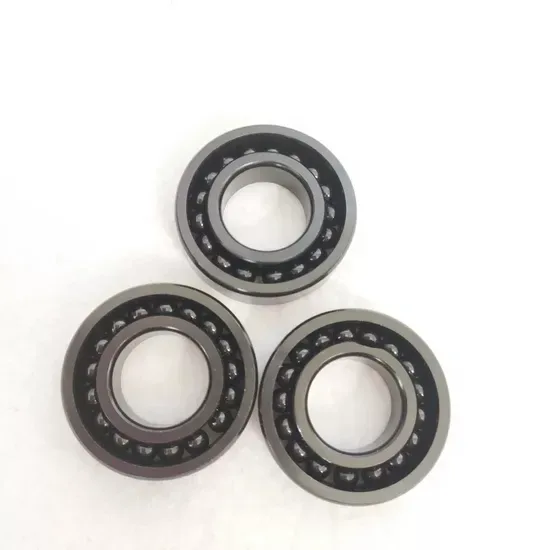
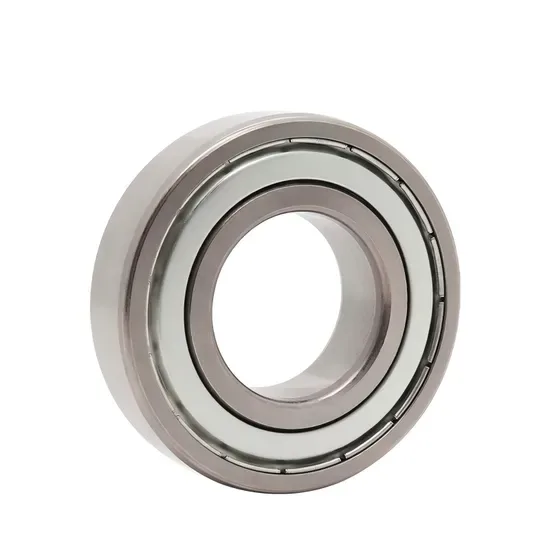


Description
Batch-Traceable Sourcing — every Stainless Steel Bearing 300C we ship is backed by supplier COC, material certificates, and lot-level documentation for import compliance.
Technical Specifications
| Parameter | Value |
|---|---|
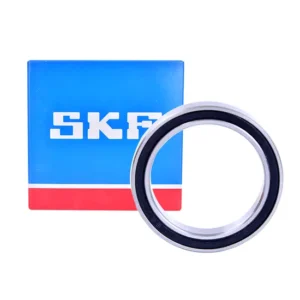
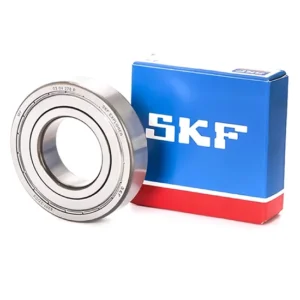
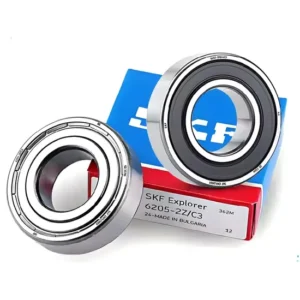
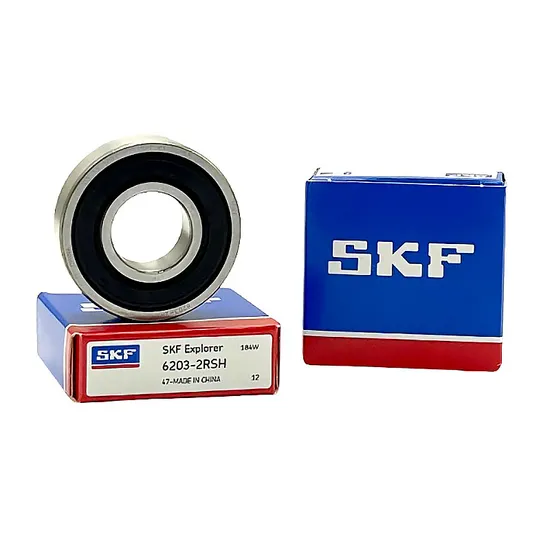
| Designation | Stainless Steel Bearing 300C |
| Bearing Type | Deep Groove Ball Bearing |
| Operating Temperature Range | 300–1000℃ |
| Material | Stainless Steel |
| Seal or Shield Type | Unverified suffix — requires manufacturer catalog confirmation |
| Application | Industrial Equipment / Conveyor / Mixer |
| Origin | China |
Note: The "300C" designation suffix is not mapped to standard SKF/NSK/FAG deep groove ball bearing nomenclature; exact seal type, clearance class, and cage variant must be confirmed against the manufacturer’s catalog before final selection.
Application Suitability
| Industry | Typical Applications |
|---|---|
| Food Processing | Oven conveyor rollers, sterilization tunnel guide bearings |
| Steel & Metallurgy | Continuous casting line roller tables, heat-treatment furnace fans |
| Material Handling | High-temperature belt conveyor pulleys, dryer drum support bearings |
| General MRO | Industrial mixer shafts exposed to washdown and thermal cycling |
What Happens When Stainless Doesn’t Mean Stainless in High-Heat Lines
A mislabeled material grade turns a food-safe conveyor into a contamination source within weeks.
We pulled a set of bearings from a dairy packaging line that had seized three times in one quarter. The purchase order said stainless, the box said stainless, but a spark test on the inner ring showed carbon steel with a thin chrome plating. In a washdown environment with 80℃ CIP cycles, that plating flaked, the raceway pitted, and the cage collapsed. Counterfeit or material-substituted stainless bearings are not a cosmetic problem — they introduce metallic particles into food contact zones and force unplanned downtime that dwarfs the unit price difference. [NEED_CITE: bearing material misidentification leading to premature seizure in food-grade conveyors]
Matching the Stainless Steel Bearing 300C to Your Thermal Profile
The Stainless Steel Bearing 300C is positioned for applications where chrome steel would lose hardness above 150℃ and standard seals would degrade. In our cross-reference work, we often see buyers match the bore and OD correctly but miss the temperature ceiling of the lubricant and cage assembly — not just the ring material. When a client running a biscuit tunnel oven switched from a standard 6205-2RS to this high-temperature stainless variant, the key verification point was whether the internal clearance accommodated thermal expansion at sustained 300℃ shaft temperatures. We confirmed material certificates and origin documentation before shipment so their import team had no surprises at customs.
Heat, Washdown, and the Clearance-Grease Trap
Radial loads on conveyor rollers are typically moderate, but the thermal gradient between a hot shaft and a cooler housing creates differential expansion that standard CN clearance cannot absorb. At sustained elevated temperatures, grease base oil viscosity drops and thickener structure breaks down — lithium-complex greases carbonize well below 300℃, turning into abrasive residue that scores raceways. [NEED_CITE: high-temperature grease degradation mechanisms in rolling bearings] Sealed variants trap this degraded lubricant inside, while open or shielded designs allow periodic re-lubrication with perfluoropolyether or fluorinated greases rated for the actual operating window. Washdown cycles compound the challenge: thermal shock from cold water hitting a hot bearing can cause micro-cracking in ceramic or brittle stainless cages if the material is not matched to the cycling frequency.
Reading Between the Lines on the Datasheet
The stainless steel construction addresses corrosion and food-safety compliance, but the operating temperature claim of 300–1000℃ spans a range that demands careful parsing. Bearings rated to 300℃ typically rely on specialized high-temperature greases or dry-film lubricants, while the upper end of that range suggests solid-lubricant or ceramic-hybrid configurations where the cage and rolling elements are engineered for extreme heat. Cage material is critical here: PTFE or bronze cages behave entirely differently at 500℃ than polyamide, and the wrong cage choice causes thermal binding long before the rings themselves fail. Clearance class must be verified against the actual shaft and housing operating temperatures — C3 or C4 is typical for high-heat conveyor applications to prevent internal preload from thermal growth.
The Downtime Math Nobody Quotations For
Correct material selection with full traceability costs marginally more per unit but avoids the cascade: a single seized bearing on a continuous oven conveyor can halt an entire production shift, damage adjacent rollers, and trigger a food-safety audit if metallic contamination is suspected. [NEED_CITE: ISO 15243 rolling bearing failure classification for material and lubrication-related modes] Mismatched clearance in high-temperature service shows up as thermal binding within hours, not thousands of hours — and the resulting shaft scoring often means replacing the entire assembly, not just the bearing.
How We Keep Your Supply Chain Honest
We source through authorized distributor channels, meaning every Stainless Steel Bearing 300C carries traceable documentation back to the production batch. Our cross-reference database matches not just the base designation but clearance, cage material, and precision suffixes — so when you substitute across brands, you are not gambling on a thermal mismatch. We provide material certificates confirming stainless grade, dimensional inspection reports verifying bore and OD against OEM envelopes, and country-of-origin paperwork for import compliance. When a mining client needed to verify whether their existing FAG-specified bearing could interchange with an NTN equivalent in a high-heat kiln fan, we pulled the full suffix comparison — cage, clearance, and seal — before confirming the swap. [NEED_CITE: cross-reference bearing interchange verification methodology]
Documentation & Authenticity
- Supplier Certificate of Conformity tied to batch and lot number for the Stainless Steel Bearing 300C
- Material certificate confirming stainless steel grade (440C, 420, 304, or 316 as applicable to your order batch)
- Dimensional inspection report verifying bore, OD, width, and runout against specified tolerances
- Country-of-origin documentation and HS code support for customs clearance in Middle East, Africa, and Latin American markets
- QR code verification pathway through the brand’s official application where available
Storage, Handling & Mounting
- Keep the Stainless Steel Bearing 300C in original sealed packaging until mounting — high-temperature bearings often carry specialized dry-film or fluorinated lubricants that attract contamination if exposed to workshop dust
- Store below 40℃ and away from direct heat sources; the rated 300–1000℃ operating range applies to in-service conditions, not warehouse exposure which can degrade pre-packed grease
- Use clean, lint-free gloves during handling — fingerprint acids on stainless raceways can initiate localized corrosion even on corrosion-resistant grades
- For high-temperature conveyor installations, verify shaft and housing fit tolerances account for differential thermal expansion at operating temperature; cold-assembly interference fits may shift at 300℃
- If the bearing arrives open or shielded for re-lubrication, confirm grease compatibility with the original factory fill before introducing aftermarket high-temperature lubricant
Start Your Selection Review
Share your conveyor or mixer operating parameters — shaft temperature, load profile, washdown frequency, and OEM equipment number — so we can verify whether the Stainless Steel Bearing 300C clearance and seal configuration matches your actual duty cycle. If you are replacing an existing bearing, send us the full designation from the nameplate including all suffixes, and we will run a cross-reference check covering clearance, cage, and precision class. We will confirm batch availability, lead time, and documentation package before you commit to a trial order.
Frequently Asked Questions
Q: How do I confirm the stainless steel grade of this bearing before it ships?
A: We provide a material certificate with every shipment specifying the exact stainless grade — whether 440C for hardness-critical applications or 316 for superior corrosion resistance in washdown environments. Request this at inquiry stage so it is included in your documentation package.
Q: The suffix "300C" is unfamiliar — how do I cross-reference it to SKF, NSK, or FAG?
A: The 300C suffix is not a standard designation in major brand catalogs, which is exactly why cross-reference work must go beyond the base number. We match operating temperature range, material grade, clearance class, and cage type individually to find the correct equivalent across SKF, NSK, FAG, TIMKEN, NTN, and KOYO product lines.
Q: Is this bearing suitable for direct food contact in processing lines?
A: Stainless steel construction is a prerequisite, but food-grade compliance also depends on the lubricant and seal materials. Confirm with us whether the grease fill and seal compound in your specific batch carry food-grade certification such as NSF H1 before installing in direct food-contact zones.
Q: What operating temperature can I realistically expect in continuous service?
A: The rated 300–1000℃ range depends on the specific internal configuration — lubricant type, cage material, and seal compound each have different thermal limits. Share your actual continuous shaft temperature so we can verify which configuration within this range suits your application.
Q: Can I get import documentation for shipment to restricted markets?
A: Yes. We provide country-of-origin certificates, HS code guidance, and full batch traceability documentation to support customs clearance in markets with strict import verification requirements.
Get Your Technical Selection Review Started
Send us your OEM equipment number or operating parameters — temperature, load, speed, and environment — and we will confirm the right configuration with full documentation before you order.