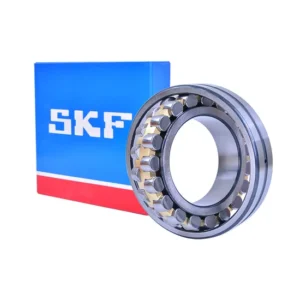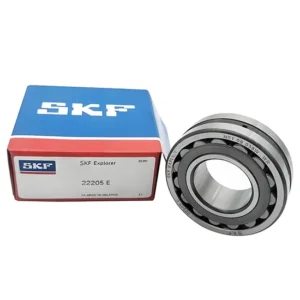
Description
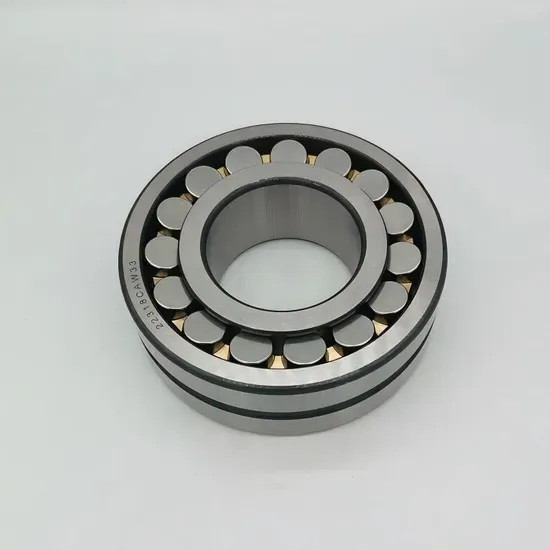
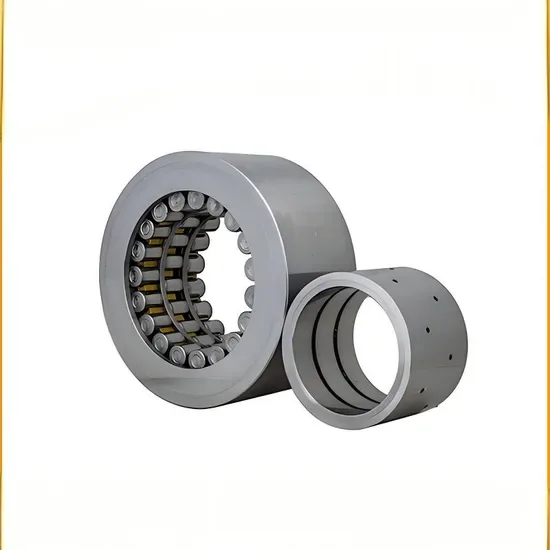
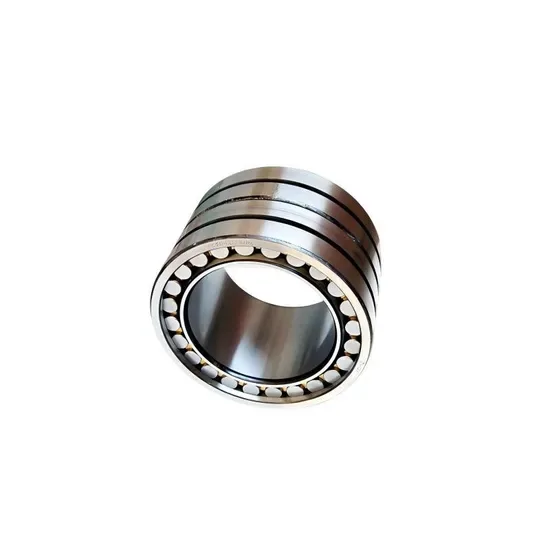
Verified Channel Sourcing — Every 22218SWREAg2E4 spherical roller bearing for continuous caster ships with traceable batch documentation and country-of-origin certificates to clear customs without delay.
Technical Specifications
| Parameter | Value |
|---|---|
| Designation | 22218SWREAg2E4 (Generic) |
| Bearing Type | Spherical Roller Bearing |
| Bore Diameter (d) | 90 mm |
| Outside Diameter (D) | 160 mm |
| Width (B) | 40 mm |
| Cage Material | Brass (EA series standard) |
| Seal or Shield Type | Sealed |
| Bore Type | Cylindrical |
| Number of Rows | Two |
| Feature | High Temperature, Heavy-Load |
| Certification | ISO9001:2008, ISO9001:2000, RoHS, CE |
The suffixes SWR, EA, and g2E4 require confirmation against the manufacturer’s current catalog to verify exact clearance class, seal configuration, and thermal rating before final procurement.
Application Suitability
| Industry | Typical Applications |
|---|---|
| Steel and Metallurgy | Continuous caster guide rolls, roller table drive shafts, strand alignment idlers |
| Mining and Crushing | Vibrating screen exciter shafts, jaw crusher eccentric assemblies |
| Pulp and Paper | Paper machine dryer section felt rolls, press section guide rollers |
When the Wrong Suffix Locks a Continuous Caster Solid
The 22218SWREAg2E4 spherical roller bearing for continuous caster must carry the exact suffix combination that matches thermal expansion, load, and contamination conditions on the caster floor — swapping in a standard CN-clearance open bearing looks correct on paper but fails within weeks.
I watched a steel mill buyer grab a 22218 off a trade show table years ago without checking the suffix. Same basic bore and outside diameter, but standard clearance and a stamped steel cage instead of the C4 clearance and solid brass cage the continuous caster actually required. Three weeks later, thermal growth inside the housing squeezed the rollers until they stopped turning. The caster segment had to be pulled offline mid-cast. That kind of unplanned downtime on a continuous casting line does not just cost the bearing price — it costs the entire strand’s production output for the shift. [NEED_CITE: thermal expansion effects on bearing internal clearance in high-temperature steel mill applications]
Matching the Bearing to Caster Segment Loads
Continuous caster guide rolls and roller tables subject bearings to heavy radial loads combined with moderate axial displacement from strand misalignment. The 22218SWREAg2E4 spherical roller bearing for continuous caster addresses this through its two-row spherical roller geometry, which self-aligns under housing deflection while distributing radial forces across a large contact area. The sealed configuration keeps scale dust, secondary cooling water, and grease breakdown products out of the roller path — contamination that would otherwise pit raceways within a single campaign cycle.
Heat, Scale, and Coolant: What the Caster Floor Demands
Ambient temperatures near the secondary cooling zone routinely exceed what standard bearing grease can survive, while thermal gradients across the housing create uneven expansion that consumes internal clearance. Sealed bearings in this environment face a trade-off: contact seals block particulate ingress but generate friction heat at elevated speeds, while non-contact labyrinth seals run cooler but admit fine scale dust. The correct seal selection depends on roll position, rotational speed, and whether the segment uses oil-mist or grease lubrication. [NEED_CITE: bearing seal selection criteria for contaminated high-temperature environments]
Installation practices matter equally. Induction heating of the inner ring for cylindrical bore mounting must be controlled to avoid exceeding the tempering temperature of the bearing steel, which would permanently reduce ring hardness and accelerate spalling under cyclic loading.
Reading the Suffix Stack
The EA designation in NSK’s spherical roller bearing nomenclature signals an optimized internal geometry with high-capacity symmetrical rollers and a machined brass cage — a configuration built to handle the combined shock loads and misalignment common in metallurgical equipment. Brass cages outperform stamped steel cages in vibrating and high-temperature applications because they resist fatigue cracking under cyclic acceleration and maintain dimensional stability when grease viscosity drops at elevated temperatures. The E4 suffix indicates oil holes and an oil groove in the outer ring, enabling direct lubricant feed from the housing — critical for continuous caster rolls where relubrication must happen during operation without disassembly. Sealed variants add protection against coolant ingress, though the specific seal type and clearance class tied to the SWR and g2E4 suffixes must be confirmed before committing to a purchase order.
The Cost of Overlooking a Single Suffix Character
Correct specification paired with verified provenance delivers predictable L10 life and planned changeout during scheduled maintenance windows. A bearing that matches on base designation but carries the wrong clearance class or cage material introduces hidden costs: premature cage fracture that sends metal fragments through downstream gearbox stages, thermal binding that seizes the roll and damages the housing bore beyond reconditioning, or seal failure that allows coolant to emulsify the grease and collapse the lubricant film. ISO 15243 classifies these outcomes across distinct failure modes — each traceable to specification mismatch rather than random defect. [NEED_CITE: rolling bearing failure mode classification per ISO 15243]
How We Reduce Specification Risk at Procurement
Every sourcing conversation begins with your application parameters — roll position, operating temperature, load spectrum, and lubrication method — not just the base number. We cross-reference across SKF, NSK, FAG, TIMKEN, NTN, and KOYO catalogs simultaneously, matching clearance, cage material, and seal type together rather than substituting on bore and outside diameter alone. Bearings ship with batch-level traceability and country-of-origin documentation so your import team has the paperwork needed before the vessel sails. When a suffix string is unfamiliar, we pull the manufacturer catalog entry and confirm each element before quoting, eliminating the guesswork that leads to field failures.
Documentation & Authenticity
- Supplier Certificate of Conformity listing batch and lot numbers tied to your 22218SWREAg2E4 purchase order
- Country-of-origin certificate formatted for customs authorities in Middle East, African, and Latin American import jurisdictions
- Material certificate confirming bearing steel grade and heat treatment compliance
- Dimensional inspection report covering bore diameter, outside diameter, width, and radial internal clearance
- HS code classification guidance for spherical roller bearings to accelerate import clearance
Storage, Handling & Mounting
- Keep the 22218SWREAg2E4 in its original sealed packaging until the moment of mounting to preserve factory-applied rust preventative, especially in humid port-city warehouses
- For the sealed variant, do not wash or degrease before installation — solvent exposure damages the seal lip material and compromises contamination exclusion on the caster floor
- Induction heat the inner ring for cylindrical bore mounting, monitoring temperature to remain below the tempering threshold of the bearing steel
- Align oil holes in the outer ring with housing lubrication ports before pressing the bearing into position, ensuring the E4 groove feeds directly from the central lubrication system
- Verify residual internal clearance after mounting using feeler gauges at the top roller position, confirming thermal expansion allowance was not consumed during installation
Request a Technical Review Before You Order
Share your continuous caster segment drawing or OEM equipment number so we can verify the full suffix string against your actual operating conditions. We will return a cross-reference comparison showing equivalent designations across all six major brands, with clearance, cage, and seal parameters aligned — not just the base number. Ask for the documentation package upfront so your procurement and import teams can review compliance before committing to a production batch.
Frequently Asked Questions
Q: What do the SWR, EA, and g2E4 suffixes mean on this bearing?
A: The EA suffix generally indicates optimized internal geometry with a brass cage in NSK nomenclature, while E4 refers to oil holes and groove on the outer ring. The SWR and g2E4 portions require manufacturer catalog confirmation to pin down exact clearance class and seal specification — we verify these before issuing a final quotation.
Q: Can I substitute a different brand for the 22218SWREAg2E4 spherical roller bearing for continuous caster?
A: Cross-brand substitution is possible, but the replacement must match on clearance class, cage material, seal type, and outer ring lubrication features — not only on the 90 × 160 × 40 mm envelope dimensions. We provide a full interchange comparison across SKF, NSK, FAG, TIMKEN, NTN, and KOYO to confirm alignment.
Q: Should I choose sealed or open design for caster guide roll positions?
A: Sealed bearings protect against scale and coolant ingress but add friction at the seal lip. Open bearings rely on housing seals for contamination exclusion and allow higher-speed operation. The decision depends on roll rotational speed, housing seal condition, and relubrication interval on your specific caster line.
Q: What lead time should I expect for industrial bearing orders?
A: Lead times vary by brand, suffix complexity, and order quantity. Common designations with standard suffixes typically ship faster, while specialized suffix combinations may require multi-week production scheduling. Confirm current availability when you submit your inquiry.
Verify Your 22218 Specification Before It Ships
Send your OEM equipment number or caster segment parameters to our engineering team for a complete suffix verification and cross-brand interchange review.
Contact us through your regional distributor channel or reach our sourcing team directly to initiate the technical review.