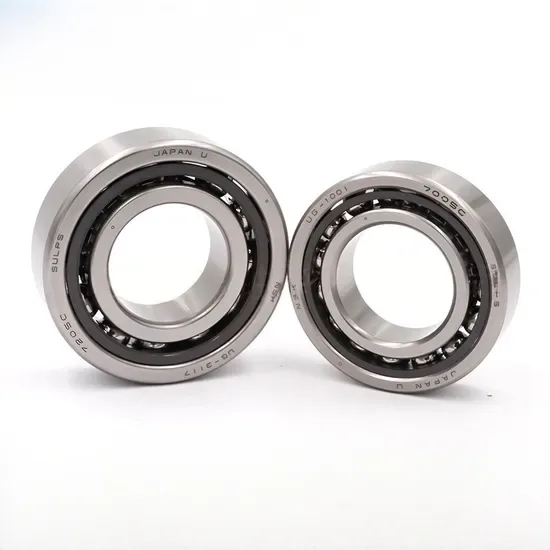
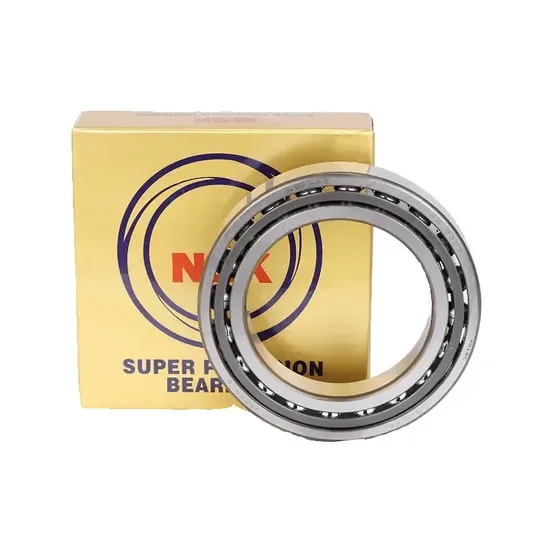
Description
Authorized Sourcing Chain — Every NSK 7200ATYNSUMP5 we ship traces back through verified distributor channels, backed by batch-level documentation and official QR authentication pathways.
Technical Specifications
| Parameter | Value |
|---|---|
| Designation | NSK 7200ATYNSUMP5 |
| Bearing Type | Angular Contact Ball Bearing |
| Bore Diameter (d) | 10 mm |
| Outside Diameter (D) | 30 mm |
| Width (B) | 9 mm |
| Number of Rows | Single |
| Cage Material | Polyamide Resin (TYN) |
| Precision Class | P5 |
| Material | Bearing Steel |
| Separated | Yes |
| Load Direction | Combined Radial and Axial Load |
| Contact Angle | 30° |
| Arrangement | Single Universal Matching |
| Bore Type | Cylindrical |
| Origin | Subject to batch documentation |
Note: Suffixes A, TYN, SU, and MP5 in the NSK 7200ATYNSUMP5 designation follow NSK-specific coding conventions; cross-verification against the current NSK catalog is recommended for application-critical installations.
Application Suitability
| Industry | Typical Applications |
|---|---|
| Industrial Machinery | CNC spindle nose bearing, precision indexing head |
| Electric Motors | High-speed motor shaft support, servo motor bearing |
| General MRO | Precision grinder spindle replacement, robotics joint actuator |
What Happens When P5 Precision Meets the Wrong Cage on a Spindle
Mismatched cage material on a precision spindle bearing often fails before the first shift ends.
I have sorted through batches where suppliers substituted a stamped steel cage where a polyamide design was specified, and the result was chatter marks on every workpiece the spindle touched that week. When procurement teams cross-reference only the base number and skip the suffix, a 30° contact angle paired with an incorrect cage leads to thermal buildup at speed — and what began as a routine replacement becomes an unplanned teardown. The NSK 7200ATYNSUMP5 exists precisely for applications where that tolerance stack-up is not acceptable. [NEED_CITE: bearing failure modes from cage-material mismatch in high-speed spindles per ISO 15243]
Why This Bearing Fits High-Speed Precision Spindles
The single-row angular contact geometry with a 30° contact angle delivers the axial rigidity that CNC spindles demand during interrupted cuts, while the polyamide resin cage reduces centrifugal loading at elevated rpm. In spindle arrays where two bearings mount back-to-back, the universal matching (SU) arrangement allows the assembler to set preload during installation rather than relying on fixed factory pairing. When we supply this NSK 7200ATYNSUMP5 to machine tool rebuilders, we pair the shipment with the dimensional inspection data so the installer can confirm running accuracy before pressing the bearing into the spindle housing.
Thermal Expansion and Cage Behavior at Spindle Speeds
Spindle environments combine radial cutting forces with sustained axial thrust, and the temperature gradient between inner and outer rings can reach levels that close standard clearance in minutes. A polyamide cage handles this differently than machined brass — it runs cooler due to lower mass and sliding friction, but it also demands clean oil-air or grease lubrication without contamination that degrades the resin. Installation in a sealed spindle housing requires attention to lubricant fill quantity, because over-greasing a polyamide-caged bearing at high speed accelerates cage pocket wear faster than almost any other misstep. [NEED_CITE: polyamide cage temperature limits and lubrication requirements in angular contact bearings]
Reading the Suffix Chain on the 7200ATYNSUMP5
The A in this designation signals a 30° contact angle, which positions this bearing between the 15° high-speed series and the 40° high-axial-load series — a middle ground suited to spindles that see moderate thrust during tool changes. The TYN cage code points to a polyamide resin retainer, chosen here to keep cage mass low so that the bearing can sustain the rpm envelope of precision grinding and milling spindles without excessive centrifugal stress on the cage pockets. SU indicates single universal matching, meaning the bearing is ground so that its face deviations allow predictable preload when clamped against a mating bearing in DB or DF arrangements. The P5 precision class, referenced against ISO 492 tolerance class 5, provides tighter bore and OD tolerances than a standard P0 bearing — critical when the spindle housing bore is machined to a close interference fit. Together, these suffixes define a bearing that is not interchangeable with a generic 7200 of unspecified construction.
The Downtime Cost of Skipping Suffix Verification
A spindle bearing that looks correct on paper but carries the wrong internal clearance or cage material can fail within days — sometimes hours — of commissioning. The financial impact extends well beyond the bearing itself: scrapped workpieces, missed delivery windows, and emergency air-freight replacements compound quickly. ISO 281 life calculations assume correct internal geometry and lubrication; when either deviates from specification, the L10 framework no longer predicts reality. This is why we treat every cross-reference request as a full suffix audit rather than a base-number swap. [NEED_CITE: relationship between internal geometry deviation and actual bearing service life per ISO 281]
How We Reduce Risk on Every NSK 7200ATYNSUMP5 Shipment
Our sourcing model routes every order through authorized distributor channels, which means the Certificate of Conformity travels with the bearing from the manufacturer’s production facilities to your receiving dock. We maintain a cross-reference database that aligns cage material, contact angle, and precision class — not just the base designation — so when a competitor part is proposed as a substitute, all three parameters are checked before we confirm interchangeability. For buyers managing import documentation, we supply country-of-origin paperwork and HS code details alongside the shipment. When a trial batch is needed for a new spindle rebuild, we can arrange a third-party dimensional check so you see runout data before committing to a production order.
Documentation & Authenticity
- Supplier Certificate of Conformity with lot-level traceability linked to each NSK 7200ATYNSUMP5 shipment
- QR code verification pathway through NSK official apps, enabling receiving inspectors to confirm authenticity on the warehouse floor
- Country-of-origin documentation prepared for customs clearance and buyer-side due diligence
- Third-party dimensional inspection covering bore, OD, and running accuracy available for trial batches before bulk commitment
- Material certificates referencing bearing steel grade supplied with each documentation package
Storage, Handling & Mounting
- Keep the NSK 7200ATYNSUMP5 in its original sealed packaging until the moment of spindle assembly; the polyamide cage absorbs moisture if exposed to high humidity, which affects dimensional stability during press-fit installation
- For SU universal-matching bearings, maintain the factory pairing marks and do not separate matched sets until the spindle housing is prepped and ready — re-pairing introduces unpredictable preload variation
- Induction heating of the inner ring for interference fits on the 10 mm bore should stay within the temperature range suitable for polyamide cage integrity; overheating damages the resin retainer before the bearing ever sees load
- Store sealed units in a temperature-stable environment away from direct UV exposure, which degrades polyamide over prolonged periods
- After mounting, confirm axial preload with a calibrated method rather than relying on clamping torque alone, because universal-matched bearings depend on controlled face contact for correct stiffness
Request a Quotation or Technical Review
Share your spindle speed range, load profile, and operating temperature so we can confirm whether the P5 precision class and polyamide cage combination in the NSK 7200ATYNSUMP5 matches your application envelope. If you are replacing an existing bearing by OEM equipment number, send us the machine tag and we will run a full cross-reference check including clearance, cage, and contact angle alignment. Documentation packages with origin and traceability files are available with every quotation upon request.
Frequently Asked Questions
Q: How can I verify the authenticity of the NSK 7200ATYNSUMP5 I received?
A: Each bearing carries a batch and lot traceability code that links back to the Certificate of Conformity. You can scan the QR code using NSK’s official verification app to confirm the product’s origin and production batch. We provide the QR verification pathway documentation with every shipment.
Q: What does each suffix in 7200ATYNSUMP5 mean?
A: The A indicates a 30° contact angle. TYN specifies a polyamide resin cage. SU denotes single universal matching for flexible pairing arrangements. P5 refers to ISO 492 tolerance class 5 precision. Together these suffixes define the bearing’s internal geometry, cage construction, matching method, and dimensional accuracy.
Q: When substituting across brands, why must clearance, cage material, and precision class all be matched?
A: A base-number-only cross-reference may pair a brass-caged bearing where a polyamide cage was specified, or substitute a standard-clearance bearing into a spindle that requires room for thermal expansion. These mismatches cause thermal binding, cage failure, or premature wear under operating conditions that the original specification was designed to handle.
Q: What is the difference between P5 and P4 precision, and how do I choose for a spindle?
A: P4 provides tighter bore, OD, and running accuracy tolerances than P5 per ISO 492. For high-speed spindles with tight housing fits and demanding surface-finish requirements, P4 may be specified. For general-purpose precision spindles and motor applications, P5 delivers reliable performance at a more accessible cost point.
Q: Are there special lubrication considerations for the polyamide cage in this bearing?
A: Polyamide resin cages are sensitive to certain synthetic lubricants and to contamination by particulate ingress. Oil-air lubrication or high-quality grease with compatible thickener chemistry is recommended. Over-greasing should be avoided at high speeds, as excess lubricant generates heat that accelerates cage pocket wear.
Confirm Your NSK 7200ATYNSUMP5 Requirement
Send us your application parameters or OEM equipment number, and we will respond with a matched quotation, lead time, and the complete documentation package for your procurement records.