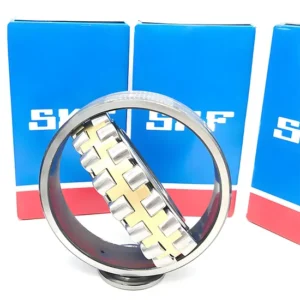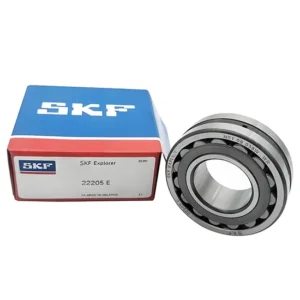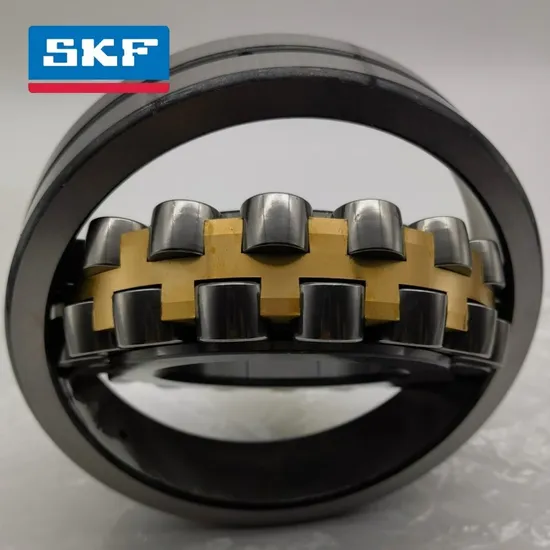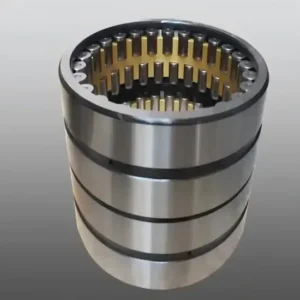
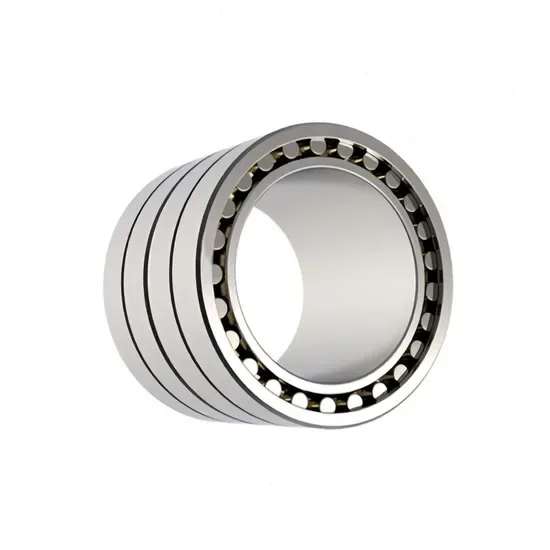
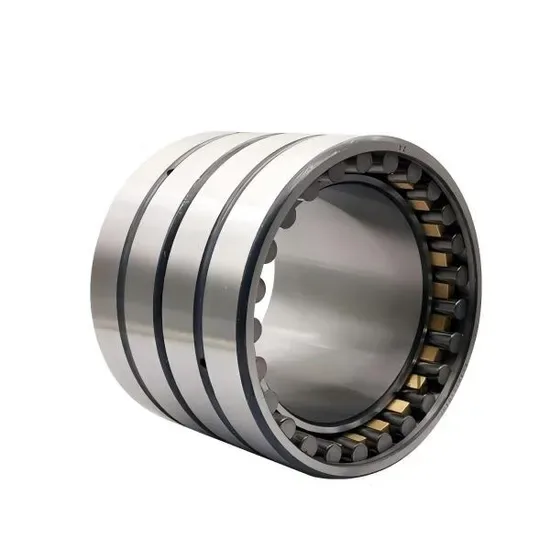
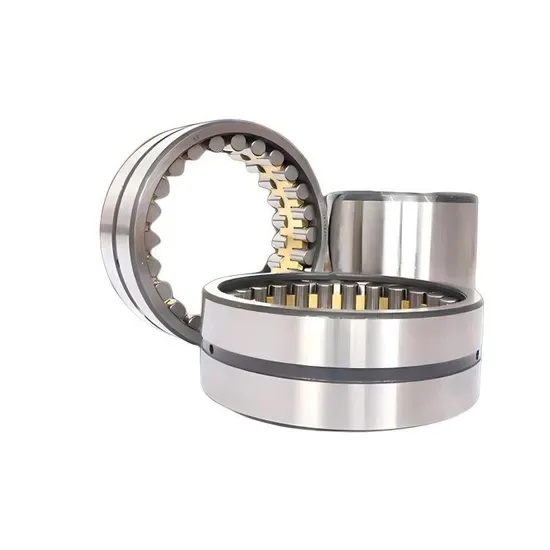
Description
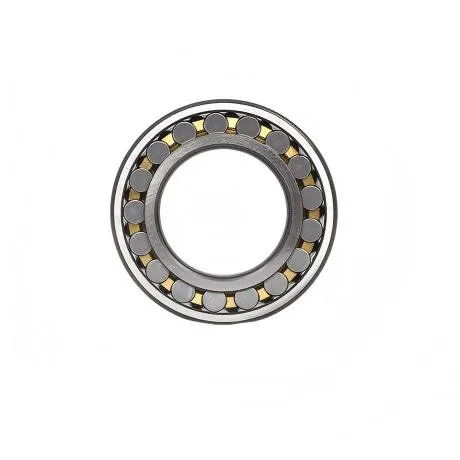
Traceable Spherical Roller Supply — Every 22228SWRCDg2E4 spherical roller bearing we ship carries batch-level documentation back to authorized distributor channels, not gray-market middlemen.
Technical Specifications
| Parameter | Value |
|---|---|
| Designation | SKF 22228SWRCDg2E4 |
| Bearing Type | Spherical Roller Bearing |
| Bore Diameter (d) | 140 mm |
| Outside Diameter (D) | 250 mm |
| Width (B) | 68 mm |
| Number of Rows | Double Row |
| Seal or Shield Type | Sealed Type |
| Material | Bearing Steel |
| Bore Type | Cylindrical |
| Origin | To be confirmed per batch |
Note: Suffixes SW, R, CD, and g2E4 are non-standard designations in conventional SKF spherical roller nomenclature and require confirmation against the manufacturer’s current catalog before final specification lock-in.
Application Suitability
| Industry | Typical Applications |
|---|---|
| Steel & Metallurgy | Continuous caster guide rolls, segment roll bearings |
| Mining & Crushing | Vibrating screen exciter shafts, jaw crusher pitman |
| Heavy Industrial | Rotary kiln support rollers, large conveyor pulleys |
What Happens When a Sealed Caster Bearing Gets the Wrong Internal Clearance
A C3-rated cavity filled with CN-clearance hardware seizes before the first campaign ends.
On a continuous caster, the guide rolls see cyclic thermal shock — molten steel radiation on one side, coolant spray on the other. I once traced a premature cage fracture on a 222-series back to a procurement shortcut: the buyer matched the base number 22228 and ignored everything after it. The replacement ran standard clearance in a thermal gradient that demanded C3 minimum. The inner ring expanded, clearance vanished, and the brass cage cracked within three weeks. Downtime on a caster line costs more per hour than the entire bearing order was worth. [NEED_CITE: thermal expansion effects on internal clearance in spherical roller bearings]
This is exactly the trap the 22228SWRCDg2E4 spherical roller bearing suffix string is designed to prevent — if you decode it correctly and verify it against the application envelope.
Matching Sealed Spherical Rollers to Caster-Scale Contamination
Continuous caster segments operate in an environment where iron scale, coolant emulsion, and grease degradation products conspire to destroy open bearings within a single campaign. The sealed construction of the 22228SWRCDg2E4 spherical roller bearing addresses this directly: contact seals retain factory-charged lubricant and exclude particulate ingress at the roll neck, eliminating the need for external re-lubrication intervals that maintenance crews on a hot strand rarely execute on schedule. When we supply sealed spherical rollers for caster duty, we cross-check the seal material compatibility against the specific coolant chemistry the plant uses — a step most catalog-based ordering workflows skip entirely.
Thermal Gradients, Shock Loads, and What the Suffix Must Cover
The load profile on a caster guide roll is a combination of steady radial weight from the strand and intermittent axial thrust from misalignment and roll deflection. Speed is modest — typically under 30 rpm — but the thermal gradient across the bearing cross-section is severe. The outer ring may sit at ambient while the inner ring approaches operating temperatures that demand extra internal clearance to compensate for differential expansion. Lubrication must survive both heat and water washout. Sealed bearings shift the responsibility for lubricant selection and fill volume to the factory, which is an advantage only if the factory fill matches the actual operating temperature range. [NEED_CITE: sealed spherical roller bearing lubrication life under thermal cycling]
Decoding the Non-Standard Suffix String
The designation 22228SWRCDg2E4 clusters several suffixes that do not map one-to-one onto mainstream SKF spherical roller catalogs. The double-row spherical roller architecture itself is straightforward — self-aligning capability accommodates the shaft deflection and housing bore misalignment common in heavy fabricated steel structures. Bearing steel construction provides the through-hardness needed for the shock loads encountered when a billet tail drops onto a guide roll. The sealed configuration eliminates the open-bearing contamination pathway that accounts for a significant share of premature failures in steel mill environments. [NEED_CITE: ISO 15243 rolling bearing failure mode classification contamination ingress]
The Price of Ignoring What Comes After the Base Number
Procurement systems often strip suffixes during cross-referencing, reducing a fully specified bearing to its dimensional envelope. A 22228 with the wrong cage material — pressed steel substituted for machined brass in a vibrating screen application — will suffer cage pocket wear and roller skewing long before the raceways show fatigue. A sealed unit installed in a housing designed for open bearings with external seals creates a double-seal friction problem that overheats the grease. These are not edge cases. They represent a pattern of field failures traceable to the gap between what the equipment engineer specified and what the purchasing system actually ordered. [NEED_CITE: bearing cage failure modes under vibration per ISO 15243]
How Verification Works Before the Crate Ships
We source through authorized distributor channels, which means every 22228SWRCDg2E4 spherical roller bearing arrives with a traceable batch number linked to the manufacturer’s production records. Our cross-reference database does not stop at dimensional interchange — it aligns clearance class, cage material, seal type, and precision grade across all six brands we cover. When a maintenance engineer sends us an OEM equipment number from a caster segment drawing, we return a verified match that accounts for the thermal and contamination envelope, not just the bore and OD. Origin documentation accompanies every shipment so import compliance is resolved before the goods reach the port.
Documentation & Authenticity
- Supplier Certificate of Conformity tied to the specific batch and lot number of each 22228SWRCDg2E4 unit shipped
- Material certificate confirming bearing steel composition consistent with GCr15 or 100Cr6 specifications
- Dimensional inspection report covering bore, OD, width, and radial internal clearance measured before dispatch
- Country-of-origin documentation prepared for customs classification and import duty assessment
- QR code verification pathway enabling end users to confirm authenticity through brand official applications
Storage, Handling & Mounting
- Retain the sealed bearing in its original moisture-barrier packaging until the moment of installation; premature opening exposes the factory grease fill to humidity that degrades the sealed environment
- Store flat on a shelf in a temperature-stable area away from direct heat sources that could soften the seal elastomer or alter the grease consistency before the bearing reaches the caster segment
- Use induction heating for the inner ring during mounting — never open flame — to avoid localized overheating that damages the seal lip or degrades the internal lubricant charge
- Verify housing bore cleanliness before pressing the sealed outer ring into position; scale or weld spatter trapped between housing and OD creates a point load that distorts the ring and compromises the self-aligning function
- Do not attempt to re-lubricate through external grease fittings after installation; the sealed design relies on the factory fill volume calculated for the application temperature band
Request the Full Specification Package
Share your caster segment drawing number or the operating parameters — roll load, strand speed, ambient and peak temperatures, coolant type — and we will return a verified specification match with confirmed suffix decoding. If you are replacing an existing bearing, send the full designation from the nameplate including every suffix character, and we will cross-reference it against authorized channel availability with lead time and documentation scope.
Frequently Asked Questions
Q: Why does matching the base number 22228 alone lead to field failure?
A: The base number defines only the dimensional envelope. Clearance class determines whether thermal expansion will eliminate internal play and cause seizure. Cage material determines vibration and shock resistance. Seal type determines contamination protection. All three must align with the application, or the bearing fails prematurely regardless of dimensional correctness.
Q: How should the suffixes SWRCDg2E4 be interpreted for this spherical roller bearing?
A: These suffixes do not correspond to standard SKF spherical roller catalog designations and must be verified against the manufacturer’s current documentation. We confirm the exact meaning of each suffix element — including seal type, internal design variant, and any special treatment — before issuing the final quotation.
Q: Sealed versus open spherical roller bearings — which is correct for a steel mill?
A: Sealed bearings eliminate contamination ingress at the seal lips and remove the dependency on manual re-lubrication discipline. Open bearings allow flexible re-lubrication intervals but require effective external housing seals. The choice depends on whether the housing design and maintenance protocol can guarantee contamination exclusion without the integral seal.
Q: What lead times apply to less common suffix configurations like this one?
A: Non-standard suffix combinations typically require sourcing from specific authorized channel inventories or factory production runs. We confirm availability and expected dispatch window at the quotation stage based on current distributor stock positions.
Sourcing Starts with the Full Drawing Number
Send us the complete bearing designation, OEM equipment reference, or application parameters — we return a verified match with full documentation within one business day.