Description
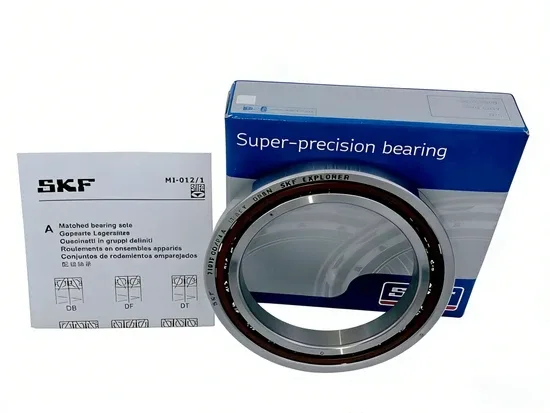
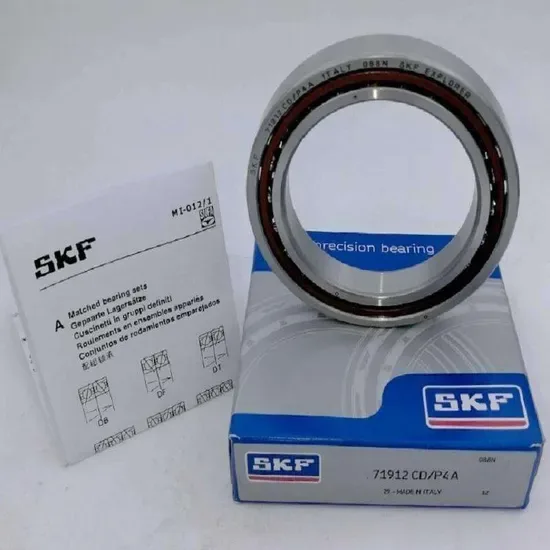
Authorized Supply Chain — Traceable distributor documentation accompanies every SKF 7008 CEGA/HCP4AH1 angular contact ball bearing we ship, with batch-level provenance for your compliance records.
Technical Specifications
| Parameter | Value |
|---|---|
| Designation | SKF 7008 CEGA/HCP4AH1 |
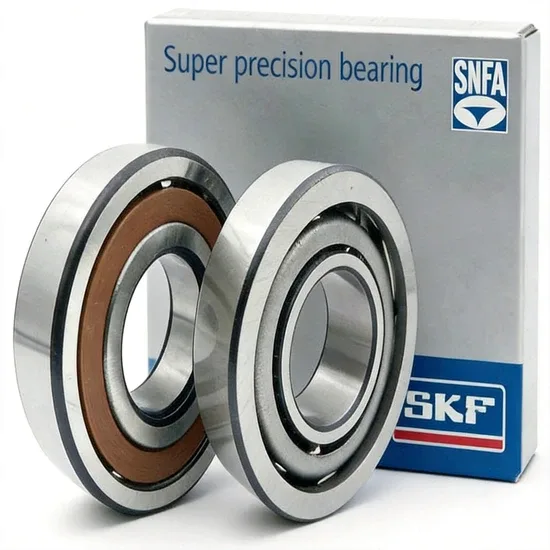
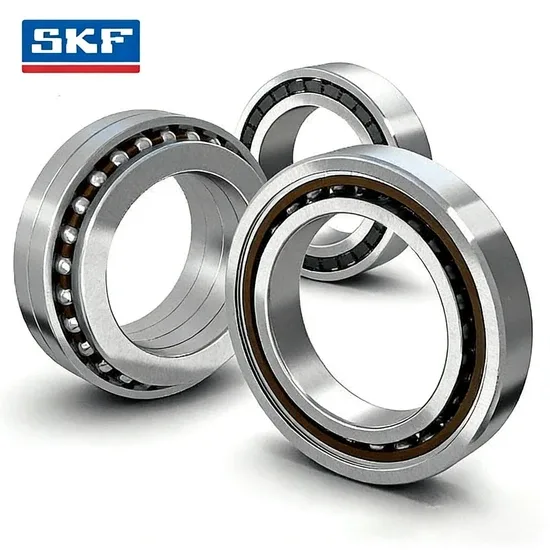
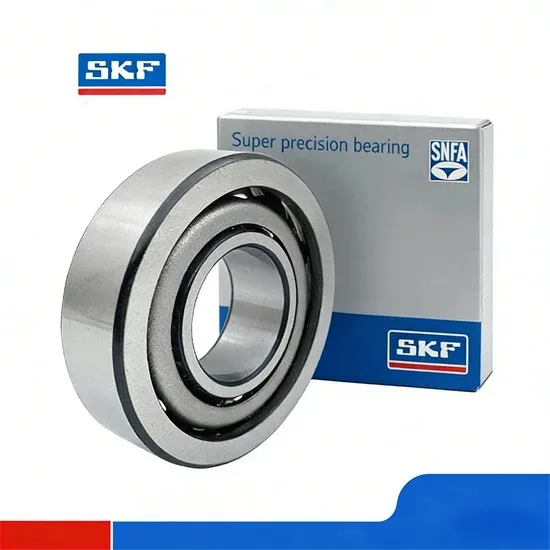
| Bearing Type | Angular Contact Ball Bearing |
| Bore Diameter (d) | 40 mm |
| Outside Diameter (D) | 68 mm |
| Number of Rows | Single Row |
| Contact Angle | 15° (CE suffix) |
| Arrangement | Universal Matching, Light Preload (GA suffix) |
| Precision Class | P4 |
| Cage Material | Polyamide or Steel (CE optimized design) |
| Bore Type | Cylindrical |
| Weight | 0.100 kg |
| Origin | China |
| HS Code | 8482103000 |
Suffixes H, CP, 4A, and H1 require confirmation against the manufacturer catalog for complete interpretation — please request our technical review before finalizing your order.
Application Suitability
| Industry | Typical Applications |
|---|---|
| Machine Tool Manufacturing | CNC spindle nose bearing / grinding wheel head |
| Precision Equipment | Optical positioning stages / coordinate measuring machines |
| Robotics | High-speed joint actuators / harmonic drive assemblies |
What Happens When a Spindle Bearing Suffix Gets Overlooked
A single missed suffix letter can shift thermal equilibrium enough to scrap an entire batch of machined parts.
I recall a Shenzhen workshop installing replacement spindle bearings that matched the base number perfectly — but the contact angle and preload class were wrong. Within hours of operation, thermal drift pushed tolerances beyond acceptable limits, and the operator scrapped dozens of precision components before tracing the root cause. This pattern repeats more often than buyers realize: procurement teams match the basic designation while overlooking clearance, preload pairing, or precision suffixes that define how the bearing behaves under real spindle loads [NEED_CITE: cross-reference errors in angular contact bearing procurement]. Counterfeit angular contact bearings with soft inner rings and cloned QR codes further compound the risk, passing casual visual inspection yet failing catastrophically at speed.
Matching This Bearing to Precision Spindle Duty Cycles
The SKF 7008 CEGA/HCP4AH1 angular contact ball bearing addresses high-speed radial-dominant spindle loads where a 15° contact angle produces less frictional heat than higher-angle alternatives. Universal matching with light preload allows flexible back-to-back or face-to-face pairing, which machine tool builders rely on for adjustable rigidity across varying cutting forces. We typically ask buyers for the spindle speed envelope, expected axial thrust during tool changes, and operating temperature range before confirming suitability — the same verification workflow we applied when a Latin American distributor needed to substitute a delayed OEM bearing without compromising their customer’s spindle warranty.
Spindle Operating Challenges This Configuration Must Survive
Precision spindles impose combined loads: predominantly radial forces from belt or direct-drive motors, punctuated by axial thrust during tool engagement and tool-change cycles. Speeds commonly reach the upper boundary for grease lubrication, making cage material and contact angle selection critical for managing heat generation. Thermal expansion inside a sealed spindle housing directly affects residual clearance — a bearing installed with standard clearance in a high-temperature spindle may experience thermal binding, while excessive clearance invites vibration and poor surface finish. Oil-air or oil-jet lubrication systems demand open bearings or specific seal configurations to avoid drag torque penalties. Mounting precision is equally demanding: interference fits on the inner ring must account for dimensional change during press-fitting, and paired arrangements require careful alignment to preserve the factory preload setting [NEED_CITE: angular contact bearing mounting preload retention].
Decoding the Engineering Behind the Suffix String
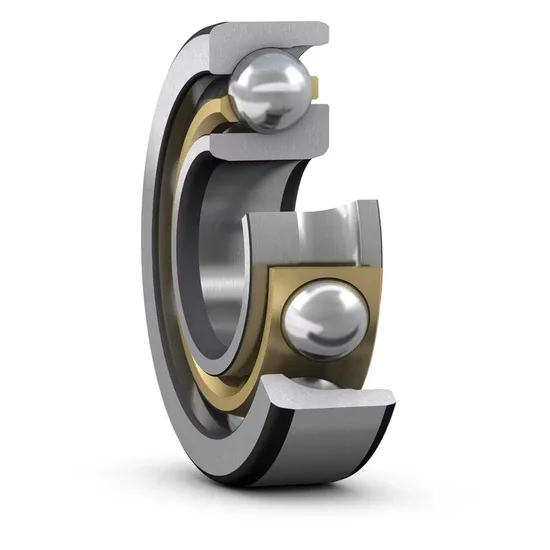
The CE designation confirms a 15° contact angle paired with an optimized internal geometry — raceway curvature and ball diameter tuned for reduced friction at high rotational speeds. This angle delivers lower axial stiffness than a 25° or 40° variant, but the trade-off favors spindles where radial precision matters more than heavy axial thrust capacity. The GA suffix indicates universal matching with light preload: when two bearings are paired back-to-back or face-to-face, this preload class provides enough internal force to eliminate play without generating excessive heat. P4 precision class meets ISO tolerance requirements for running accuracy and dimensional stability expected in machine tool spindles, ensuring bore and outside diameter deviations stay within tight bands. The optimized cage design — polyamide or steel depending on the specific variant — supports the speed capability demanded by modern high-frequency spindles while maintaining ball guidance stability under centrifugal force.
The Hidden Expense of Specifying the Wrong Angular Contact Bearing
A precision spindle that receives a bearing with incorrect preload will reveal the problem gradually: rising vibration signatures, deteriorating surface finish on machined parts, and eventually thermal seizure if left unaddressed. Wrong clearance class triggers a similar cascade — standard CN installed where thermal expansion demands C3 results in raceway contact stress that accelerates fatigue per ISO 281 life calculations. Counterfeit bearings with inadequate case depth on inner rings fail through subsurface spalling, often classified under ISO 15243 surface fatigue categories, but the root cause traces back to material fraud rather than application mismatch [NEED_CITE: counterfeit bearing failure modes in precision spindles]. Each unplanned spindle teardown costs not only the replacement bearing but also lost production hours, scrapped workpieces, and potential warranty claims from the machine builder’s end customer.
How We Reduce Procurement Risk for Precision Bearings
Every SKF 7008 CEGA/HCP4AH1 angular contact ball bearing we source passes through authorized distributor channels, meaning the chain of custody from manufacturer to your receiving dock carries traceable documentation. Our cross-reference database checks more than base number equivalence — we verify contact angle, preload class, cage material, and precision suffix alignment before recommending any substitution. Buyers concerned about counterfeit exposure receive QR code verification guidance through the manufacturer’s official app, along with documentation that supports import compliance in your destination country. When an OEM equipment number is provided instead of a bearing designation, we reverse-engineer the correct specification including all critical suffixes, reducing the selection errors that cause field failures. Our engineering team reviews application parameters — load spectrum, speed range, temperature envelope — before confirming technical suitability, which is how we caught a preload mismatch for a European robotics integrator before their order shipped.
Documentation & Authenticity
- Supplier Certificate of Conformity referencing the specific batch number of your SKF 7008 CEGA/HCP4AH1 shipment
- QR code verification pathway documentation for authenticity confirmation through the manufacturer’s official mobile application
- Country-of-origin certificate prepared for your import customs requirements and duty classification
- Dimensional inspection report confirming bore, outside diameter, and width tolerances consistent with P4 precision class
- Material certificate traceable to the bearing steel heat lot used in production
Storage, Handling & Mounting
- Retain the original sealed packaging until immediately before mounting; premature exposure risks contamination of the precision-ground raceways on this P4 class bearing
- Store in climate-controlled conditions below 60% relative humidity to protect the polyamide or steel cage from moisture-related degradation
- When preparing matched pairs, verify the factory pairing marks before separating the bearings — losing these references compromises the GA light preload arrangement
- Use clean, lint-free gloves during handling to prevent fingerprint acids from etching the bearing steel surfaces
- Employ induction heating for inner ring mounting rather than mechanical force, controlling temperature to preserve the P4 dimensional accuracy
- Confirm shaft and housing tolerances against the manufacturer’s recommendations for 40 mm bore and 68 mm OD interference fits before assembly
Request a Technical Review Before Ordering
Share your spindle speed range, expected axial loads during tool changes, and operating temperature so we can confirm whether the CE 15° contact angle and GA light preload suit your specific duty cycle. If you have an OEM equipment serial number rather than a bearing designation, provide that and we will cross-reference the complete specification including all suffix requirements. Ask for the documentation package preview — COC, origin certificate, and inspection reports — to verify everything your import process demands is in place before we ship.
Frequently Asked Questions
Q: How can I verify the authenticity of an SKF angular contact ball bearing before installation?
A: Use the manufacturer’s official mobile app to scan the QR code on the packaging and bearing label, which returns production batch data from the manufacturer’s systems. We also supply Certificates of Conformity with batch traceability and can arrange third-party inspection for additional assurance.
Q: What do the CE and GA suffixes mean for angular contact ball bearing performance?
A: CE indicates a 15° contact angle with optimized internal geometry for reduced friction at high speeds. GA specifies universal matching with light preload, allowing flexible back-to-back or face-to-face pairing arrangements while maintaining low heat generation suitable for precision spindles.
Q: Why must clearance, cage material, and precision all be matched together during cross-referencing?
A: Matching only the base number ignores how the bearing behaves under load and speed. A bearing with correct bore and OD but wrong contact angle will generate different thrust capacity and friction characteristics, while mismatched precision class affects running accuracy — all contributing to premature failure even if dimensions fit physically.
Q: What is the difference between ISO P4 and ABEC 7 for spindle applications?
A: Both represent high precision classes with tight tolerances on bore, outside diameter, and running accuracy. ISO P4 is the designation system used in SKF catalogs and most international standards, while ABEC 7 is the North American equivalent — the dimensional requirements are comparable though not identical in every measurement category.
Q: Can I substitute a different preload class if GA is unavailable?
A: Substituting GB (medium preload) or GC (heavy preload) changes the internal force distribution and heat generation characteristics significantly. We recommend against preload class substitution without engineering review of your spindle’s speed, load, and thermal conditions to confirm the alternative will not cause binding or reduced service life.
Confirm Your Spindle Bearing Specification
Send us your application parameters or OEM equipment number so we can verify the complete suffix string, cross-reference availability, and prepare your documentation package.