

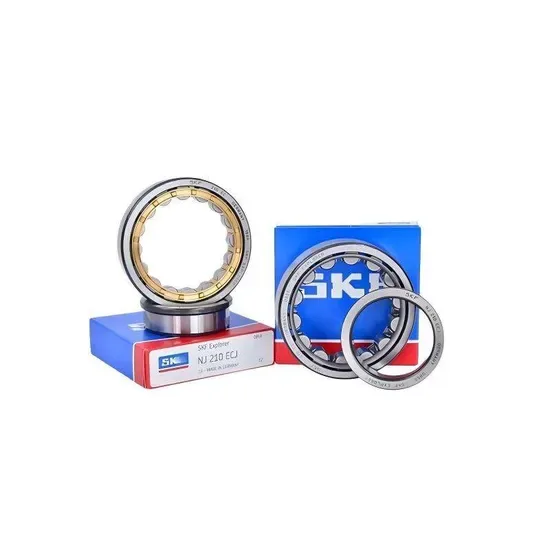
Description
Authorized Channel Sourcing — every NNU 49/670 BK/SPW33X we ship traces back to manufacturer-approved distributor networks with batch-level documentation.
Technical Specifications
| Parameter | Value |
|---|---|
| Designation | SKF NNU 49/670 BK/SPW33X |
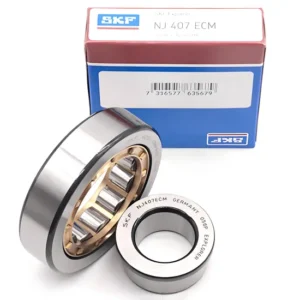
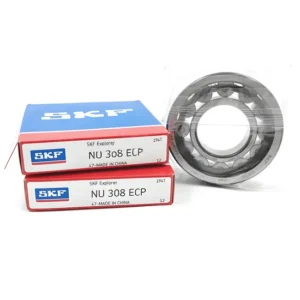
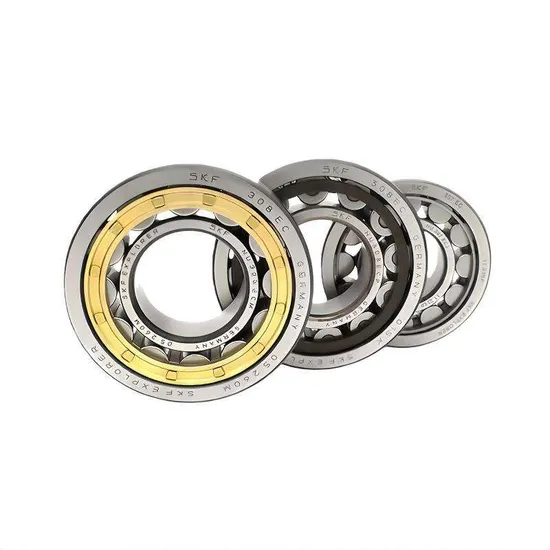
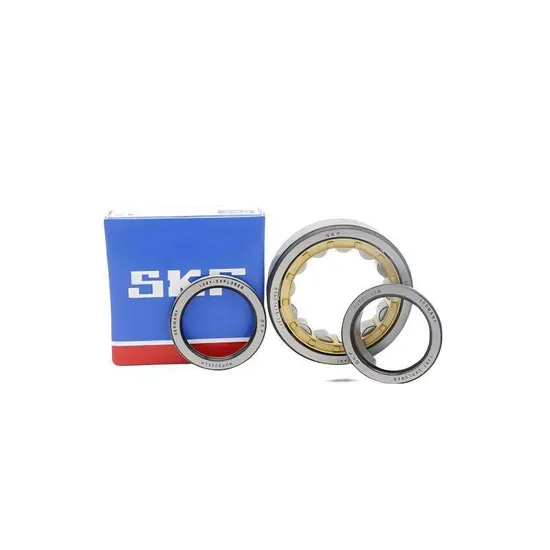
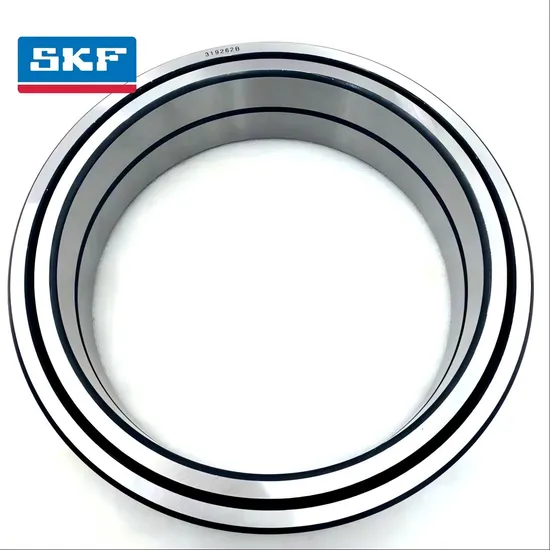
| Bearing Type | Double Row Cylindrical Roller Bearing |
| Bore Diameter (d) | 670 mm |
| Outside Diameter (D) | 900 mm |
| Width (B) | 230 mm |
| Number of Rows | Double Row |
| Seal or Shield Type | Open |
| Precision Class | SP |
| Bore Type | Cylindrical |
| Origin | China |
Note: Suffixes BK, SP, and X are non-standard in the public SKF suffix reference table; their exact engineering definitions should be confirmed against the manufacturer’s current catalog before final specification lock-in.
Application Suitability
| Industry | Typical Applications |
|---|---|
| Oil & Gas Drilling | Mud pump power end crankshaft and pinion shaft support |
| Mining and Crushing | Gyratory crusher main shaft radial support |
| Steel and Metallurgy | Rolling mill work roll and backup roll neck journals |
| Heavy Industrial Pumps | Large-bore slurry pump shaft radial positioning |
What Happens When a 670 mm Bore Bearing Fails Underground
A seized mud pump in an active drilling operation costs far more than the bearing itself.
When procurement teams source large-bore cylindrical roller bearings based on the base designation alone, they often overlook clearance class, cage material, and precision suffix requirements. In continuous drilling operations, thermal expansion from friction heat can close internal clearance entirely if the wrong class was installed. The cage cracks, rollers skew against the raceway, and the entire power end locks up — sometimes taking the pump offline for days while replacement parts move through international logistics [NEED_CITE: bearing failure cost escalation in continuous drilling operations]. Counterfeit large-size bearings with soft inner rings and cloned packaging are increasingly entering the supply chain through unverified intermediaries, and visual inspection alone cannot reveal material or heat-treatment fraud until the bearing is already under load.
How This Bearing Handles the Mud Pump Power End
The NNU 49/670 BK/SPW33X double row cylindrical roller bearing is engineered for the heavy radial loads and moderate speeds typical of mud pump crankshaft assemblies. The double row configuration distributes radial forces across two roller complements, reducing contact stress on each raceway compared to single-row alternatives. The W33 lubrication feature —*outer ring — allows field re-lubrication without dismounting the bearing from the shaft, which matters when maintenance windows on a drilling rig are measured in hours rather than days. We have cross-referenced this designation against application parameters from mud pump OEMs to confirm that the load capacity and dimensional envelope align with typical power end requirements, not just the base number.
Drilling Rig Conditions That Push Bearings Beyond Catalog Ratings
Mud pump power ends operate under cyclic radial loading with frequent direction reversals as the crankshaft rotates through each stroke. Shaft speeds are moderate but torque transmission creates significant contact pressure at the roller-raceway interface. Ambient temperatures on a desert drilling site can exceed what the pump housing dissipates, meaning internal bearing temperatures climb further from friction heat [NEED_CITE: thermal expansion effects on internal clearance in heavy radial bearings]. Contamination from drilling fluid aerosols and airborne particulates threatens any open bearing unless external sealing is properly designed at the housing level. The 670 mm bore demands careful mounting procedures — induction heating with controlled temperature ramp rates is essential to avoid thermal shock that could initiate micro-cracking in the inner ring.
Decoding the Specification Package
The double row NNU design places flanges on the outer ring while leaving the inner ring without integral flanges, allowing the inner ring and roller-cage assembly to be mounted independently. This separable construction simplifies installation on large shafts where press-fitting a fully assembled bearing would be impractical. The W33 suffix confirms an annular lubrication groove machined into the outer ring OD with three radial holes feeding lubricant directly to the roller paths — a practical necessity for bearings in this size range where grease distribution across a 900 mm circumference cannot rely on splash or capillary action alone. The open construction means no integral seals or shields; contamination exclusion is the responsibility of the housing seal design, which must be specified based on the actual particulate environment. SP-class precision, as noted in available supplier documentation, targets tighter running accuracy than standard production grades, supporting applications where shaft deflection and vibration must be minimized under heavy radial loads [NEED_CITE: cylindrical roller bearing precision classes and running accuracy requirements].
The Hidden Expense of a Shortcut in Procurement
A bearing that passes casual inspection but carries undisclosed material defects or incorrect internal clearance does not fail gracefully. It fails catastrophically — typically when the drilling operation is at maximum depth and pulling out of the hole would cost the operator significant rig time. ISO 281 provides the framework for calculating basic rating life, but that calculation assumes genuine material quality and correct internal geometry; neither applies to counterfeit product [NEED_CITE: ISO 281 rating life assumptions for rolling bearings]. ISO 15243 classifies failure modes that trace back to material fatigue, but counterfeit inner rings with inadequate case depth fail through spalling and fracture long before calculated fatigue life is reached. The downstream cost includes not just the replacement bearing and emergency freight, but rig downtime, missed drilling targets, and potential well control complications.
How Our Sourcing Process Reduces Procurement Risk
We source the NNU 49/670 BK/SPW33X through authorized distributor channels rather than open-market brokers, which means every shipment carries batch-level traceability back to the manufacturer’s production facilities. Our cross-reference database matches not only the base designation but also clearance class, cage material, and precision suffix — so if your OEM drawing calls for specific internal geometry, we verify alignment before quoting. For buyers managing import compliance, we provide country-of-origin documentation and HS code guidance specific to the destination market. When authenticity questions arise, we guide verification through the brand’s official app and QR code pathway rather than relying on visual markers that counterfeiters have learned to replicate. Every bearing ships with the documentation package your quality team requires before it reaches the tool crib.
Documentation & Authenticity
- Supplier Certificate of Conformity linking this specific NNU 49/670 BK/SPW33X to its production batch and inspection lot
- Country-of-origin certificate supporting customs clearance and import duty classification for the destination market
- Dimensional inspection report confirming bore, OD, and width against specified tolerances before shipment
- QR code verification guidance using the brand’s official mobile application for on-site authenticity confirmation upon receipt
- Material certificate documenting the steel grade and heat-treatment specification of the rings and rollers
Storage, Handling & Mounting
- Keep this 410 kg bearing in its original packaging until mounting day; premature exposure to humid rig-site air risks surface corrosion on the open raceways before the bearing even sees load
- Use induction heating for the 670 mm bore inner ring with a controlled temperature target — overheating compromises the heat-treatment condition and accelerates raceway wear
- Store horizontally on a flat, supported surface; vertical storage of a bearing at this diameter risks cage distortion under the weight of the roller complement
- Fill the W33 annular groove and lubrication holes with the specified grease grade before initial startup; running the bearing dry during commissioning causes surface damage that shortens service life permanently
- Assign external sealing responsibility explicitly in the housing design — this open bearing has no integral contamination defense, and drilling-site aerosols will penetrate any inadequate shaft seal
Start Your Technical Review
Share your mud pump OEM equipment number or application parameters — load, speed, operating temperature, and housing seal type — so we can confirm whether this designation matches your requirements or whether a cross-reference alternative better fits your maintenance cycle. If the BK, SP, or X suffixes carry specific meaning in your original equipment documentation, send us the drawing reference so we can verify alignment with the manufacturer’s current catalog. Request the full documentation package and lead-time confirmation by reaching out through your preferred channel.
Frequently Asked Questions
Q: How can I verify that the NNU 49/670 BK/SPW33X I receive is genuine SKF product?
A: We guide you through verification using the brand’s official mobile application and QR code pathway, which checks the bearing against the manufacturer’s production database. We also provide batch-level traceability documentation and recommend that your receiving team compare physical markings against the brand’s official marking specifications before installation.
Q: What does the W33 suffix mean for my maintenance planning?
A: W33 indicates an annular groove with three lubrication holes in the outer ring, allowing re-lubrication without dismounting the bearing. This means your maintenance team can inject fresh grease directly into the roller path during scheduled service intervals, which is critical for large-bore bearings in continuous-duty applications like mud pumps where unplanned dismounting carries significant downtime cost.
Q: Why does cross-reference matching require more than the base designation?
A: Two bearings can share the same base number but differ in internal clearance, cage material, or precision class — each of which affects performance under specific load, speed, and temperature conditions. A standard-clearance bearing installed where thermal expansion demands C3 clearance will close up internally as operating temperature rises, leading to thermal binding and cage failure. We verify all suffix parameters against your application requirements before confirming any interchange.
Q: How do I confirm country of origin for import documentation?
A: We provide country-of-origin certification with each shipment, which supports customs clearance and import duty classification. If your destination market requires specific origin documentation formats or trade agreement certificates, share the requirements at inquiry stage so we can prepare the correct paperwork before dispatch.
Q: What suffixes on this designation require manufacturer catalog confirmation?
A: The BK, SP, and X suffixes do not appear in standard public SKF suffix reference tables and should be verified against the manufacturer’s current product catalog to confirm their exact engineering definitions before locking them into your specification.
Confirm Your Specification and Request Documentation
Send us your application parameters or OEM equipment number, and our technical team will verify suffix alignment, confirm batch availability, and prepare the full documentation package for your review.