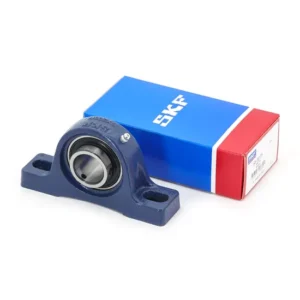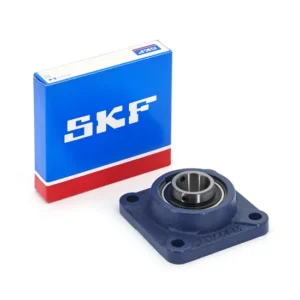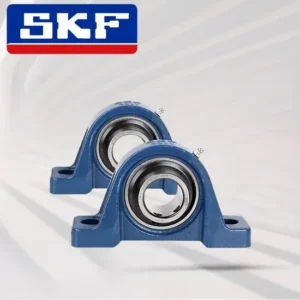



Description
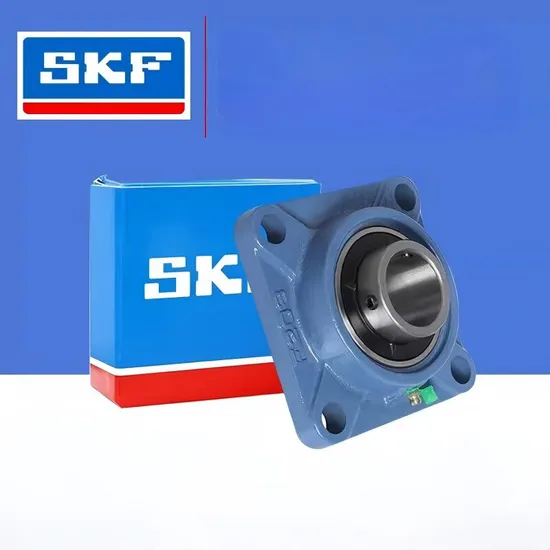
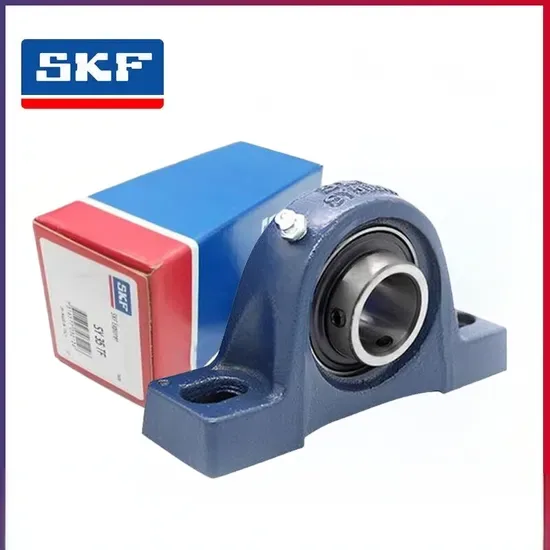
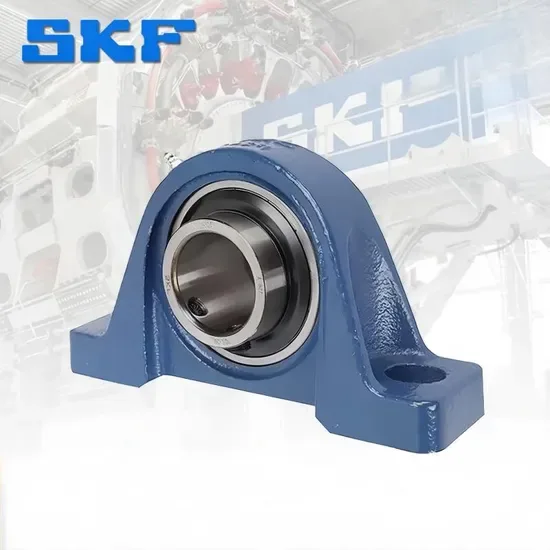
Authorized Channel Sourcing — every UCP317 pillow block ships with batch-traceable documentation confirming its path through verified distributor networks.
Technical Specifications
| Parameter | Value |
|---|---|
| Designation | UCP317 Pillow Block Bearing |
| Bearing Type | Pillow Block Unit (Insert Bearing with Housing) |
| Number of Rows | Single |
| Raceway | Spherical Raceway |
| Seal or Shield Type | RS / ZZ / Open |
| Bearing Block Model | F |
| Corrosion Resistant | Yes |
| High Temperature Capability | Yes |
| High Speed Capability | Yes |
| Transport Package | Carton + Wooden Pallet / Export Standard Packing |
Seal variants RS and ZZ listed for this unit have not been verified against a specific manufacturer suffix table; confirm exact seal designation with supplier before finalizing order.
Application Suitability
| Industry | Typical Applications |
|---|---|
| Agricultural Machinery | Grain conveyor idler stations, auger drive shafts, combine harvester return rollers |
| Mining and Crushing | Belt conveyor tail pulleys, vibrating screen cross-shafts, stacker pivot points |
| Material Handling | Overhead crane trolley wheels, bucket elevator head shafts, transfer conveyor bend pulleys |
| General MRO | Exhaust fan support pedestals, cooling tower shaft mounts, mixer drive bases |
What Happens When a Pillow Block Seal Fails Mid-Season
A single contact seal mismatch can shut down an entire harvest line within months of installation.
I once watched a Midwest grain dealer go through three UCP317 replacements on a single conveyor before anyone asked what was actually getting past the shields. Dust-laden chaff infiltrated the ZZ-shielded units, mixed with grease until it formed an abrasive paste, and the inner rings scored badly enough to seize the shaft [NEED_CITE: rolling bearing failure mode classification per ISO 15243]. The base number was correct — nobody had checked whether the contamination level demanded RS contact seals instead. For the UCP317 pillow block bearing, that distinction is not academic; it is the difference between finishing the season and calling an emergency crew on a Saturday night.
Matching the UCP317 to Contaminated, High-Load Environments
The spherical raceway inside this UCP317 pillow block bearing gives the insert enough self-alignment to absorb static and dynamic shaft deflection, which matters when conveyor frames settle unevenly or foundation bolts loosen under vibration. Single-row geometry keeps radial load distribution predictable across the rolling elements, a practical advantage for steady-direction belt loads. Where chaff, moisture, or washdown spray are constant threats, the RS contact-seal variant provides a tighter lip barrier than non-contact ZZ shields, though at the cost of slightly higher friction and a narrower speed envelope. We typically walk procurement teams through the actual airborne contamination profile before locking a seal type, because matching the environment beats guessing from a catalog cover every time.
Loads, Temperatures, and the Lubrication Clock
Radial loads dominate most UCP317 applications, but any misalignment introduces moment loads that the spherical raceway must absorb without edge stress. Ambient temperatures in outdoor mining or grain-drying operations can push housing interiors well above grease stability thresholds, shortening re-lubrication intervals and demanding high-temperature grease compatibility [NEED_CITE: bearing grease thermal degradation and re-lubrication intervals]. Where shafts run through wash cycles — think food-grade conveyor washdowns or chemical plant rinse stations — corrosion resistance becomes a survival requirement, not a catalog checkbox. Installation practices also shift with the seal choice: RS-sealed units arrive pre-greased and sealed for life under normal duty, while open configurations leave lubrication scheduling entirely to the maintenance team, along with the responsibility for external contamination barriers.
Reading the Specs That Actually Matter
Spherical raceway geometry is the core feature here; it allows the insert to pivot inside the cast-iron housing and compensate for up to a few degrees of angular misalignment, preventing localized Hertzian stress on the raceway. The single-row ball arrangement concentrates load capacity on the radial plane, which suits belt-driven and gravity-fed systems where axial thrust is incidental rather than sustained. Corrosion-resistant treatment and high-temperature capability widen the operating envelope into washdown and furnace-adjacent zones where standard insert bearings lose hardness or rust through the seal lip [NEED_CITE: insert bearing material treatment for corrosive industrial environments]. The F-type housing foot pattern distributes clamping force across a broad base, reducing pedestal cracking under cyclic loading compared to narrow-foot alternatives.
What a Wrong Spec Really Costs on the Balance Sheet
Correct selection backed by traceable sourcing keeps the UCP317 running until the next scheduled shutdown. Pick a unit with the wrong seal for a dusty grain pit, and you get contamination ingress that ISO 281 life models never predicted — L10 drops from years to months, and unplanned downtime eats whatever margin the cheaper price offered. Counterfeit units with soft inner rings and cloned markings add a different failure path: the raceway brinells under load far earlier than genuine material would, often without visible warning until the shaft drops [NEED_CITE: counterfeit bearing identification markers and field failure patterns]. Warranty voidance follows, and the downstream damage to pulleys, belts, and driven gearboxes compounds the original replacement cost many times over.
How We Keep the UCP317 Supply Honest
Every UCP317 pillow block bearing we quote is sourced through authorized distributor channels, so the paperwork chain starts at the manufacturer and stays unbroken to your receiving dock. We cross-check the insert bore, housing footprint, seal type, and clearance class together — not just the base number — because a mismatch on any one of those suffixes changes the unit’s field behavior. Origin documentation and HS code details travel with the shipment, smoothing customs clearance for importers in the Middle East, Africa, and Latin America. Pre-shipment dimensional inspections confirm running accuracy before the crate closes. If you need to verify authenticity on arrival, we point you to the manufacturer’s official app and QR-code pathway so your QC team closes the loop independently. Technical selection support is included at the inquiry stage, not billed as an extra.
Documentation & Authenticity
- Supplier Certificate of Conformity tied to the specific UCP317 batch and lot number for full upstream traceability
- Third-party pre-shipment dimensional and runout inspection confirming insert fit and housing bore tolerances before dispatch
- Material certificate identifying housing casting grade and insert ring steel composition
- Country-of-origin documentation and HS code declaration prepared for import compliance in your destination market
- QR code verification instructions via the brand’s official mobile app, enabling on-site authenticity checks at your receiving bay
Storage, Handling & Mounting
- Keep the UCP317 in its original export carton with the inner seal intact until the day of mounting; early exposure in a humid storeroom risks surface corrosion on the spherical outer ring before it ever sees load.
- Store wooden pallets off the floor on racking, away from welding spatter or coolant splash common in workshop environments, to protect the corrosion-resistant treatment on the housing and insert.
- For open-type units, apply the recommended grease grade and quantity immediately before installation; sealed RS or ZZ variants are factory-filled and must not be regreased through initial run-in.
- Align the shaft to the housing bore using a dial indicator before locking the set screws; the spherical raceway compensates for residual angular offset, but forced assembly under heavy misalignment still overloads the insert ball set.
- When mounting multiple UCP317 units on a long conveyor line, torque housing bolts evenly in a star sequence to avoid distorting the F-type foot and shifting the bore axis.
Request a Quotation with Full Application Context
Share the operating parameters — load, speed, ambient temperature, contamination type, and sealing preference — so we can confirm the correct UCP317 variant and cross-reference any OEM equipment numbers you hold. We will return a formal quotation with lead time, MOQ, and the complete documentation package outlined above, along with country-of-origin confirmation for your import records.
Frequently Asked Questions
Q: How can I tell if a UCP317 pillow block is genuine or counterfeit?
A: Inspect the marking quality on the inner ring — genuine units have laser-etched or stamped designations with consistent font depth, while counterfeits often show shallow or uneven characters. Verify the QR code through the manufacturer’s official app rather than a generic scanner, and request the batch-traceable Certificate of Conformity from your supplier before accepting the shipment.
Q: Which seal type should I choose for a dusty grain conveyor?
A: RS contact seals generally outperform ZZ shields in airborne-particulate environments because the rubber lip maintains physical contact with the inner ring, blocking fine chaff and dust. ZZ shields offer lower friction and suit cleaner indoor applications where speed matters more than contamination exclusion.
Q: Can I cross-reference a UCP317 from another brand using just the base number?
A: The base number is only the starting point. You must also verify the insert bore diameter, seal configuration, housing footprint, clearance class, and set-screw locking type. A unit that matches the base number but ships with open seals instead of RS contact seals will fail prematurely in a contaminated environment, regardless of brand.
Q: What is the typical lead time and MOQ for a bulk UCP317 order?
A: Lead times and minimum quantities depend on the specific seal variant and current stock position across our authorized channels. Confirm your required seal type and total quantity at the inquiry stage, and we will quote exact availability and dispatch windows.
Q: Do you provide import documentation for overseas shipments?
A: Yes. Each shipment includes country-of-origin certificates, HS code declarations, and the full documentation package required by customs authorities in your destination country. We prepare these documents alongside the commercial invoice to prevent clearance delays.
Secure Your UCP317 Supply with Verified Documentation
Send us your application parameters or OEM part numbers today, and our engineering team will return a cross-referenced quotation with full traceability documentation.
Contact: sales@company-bearing.com