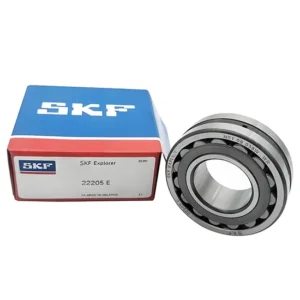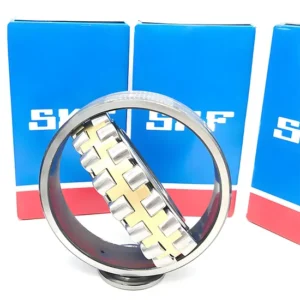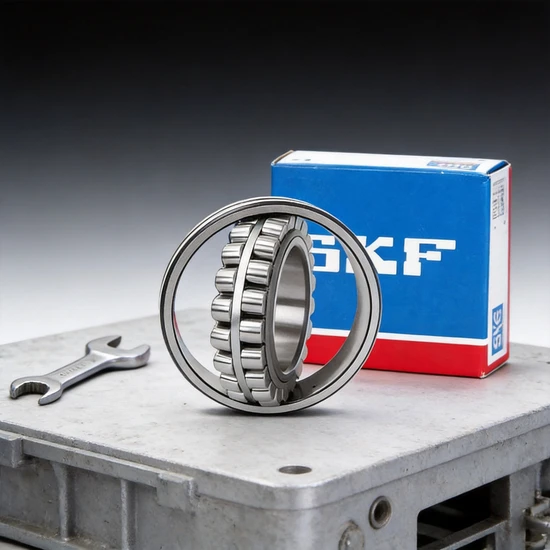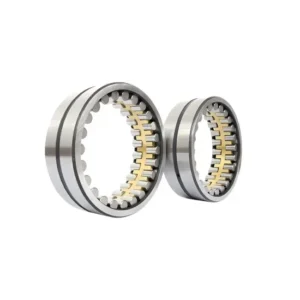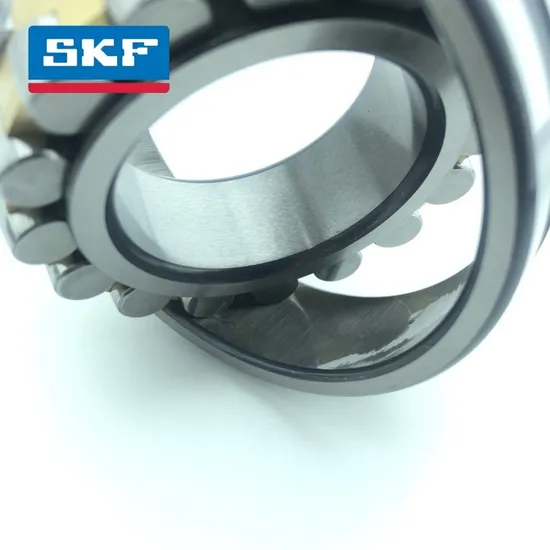

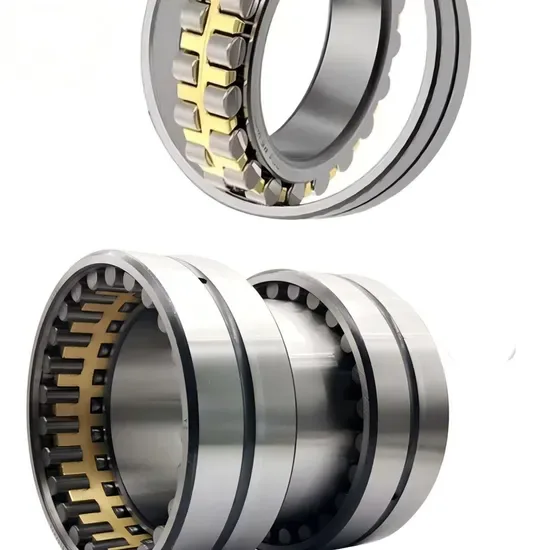
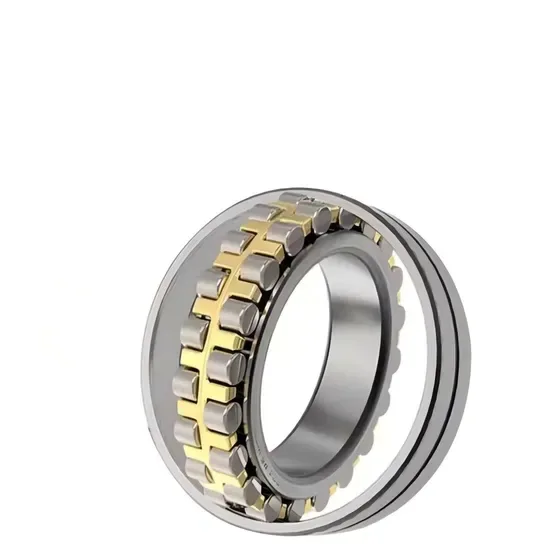
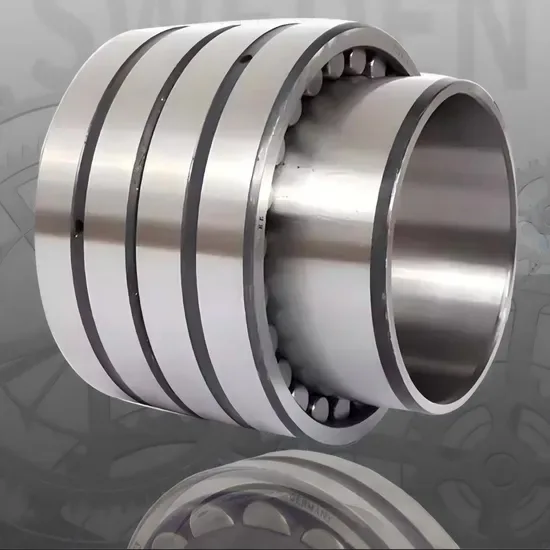
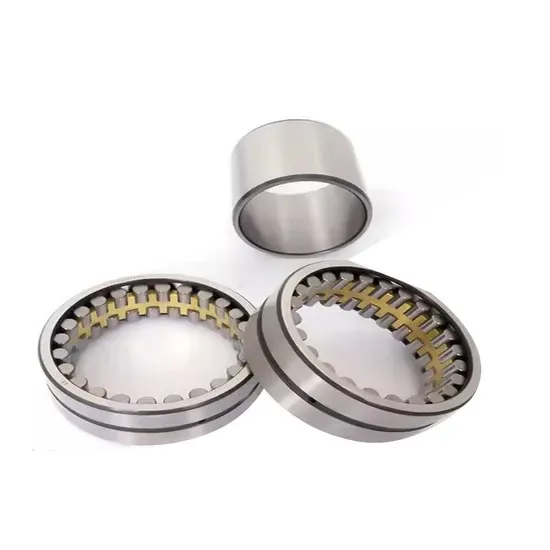
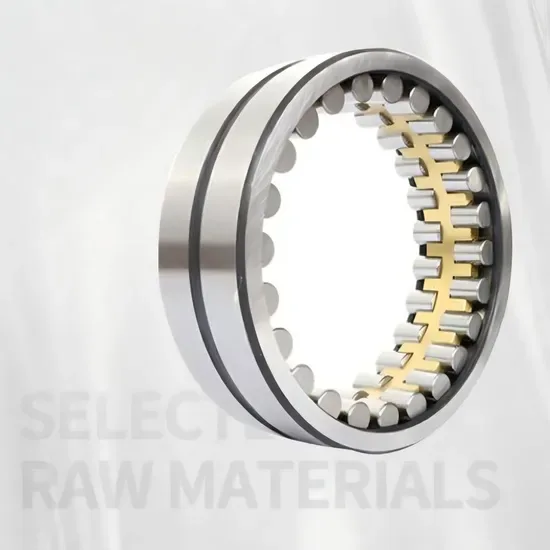
Description
Authorized Channel Procurement — Every 23034SWRCDg2E4 spherical roller bearing ships with full batch traceability and supplier Certificate of Conformity tied to the specific heat lot.
Technical Specifications
| Parameter | Value |
|---|---|
| Designation | 23034SWRCDg2E4 (generic) |
| Bearing Type | Spherical Roller Bearing |
| Bore Diameter (d) | 170 mm |
| Outside Diameter (D) | 260 mm |
| Width (B) | 67 mm |
| Material | Bearing Steel |
| Seal or Shield Type | Sealed Type |
| Feature | High Temperature, Sealed, Heavy-Load |
| Customization | Available |
| Cross-Reference | 23034 CC/W33 (SKF) / 23034CDE4 (NSK) / 23034-E1A-XL-M (FAG) / 23034CJW33 (TIMKEN) / 23034RCDg2E4 (KOYO) |
| Standards | ISO 15 / ISO 76 / ISO 281 |
The suffix string SWRCDg2E4 does not align with standard SKF, NSK, or FAG nomenclature. Buyers should confirm the exact meaning of each suffix segment — including cage type, internal geometry, and seal variant — with the supplier before finalizing order specifications.
Application Suitability
| Industry | Typical Applications |
|---|---|
| Steel & Metallurgy | Continuous caster roll stands, ladle turret pivot points, tundish car wheels |
| Mining & Crushing | Vibrating screen exciter shafts, cone crusher main shaft bearings |
| Pulp & Paper | Paper machine dryer cylinder journal supports |
| Material Handling | Heavy-duty conveyor pulley shafts, bucket elevator drive rollers |
What Sealed Means When Scale and Coolant Flood the Roll Gap
A sealed 23034SWRCDg2E4 spherical roller bearing keeps contaminants out where open designs would fail within a single campaign.
On caster segments, bearing positions sit directly beneath scale spray and secondary cooling zones. Fine iron oxide particles ride the coolant stream straight into the cage pockets of open bearings. I watched a caster in the Gulf lose alignment on two guide rolls in the same week — root cause was scale packed into the roller end faces of an open spherical bearing that had been regreased with contaminated grease. The downtime on a slab caster is not measured in hours; it is measured in tons of steel not poured [NEED_CITE: continuous caster downtime cost per hour in integrated steel plants]. Counterfeit bearings with soft inner rings make this worse, because the seal lip seats on a raceway that deforms under load and breaks contact.
How This Bearing Matches Caster Segment Conditions
The 23034SWRCDg2E4 spherical roller bearing is built for the combined radial and axial loading found in continuous caster roll segments, where roll deflection creates moment loads that rigid bearings cannot accommodate. The spherical raceway in the outer ring allows the inner ring and cage assembly to self-align, absorbing misalignment from roll deflection and housing bore tolerances. The sealed construction eliminates the need for relubrication in positions where grease nipples are inaccessible during a campaign, which is the case on most inner-arc segments. When we cross-reference this designation against equivalent SKF 23034 CC/W33 or NSK 23034CDE4 configurations, we verify that the internal geometry, cage guidance method, and seal type all align with the application — not just the bore and OD.
Thermal, Load, and Contamination Demands on the Roll Neck
Roll neck bearings on continuous casters face a punishing combination of factors. Radial loads from ferrostatic pressure can spike during strand start-up and tail-out, while axial loads arise from roll chock misalignment and strand guiding forces. Temperatures at the bearing position regularly exceed what standard lithium-complex greases can sustain, which is why high-temperature capability is non-negotiable here. The sealed design must balance contact seal friction against contamination exclusion — too tight and the seal generates its own heat; too loose and scale fines migrate past the lip. Thermal expansion of the inner ring on a hot roll neck also changes internal clearance, so starting clearance must account for the operating temperature differential [NEED_CITE: thermal expansion effect on bearing internal clearance in hot rolling applications].
Cage, Seal, and Internal Geometry — Reading Between the Lines
With a 170 mm bore and 260 mm OD, this bearing falls in the medium-large size range typical of guide roll and support roll positions. The sealed construction means the bearing arrives factory-filled with a grease selected for the anticipated temperature range, and relubrication intervals are extended or eliminated entirely depending on the segment position. The bearing steel construction provides the rolling contact fatigue strength needed under the heavy combined loads described by ISO 281 life calculations. The heavy-load designation indicates an optimized roller profile and raceway curvature that distributes contact stress across a larger area of each roller, reducing the risk of surface-initiated spalling under shock loads during strand threading. Cage material is critical in vibrating or high-misalignment positions — brass cages tolerate these conditions far better than pressed steel alternatives, which can fracture at the window edges under cyclic misalignment loading.
The Downtime Math Nobody Puts on a Purchase Order
A correct 23034SWRCDg2E4 spherical roller bearing sourced through a traceable channel protects the caster campaign schedule. The alternative is a bearing with unverified internal clearance that seizes when the roll neck reaches operating temperature, or a counterfeit with a cloned QR code that passes a visual check but has case depth nowhere near HRC 58-62. ISO 15243 classifies the failure modes you will see: subsurface fatigue from material defects, surface distress from contaminated lubricant, and thermal fracture from clearance collapse [NEED_CITE: bearing failure modes classified under ISO 15243 standard]. The unplanned strand stop that follows costs far more than the price difference on the bearing itself — lost production, refractory damage from interrupted casting, and the labor to cut out and replace a seized roll segment.
What Traceability Actually Looks Like at the Warehouse
We source through authorized distributor channels, which means every shipment carries documentation tied to the specific production batch. For the 23034SWRCDg2E4, this includes supplier Certificate of Conformity with heat lot numbers that can be traced back to the steel melt. Our cross-reference database checks not only the base designation but the clearance class, cage material, and seal configuration against equivalent SKF, NSK, FAG, TIMKEN, NTN, and KOYO part numbers — so a substitution does not introduce a mismatch that shows up three weeks into a campaign. We also provide country-of-origin documentation for import compliance, because knowing where the bearing was manufactured matters for customs clearance and for your own vendor qualification audits. When authenticity is a concern, we guide buyers through the manufacturer’s official verification pathway rather than relying on packaging marks that counterfeiters reproduce easily.
Documentation & Authenticity
- Supplier Certificate of Conformity referencing the specific batch and lot number of each 23034SWRCDg2E4 unit shipped
- Material certificate confirming bearing steel grade consistent with ISO 15 requirements for through-hardening rolling bearing applications
- Third-party dimensional inspection report verifying bore diameter, outside diameter, width, and radial internal clearance before dispatch
- Country-of-origin documentation and HS code classification for customs clearance at the port of entry
- Seal integrity test confirmation ensuring the contact seal lip is undamaged and properly seated on the inner ring land
Storage, Handling & Mounting
- Keep the 23034SWRCDg2E4 in its original sealed packaging until the moment of mounting; premature opening exposes the factory-filled grease to ambient moisture and particulate contamination
- Store sealed units horizontally on a shelf in a dry environment; storing a 170 mm bore bearing vertically for extended periods can cause the inner ring to cock and stress the seal lip
- Before mounting on the caster roll neck, verify the shaft seat diameter and roundness — the interference fit must be sufficient to prevent inner ring creep under heavy radial load without closing out the operating clearance
- Use induction heating for mounting on cylindrical shaft seats, controlling temperature to avoid damaging the seal material or degrading the factory grease fill
- After mounting, confirm that the outer ring can rotate freely within the housing; restricted rotation indicates housing bore misalignment that will overload one roller row
Getting the Right Configuration to Your Dock
Share your caster segment position, operating temperature range, and the existing bearing designation from the equipment nameplate or maintenance records. We will cross-reference the 23034SWRCDg2E4 spherical roller bearing against the OEM specification and confirm that clearance, cage, and seal parameters match your application. If you need import documentation or a specific country of origin, tell us upfront so we can route the sourcing through the appropriate authorized channel and provide the paperwork package before shipment.
Frequently Asked Questions
Q: How can I confirm the authenticity of a spherical roller bearing when counterfeit QR codes are common?
A: QR codes on packaging can be cloned, so verification should not stop at a scan. We guide buyers through the manufacturer’s official app verification process, which checks the code against a secure database. We also provide batch and lot traceability documents that tie the physical bearing to its production records, and we recommend visual inspection of the cage finish, roller surface quality, and seal lip uniformity as additional authenticity indicators.
Q: Why does cross-reference matching need to go beyond the base bearing number?
A: Two bearings can share the same 23034 base designation but differ in internal clearance, cage material, and seal type — all of which affect performance in a continuous caster. A standard CN clearance unit installed where C3 is needed will lose clearance as the inner ring expands thermally on a hot roll neck. Our interchange comparison checks every suffix and parameter, not just the bore and OD.
Q: When should I choose a sealed spherical roller bearing over an open design for caster applications?
A: Sealed designs are preferred for roll positions where relubrication access is limited during a campaign and where scale, coolant, or water spray would contaminate an open bearing. Open designs are suitable for positions with accessible grease fittings and effective external sealing from the chock design. The decision depends on the specific segment position and the maintenance strategy of the caster.
Q: What documentation comes with a bulk order of these bearings?
A: Each bulk shipment includes a supplier Certificate of Conformity, material certificate, dimensional inspection report, and country-of-origin documentation. Batch and lot numbers are recorded for each unit so that any future failure analysis can trace the bearing back to its production heat. We also provide HS code and import support documentation for customs processing.
Q: What should I confirm before ordering a bearing with a non-standard suffix combination?
A: The suffix string on this bearing should be verified against the manufacturer’s current catalog to confirm the cage type, internal clearance class, seal variant, and any special internal geometry. We handle this confirmation as part of our technical review before issuing a quotation, so buyers have full specification clarity before committing to an order.
Secure Your Caster Campaign — Start With the Specs
Send us your equipment number, segment position, and operating parameters. We will return a verified cross-reference with full documentation before you place an order.