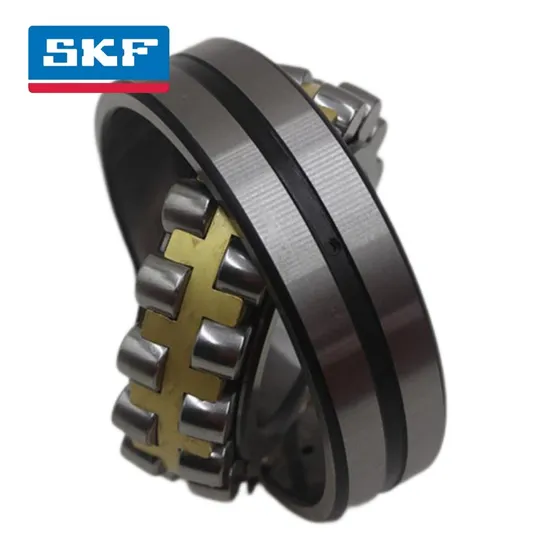
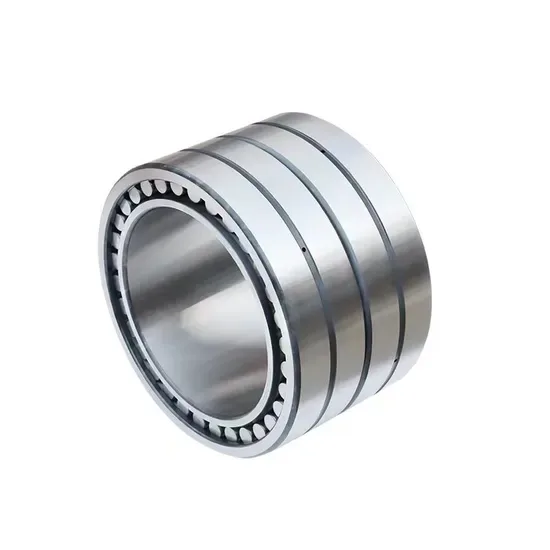
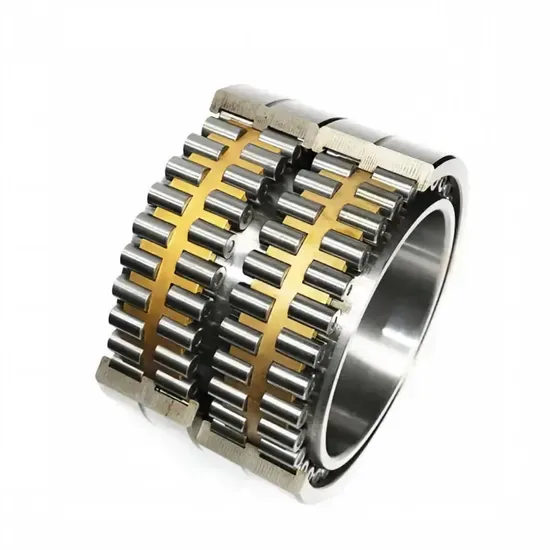
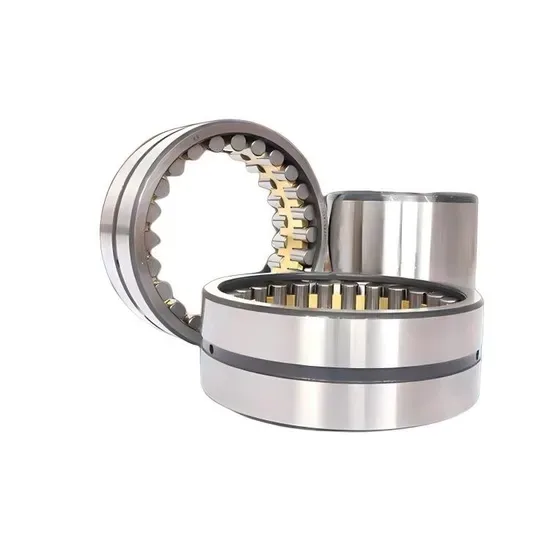
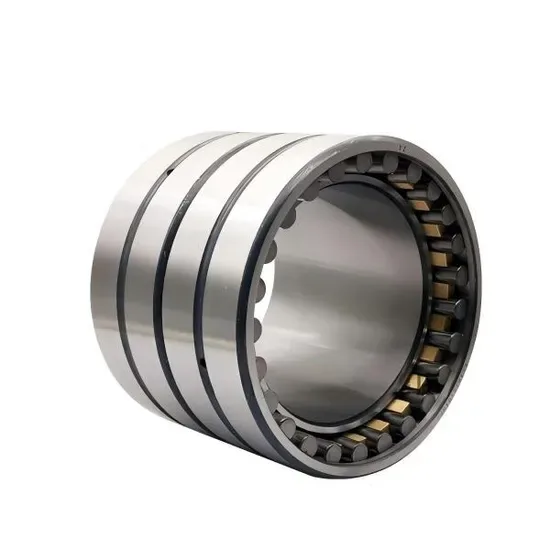
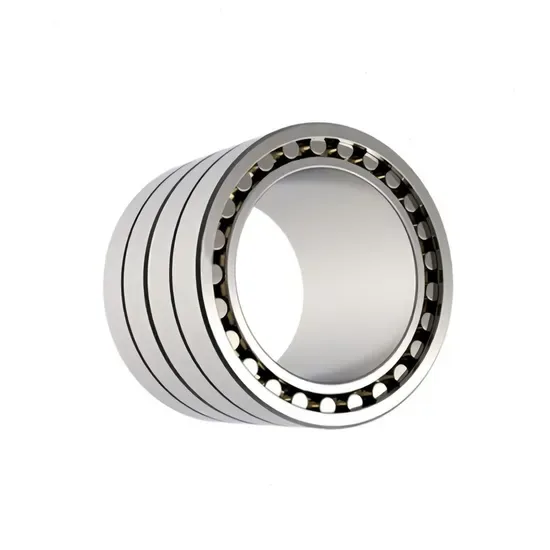
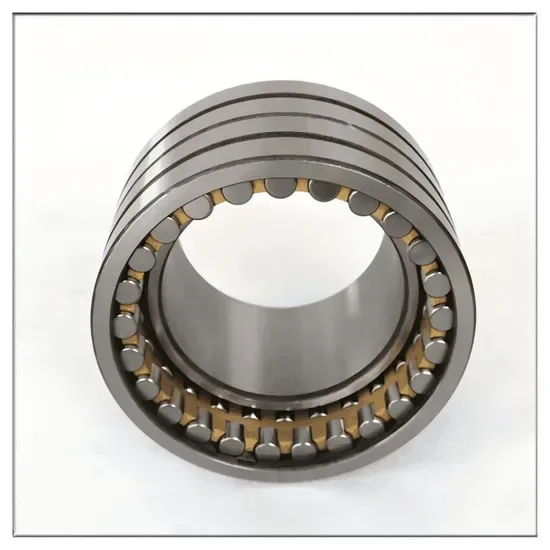
Description
Authorized Channel Sourcing — Every 24020SWRCg2E4 spherical roller bearing we supply ships with batch-level documentation traceable back through verified distribution partners, not secondary gray-market brokers.
Technical Specifications
| Parameter | Value |
|---|---|
| Designation | generic 24020SWRCg2E4 |
| Bearing Type | Spherical Roller Bearing |
| Bore Diameter (d) | 100 mm |
| Seal or Shield Type | Sealed Type |
| Material | Bearing Steel |
| Number of Rows | Double Row |
| Bore Type | Cylindrical |
Suffixes SWR and Cg2E4 remain unverified against the standard manufacturer catalog system and should be confirmed with the originating brand’s current documentation before finalizing a purchase order.
Application Suitability
| Industry | Typical Applications |
|---|---|
| Steel and Metallurgy | Continuous caster guide rolls, strand guide segments |
| Mining and Crushing | Vibrating screen exciter mechanisms, crusher eccentric shafts |
| Pulp and Paper | Paper machine dryer cylinder support, press roll bearings |
| Industrial Machinery | High-load rotating equipment with misalignment exposure |
When a Suffix Oversight Silences a Continuous Caster Line
The 24020SWRCg2E4 spherical roller bearing is engineered to handle the severe thermal and load environment inside steel mill continuous caster equipment, where internal clearance selection is anything from optional.
A caster segment bearing specified without confirming the full suffix string can run for weeks before internal clearance collapses under thermal gradient, leading to inner ring discoloration, cage deformation, and an unplanned line stoppage. I once traced a strand shutdown back to a C3 clearance unit installed where the OEM design called for C4 — the casting temperature envelope eliminated operating clearance within the first heat cycle. Counterfeit spherical roller bearings with soft inner rings and cloned QR codes compound this risk, entering supply chains through unverified middlemen and passing visual inspection yet failing catastrophically under real continuous caster loads [NEED_CITE: rolling bearing failure mode classification per ISO 15243]. A significant share of these premature failures is only discovered after the equipment is already down.
Matching the 24020SWRCg2E4 to Continuous Caster Demands
Continuous caster guide rolls operate under heavy combined radial and axial loads with constant misalignment from strand curvature, making the self-aligning capability of the 24020SWRCg2E4 spherical roller bearing essential. The sealed design prevents scale dust and cooling water ingress that would otherwise degrade the lubricant film and accelerate raceway spalling. We have supported steel mill maintenance teams across Latin America in matching clearance class to actual segment operating temperature, rather than relying solely on the base bearing number printed on the old unit.
Load Profile, Thermal Envelope, and Lubrication Boundaries
Caster segment bearings see predominantly radial load with moderate axial thrust from strand straightening forces, all at relatively low rotational speed but extreme ambient heat from the solidifying shell. Thermal expansion of the shaft and housing alters the installed internal clearance, which is why clearance class must be selected against measured segment surface temperature rather than assumed ambient conditions. Sealed spherical roller bearings in this size range rely on factory-charged grease, and re-lubrication intervals shorten considerably when operating temperatures exceed typical grease thermal stability limits [NEED_CITE: lubricant thermal degradation thresholds in sealed spherical roller bearings]. Installation typically involves induction heating to achieve the interference fit on the cylindrical bore, and temperature uniformity during heating is critical to avoid localized softening of the inner ring raceway.
Reading the Spec Sheet: What Actually Matters
The bearing steel construction delivers the fatigue strength required for the high cyclic loads in caster service, where contact stress on the raceway determines L10 life. The sealed configuration eliminates contamination as the dominant failure trigger but introduces a speed limitation due to seal lip friction — acceptable in the low-RPM caster environment but worth noting if the same base designation is considered for higher-speed vibrating screen duty. Clearance class governs how much thermal growth the bearing can absorb before preload builds up internally; selecting the wrong class in a high-temperature zone converts a self-aligning bearing into a thermally locked assembly. Precision class affects running accuracy and vibration signature, though in caster guide rolls the dominant concern is dimensional accuracy for housing fit rather than spindle-grade runout limits.
The Hidden Cost of a Specification Shortcut
Installing a bearing with mismatched clearance or unverified origin may save days of lead time initially, yet the downstream cost includes unplanned downtime, emergency freight for replacement parts, and potential damage to adjacent rolls and segments. ISO 281 life calculations assume correct internal clearance and verified material quality — assumptions that collapse when a counterfeit inner ring softens under load [NEED_CITE: ISO 281 bearing life calculation assumptions and limitations]. Warranty claims on downstream equipment are routinely voided when failure analysis traces the root cause to an untraceable bearing, leaving the maintenance team bearing the full cost of a line outage.
Why Procurement Engineers Keep Coming Back
Our supply chain for the 24020SWRCg2E4 runs through authorized distributor channels with full batch traceability, not spot-market trading desks. Each shipment is backed by a Certificate of Conformity tied to the production lot, and buyers can verify authenticity through the brand’s official application using the QR code on the packaging. When a cross-reference is requested, our interchange database aligns clearance class, cage material, and precision suffix simultaneously — not just the base number — so the replacement unit performs identically in the installed position. We also provide country-of-origin documentation and HS code guidance for customs clearance in regions with strict import compliance, which removes a common bottleneck for mill procurement departments managing international supply lines.
Documentation & Authenticity
- Supplier Certificate of Conformity referencing the specific production batch of your 24020SWRCg2E4 order
- Third-party dimensional inspection report confirming bore diameter, outside diameter, and width tolerances prior to dispatch
- Material certificate verifying bearing steel chemistry and heat treatment condition
- Country-of-origin statement with HS code classification for import documentation at destination port
- QR code pathway linked to the brand’s official verification application for on-site authenticity confirmation
Storage, Handling & Mounting
- Retain the factory-sealed packaging until the moment of installation; premature opening exposes the sealed bearing to caster workshop scale dust and moisture that can compromise the pre-charged grease
- Store horizontally in a climate-controlled area to prevent cage deformation under the weight of the double-row roller complement in this 100 mm bore bearing
- Use induction heating for cylindrical bore mounting and monitor temperature to avoid exceeding the thermal limit of the seal material
- Confirm shaft and housing tolerances before pressing, as an oversized shaft will consume internal clearance that the specified clearance class was designed to accommodate
Starting the Conversation
Share the continuous caster segment number or the operating temperature data from your maintenance records so we can verify the correct clearance class for the 24020SWRCg2E4 spherical roller bearing in your specific position. If you are cross-referencing from an OEM part number, provide the full designation string including any suffixes printed on the existing unit so our interchange review covers every parameter that affects installed performance.
Frequently Asked Questions
Q: How do I verify that the bearing I received is genuine?
A: Scan the QR code on the packaging using the brand’s official mobile application. The app cross-references the code against the manufacturer’s production database and confirms the batch, production facility, and specification string. We also supply a Certificate of Conformity with each shipment for independent verification.
Q: Why does the clearance class matter so much in continuous caster applications?
A: At casting segment temperatures, thermal expansion of the shaft and housing reduces internal clearance after installation. A bearing specified with standard CN clearance where C3 or C4 was required can reach zero clearance during operation, causing thermal binding, accelerated wear, and eventual seizure. Clearance must be selected against the actual measured operating temperature at the bearing position.
Q: What are the suffixes SWR and Cg2E4, and how should I interpret them?
A: These suffixes fall outside the standard manufacturer designation system and require confirmation against the originating brand’s current catalog or engineering bulletin. We recommend requesting the full specification sheet from the supplier and verifying against the brand’s technical documentation before confirming the order.
Q: Can I cross-reference this bearing to another brand?
A: Yes, provided the interchange matches clearance class, cage material, seal type, and precision level simultaneously — not just the 100 mm bore and spherical roller bearing type. We maintain a cross-brand database covering SKF, NSK, FAG, TIMKEN, NTN, and KOYO with parameter-level alignment for each position.
Confirm Your 24020SWRCg2E4 Requirements
Send us your equipment number or operating parameters to initiate the technical review and receive a matched quotation with documentation package details.