
SKF
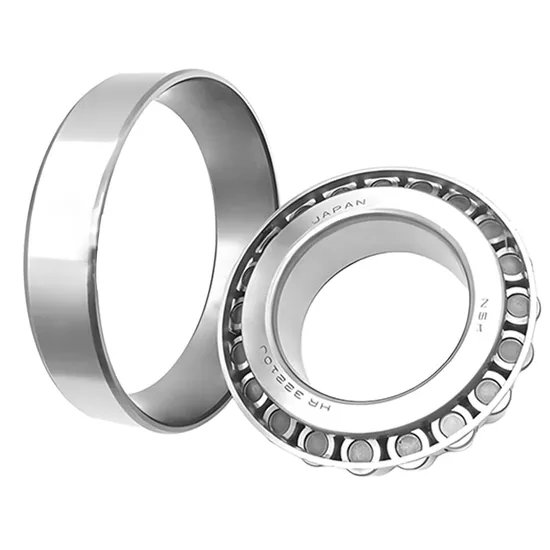
Truck Hub SKF 30206 Tapered Roller Bearing 30x62x16mm with Bearing Steel for Long Life
Tapered Roller Bearing
View DetailsAuthorized SKF Distributor Ball, roller, needle, thrust and mounted bearings for industrial buyers worldwide

Authentic
ISO 9001
24h Reply
<p><strong>AR110-28 Sealed Tapered Roller Bearing 110×180×86 mm</strong> — sealed construction provides contamination protection for sintering support roller environments with high dust and particulate exposure, while bearing steel material ensures load-carrying capacity for heavy-duty operation.</p> <ul> <li>Sourced through authorized distributor channels with traceable documentation</li> <li>Authenticity verification and cross-brand interchange support available</li> <li>Complete import documentation package including country-of-origin certification for sintering support roller applications</li> </ul>
Authorized Channel Sourcing — Every AR110-28 sealed tapered roller bearing we ship traces back to verified distributor inventories with batch-level documentation, ensuring sintering plant maintenance teams receive components backed by traceable origin records rather than unverified middleman stock.
| Parameter | Value |
|---|---|
| Designation | AR110-28 |
| Bearing Type | Tapered Roller Bearing |
| Bore Diameter (d) | 110 mm |
| Outside Diameter (D) | 180 mm |
| Width (T) | 86 mm |
| Seal or Shield Type | Sealed Type |
| Material | Bearing Steel |
| Cage Material | Unverified suffix — requires manufacturer catalog confirmation |
| Clearance Class | Unverified suffix — requires manufacturer catalog confirmation |
| Precision Class | Unverified suffix — requires manufacturer catalog confirmation |
| Number of Rows | Unverified suffix — requires manufacturer catalog confirmation |
| Origin | Unverified suffix — requires manufacturer catalog confirmation |
Cage material, clearance class, precision class, row count, and origin for the AR110-28 suffix configuration remain subject to manufacturer catalog verification and will be confirmed at inquiry stage.
| Industry | Typical Applications |
|---|---|
| Steel and Metallurgy | Sintering line support rollers, cooling bed transfer rollers |
| Mining and Crushing | Conveyor head pulley shafts, vibratory screen eccentrics |
| Industrial Machinery | Heavy-duty gearbox output shafts, large mixer drive rolls |
| Automotive and Heavy Vehicle | Truck wheel hub assemblies, trailer axle spindle positions |
A single seized support roller can shut down an entire sintering strand within hours, not days.
I watched a Vietnamese steel plant lose three full production days because someone swapped a tapered roller support bearing by base number alone — skipped the sealed suffix, ignored clearance requirements for sustained heat exposure. Sintering dust infiltrated the raceway, thermal expansion bound the rollers against the cage, and the line stopped cold. That wreck was not caused by a bad bearing; it was caused by a bad cross-reference. Most procurement engineers focus on bore and OD matching while overlooking the suffix stack that determines whether an AR110-28 sealed tapered roller bearing 110x180x86mm survives real operating conditions or becomes a six-week failure statistic. Counterfeit units with soft inner rings and cloned QR codes pass casual visual inspection but collapse under thermal cycling. [NEED_CITE: rolling bearing failure mode classification per ISO 15243]
Sintering support rollers endure combined radial and axial loading from belt tension and thermal shaft growth simultaneously. The sealed construction of the AR110-28 sealed tapered roller bearing 110x180x86mm prevents abrasive particulate from entering the raceway — a critical advantage where airborne sinter dust behaves like lapping compound against unsealed surfaces. Bearing steel material construction carries the heavy static loads typical of loaded sinter strands. When we source this designation, we verify seal type against the actual contamination profile of the installation, not just the catalog line item. A maintenance manager in an Indonesian nickel plant once specified open bearings with external labyrinth seals for a similar position; the labyrinth alone could not stop sub-micron dust infiltration during monsoon humidity swings.
Support rollers on sintering machines cycle through temperature ranges that force shaft elongation and housing distortion simultaneously. Tapered roller bearings at these positions must accommodate thermal growth without binding, which makes clearance selection non-negotiable. Standard CN clearance installed where elevated clearance is required leads to preload buildup as the inner ring expands against the roller set. The sealed design introduces contact friction at the lip interface — acceptable at the moderate rotational speeds of support rollers but problematic if the bearing is repurposed into a high-speed gearbox application without reviewing limiting speed data. Lubrication inside sealed units is factory-filled and non-replenishable; once the grease degrades past its thermal life, the bearing must be replaced rather than regreased. [NEED_CITE: thermal expansion effects on bearing internal clearance in high-temperature applications]
The AR and 110-28 suffix portions of this designation encode specific design choices that separate a field-ready bearing from a catalog placeholder. Seal configuration determines whether the unit retains factory grease and excludes contamination or relies entirely on external sealing provisions at the housing level. Bearing steel grade — typically GCr15 or 100Cr6 equivalent — defines the hardenability and through-hardness uniformity needed for heavy-load rolling contact. Cage material selection governs how the bearing handles vibration and shock loading; pressed steel cages suit steady-state operation while machined brass cages resist fragmentation under impact. The relationship between dynamic load rating C and static load rating C₀ indicates whether the application is fatigue-life governed or permanent-deformation governed — sintering rollers with slow rotation and heavy loads often sit in the static-dominant zone where C₀ matters more than L10 calculations suggest.
Correct specification paired with verified provenance yields predictable service intervals aligned with planned shutdowns. Wrong clearance on a heat-exposed roller produces thermal seizure that damages the shaft journal and housing bore simultaneously — turning a bearing swap into a full assembly rebuild. Counterfeit units with substandard heat treatment spall prematurely, sending hardened steel debris downstream into adjacent gear meshes and hydraulic circuits. ISO 281 establishes the L10 fatigue life framework, but that framework assumes genuine material properties and correct internal geometry; neither assumption holds when the supply chain includes unverified intermediaries. Warranty coverage voids the moment a failed bearing is traced to a non-authorized source, shifting the entire replacement cost — including collateral damage and lost production — back onto the end user. [NEED_CITE: ISO 281 bearing life calculation assumptions and limitations]
We pull AR110-28 designations from authorized distributor channels, meaning the chain of custody from manufacturer to your receiving dock remains documented at every handoff. Our cross-reference database aligns not only the base number but clearance class, cage material, and precision suffixes across six major brands — so if your OEM equipment specifies a competitor designation, we match the complete engineering intent rather than a partial number overlap. Authenticity verification support includes QR code pathway guidance through brand official applications, giving your receiving inspectors a concrete check beyond visual comparison. Country-of-origin documentation ships with every order to satisfy import compliance requirements in markets where customs authorities scrutinize bearing provenance. Material certificates and dimensional inspection reports accompany pre-shipment documentation packages, and our team reviews application parameters before confirming suitability rather than shipping blind against a part number.
Share your operating parameters — load magnitude, shaft speed, ambient and operating temperature range, contamination severity — so we can verify whether the AR110-28 sealed tapered roller bearing 110x180x86mm meets your application requirements or whether a variant with different clearance or seal material suits the duty cycle better. If you are replacing an existing bearing, provide the OEM equipment number and any legible markings from the removed unit so we can cross-reference against our interchange database and flag any suffix discrepancies. We will confirm batch availability, lead time, and the complete documentation package before you commit to an order.
Q: How can I verify the authenticity of an AR110-28 sourced through a third-party supplier rather than a direct brand channel?
A: Request batch and lot traceability documentation that links back to a manufacturer production run, and use the applicable brand’s official QR verification application to scan markings on the bearing and packaging. Authorized distributor channel sourcing ensures these traceability links remain intact from factory to end user.
Q: What cross-reference factors matter beyond matching the base number on a tapered roller bearing?
A: Clearance class, cage material, seal type, and precision class all affect field performance. Matching only the base designation while ignoring these suffixes leads to thermal binding in high-temperature installations or premature cage failure under vibration.
Q: Is a sealed tapered roller bearing appropriate for high-temperature sintering support roller positions?
A: Sealed designs protect against particulate contamination but introduce contact friction at the seal lip. At the moderate rotational speeds typical of sintering support rollers, this friction is manageable. At higher speeds, the heat generated at the seal interface must be evaluated against the grease thermal life limit.
Q: What country-of-origin documentation should I expect when importing this bearing?
A: A formal country-of-origin certificate, HS code classification, and commercial invoice detailing the manufacturing origin support customs clearance. We prepare these documents per shipment to match the import requirements of your destination market.
Q: How do material certificates confirm bearing steel quality for heavy-load applications?
A: Material certificates document the chemical composition and heat treatment records for the steel used in raceway and rolling element production, confirming hardness and microstructure meet the standards required for sustained rolling contact under load.
Confirm Your AR110-28 Specification Package
Send us your application parameters or OEM equipment number, and we will return a verified cross-reference with full documentation scope before you place an order. Contact our engineering team through your existing account channel or submit an inquiry with your installation details for a technical review.
Tapered Roller Bearing
View DetailsTapered Roller Bearing
View DetailsTapered Roller Bearing
View DetailsSend us your inquiry with model number and quantity. Our technical team will respond within 24 hours with pricing, availability and delivery terms.
100% Authentic
Authorized distributor
Fast Delivery
Global logistics network
Full Documentation
Certs, datasheets & more
Expert Support
10+ years experience