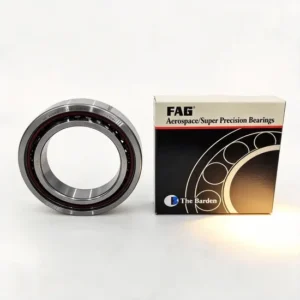
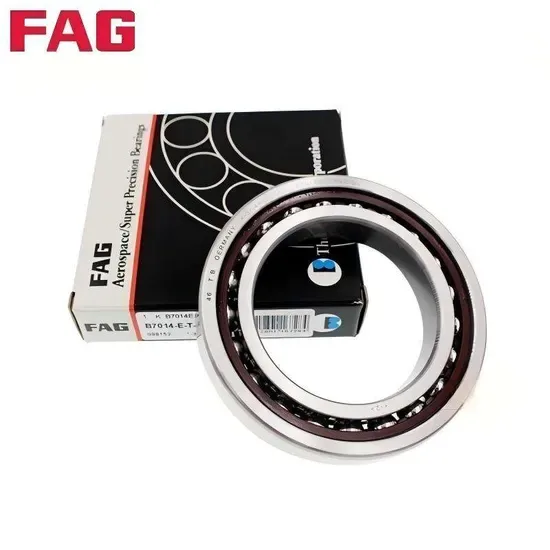
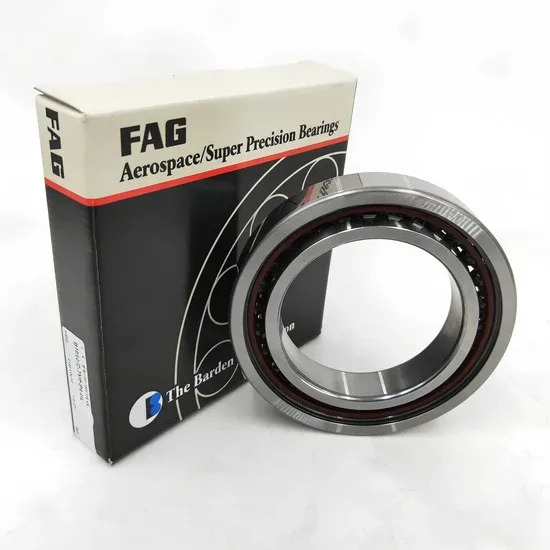
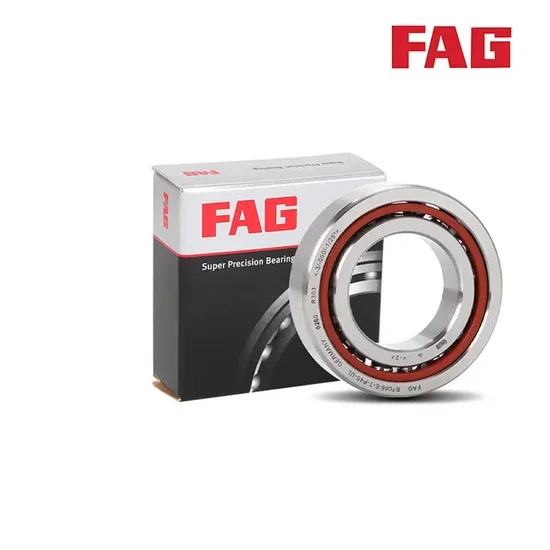
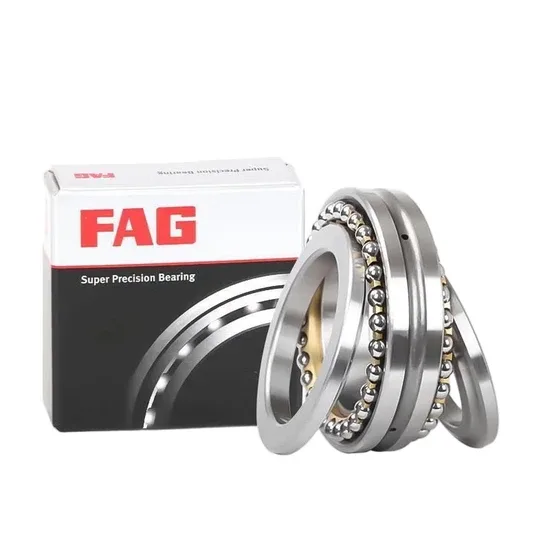

Description
Authorized channel sourcing — every B7007-C-2RSD-T-P4S-UL shipment leaves with batch-level traceability back to the manufacturer’s production run.
Technical Specifications
| Parameter | Value |
|---|---|
| Designation | FAG/INA B7007-C-2RSD-T-P4S-UL |
| Bearing Type | Angular Contact Ball Bearing |
| Bore Diameter (d) | 35 mm |
| Outside Diameter (D) | 62 mm |
| Width (B) | 14 mm |
| Weight | 0.152 kg |
| Number of Rows | Single |
| Seal or Shield Type | 2RSD (non-contact lip seal, both sides) |
| Contact Angle | 15° (C designation) |
| Precision Class | P4S (ISO tolerance class 4 with special specification) |
| Arrangement | UL (universal matching, light preload) |
| Bore Type | Cylindrical |
| Origin | China |
Note: The suffixes T and UL follow FAG-specific nomenclature conventions; exact definitions should be confirmed against the current FAG super precision catalog for application-critical installations.
Application Suitability
| Industry | Typical Applications |
|---|---|
| Machine tool manufacturing | High-speed milling spindle front support |
| Precision grinding | Internal grinding spindle nose bearing |
| Robotics | Joint rotary encoder support bearing |
| Semiconductor equipment | Wafer inspection stage rotary axis |
What Happens When a Spindle Bearing Suffix Gets Overlooked
A single letter in the designation separates a mirror-finish workpiece from a bin full of scrap.
Years ago on a spindle rebuild, the base number matched perfectly. Nobody caught that the contact angle suffix was wrong — 40° standard went in where the design called for 15° C-type. The spindle ran hot within the first hour at speed, thermal drift killed the surface finish, and chatter marks appeared across every workpiece that came off the machine. That failure mode repeats itself constantly in the field: procurement matches the bore and OD, skips the suffix stack, and the machine pays the price weeks later. [NEED_CITE: spindle bearing failure modes related to contact angle and preload mismatch]
The B7007-C-2RSD-T-P4S-UL angular contact ball bearing exists to prevent exactly that scenario. Every suffix in this designation carries engineering intent, and ignoring any one of them turns a precision component into a liability.
Matching the Spindle Envelope at 35×62 mm
This bearing fills a compact spindle envelope where radial rigidity and axial precision must coexist. The 15° contact angle in the B7007-C-2RSD-T-P4S-UL angular contact ball bearing generates lower friction heat than higher-angle variants under the predominantly radial loads typical of milling and grinding spindles. When cross-referencing from other brands, the full suffix stack — contact angle, seal type, precision class, and preload — must align, not just the bore and outside diameter. We have seen buyers match the base number and miss the preload designation entirely, which changes the axial stiffness of the paired set.
Speed, Heat, and the Seal Decision
Spindle bearings operate in a narrow thermal window. The 2RSD non-contact lip seals on this bearing keep contaminants out of the raceway without adding the friction heat that contact seals would introduce at high rotational speeds. In grease-lubricated spindle applications, the seal also retains the factory fill and prevents re-lubrication errors on the shop floor. Temperature rise directly affects the internal clearance of the bearing, and a 15° contact angle already runs cooler than 25° or 40° alternatives under equivalent radial load. [NEED_CITE: thermal effects on spindle bearing internal clearance and running accuracy]
Installation practice matters as much as the bearing itself. Cylindrical bore bearings in this size range are typically mounted by induction heating of the inner ring, and the temperature ceiling during heating must respect the seal material limits to avoid lip deformation.
Decoding the Suffix Stack
The P4S precision class specifies ISO tolerance class 4 with additional restrictions on running accuracy beyond standard P4, which directly controls the radial and axial runout at the spindle nose. The 15° contact angle (C designation) optimizes the balance between axial load capacity and friction-induced heat generation for high-speed rotary applications. The UL arrangement designation indicates universal matching with light preload, meaning this bearing can be paired in back-to-back or face-to-face configurations without selective fitting during assembly. The phenolic or fabric-reinforced cage (T designation) is standard for high-speed spindle duty, chosen for its low weight and adequate lubricant film retention at elevated rpm.
The Hidden Cost of Suffix Blindness
Correct selection from a verified source protects the spindle. Wrong clearance, a missed precision suffix, or a counterfeit with cloned packaging introduces failure modes that ISO 15243 classifies as premature: smearing from insufficient preload, excessive wear from contamination ingress through inferior seals, and thermal cracking from contact angle mismatch. [NEED_CITE: rolling bearing failure mode classification per ISO 15243] Unplanned downtime on a CNC machining center costs far more than the bearing itself — lost production hours, scrapped workpieces, and potential damage to the spindle housing if a cage failure sends debris through the bearing stack.
How We Support the Procurement Decision
We source the B7007-C-2RSD-T-P4S-UL through authorized distributor channels, so every unit ships with documentation that traces back to the manufacturer’s production lot. Our cross-reference database aligns clearance, cage material, seal type, and precision class across SKF, NSK, FAG, TIMKEN, NTN, and KOYO — not just the base designation. When a maintenance engineer provides an OEM equipment number, we verify the full suffix requirement against the original spindle specification. Country-of-origin documentation travels with the shipment for import compliance, and we guide buyers through QR code verification using the brand’s official application.
Documentation & Authenticity
- Supplier Certificate of Conformity with batch and lot numbers traceable to the manufacturer’s production run for this B7007 series spindle bearing
- Third-party dimensional inspection report confirming P4S running accuracy on bore, OD, and radial runout before dispatch
- QR code verification pathway through the FAG/INA official app for on-site authenticity confirmation upon receipt
- Country-of-origin documentation and HS code classification included for customs clearance at destination port
- Material certificate covering ring and ball steel specification for the B7007-C-2RSD-T-P4S-UL
Storage, Handling & Mounting
- Keep the 2RSD sealed bearing in original packaging until the moment of mounting to prevent contamination of the factory grease fill through the non-contact lip seals
- Store in a temperature-stable environment; thermal cycling before installation can cause condensation inside the packaging and compromise the P4S surface finish on the raceways
- Handle the 0.152 kg unit with clean lint-free gloves — fingerprint acids on the 35 mm bore surface can initiate corrosion before the bearing reaches the spindle
- Use induction heating for inner ring mounting and monitor temperature to stay within the 2RSD seal material limit, preventing lip distortion that would compromise the non-contact seal gap
- For UL universal-matched pairs, open both bearings simultaneously and follow the factory pairing marks to maintain the specified light preload orientation during back-to-back or face-to-back assembly
Start Your Spindle Bearing Inquiry
Share your spindle application parameters — speed range, load profile, and operating temperature — so we can verify that the B7007-C-2RSD-T-P4S-UL angular contact ball bearing suffix stack matches your design requirement. If you are replacing an existing bearing, provide the OEM equipment number or the full designation from the nameplate for cross-reference verification across all six brands we cover.
Frequently Asked Questions
Q: What does each suffix in B7007-C-2RSD-T-P4S-UL mean for my spindle application?
A: C indicates the 15° contact angle suited for high-speed predominantly radial spindle loads. 2RSD specifies non-contact lip seals on both sides. T refers to the cage material and design optimized for speed. P4S is ISO class 4 precision with additional running accuracy restrictions. UL denotes universal matching with light preload for paired mounting. Some FAG-specific suffix definitions should be verified against the current catalog for critical applications.
Q: How do I cross-reference this bearing to SKF or NSK equivalents?
A: Cross-referencing requires matching not only the 35×62×14 mm envelope but also the 15° contact angle, non-contact seal type, P4S precision class, and UL light preload arrangement. A base-number match alone risks installing a bearing with different axial stiffness or thermal behavior in the spindle.
Q: What is the difference between P4, P4S, and P2 per ISO 492?
A: P4 is the standard ISO tolerance class 4. P4S applies the dimensional tolerances of P4 but imposes tighter running accuracy restrictions, which directly reduces radial and axial runout at the spindle nose. P2 is a higher precision class with even tighter tolerances across all parameters.
Q: How can I verify bearing authenticity when sourcing through a multi-brand supplier?
A: Request the supplier Certificate of Conformity with batch traceability, then verify the QR code on the bearing packaging using the brand’s official mobile application. Country-of-origin documentation and dimensional inspection reports provide additional confirmation layers.
Q: What preload arrangement should I use when pairing UL bearings in a spindle?
A: UL designates universal matching with light preload. The specific pairing configuration — back-to-back for moment load rigidity, face-to-face for alignment tolerance, or tandem for axial capacity — depends on your spindle load profile and should be confirmed against the OEM design specification.
Verify Your Spindle Bearing Selection Today
Send us your application parameters or OEM equipment number, and we will confirm the full suffix match with complete traceability documentation. Contact our engineering team through your existing supplier channel or submit an inquiry with your spindle specifications.