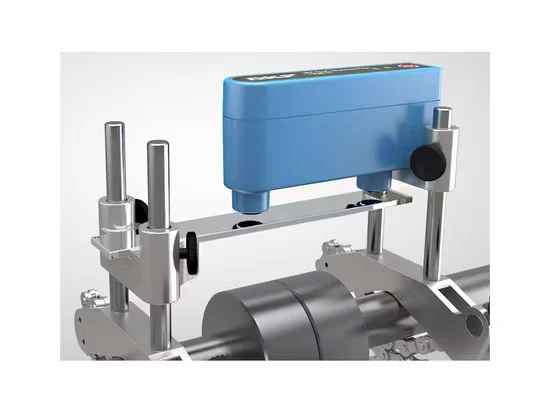
Traceable Documentation — Every 2J160Z-1 shipment ships with supplier Certificate of Conformity, material certification, and country-of-origin paperwork matched to the specific batch.
Technical Specifications
Parámetro
Value |
| Designation | Generic 2J160Z-1 |
Tipo de Rodamiento
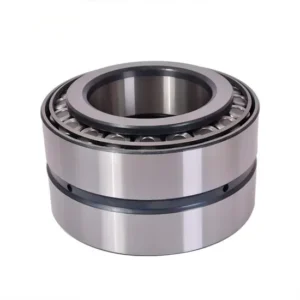
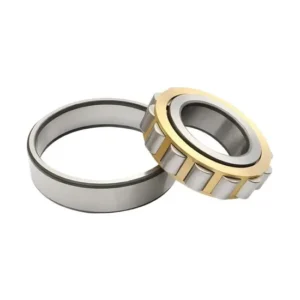
Rodamiento de rodillos cilíndricos
https://www.skf.com/binaries/pub120207/pub120207_tcm_120-538021.pdf)[^1]Diámetro del orificio (d)https://www.iso.org/standard/72154.html)[^2] | 160.11 mm |
https://www.skf.com/binaries/pub120207/pub120207_tcm_120-538021.pdf)[^1]Diámetro Exterior (D)https://www.iso.org/standard/72154.html)[^2] 250 mm
https://www.skf.com/binaries/pub120207/pub120207_tcm_120-538021.pdf)[^1]Ancho (B)https://www.iso.org/standard/72154.html)[^2] 130 mm
Material
Acero para rodamientos
| Seal or Shield Type | Sealed Type |
Número de Filas
Doble Fila
Origen
To be confirmed with order |
Note: The "2J" and "Z-1" suffixes in this designation are unverified and require confirmation against the manufacturer catalog before final specification lock.
Application Suitability
Industria
Aplicaciones Típicas
| Steel and Metallurgy | Sintering machine medium roll journals |
| Mining and Crushing | Rotary kiln support rollers, crusher main shafts |
Maquinaria Industrial
Heavy-duty conveyor drive drums, large gearbox shafts |
What Happens When Sealed Bearings Overheat on a Sintering Line
A sealed cylindrical roller bearing running above its grease thermal limit becomes a liability, not a convenience.
I once flew into a Southeast Asian steel mill where a sintering medium roll seized after just a few weeks of service. The replacement bearings matched the base number perfectly, but the internal clearance was CN standard instead of the C3 required for the elevated temperatures along the sintering car path. The thermal expansion closed the operating clearance entirely, and the rollers locked hard enough to score the shaft journal. Downtime on a sintering line is measured in lost tons of output, not just maintenance hours. That 2J160Z-1 cylindrical roller bearing for sintering medium roll applications must be specified with the correct clearance class before it ever reaches the roll housing.

How This Bearing Earns Its Place in Sintering Roll Assemblies
Sintering medium rolls carry sustained radial loads from the weight of the burden material while rotating at moderate speeds in an environment saturated with abrasive dust and radiant heat from the ignition hood. The double row cylindrical roller design inside the 2J160Z-1 cylindrical roller bearing for sintering medium roll positions delivers the radial load capacity that single row arrangements simply cannot match on a 160 mm bore. The sealed configuration keeps contaminant-laden air out of the roller-raceway contact zone, which matters when the nearest grease fitting is buried behind a labyrinth seal assembly that maintenance crews avoid disturbing during short shutdowns. On a comparable retrofit I supported in a Vietnam steelworks, switching from open to sealed cylindrical rollers on the medium roll cut re-greasing intervals to zero for the bearing itself, and the mill's MRO team redirected those labor hours to other preventive tasks.
Load Spectrum, Temperature, and Contamination Reality
The sintering medium roll sees predominantly radial loading with minor misalignment from shaft deflection under burden weight. Speeds are low enough that heat generation inside the bearing comes from friction at the roller-end guiding flanges rather than from high-speed churning. The real thermal input is external — radiant heat from the sinter cake and conduction through the roll shaft raise bearing operating temperatures well above ambient. At these temperatures, standard mineral grease in a sealed bearing can degrade rapidly if the clearance class was not chosen to leave adequate operating film after thermal expansion. The sealed design trades off the ability to re-lubricate in service for the benefit of excluding sinter dust, iron oxide fines, and moisture from the roll cooling sprays.
Reading the Critical Specs Behind the Designation
The 160.11 mm bore diameter is a non-standard fractional dimension, which signals this bearing was designed to fit a specific shaft envelope rather than a generic catalog size. Matching replacement stock must hold this bore tolerance precisely, or the interference fit on the shaft will be either too loose — causing fretting corrosion — or too tight — inducing hoop stress that reduces the already critical internal clearance. The 250 mm outside diameter and 130 mm width give this double row cylindrical roller bearing a substantial cross section, appropriate for the sustained heavy radial loads on sintering medium rolls. The bearing steel construction must achieve through-hardening in the HRC 58–62 range at the raceway surfaces to resist subsurface fatigue initiation under cyclic loading. Since the sealed design prevents field re-lubrication, the factory fill grease and seal lip material must both be rated for the expected continuous operating temperature — a point I always verify before releasing a quotation.
The Hidden Invoice Behind a Wrong-Spec Bearing on a Sintering Roll
When a sealed cylindrical roller bearing fails prematurely inside a sintering medium roll, the cost of the bearing itself is almost irrelevant compared to the collateral damage. A seized bearing can gall the shaft journal beyond re-machining limits, forcing a complete roll shaft replacement. Unplanned downtime on a continuous sintering strand idles the entire downstream cooling and crushing circuit. The ISO 15243 failure classification framework distinguishes between fatigue, wear, corrosion, and electrical damage — but on sintering lines, the dominant failure driver is often thermal instability from clearance mismatch or grease breakdown from contamination ingress through compromised seals. Correct specification and verified authenticity prevent these cascading losses.
Why Procurement Engineers Route Their Sintering Bearings Through Our Channel
We source the 2J160Z-1 cylindrical roller bearing for sintering medium roll applications through authorized distributor channels, which means the documentation trail extends back to the manufacturer's production facilities. Every batch ships with a Certificate of Conformity tied to the specific lot number. When buyers need to cross-reference this bearing against alternative brands, we verify clearance class, cage material, and seal specifications — not just the base bore and OD — so the substitute performs identically in service. Our authenticity verification support helps receiving inspectors distinguish genuine bearings from counterfeits that replicate packaging and QR codes but ship with soft inner rings that fail within months. We also prepare country-of-origin documentation and HS code details to smooth customs clearance for international buyers.
Documentation & Authenticity
- Supplier Certificate of Conformity referencing the 2J160Z-1 batch number and production date for full lot traceability
- Material certificate confirming bearing steel grade (GCr15 / 100Cr6) and heat treatment compliance
- Third-party dimensional inspection report verifying the 160.11 mm bore, 250 mm OD, and 130 mm width within tolerance
- Country-of-origin certificate and HS code declaration for import compliance on international orders
- Seal integrity and grease specification confirmation letter for the factory-filled sealed configuration
Storage, Handling & Mounting
- Retain the original sealed packaging until the moment of installation — early opening exposes the sealed lips to warehouse dust that can compromise the contamination barrier on this 160 mm bore bearing
- Store horizontally on a vibration-free shelf; the 130 mm width and double row roller mass make this bearing susceptible to brinelling if stood upright and bumped
- Use induction heating to 100–110 °C for mounting onto the sintering roll shaft; the 160.11 mm bore requires a controlled thermal expansion fit to avoid excessive press force on the inner ring
- After mounting, verify residual clearance with a feeler gauge through any available access — the sealed design prevents re-lubrication, so correct initial fit is the only adjustment opportunity
Next Steps for Your Sintering Medium Roll Inquiry
Share the operating temperature range and shaft speed so we can confirm the correct clearance class and grease specification for the 2J160Z-1 cylindrical roller bearing for sintering medium roll application. If you are cross-referencing from an OEM equipment number or a competing brand designation, provide the full string including any suffixes so we can align clearance, cage, and seal parameters. Request our documentation package and country-of-origin confirmation to support your import process. We will respond with availability, lead time, and minimum order details once the specification is locked.
Preguntas Frecuentes
Q: How do I verify the authenticity of a 2J160Z-1 bearing received from a new supplier?
A: Authenticity verification starts with matching the batch number on the bearing packaging against the Certificate of Conformity. We recommend checking material hardness at the inner ring raceway — counterfeit bearings frequently use under-hardened steel that passes visual inspection but fails under load. We provide QR code verification pathways and guide receiving teams through the inspection steps before the bearing is released to the warehouse.
Q: What clearance class should I specify for a sealed cylindrical roller bearing on a sintering medium roll?
A: The clearance class depends on the continuous operating temperature and the shaft-housing fit combination. On sintering lines where radiant heat pushes bearing temperatures significantly above ambient, a C3 or greater clearance is typically necessary to maintain adequate operating clearance after thermal expansion. We review the application parameters before quoting to confirm the correct class.
Q: Can I cross-reference the 2J160Z-1 to SKF, NSK, or FAG equivalents?
A: Cross-referencing is possible but must go beyond matching bore, OD, and width. We align clearance class, seal type, and cage material against the target brand's suffix system to ensure the substitute performs identically in the sintering roll application. Share your preferred brand and we will build the comparison.
Q: What documentation comes with the shipment for import purposes?
A: Each shipment includes a supplier Certificate of Conformity, material certificate, dimensional inspection report, and country-of-origin documentation. We also provide the correct HS code and support any additional paperwork required by your destination country's customs authority.
Q: How do unverified suffixes in the 2J160Z-1 designation affect ordering?
A: The "2J" and "Z-1" suffixes require confirmation against the manufacturer's current catalog to lock the exact internal design and seal specification. We resolve this during the quotation stage so the delivered product matches your application requirements without ambiguity.
Secure Your Sintering Medium Roll Bearing Supply
Send us the equipment OEM number or operating parameters to begin specification verification and receive a quotation with full documentation.




 Ahmed Al-FarsiFarsi Industrial Services · Oman