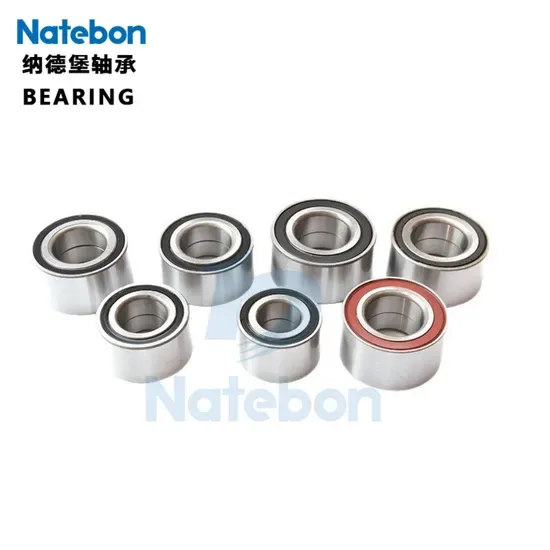
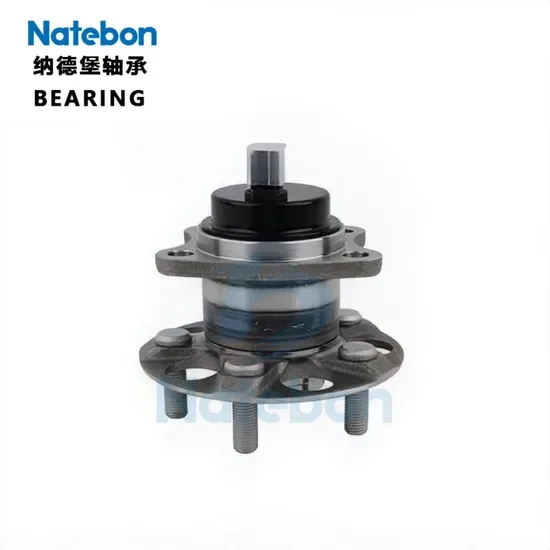

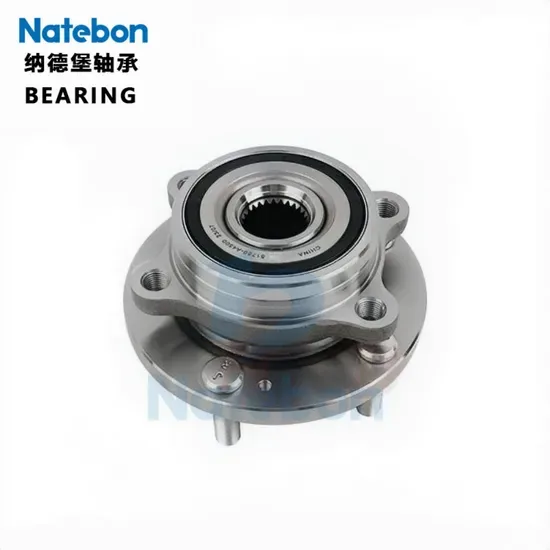
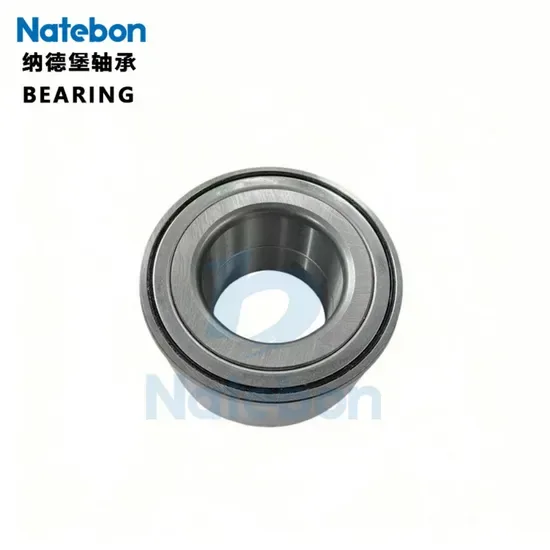
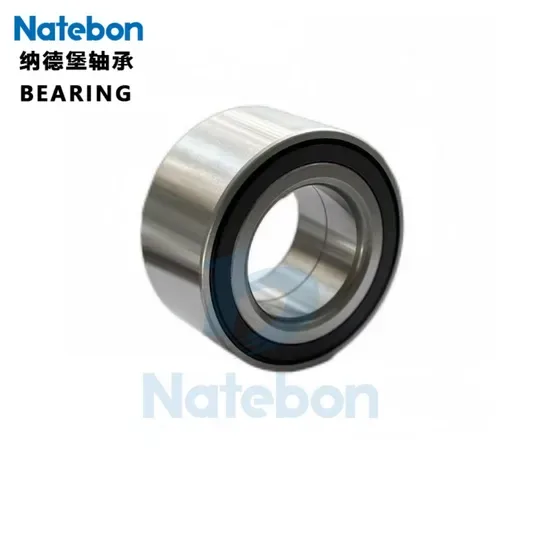
Description
Factory-Verified Origin — Every Auto Wheel Hub Bearing P0 3rd Gen Hub Unit ships with supplier certificate of conformity and batch traceability documentation matched to your import requirements.
Technical Specifications
| Parameter | Value |
|---|---|
| Designation | Natebon Auto Wheel Hub Bearing P0 |
| Bearing Type | 3rd Generation Hub Unit (Automotive Wheel Hub Assembly) |
| Precision Class | P0 (ISO 492 normal tolerance) |
| Hub System | 3rd Gen Hub Unit |
| Steering Compatibility | EPS (Electric Power Steering) Bearings |
| Vehicle Fitment | Volkswagen, WuLing, Benz, BMW, Hyundai, Honda, Toyota, Jeep, Nissan, Ford, Buick, Chery, Chevrolet, Cadillac, Geely, Roewe, Audi, Peugeot, Lexus, Volvo, Mazda, Kia |
| Application | Passenger Vehicles, Commercial Vehicles, Powertrain Systems |
| Features | Safe, Long Lifespan, Lightweight, Eco-Friendly |
| Origin | China |
| Transport Package | Paper Box / Wooden Crate / Tape Wrapping |
Application Suitability
| Industry | Typical Applications |
|---|---|
| Automotive & Heavy Vehicle Repair | Wheel hub assemblies on passenger and light commercial vehicles |
| General MRO | Fleet maintenance replacement on multi-brand platforms |
| Industrial Machinery | EPS steering system bearing maintenance |
When P0 Precision Meets African Road Conditions
The base number matches but the hub still fails — the mismatch usually hides in the seal and fitment, not the tolerance class.
A fleet operator I worked with in West Africa replaced an entire batch of wheel hub units on light commercial trucks. The cross-reference matched the OEM hub designation perfectly, yet the replacement units were specified for sealed highway use while the actual routes covered unpaved laterite roads. Red dust breached the seals within weeks, scoring the raceways and locking hubs on the highway. The cost was never in the bearing itself; it was the tow trucks, the stranded cargo, and the missed delivery windows [NEED_CITE: rolling bearing failure mode classification per ISO 15243]. That experience on the ground shaped how I approach every Auto Wheel Hub Bearing P0 3rd Gen Hub Unit inquiry — the part number is only half the story.
Matching Hub Units to Multi-Brand Fleet Duty
Third-generation hub units integrate the bearing assembly with the mounting flange, cutting installation steps compared to first and second-generation designs. For workshops servicing mixed fleets — Toyotas and Hyundais on the same lift — this Auto Wheel Hub Bearing P0 3rd Gen Hub Unit covers a wide vehicle platform range without stocking separate taper-and-seal kits. The P0 tolerance class aligns with ISO 492 normal precision requirements, which is the standard grade specified by OEMs for general wheel hub fitment where spindle runout is not the governing constraint. I cross-check vehicle VIN and OEM hub part numbers before confirming fitment, because the same platform can carry different hub bolt patterns across model years.
Road Load, Heat Soak, and Contamination in the Field
Radial loads on a wheel hub are constant, but cornering and braking introduce cyclical axial thrust that the bearing must absorb without internal skidding. On hot-climate routes, brake rotor heat soaks into the hub flange, raising internal temperature and reducing grease film thickness; this is where P0 precision, paired with the correct internal clearance, prevents thermal binding. Contamination is the other silent killer — laterite dust and water spray from unpaved sections degrade grease faster than any load spectrum [NEED_CITE: bearing contamination effect on fatigue life per ISO 281]. The sealed hub unit design shifts the contamination defense into the seal lips and grease fill decided at the factory, making pre-shipment seal integrity verification non-negotiable.
What P0 Tolerance Actually Controls on a Hub Unit
P0 precision under ISO 492 governs the dimensional accuracy of the bore, outer diameter, and width — the envelope dimensions that determine press-fit interference with the knuckle and stub axle. On a third-generation hub unit, this means the flange pilot diameter and bolt circle sit within normal tolerance bands, ensuring the brake rotor mounts without inducing axial runout that would accelerate pad wear. The P0 grade is appropriate for standard wheel hub applications where the hub does not directly support a precision spindle or encoder ring requiring tighter runout control. Internal clearance in a sealed hub unit is set at the factory and cannot be adjusted in the field; confirming the specified clearance class against the OEM service manual is therefore a step I never skip.
The Hidden Invoice Behind a Wrong Hub Swap
Correct fitment from a traceable source keeps the hub running through its design L10 life; the wrong clearance, a damaged seal, or an unverified origin part does the opposite. When a hub unit fails prematurely, the visible cost is the replacement part, but the real damage sits downstream: wheel speed sensor faults trigger ABS warnings, uneven brake pad wear cascades through the axle, and warranty claims on the vehicle get voided because the hub origin cannot be documented [NEED_CITE: automotive warranty voidance linked to unverified replacement parts]. ISO 15243 classifies these failure modes — contamination, inadequate lubrication, mounting damage — and nearly all trace back to a sourcing decision made weeks before the truck ever rolled out of the workshop.
Why MRO Buyers and Fleet Workshops Source This Hub Through Us
Every Auto Wheel Hub Bearing P0 3rd Gen Hub Unit we quote comes with a full documentation package matched to the buyer’s import and compliance needs. Authorized-channel sourcing through Natebon means batch-level traceability from production through shipment, not a warehouse receipt from an unknown middleman. Our cross-reference database checks more than base numbers — we align bolt pattern, flange pilot diameter, seal type, and ABS sensor compatibility before confirming a match. For buyers importing into markets where origin documentation affects duty rates, we prepare country-of-origin certificates and HS code guidance as standard. When a workshop needs to verify fitment against a specific vehicle platform, we pull the OEM hub part number and cross-check before the order is booked.
Documentation & Authenticity
- Supplier Certificate of Conformity issued against the specific production batch covering this P0 hub unit
- Third-party dimensional inspection report confirming flange pilot diameter, bolt circle, and bore dimensions meet ISO 492 P0 tolerance
- Country-of-origin documentation prepared for import clearance, including certificate of origin matched to your destination country’s trade agreement requirements
- HS code classification support for automotive wheel hub bearing assemblies, reducing customs delays at port of entry
- Material certificate covering bearing steel grade used in inner and outer rings
Storage, Handling & Mounting
- Keep the sealed hub unit in its original transport packaging until the mounting shift begins; opening early exposes the factory grease fill to workshop airborne contaminants that compromise the 3rd gen seal lips
- Store P0 hub units horizontally on shelving in a dry environment; vertical stacking on the flange face risks micro-deformation of the bolt circle that shows up as brake rotor runout after fitment
- Use clean gloves when handling the hub flange surface; fingerprints on the ABS sensor ring area can interfere with wheel speed signal integrity on EPS-equipped platforms
- Press-fit the hub unit using a hydraulic press aligned to the outer ring only — driving force through the inner ring damages the raceway and is a leading mounting-error failure mode per ISO 15243
- Do not attempt to re-grease or open the sealed hub unit; the factory fill and seal lip preload are calibrated as a system and cannot be replicated in the field
Getting the Right Hub to Your Workshop
Share the vehicle make, model year, and VIN or OEM hub part number so we can run a full cross-reference check covering bolt pattern, seal specification, and ABS sensor compatibility. If you are placing a bulk fleet order, let us know your destination port and preferred Incoterms so the documentation package — COC, origin certificate, HS code — arrives aligned with your customs broker’s requirements.
Frequently Asked Questions
Q: How do I verify that this Auto Wheel Hub Bearing P0 is genuine and traceable?
A: Each unit ships with a supplier Certificate of Conformity tied to its production batch, and we provide country-of-origin documentation and material certificates as part of the standard delivery package. You can request the batch number before shipment to cross-check with our traceability records.
Q: What is the difference between 1st, 2nd, and 3rd generation hub units?
A: First-generation units require manual preload adjustment and separate seals during installation. Second-generation units add a pre-set bearing but still need a separate flange. Third-generation units, like this P0 hub, integrate the bearing, flange, and seals into one assembly, reducing installation errors and workshop time.
Q: Can I use this hub unit across different car brands?
A: This Auto Wheel Hub Bearing P0 3rd Gen Hub Unit covers a broad range including Volkswagen, Toyota, Hyundai, Honda, BMW, and others listed in the fitment data. Always confirm against the specific vehicle OEM part number before ordering, as bolt patterns and flange diameters vary even within the same brand family.
Q: Is P0 precision sufficient for standard automotive wheel hub applications?
A: Yes. P0 is the ISO 492 normal tolerance class specified by most OEMs for general wheel hub fitment where spindle runout is not the governing design constraint. Applications requiring tighter runout, such as hubs with integrated high-resolution encoder rings, may call for P6 or tighter grades.
Q: What documentation comes with the shipment for import purposes?
A: Standard documentation includes the Certificate of Conformity, material certificate, country-of-origin documentation, and HS code guidance. Additional inspection reports can be arranged before shipment based on your compliance requirements.
Confirm Fitment Before You Order
Send us your OEM hub part number or vehicle VIN, and we will return a full cross-reference match with documentation package details within one working day.