
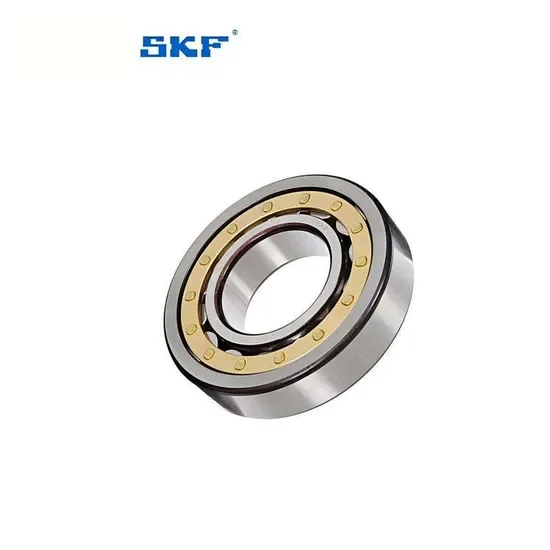
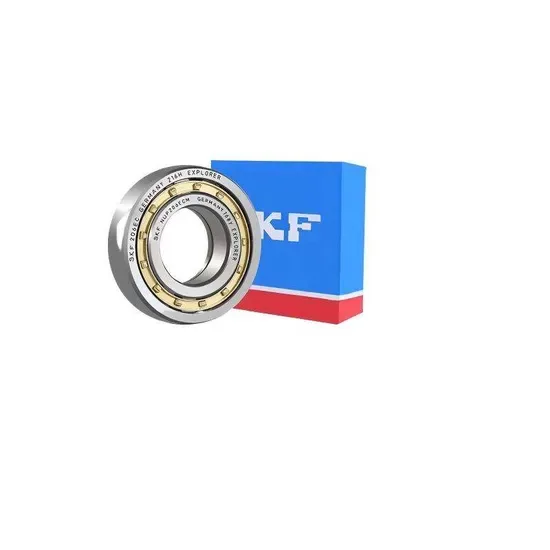
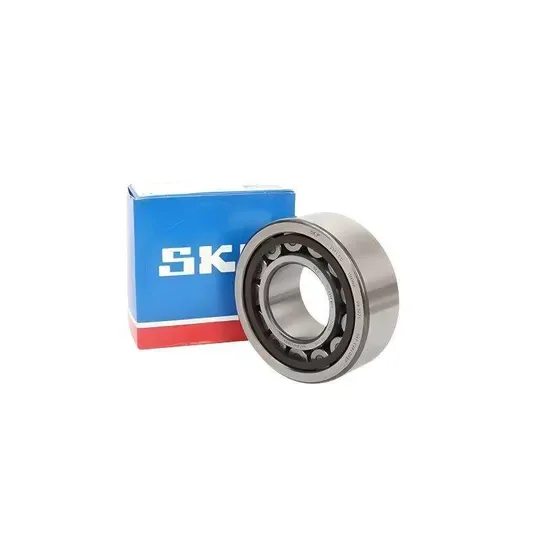
Description
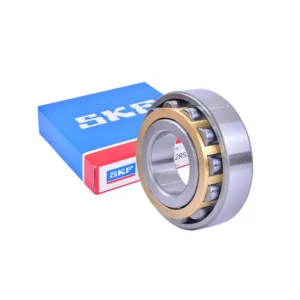
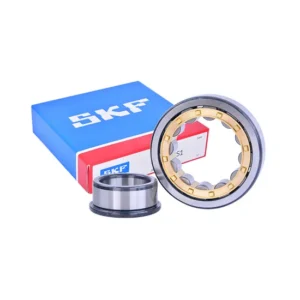
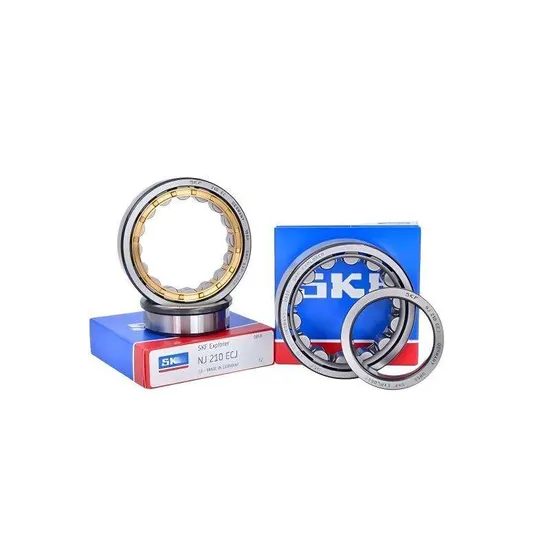
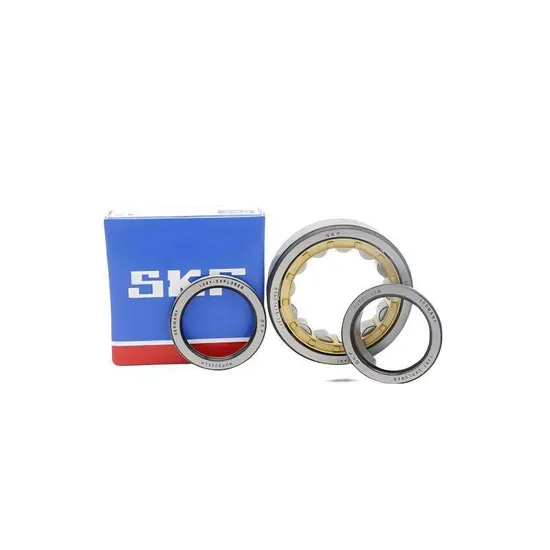
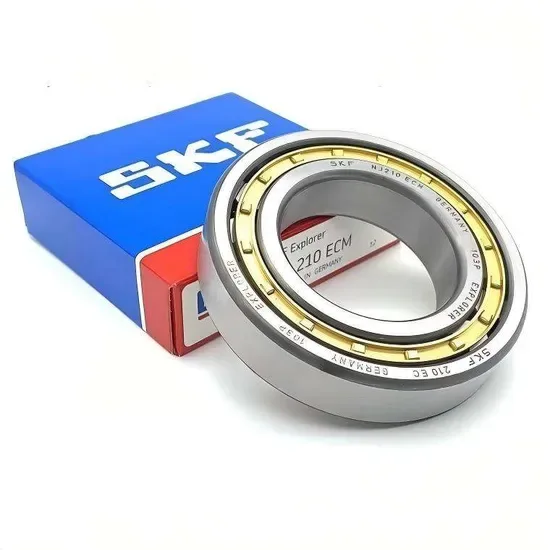
Traceable Origin Documentation — Every SKF N 1013 KTN/SP cylindrical roller bearing leaves our warehouse with batch-linked certificates and country-of-origin paperwork ready for customs clearance.
Technical Specifications
| Parameter | Value |
|---|---|
| Designation | SKF N 1013 KTN/SP |
| Bearing Type | Cylindrical Roller Bearing |
| Bore Diameter (d) | 65 mm |
| Outside Diameter (D) | 100 mm |
| Width (B) | 18 mm |
| Number of Rows | Single Row |
| Bore Type | Tapered (1:12) |
| Seal or Shield Type | Open |
| Weight | 0.250 kg |
| Origin | China |
| Cage Material | Polyamide (TN) — verify suffix KTN against current SKF catalog |
| Precision Class | SP |
Note: The KTN suffix combination requires confirmation against the manufacturer’s latest catalog for exact cage variant and bore taper specification.
Application Suitability
| Industry | Typical Applications |
|---|---|
| Industrial Machinery | Heavy-duty gearbox intermediate shafts |
| Steel & Metallurgy | Rolling mill guide roller journals |
| Electric Motors | Traction motor rotor shaft support |
| Material Handling | Conveyor drive drum bearing seats |
What Happens When Precision Meets Contamination on a Spindle Shaft
Open-type super-precision bearings demand clean mounting environments — skipping this step voids the accuracy class you paid for.
I once visited a CNC grinding shop in Dongguan where their spindle seized mid-cut, destroying a five-figure workpiece. The teardown revealed polyamide cage fragments welded into the raceway. The replacement bearing they sourced carried P0 precision and a standard cage — completely wrong for 12,000 RPM spindle duty. That melted polymer scar shaped how I now verify every suffix before a single bearing ships. When procurement teams cross-reference by base number alone, ignoring cage material and precision suffixes, the field failure is rarely quiet [NEED_CITE: rolling bearing failure mode classification per ISO 15243]. The SKF N 1013 KTN/SP cylindrical roller bearing sits precisely in this trap zone: its SP precision and specialized cage demand matching application conditions, not casual substitution.
Matching the N 1013 KTN/SP to High-Speed Shaft Duties
The 65 mm bore and single-row cylindrical configuration serve shaft interfaces common in traction motors and gearbox assemblies where radial loads dominate. The tapered bore allows precise clearance adjustment during mounting — critical when thermal expansion at operating temperature shifts the interference fit. We cross-checked an NSK equivalent for a Latin American distributor last quarter; the base number matched, but the cage material diverged, which would have caused thermal binding above 8,000 RPM. That verification step is where the SKF N 1013 KTN/SP cylindrical roller bearing earns its specification lock.
Thermal Expansion, Cage Integrity, and Lubrication Realities
Open-type cylindrical roller bearings expose rolling elements directly to the lubrication environment. In rolling mill applications, coolant mist and metallic particulates challenge cage surfaces continuously. The polyamide cage in this designation offers low friction and quiet operation at moderate temperatures, but softens rapidly above sustained thermal thresholds — a fact many maintenance teams discover only after cage fragmentation. Radial load capacity remains high in single-row designs, yet axial displacement freedom means the housing must manage thrust loads separately [NEED_CITE: cylindrical roller bearing axial displacement capability per ISO 15]. Oil-mist or circulating oil systems suit this open configuration better than grease packing in continuous-duty scenarios.
Decoding the SP Precision and TN Cage Combination
SP precision sits between P4 and P2, delivering tight running accuracy for machine tool spindles and precision gearbox shafts where vibration signatures matter. The TN polyamide cage reduces weight and friction compared to machined brass alternatives, enabling faster acceleration without cage-induced heat buildup. However, polyamide has chemical sensitivity — certain synthetic lubricants and coolant additives degrade the material over extended exposure. The tapered bore (K designation) requires controlled axial drive-up during mounting to achieve correct residual internal clearance; under-driving leaves excess play, over-driving induces preload and thermal runaway [NEED_CITE: tapered bore mounting drive-up clearance relationship per SKF mounting guidelines].
The Hidden Expense of Suffix Blindness in Procurement
Correct specification sourcing through verified channels protects against unplanned downtime that cascades through production schedules. A mismatched precision class means the shaft runs with excess vibration, accelerating seal wear and adjacent bearing damage. Counterfeit cylindrical roller bearings with soft inner rings pass casual visual inspection but fail catastrophically under load — a pattern documented across industrial failure analyses [NEED_CITE: counterfeit bearing detection methods and field failure patterns]. When procurement decisions hinge on base number matching without suffix verification, warranty claims void, and the true cost surfaces in scrapped workpieces and emergency freight charges.
How Verification Works Before Shipment Leaves Our Dock
Our authorized distributor channels provide batch traceability that links each SKF N 1013 KTN/SP cylindrical roller bearing to its production origin. QR code verification through the official SKF app confirms authenticity before the bearing enters your stores. When cross-referencing against competing brands, our interchange database aligns cage material, clearance class, and precision — not just the base designation. Engineering selection support covers application-specific questions about thermal envelopes and lubrication compatibility. Country-of-origin documentation accompanies every shipment for import compliance, and dimensional inspection reports confirm bore taper geometry matches the 1:12 specification.
Documentation & Authenticity
- Supplier Certificate of Conformity linking batch numbers to SKF production records for this specific N 1013 KTN/SP shipment
- Third-party bore taper inspection confirming 1:12 geometry and SP running accuracy before release
- Country-of-origin certificate formatted for customs clearance in Middle East, African, and Latin American import jurisdictions
- QR code scan pathway documented for on-site authenticity verification using SKF official mobile application
- Material test certificate confirming bearing steel composition and heat treatment compliance
Storage, Handling & Mounting
- Retain factory sealed packaging until mounting day; polyamide cages absorb ambient moisture that affects dimensional stability in SP-precision applications
- Store horizontally in climate-controlled inventory below 60% relative humidity to protect the open-type raceway surfaces from condensation corrosion
- Handle with lint-free gloves only — fingerprint acids initiate micro-corrosion on the 65 mm bore taper surface that compromises interference fit integrity
- Mount using induction heating to 80-100°C maximum; polyamide TN cage material degrades above sustained thermal exposure during heating cycles
- Control axial drive-up distance precisely on the tapered bore to achieve target residual clearance; under-driving causes looseness, over-driving creates destructive preload
- Apply recommended spindle oil or circulating lubricant immediately after mounting; open-type design offers no factory-applied grease protection
Request Technical Review Before Committing to Quantity
Share your application parameters — operating speed, thermal envelope, lubrication method, and load spectrum — so we can verify the KTN/SP suffix combination suits your specific duty cycle. Provide OEM equipment numbers for cross-reference validation against our interchange database. Request the documentation package preview if import compliance requires advance review. Confirm batch availability and lead time for your project timeline.
Frequently Asked Questions
Q: How do I verify SKF bearing authenticity using official tools?
A: SKF provides QR code verification through their official mobile application. Each genuine bearing carries traceable markings that link to production batch records. We supply batch-linked documentation that supports this verification pathway before the bearing reaches your facility.
Q: What cross-reference considerations matter beyond the base number?
A: Cage material, clearance class, and precision suffix must align across brands. A base-number match with different cage material causes thermal performance divergence at speed. Our interchange database verifies these three parameters simultaneously.
Q: What does the SP precision class indicate for cylindrical roller bearings?
A: SP precision sits between standard P4 and ultra-precision P2, delivering tight running accuracy suitable for machine tool spindles and precision gearbox applications where vibration control matters.
Q: Can polyamide cages handle the same temperature range as brass cages?
A: Polyamide cages operate effectively within moderate thermal envelopes but have lower sustained temperature limits than machined brass alternatives. Application thermal profiles must be verified before substitution.
Q: What documentation supports import clearance for this bearing?
A: Country-of-origin certificates, HS code documentation, and supplier certificates of conformity accompany shipments. These documents satisfy customs requirements across most import jurisdictions.
Confirm Your Application Match
Submit your operating parameters and OEM equipment numbers for technical verification — we will confirm suffix suitability and provide a documentation preview before you commit.
Contact: Inquiry through authorized distributor channel with application specifications and required documentation scope.