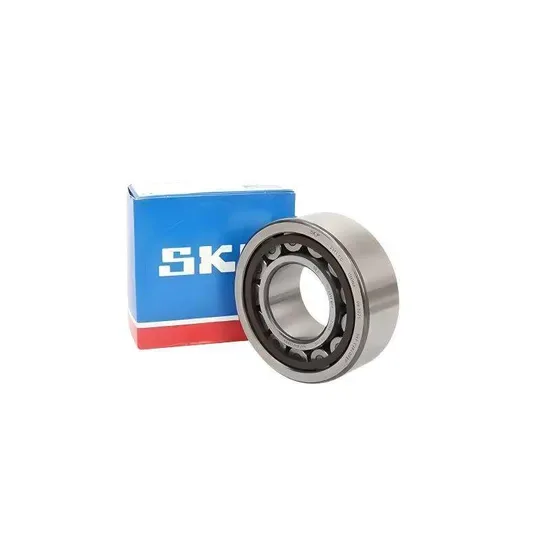
Description
Authorized Channel Sourcing — every SKF NN 3026 TN9/SPC2W33 ships with batch-level traceability and QR verification documentation tied to the manufacturer’s official authentication system.
Technical Specifications
| Parameter | Value |
|---|---|
| Designation | SKF NN 3026 TN9/SPC2W33 |
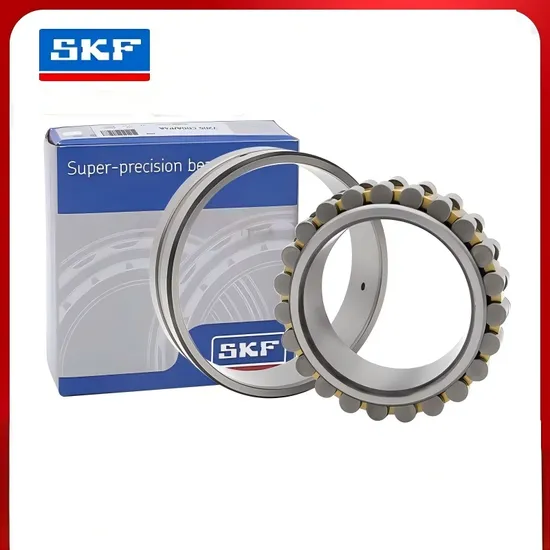
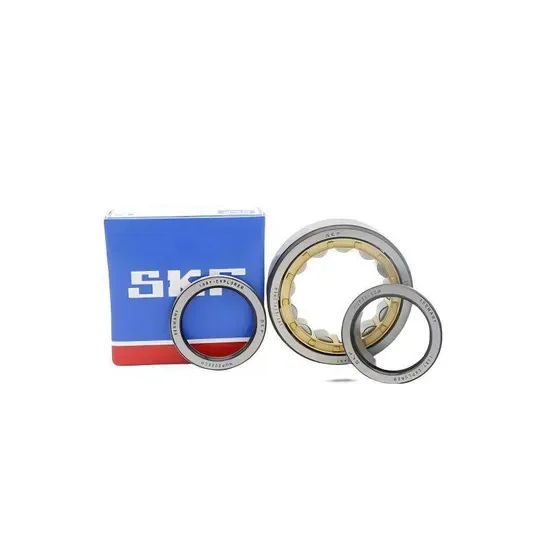
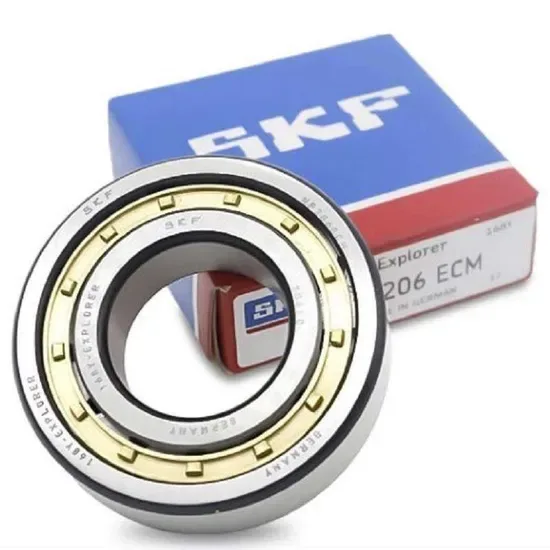
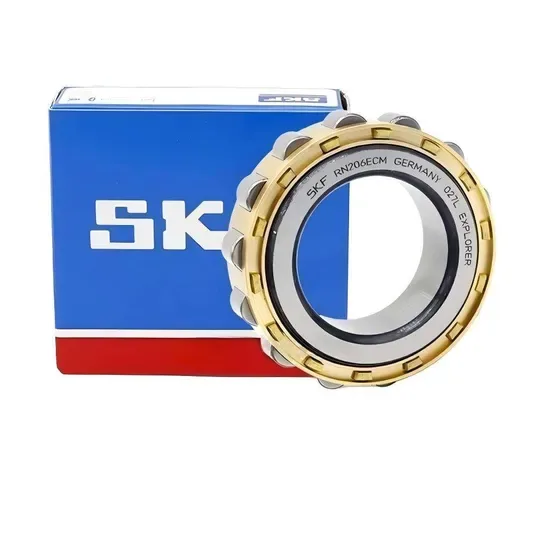
| Bearing Type | Double Row Cylindrical Roller Bearing |
| Bore Diameter (d) | 130 mm |
| Outside Diameter (D) | 200 mm |
| Weight | 5.45 kg |
| Cage Material | Injection molded glass fiber reinforced polyamide 6,6 (TN9) |
| Precision Class | SP (Super Precision) |
| Clearance Class | C2 (smaller than normal radial internal clearance) |
| Number of Rows | Double |
| Outer Ring Feature | Annular groove and three lubrication holes (W33) |
| Bore Type | Cylindrical |
| Origin | China |
| Standards | ISO 15 / ISO 492 |
Application Suitability
| Industry | Typical Applications |
|---|---|
| Machine Tool Manufacturing | Main spindle front and rear support positions requiring minimal radial runout |
| Precision Industrial Gearboxes | High-speed input shaft support in servo-driven transmission units |
| Steel and Metallurgy | Work roll and backup roll neck positions in precision rolling mills |
| General Industrial Machinery | High-speed rotating shafts demanding SP-class running accuracy |
What C2 Clearance Really Means When Your Spindle Heats Up
C2 clearance is the correct starting point when thermal growth must be absorbed by controlled preload rather than free expansion.
A significant share of premature spindle bearing failures traces back to clearance decisions made without considering the full thermal cycle. When a standard CN or C3 clearance is installed in a position designed for C2 preload-ready geometry, the shaft experiences uncontrolled radial displacement during warm-up. The result is not always immediate seizure — sometimes it manifests as chatter marks on machined surfaces, gradually worsening over weeks until the operator notices dimensional drift [NEED_CITE: spindle bearing failure modes related to clearance mismatch]. Counterfeit bearings compound this problem because soft inner rings deform under the same preload that a genuine hardened ring would absorb predictably. I once saw a workshop replace a set of NN30 spindle bearings three times before realizing the supplier had shipped CN clearance labeled as C2. The SKF NN 3026 TN9/SPC2W33 super-precision double row cylindrical roller bearing eliminates that guesswork by carrying the C2 designation as part of its verified suffix chain.
Matching Thermal Growth to Preload Geometry in Spindle Assemblies
The NN30 series was developed specifically for machine tool spindle applications where radial rigidity and low runout govern part quality. This particular configuration pairs SP precision class with C2 clearance, meaning the bearing is designed to be mounted with a defined interference fit that establishes operational preload once the shaft reaches thermal equilibrium. In practice, maintenance engineers must calculate the expected temperature differential between the inner ring (heated by shaft conduction) and the outer ring (cooled by housing mass) to confirm that C2 clearance will close to the target operating preload. The SKF NN 3026 TN9/SPC2W33 super-precision double row cylindrical roller bearing supports this calculation because its dimensional tolerances fall within the SP band, which restricts both bore and OD deviations more tightly than standard P5. Our cross-reference database flags clearance mismatches at the quotation stage — if your OEM drawing calls for C2 but the replacement quote shows CN, the discrepancy is caught before the part ships.
Load Spectrum, Speed Envelope, and Thermal Boundaries
Spindle positions subject this bearing to predominantly radial loads with moderate axial components transmitted through adjacent angular contact pairs. The double row cylindrical roller geometry handles the radial component while allowing the shaft to float axially during thermal expansion, a critical design intent that only works when clearance class is correct. Speed capability is governed largely by the TN9 polyamide cage, which reduces centrifugal mass compared to machined brass alternatives and lowers the friction heat generated at the roller-guiding surfaces [NEED_CITE: polyamide cage speed limits versus brass in cylindrical roller bearings]. Operating temperature must stay within the polyamide thermal boundary — sustained exposure above the cage material limit accelerates polymer aging and compromises roller guidance. The W33 annular groove and lubrication holes in the outer ring allow direct grease relubrication without disassembly, which is essential for spindles running multi-shift schedules where relubrication intervals must be maintained without production interruption. Installation requires careful attention to the cylindrical bore fit — induction heating of the inner ring is the preferred mounting method to avoid damage to the precision-ground raceway surfaces.
Decoding the Suffix Chain: TN9, SP, C2, W33
Each suffix in this designation carries a specific engineering consequence. The TN9 cage is injection-molded from glass fiber reinforced polyamide 6,6, chosen for high-speed spindle duty because its lower mass reduces centrifugal loading on the roller pockets and generates less friction heat than brass alternatives. SP precision class restricts dimensional and running accuracy to tighter bands than standard tolerance, directly affecting the radial runout that determines surface finish on machined parts. C2 clearance, as discussed, provides the preload-ready internal geometry that spindle designers rely on to achieve rigidity without over-constraining the shaft. The W33 feature — an annular groove with three lubrication holes drilled through the outer ring — simplifies maintenance by allowing fresh grease to reach the roller-raceway contact zone directly, flushing out degraded lubricant and wear particles without splitting the housing [NEED_CITE: W33 lubrication groove effectiveness in cylindrical roller bearing service life].
The Hidden Costs When Precision Suffixes Are Ignored
Correct selection paired with verified sourcing protects against a cascade of failures that rarely announce themselves immediately. A clearance mismatch may not cause seizure on day one, but the gradual thermal binding increases friction torque, accelerates grease degradation, and eventually initiates surface distress on the raceway — a failure path classified under ISO 15243 as surface fatigue accelerated by inadequate lubrication film [NEED_CITE: ISO 15243 bearing failure classification categories]. Installing a counterfeit bearing with cloned markings but soft inner rings introduces a different failure mode: the ring deforms under operational preload, creating uneven load distribution across the roller set that leads to edge loading and premature spalling. Precision class errors are equally costly — a P5 bearing substituted where SP is required may function initially but will produce chatter marks on finished surfaces as running accuracy falls outside the spindle’s design envelope. Every one of these scenarios results in unplanned downtime, scrap parts, and warranty disputes that far exceed the original bearing cost.
What We Verify Before Your SKF NN 3026 TN9/SPC2W33 Ships
Our sourcing model operates through authorized distributor channels with full batch and lot traceability, meaning the bearing you receive can be traced back to the manufacturer’s production records. Each unit is checked against your application parameters — we confirm that C2 clearance matches your thermal expansion calculation, that SP precision meets your spindle runout requirement, and that the TN9 cage material is compatible with your operating temperature envelope. For buyers managing cross-brand interchange, our database matches clearance, cage material, and precision class simultaneously rather than relying on base designation alone. Country-of-origin documentation accompanies every shipment to support import compliance, and the QR verification pathway through the official brand app is available for on-site authenticity confirmation by your receiving inspection team.
Documentation & Authenticity
- Supplier Certificate of Conformity referencing the specific batch and lot number tied to this SKF NN 3026 TN9/SPC2W33 shipment
- SKF official app QR code verification pathway for on-site authenticity confirmation during receiving inspection
- Third-party dimensional inspection report confirming SP-class bore, OD, and running accuracy tolerances before dispatch
- Country-of-origin documentation and HS code classification for import customs clearance in your destination market
- Material certificate confirming bearing steel grade and heat treatment compliance for the inner and outer rings
Storage, Handling & Mounting
- Retain the original sealed packaging until the moment of mounting; early exposure to shop-floor humidity risks corrosion on the SP-precision raceway surfaces of this NN 3026 unit
- Store flat in a temperature-stable environment below the polyamide TN9 cage thermal limit to prevent polymer property drift before installation
- Use clean lint-free gloves when handling the exposed bearing — finger acids etch precision-ground surfaces and initiate corrosion pits that compromise C2 preload consistency
- Mount the inner ring using controlled induction heating to the manufacturer-specified temperature; cold press-fitting risks damaging the C2-clearance roller alignment
- Feed relubrication grease through the W33 outer ring lubrication holes after installation to purge storage preservative and establish the correct fill volume
Request a Technical Review for Your Spindle Application
Share your spindle operating parameters — shaft speed, radial load, expected thermal gradient, and housing fit tolerances — so we can confirm that C2 clearance and SP precision align with your design intent. If you are replacing an existing bearing, provide the OEM equipment number and we will run a full cross-reference check covering clearance, cage, and precision class. Request the documentation package and country-of-origin confirmation for your import planning. We will respond with availability, lead time, and any technical observations relevant to your specific mounting configuration.
Frequently Asked Questions
Q: How do I verify that my SKF NN 3026 TN9/SPC2W33 is genuine using the official app?
A: SKF provides a QR code verification pathway through their official mobile application. Scan the code on the bearing packaging or product label to access batch traceability data tied to the manufacturer’s production records. This confirms production origin, date, and distribution chain. We supply the full traceability documentation package with every shipment to support this verification step during your receiving inspection.
Q: Why is C2 clearance specified instead of CN or C3 for precision spindle applications?
A: C2 clearance provides smaller-than-normal internal clearance, which is the correct starting condition when the bearing must be mounted with interference fit to establish operational preload. In spindle designs, the thermal gradient between inner and outer rings closes the remaining clearance during warm-up, achieving the rigidity required for minimal radial runout. Installing CN or C3 where C2 is specified leaves excess play at operating temperature, causing chatter and poor surface finish on machined parts.
Q: How does SP precision compare to P4 and P5 for machine tool spindle selection?
A: SP (Super Precision) is a designation used primarily for cylindrical roller bearings in spindle applications. It imposes tighter constraints on dimensional accuracy and running accuracy than standard tolerance classes. While P4 and P5 are defined under ISO 492 for general bearing categories, SP addresses the specific combination of bore tolerance, OD tolerance, and radial runout required for rigid spindle support positions. Your spindle OEM drawing will specify which class is required.
Q: What are the temperature and speed limits of the TN9 polyamide cage compared to brass?
A: The TN9 glass fiber reinforced polyamide 6,6 cage operates within a defined temperature envelope set by the polymer’s thermal stability. Above this limit, the material loses mechanical properties and roller guidance degrades. Within its rated range, TN9 offers lower mass than machined brass, reducing centrifugal forces on the cage pockets and allowing higher speed operation with less friction heat generation. Brass cages tolerate higher temperatures but add mass that limits the speed ceiling.
Q: How should the W33 lubrication groove be used during relubrication?
A: The W33 feature provides an annular groove around the outer ring with three lubrication holes that deliver grease directly to the roller-raceway contact zone. During relubrication, inject fresh grease through these holes while the bear*ly and flush out degraded grease and wear particles. Use a grease compatible with the original fill to avoid chemical incompatibility that could break down the thickener structure.
Secure Your SKF Spindle Bearing With Verified Traceability
Send us your application parameters or OEM equipment number for a technical review and cross-reference confirmation.
Contact our engineering team through the inquiry form on our website or email your specifications directly for a documented quotation with lead time and origin confirmation.