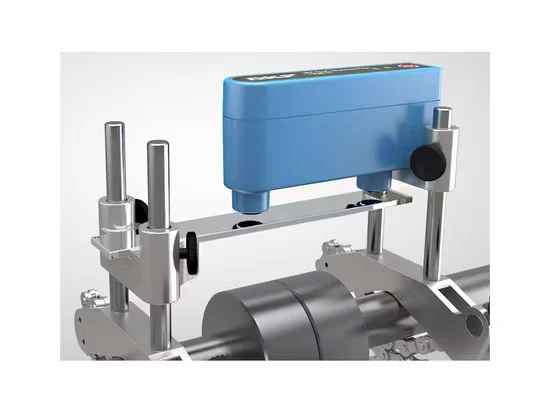
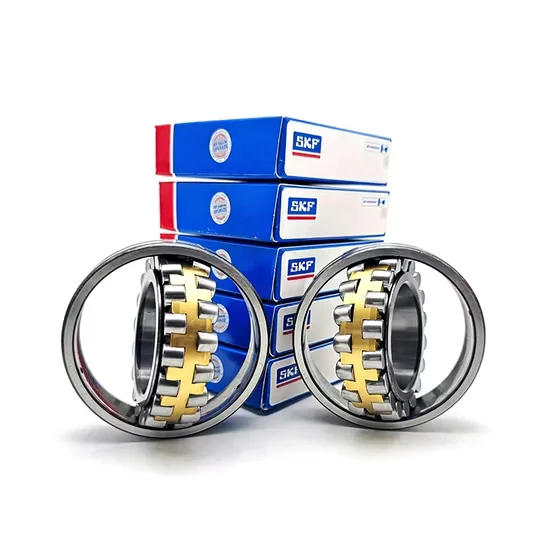
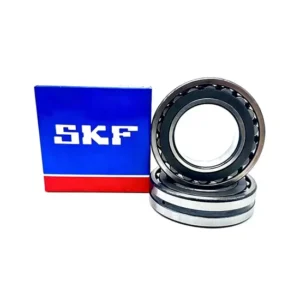
Original Batch Traceability — Every SKF 21307 spherical roller bearing ships with verifiable factory lot documentation to guarantee authentic Swedish manufacturing origin.
Technical Specifications
| Parameter | Value |
| Designation | SKF 21307 |
| Bearing Type | Spherical Roller Bearing |
| Bore Diameter (d) | 35 mm |
| Outside Diameter (D) | 80 mm |
| Width (B) | 21 mm |
| Material | Bearing Steel |
| Origin | Sweden |
Application Suitability
| Industry | Typical Applications |
| Heavy-duty machinery | Industrial gearboxes and power transmission units |
| Mining and construction | Vibrating screens and rock crushers |
| Steel mill equipment | Continuous casting and rolling mill conveyors |
Why Standard Clearance Fails in Heavy-Duty Gearboxes
Thermal expansion under continuous heavy loads quickly eliminates standard internal clearance, leading to catastrophic seizure.
Early in my failure analysis career, I dismantled a vibrating screen where the maintenance team completely ignored clearance suffixes. They installed standard clearance instead of the required C3 variant, and the extreme operating heat caused the rollers to bind and seize within hours of startup. When specifying a SKF 21307 spherical roller bearing for similar heavy equipment, overlooking the thermal growth of the shaft and housing results in unplanned downtime and severe secondary damage to the gearbox casing. The friction generated by the restricted internal geometry* surface fatigue. Maintenance crews often misdiagnose this as a lubrication failure rather than a fundamental selection error. Understanding the thermal dynamics of your specific application is absolutely critical before finalizing the procurement order. [NEED_CITE: thermal expansion effects on bearing internal clearance]

Matching Load Profiles to Spherical Roller Geometry
The unique barrel-shaped rolling elements allow this SKF 21307 spherical roller bearing to accommodate significant shaft misalignment while sustaining heavy radial loads. In environments like rock crushers where shock loads are constant, the self-aligning capability prevents edge loading on the rollers. This geometric advantage ensures stable operation even when the housing bore experiences slight deflection under peak operational stress. Furthermore, the optimized roller profile distributes the contact stress evenly across the raceway, minimizing localized wear patterns. By maintaining a consistent load zone, the component effectively absorbs the erratic vibrations inherent to heavy-duty material processing. This structural resilience is what separates standard industrial components from those engineered specifically for extreme mechanical abuse.
Navigating Contamination and Lubrication in Harsh Environments
In mining and construction applications, airborne dust and particulate matter constantly threaten the rolling contact zones. Adequate lubrication is critical to flush out contaminants and maintain a protective elastohydrodynamic film between the rollers and raceways. Without proper sealing arrangements or regular relubrication intervals, abrasive particles will accelerate surface fatigue and spalling. Selecting the correct grease viscosity and establishing strict maintenance schedules are essential to maximize service life in these demanding conditions. The ingress of microscopic silica particles acts as a lapping compound, rapidly degrading the precision-ground surfaces. Engineers must evaluate the specific contamination vector and implement physical barriers alongside chemical lubrication strategies. Ignoring the environmental reality of the installation site guarantees a drastically shortened operational lifespan. [NEED_CITE: contamination impact on rolling bearing fatigue life]
Decoding the Base Designation and Dimensional Constraints
Since the SKF 21307 designation lacks additional suffixes, it represents the baseline configuration for this specific dimensional envelope. The 35 mm bore, 80 mm outside diameter, and 21 mm width dictate the physical space required within the gearbox or machinery housing. Without a specified cage material or clearance suffix in the part number, procurement teams must explicitly verify these parameters against the application's thermal and vibrational demands. Standard bearing steel provides the necessary hardness and core toughness for general industrial use, but engineers must confirm if a specific internal clearance class is required for the operating temperature range. Misinterpreting a base designation as a universal fit often leads to premature failure when the actual operating conditions demand specialized internal geometry. The absence of a cage suffix typically implies a standard pressed steel or machined brass design depending on the manufacturer's current production standard, which must be validated for high-vibration environments. Procurement professionals should never assume the baseline configuration is automatically optimized for severe duty cycles without consulting the technical data sheets.
The Financial Impact of Premature Bearing Seizure
Replacing a seized component involves far more than the unit cost of the replacement part. The resulting unplanned downtime halts entire production lines, leading to substantial revenue loss and missed delivery deadlines. Furthermore, catastrophic failure often damages adjacent shafts, seals, and housings, multiplying the repair scope and labor expenses. Adhering to failure mode classifications helps engineers recognize that improper selection is a primary driver of these compounding operational costs. When a component seizes due to clearance collapse, the kinetic energy transfers directly into the supporting structure, often warping the gearbox housing beyond repair. The secondary damage frequently requires complete assembly teardowns, extending the maintenance window from a simple swap to a major rebuild. Recognizing these hidden financial risks shifts the procurement focus from initial unit price to total cost of ownership. [NEED_CITE: rolling bearing failure mode classification per ISO 15243]
Securing Authentic Components for Critical Machinery
Sourcing genuine components is the first line of defense against unexpected line stoppages. We provide complete batch traceability for every unit, ensuring the metallurgical integrity matches the manufacturer's original specifications. Our technical team actively cross-references application parameters to prevent the exact clearance and cage mismatches I witnessed during my early field investigations. By maintaining massive spot inventory, we eliminate the typical multi-week lead times associated with specialized heavy-duty components. Additionally, our engineers offer precise equivalent model consultation when OEM part numbers become obsolete or require dimensional upgrades. We do not simply ship boxes; we validate that the specific internal geometry aligns with your operational reality. This proactive technical verification prevents the costly installation of incompatible variants that look identical on the outside but fail rapidly under load.
Documentation & Authenticity
- Certificate of Conformity verifying the Swedish manufacturing origin for this specific batch.
- Original factory lot traceability documents linking the 35x80x21mm dimensions to the production run.
- Official app QR code validation confirming the authenticity of the bearing steel construction.
- Dimensional inspection reports validating the precise 80 mm outside diameter tolerance before dispatch.
Storage, Handling & Mounting
- Store the 35 mm bore components in original packaging to prevent humidity-induced corrosion on the bearing steel surfaces.
- Use induction heating for mounting the 80 mm outer ring, avoiding direct flame contact that alters the metallurgical structure.
- Keep the units sealed until installation to protect the precision-ground raceways from airborne particulate contamination.
- Verify the shaft and housing tolerances match the 21 mm width and 35 mm bore specifications prior to pressing.
Engineering Data Required for Technical Verification
To ensure optimal performance, please provide the specific radial and axial load profiles along with the operational speed and temperature range. Sharing the exact OEM equipment model number allows our engineering team to perform a comprehensive cross-reference and L10 life calculation. Detailing the environmental exposure, such as dust or moisture levels, helps us recommend the most appropriate sealing and lubrication strategy for your application. If the installation involves tight interference fits or specialized housing materials, documenting these mechanical constraints is equally vital. Our technical staff will analyze these operational variables to confirm whether the baseline configuration is sufficient or if a specialized variant is necessary. This collaborative engineering approach guarantees that the final selection is perfectly calibrated to your unique machinery requirements.
Preguntas Frecuentes
Q: How can I verify the authenticity of the received components using official tools?
A: You can authenticate the components by scanning the QR code printed on the packaging using the manufacturer's official mobile application. This digital verification confirms the Swedish origin and matches the physical unit to the factory's production database, ensuring you have received genuine bearing steel products rather than counterfeit alternatives.
Q: What are the equivalent cross-reference models across other premium global brands?
A: While the base dimensions of 35x80x21 mm are standardized, internal geometry and cage designs vary between manufacturers. Our technical team can provide precise cross-reference mappings to equivalent models from other premium global brands, ensuring the replacement maintains the required load capacity and misalignment tolerance for your specific heavy-duty machinery application.
Q: How do I select the appropriate internal clearance class for vibrating equipment?
A: Vibrating screens and crushers generate significant heat and dynamic loads, which reduce internal clearance during operation. Engineers typically specify a larger initial clearance class to compensate for thermal expansion and tight interference fits. Providing your exact operating temperature and shaft fit tolerances allows us to recommend the correct clearance to prevent seizure.
Q: How does this series differ from wider spherical roller variants in load capacity?
A: The 213 series features a narrower width compared to wider variants, resulting in a more compact design for space-constrained gearboxes. While it offers excellent radial load capacity and misalignment compensation, wider series bearings provide higher load ratings for extremely heavy applications. We evaluate your specific spatial constraints and load requirements to determine the optimal series.





 Ahmed Al-FarsiFarsi Industrial Services · Oman