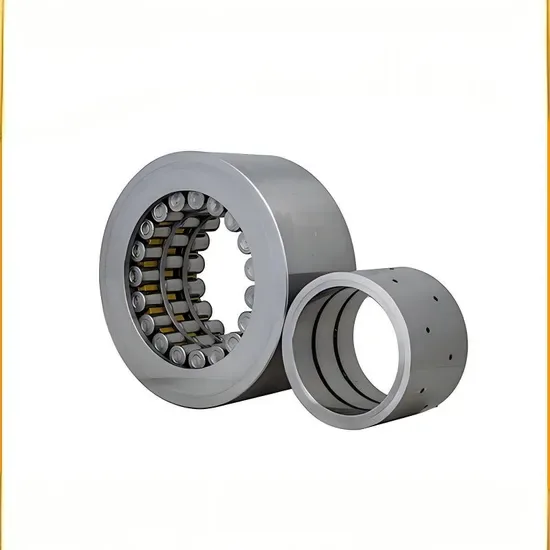
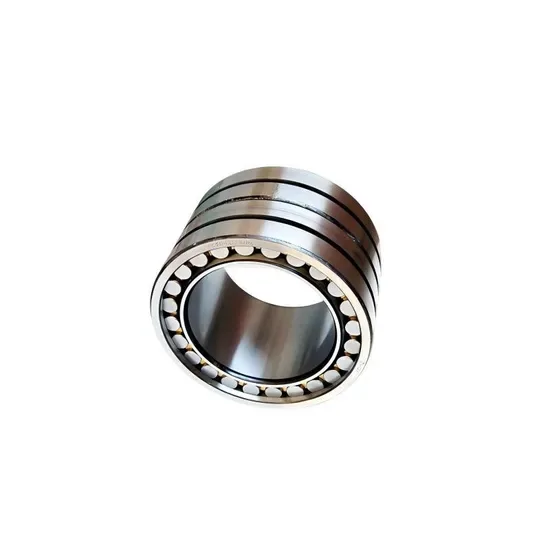
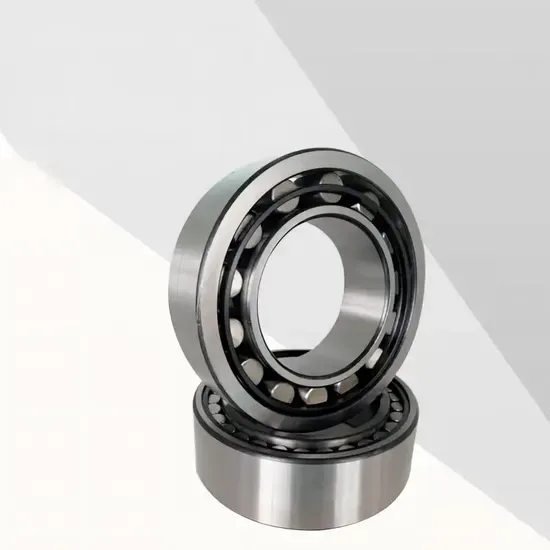
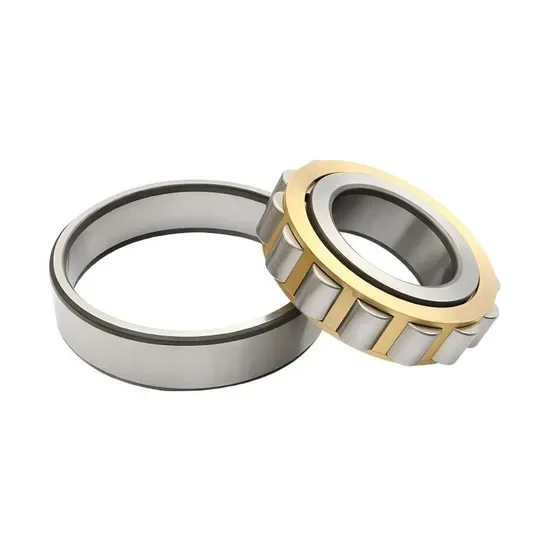
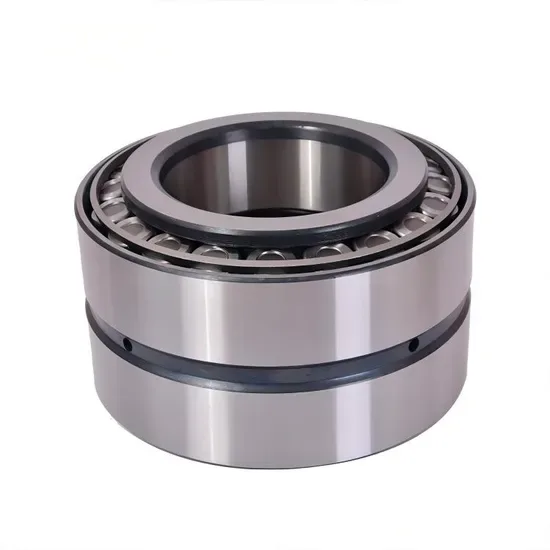
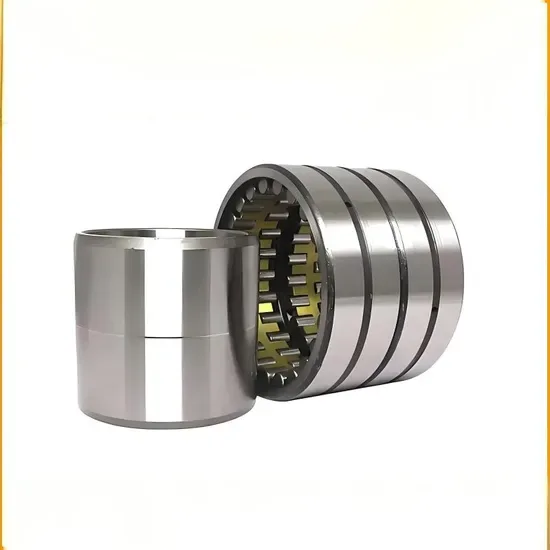
Description
Traceable Supply Chain — Every 2J120-14 sealed cylindrical roller bearing we dispatch ships with a Certificate of Conformity tied to its specific production batch, giving your maintenance team full material lineage before it ever reaches the sintering line.
Technical Specifications
| Parameter | Value |
|---|---|
| Designation | 2J120-14 (generic) |
| Bearing Type | Cylindrical Roller Bearing |
| Bore Diameter (d) | 120 mm |
| Outside Diameter (D) | 210 mm |
| Width (B) | 132 mm |
| Seal or Shield Type | Sealed Type |
| Material | Bearing Steel |
| Number of Rows | Single Row |
| Origin | To be confirmed at quotation |
The suffix "2J120-14" does not follow standard ISO bearing suffix conventions; it appears to be an OEM or equipment-specific designation and should be verified against the original machinery manual or manufacturer catalog before final procurement.
Application Suitability
| Industry | Typical Applications |
|---|---|
| Steel & Metallurgy | Sintering plant roller tables, cooling bed transfer rolls |
| Mining & Crushing | Jaw crusher toggle seat guides, vibrating screen shafts |
| Material Handling | Heavy-duty conveyor drive pulleys, bucket elevator head shafts |
| General MRO | Large gearbox intermediate shafts, industrial fan bearings |
What a Thermal Profile Oversight Costs on a Sintering Roller
A sealed cylindrical roller bearing that ignores operating temperature will destroy itself from the inside out.
I once watched a 120×210 sintering roller seize solid after three weeks because someone fitted a standard clearance unit without checking the thermal gradient across the shaft. The inner ring expanded, pinched the rollers, and tore the cage apart — two days of lost production on a line that never stops. [NEED_CITE: thermal expansion effects on bearing internal clearance per ISO 281] That failure repeats itself across West African sintering plants and Middle Eastern steel mills more often than procurement teams realize. When you source a 2J120-14 cylindrical roller bearing 120x210x132mm sealed type for high-temperature equipment, the clearance class and seal material matter as much as the bore and OD. Counterfeit units with soft inner rings and cloned packaging make the risk worse — they pass a visual check but collapse under the first real thermal cycle.
How the 2J120-14 Fits the Sintering Roller Envelope
Sintering rollers operate under continuous radial load at elevated temperatures, often with significant dust ingress from the pellet bed above. The 120 mm bore, 210 mm OD, and 132 mm width of the 2J120-14 cylindrical roller bearing 120x210x132mm sealed type match the OEM housing dimensions of many mid-size sintering lines, allowing direct drop-in replacement without machining spacers or shimming the pedestal. The sealed configuration keeps abrasive sinter dust out of the roller path — a critical advantage over open bearings that rely on external labyrinth seals which degrade over maintenance cycles. When we cross-check an OEM equipment number against our interchange database, we verify not just the base dimensions but also the clearance class, cage material, and seal type to ensure the replacement survives the actual thermal profile, not just the catalog rating.
Operating Environment and Performance Demands
Sintering rollers see steady radial loads with occasional shock when cold pellets drop onto the bed, creating impact spikes that test the cage and roller-end geometry. Temperatures along the roller shaft can climb well above ambient, meaning the bearing steel must retain hardness while the internal clearance accommodates differential expansion between the shaft and housing. Sealed designs in this zone face a trade-off: contact seals keep contamination out but generate friction heat that adds to the thermal load. [NEED_CITE: seal friction contribution to bearing temperature rise in contaminated environments] Grease selection becomes equally important — a standard lithium-complex grease may oxidize rapidly at sintering-line temperatures, leaving the rollers starved long before the next scheduled re-grease. Mounting practice also plays a role; induction heating of the inner ring must be controlled to avoid exceeding the tempering temperature of the bearing steel, which would soften the raceway and invite spalling within the first month.
Reading the Core Specifications
The single-row cylindrical roller design inside the 2J120-14 handles heavy radial loads but offers no axial location capability — the shaft must be located by a separate thrust bearing or a different bearing arrangement at the opposite end. Bearing steel construction provides the hardness and fatigue resistance needed for continuous heavy-load operation, though the specific grade and heat treatment protocol determine how well the raceway resists micropitting under boundary lubrication conditions. The 132 mm width is generous relative to the 120 mm bore, suggesting a high-capacity roller complement designed for the sustained loads typical of sintering and crushing equipment. The sealed configuration eliminates the need for external contamination barriers in moderately dirty zones, though in extreme dust environments an additional housing seal may still be warranted. Clearance class is the variable that demands the most attention — without confirming whether the OEM specified CN, C3, or C4, you risk the exact thermal seizure scenario I encountered on that Nigerian sintering line.
The Hidden Cost of the Wrong Clearance Call
Fitting a CN clearance bearing where C3 was required does not cause a gradual decline — it causes a sudden, catastrophic seizure that takes the shaft, housing, and production schedule down with it. ISO 15243 classifies this failure mode under smearing and thermal cracking, both of which void any warranty claim because the root cause is selection error, not manufacturing defect. [NEED_CITE: bearing failure classification per ISO 15243] The downtime cost on a continuous-process sintering line dwarfs the price differential between clearance classes, and yet procurement shortcuts happen regularly when the OEM manual is unavailable and the supplier does not ask the right questions. Verified sourcing channels reduce this risk because the documentation trail confirms what was actually supplied versus what was invoiced.
Why Maintenance Engineers Source Through Us
Every 2J120-14 cylindrical roller bearing 120x210x132mm sealed type we quote is traced back to its authorized distributor channel with batch-level documentation — not just a packing slip. Our cross-reference process checks bore, OD, width, clearance, cage material, and seal type simultaneously, so a substitution from SKF, FAG, NSK, or TIMKEN carries the same performance profile as the original. We provide country-of-origin documentation and HS code support for import clearance, which matters when your port authority demands proof before releasing the shipment. For new applications, we recommend a trial batch with pre-shipment dimensional inspection so your maintenance team can verify fit before committing to a full line changeover. Post-delivery, we remain available for installation questions and failure analysis, because a bearing that fails in the field is a problem we share with you.
Documentation & Authenticity
- Supplier Certificate of Conformity linked to the specific batch and lot number of your 2J120-14 shipment
- Material certificate confirming bearing steel grade and heat treatment compliance for the 120×210×132 sealed unit
- Dimensional inspection report verifying bore, OD, width, and seal runout tolerances before dispatch
- Country-of-origin certificate and HS code classification to support your import documentation and customs clearance
- QR code verification pathway through brand official apps where applicable, confirming authenticity of each unit
Storage, Handling & Mounting
- Keep the 2J120-14 sealed bearing in its original packaging until the moment of installation to protect the factory-applied grease and seal lips from sintering-plant dust
- Store horizontally in a dry environment below 60% relative humidity to prevent condensation from migrating past the seal and degrading the internal grease
- Use induction heating for inner ring mounting — control the temperature carefully to avoid exceeding the tempering limit of the bearing steel, which would compromise raceway hardness
- Verify shaft and housing tolerances against the OEM drawing before pressing the sealed unit into position; a tight housing fit can reduce internal clearance and replicate the thermal binding risk
- Do not attempt to re-grease the sealed 2J120-14 — the sealed design is lubricated for life, and breaching the seal in a contaminated sintering environment introduces the very particles it was designed to exclude
Request a Quotation or Technical Review
Confirm Your Sintering Roller Requirements
Share your operating temperature profile, shaft speed, and OEM equipment number so we can verify the correct clearance class and cross-reference the 2J120-14 cylindrical roller bearing 120x210x132mm sealed type against our interchange database.
Frequently Asked Questions
Q: How do I verify the authenticity of a 2J120-14 bearing before installation?
A: We supply each unit with batch-level traceability documentation and, where applicable, a QR code that links to the manufacturer’s official verification app. You can scan this on the shop floor before opening the packaging to confirm the bearing matches the documentation.
Q: What should I check when cross-referencing the 2J120-14 against another brand?
A: Beyond matching the 120 mm bore, 210 mm OD, and 132 mm width, you must confirm the clearance class, cage material, and seal type. A base-number match with the wrong clearance will cause thermal seizure on a sintering roller just as reliably as a counterfeit unit.
Q: Is a sealed bearing always the right choice for high-temperature sintering applications?
A: Not automatically. Sealed bearings protect against dust ingress but add friction heat. If the operating temperature exceeds the grease’s thermal stability range, an open bearing with external seals and a high-temperature lubrication regime may outperform a sealed unit. Share your thermal profile so we can advise.
Q: What import documentation do you provide with the shipment?
A: Each shipment includes a Certificate of Conformity, material certificate, dimensional inspection report, and country-of-origin documentation with HS code classification to support your customs clearance process.
Q: What are the typical lead times and minimum order quantities?
A: Lead times and MOQ depend on current stock availability at our authorized distributor channels. Share your required quantity and target delivery date, and we will confirm batch availability with a formal quotation.
Confirm Your Sintering Roller Requirements
Send us your OEM equipment number, operating temperature range, and required quantity to receive a cross-reference review and formal quotation with full documentation.