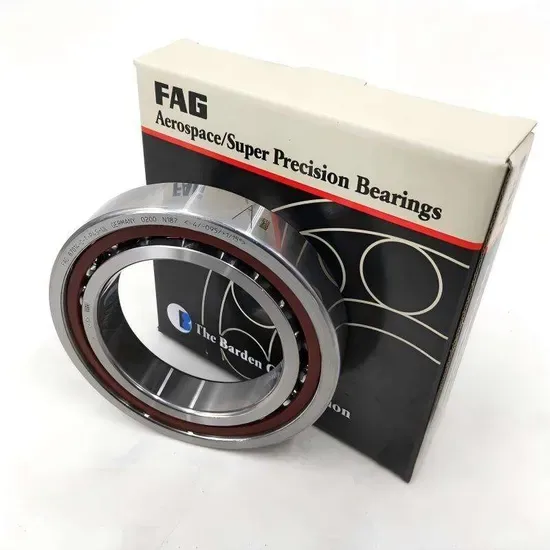
Description
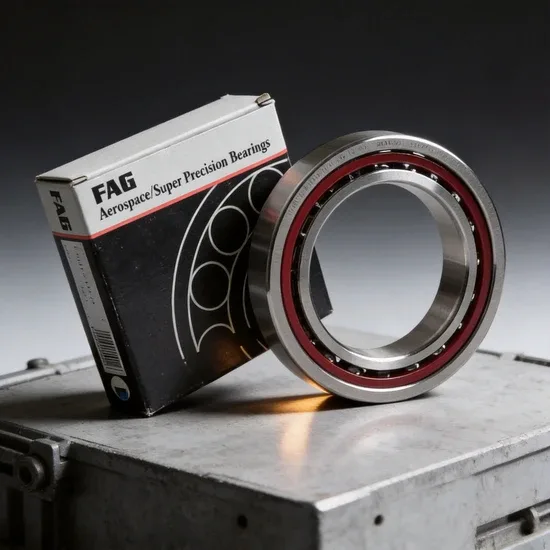
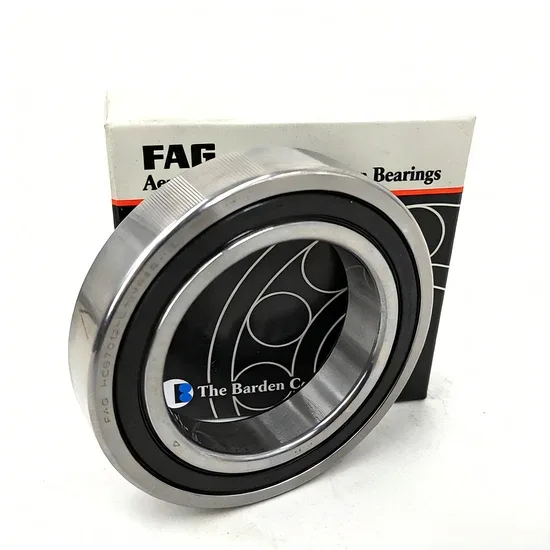
Batch-Traced Precision Sourcing — Every FAG B7200-C-T-P4S angular contact ball bearing we ship carries full lot traceability back to the manufacturer’s authorized distribution channel, with country-of-origin paperwork ready for your import filing.
Technical Specifications
| Parameter | Value |
|---|---|
| Designation | FAG B7200-C-T-P4S |
| Bearing Type | Angular Contact Ball Bearing |
| Number of Rows | Single Row |
| Bore Diameter (d) | 10 mm |
| Outside Diameter (D) | 30 mm |
| Width (B) | 9 mm |
| Contact Angle | 15° |
| Precision Class | P4S |
| Seal or Shield Type | Open |
| Origin | China |
| Weight | 0.100 kg |
Note: Suffixes C, T, and P4S in the FAG B-series nomenclature require confirmation against the current FAG spindle bearing catalog for exact contact angle mapping, cage material designation, and running accuracy tolerance bands.
Application Suitability
| Industry | Typical Applications |
|---|---|
| Industrial Machinery | High-speed CNC router spindle nose assemblies |
| Robotics | Compact articulated joint rotary encoders |
| Precision Equipment | Instrument-grade grinding head shafts |
| General MRO | Replacement spindle cartridges in micro-milling centers |
What Happens When a 10 mm Spindle Bearing Gets the Wrong Contact Angle
A mismatched contact angle turns a precision spindle into a vibration source within hours.
I saw this play out at a furniture CNC shop outside Ho Chi Minh City. The maintenance team sourced replacements for a failed spindle bearing, matched the base number B7200, and accepted whatever suffix the local trader had on the shelf. The contact angle was wrong for that spindle’s axial preload design. Within a week, chatter marks appeared across every cabinet door panel in the batch. The end-user nearly pulled the contract. The shop replaced the spindle cartridge entirely — unplanned downtime, scrap material, and a damaged reputation that no invoice discount could repair [NEED_CITE: spindle bearing contact angle mismatch causing chatter and surface finish degradation]. That is the real cost of treating precision suffixes as optional details.
Matching a 10 mm Bore to Compact Spindle Demands
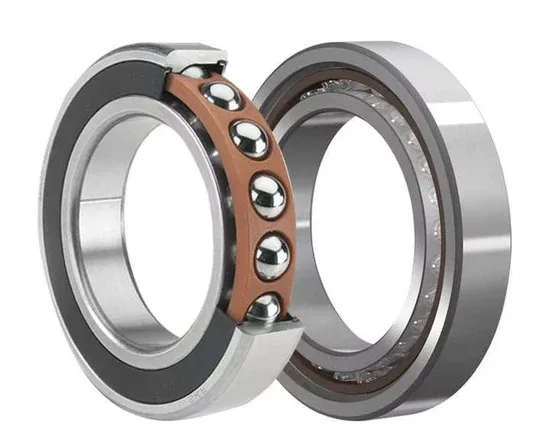
The FAG B7200-C-T-P4S angular contact ball bearing fits a specific niche: spindles and rotary mechanisms where envelope dimensions are tight but running accuracy cannot be compromised. At 10 mm bore and 30 mm outside diameter, this bearing seats into instrument-grade grinding heads, micro-milling cartridges, and robotic joint assemblies that demand minimal radial runout at elevated speeds. The 15° contact angle balances radial load capacity with axial stiffness — the right compromise for spindles that see combined loading from cutting forces and belt tension.
When we cross-reference this bearing for buyers in Southeast Asia, we verify not just the base dimensions but the cage type, precision class, and contact angle as a matched set. A distributor in Jakarta once sent us a photo of a competitor’s label that listed the same outer dimensions but carried a 25° contact angle suffix. The spindle was designed for 15°. That swap alone would shift the load zone, increase friction torque, and shorten grease life noticeably in a high-speed application.
Speed, Heat, and the Open-Design Lubrication Decision
Running at high speeds in a 10 mm bore bearing means heat generation is a primary constraint. The open design of this FAG B7200-C-T-P4S angular contact ball bearing puts lubrication decisions entirely in the hands of the machine builder or maintenance engineer. Oil-air or oil-mist systems can keep friction low and carry heat away from the raceway, which matters when the spindle housing has limited thermal mass. Grease lubrication is viable at moderate speeds but demands careful fill volume control — overfilling a small bore bearing generates churning heat that degrades the grease and accelerates cage wear [NEED_CITE: bearing lubrication fill volume effect on temperature rise in high-speed spindle applications].
Ambient temperature and duty cycle shape the choice further. A CNC router running three shifts in a tropical workshop sees housing temperatures that push standard greases past their useful range. The open design lets you specify a high-temperature synthetic oil or a spindle-grade grease matched to the actual operating envelope, rather than accepting a factory fill that may not suit the field conditions.
Reading the Suffix Stack on a B-Series Spindle Bearing
FAG’s B-series spindle bearings pack critical information into their suffix chain, and each element affects field performance. The 15° contact angle provides a stiffness profile suited to combined radial and axial loads typical in belt-driven spindles, where cutting forces push both radially into the workpiece and axially along the tool axis. A 40° contact angle in the same position would increase axial rigidity but raise friction torque and operating temperature at the same speed — a tradeoff that only makes sense if the spindle design calls for it.
The precision class here matters for runout. Spindle bearings at this grade hold tighter dimensional and running accuracy tolerances than standard industrial bearings, which translates directly to workpiece surface finish. In a grinding head or micro-mill, even a small increase in radial runout shows up as visible feed marks on the finished part. The open seal type complements the precision class by eliminating seal friction, allowing higher limiting speeds, and giving the machine builder control over contamination protection through external housing seals.
The Hidden Expense of a Wrong Suffix on a Precision Spindle
Correct bearing selection from a traceable source protects more than the spindle — it protects the entire production schedule. A counterfeit or cross-reference mismatch in a P4S-class bearing can cause thermal binding when the internal clearance collapses under operating temperature, or premature cage failure when the cage material cannot handle the speed. ISO 15243 classifies these failure modes distinctly, and the root cause is almost always traceable to a specification mismatch at the point of purchase [NEED_CITE: rolling bearing failure mode classification per ISO 15243].
Wrong clearance in a small-bore spindle bearing is particularly unforgiving. There is simply less thermal mass to absorb the heat, and the raceway curvature is optimized for a specific preload condition. When those conditions are violated, L10 life drops sharply — not gradually, but in a way that shows up as catastrophic spindle seizure or workpiece rejection before the maintenance team notices a trend.
How We Keep Your Spindle Bearings Traceable and Verified
We source FAG B7200-C-T-P4S angular contact ball bearings through authorized distributor channels, which means every unit arrives with lot-level documentation rather than a generic packing slip. Our cross-reference database matches not only the base designation but also the contact angle, cage material, and precision class simultaneously — so a substitute from another brand in our coverage range will meet the same functional specification, not just the same outer dimensions.
For buyers dealing with import compliance, we provide country-of-origin documentation and HS code support as part of the shipment package. When authenticity questions arise, we guide buyers through the manufacturer’s official verification pathway, including QR code scanning via the brand’s official app. This is the same process we would want if we were on the buying side — which, in my case, I was for several years before switching to supply.
Documentation & Authenticity
- Supplier Certificate of Conformity referencing the specific batch and lot number of the B7200-C-T-P4S units shipped
- Dimensional and running accuracy inspection report confirming P4S-class tolerances before dispatch
- Country-of-origin certificate suitable for customs clearance and preferential tariff claims in ASEAN import markets
- Material certificate tracing ring and ball steel to the manufacturer’s production facilities
- QR code verification guidance enabling the buyer to authenticate each bearing through FAG’s official digital channel
Storage, Handling & Mounting
- Keep the B7200-C-T-P4S in its original sealed packaging until the moment of mounting; the open design means any dust ingress during shelf storage will score the raceway before the spindle ever starts
- Store flat in a climate-controlled area below the humidity threshold that causes condensation on the bearing steel surfaces — tropical warehouse conditions demand dehumidified cabinets
- Handle with clean, lint-free gloves to prevent fingerprint corrosion on the precision-ground raceways; at 10 mm bore, the surface area is small and any contamination is concentrated
- For spindle installations using paired arrangements, match the factory pairing marks and maintain the marked orientation during assembly to preserve the intended preload
- Select lubricant type and fill volume based on the spindle’s actual speed range and housing design, since the open bearing relies entirely on the machine builder’s lubrication system
Request a Technical Review Before You Order
Share your spindle speed, load profile, and operating temperature range so we can confirm the FAG B7200-C-T-P4S angular contact ball bearing is the correct match for your application. If you are replacing an existing bearing, send us the OEM equipment number or a photo of the current bearing label, and we will run a full cross-reference check covering contact angle, cage, and precision class.
Frequently Asked Questions
Q: How do I verify the authenticity of a FAG B-series spindle bearing?
A: FAG provides official digital verification tools, including QR code scanning through their brand app. We supply every bearing with batch traceability documentation and guide buyers through the verification process so you can confirm origin before mounting.
Q: What does P4S precision mean compared to standard P4 or P5?
A: P4S is a FAG-specific precision designation that meets ISO tolerance class 4 requirements with additional running accuracy controls. It is tighter than standard P4 and significantly tighter than P5, which matters for spindle runout and workpiece surface finish.
Q: Can I substitute another brand for this FAG bearing?
A: Cross-brand substitution is possible, but the replacement must match the 15° contact angle, cage type, and precision class — not just the base dimensions. We run a full parameter comparison across SKF, NSK, NTN, and other brands in our coverage range before recommending any interchange.
Q: What lubrication is recommended for an open spindle bearing at high speed?
A: Oil-air or oil-mist lubrication is typically preferred for high-speed open spindle bearings because it minimizes friction heat and provides continuous cooling. Grease is viable at moderate speeds with controlled fill volume. We can advise based on your specific speed and temperature parameters.
Q: How does the 15° contact angle affect my spindle’s performance?
A: A 15° contact angle offers a balanced stiffness profile for combined radial and axial loads, which suits most belt-driven and direct-drive spindles. Switching to a larger contact angle increases axial rigidity but raises operating temperature and friction torque at the same speed.
FAG B7200-C-T-P4S Technical Inquiry
Send us your spindle parameters or OEM equipment number, and our engineering team will confirm suitability, cross-reference alternatives, and provide a quotation with lead time and documentation package details.