

Description
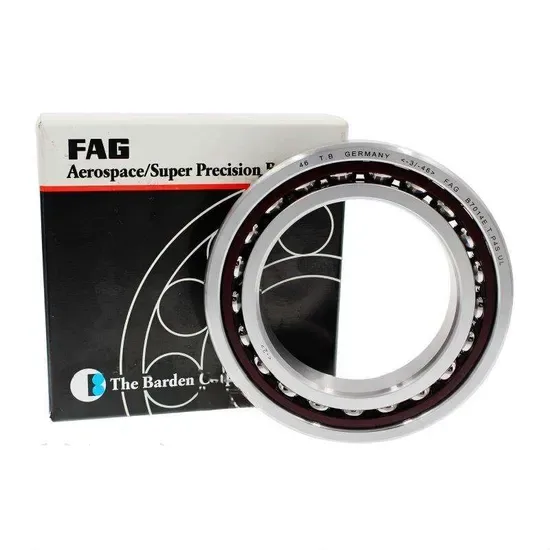
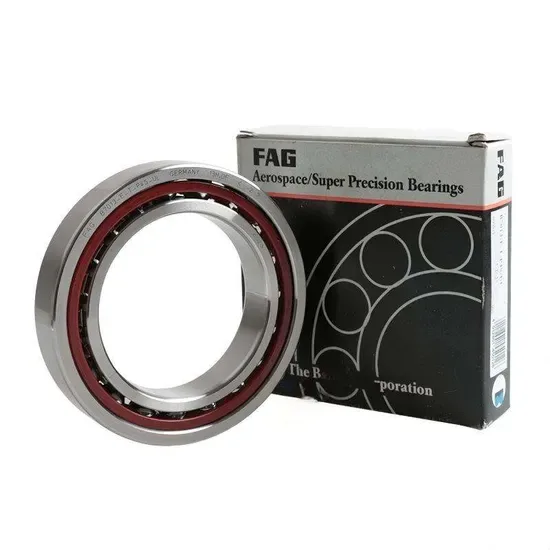
Traceable Batch Records — Every FAG HC7003-C-T-P4S angular contact ball bearing we supply ships with verifiable lot documentation tied to authorized distributor channels, giving you full visibility from factory gate to your maintenance bay.
Technical Specifications
| Parameter | Value |
|---|---|
| Designation | FAG HC7003-C-T-P4S |
| Bearing Type | Angular Contact Ball Bearing |
| Bore Diameter (d) | 17 mm |
| Outside Diameter (D) | 35 mm |
| Width (B) | 10 mm |
| Number of Rows | Single Row |
| Contact Angle | 15° (C suffix) |
| Precision Class | P4 (ISO tolerance class 4) |
| Cage Material | Solid resin (T suffix)* |
| Weight | 0.040 kg |
| Origin | China |
The HC and P4S suffixes fall outside standard FAG nomenclature tables; the P4S portion likely denotes a specific dimensional variant of P4 precision, and HC/T designations should be confirmed against the manufacturer’s current catalog for exact material and treatment specifications.
Application Suitability
| Industry | Typical Applications |
|---|---|
| Industrial Machinery | High-speed spindle nose bearings, precision grinding wheelheads |
| Robotics | Joint actuators requiring low-friction rotation and minimal runout |
| Material Handling | Servo motor shaft supports in automated guided vehicles |
| General MRO | Replacement bearings for OEM precision pump drives and instrumentation |
When a 15° Contact Angle Saves a Spindle from Thermal Runaway
Matching base numbers while ignoring contact angle suffixes is the silent killer of high-speed precision spindles.
I have walked into workshops where the maintenance log showed repeated spindle seizures, and the root cause traced back to someone swapping a C-angle bearing for a B-angle equivalent because the digits matched. On a high-speed grinding spindle, a 40° contact angle generates noticeably higher friction torque than the intended 15° design, pushing operating temperatures past the grease thermal limit within hours. The cage deteriorates, dimensional accuracy collapses, and what should have been a scheduled changeover becomes an emergency teardown. Procurement teams often focus on availability and price, yet the suffix stack — contact angle, cage type, precision grade — dictates whether a FAG HC7003-C-T-P4S angular contact ball bearing survives its first week or triggers a cascade failure [NEED_CITE: angular contact bearing friction torque versus contact angle relationship].
Where Spindle Speed Meets Radial-Dominant Loading
This bearing fits applications where radial loads dominate but a controlled axial component exists — typical of belt-driven or direct-drive spindle configurations running at elevated speeds. The 15° contact angle keeps friction heat low while still providing axial locating capability. We recently cross-referenced this designation for a buyer rebuilding a CNC milling head; the OEM print called for a C-angle P4 bearing with a lightweight cage, and the HC7003-C-T-P4S matched all three criteria without requiring a lead-time-heavy special order.
Thermal Growth and the Precision Envelope
At sustained high speeds, inner ring expansion alters the effective operating clearance. A P4-class bearing limits dimensional variation tightly enough that thermal growth stays predictable, but the surrounding housing and shaft tolerances must cooperate. If the housing bore is machined to P6 looseness, the outer ring can creep under moment loads, negating the bearing’s own accuracy. Temperature gradients across the spindle housing also affect grease migration — a solid resin cage helps here by running cooler than brass alternatives, keeping the lubricant film intact longer [NEED_CITE: spindle bearing thermal growth effects on operating clearance].
Decoding What the Suffix Stack Actually Controls
The C suffix locks the contact angle at 15°, which suits predominantly radial loads at high rotational speeds — the standard choice for most spindle nose positions. The T suffix points to a solid resin cage, a material that runs quieter and lighter than machined brass, reducing centrifugal loading on the balls at high rpm. P4 precision constrains both dimensional and running accuracy to tight ISO class 4 bands, meaning bore roundness, outer ring roundness, and axial runout all stay within narrow limits. At 0.040 kg, the low mass further supports high-speed operation by minimizing rotational inertia during acceleration and deceleration cycles.
The Downtime Invoice Nobody Budgets For
A bearing that fails prematurely inside a precision spindle does not just cost its replacement price. The spindle must be disassembled, inspected for shaft scoring and housing damage, rebalanced, and requalified — a process that pulls a production machine offline for days. When the root cause is a mismatched precision grade or an unverified supply chain, the entire lot of installed bearings becomes suspect, multiplying the teardown scope. ISO 15243 classifies these failures under mounting and operational errors rather than material fatigue, meaning the warranty conversation shifts away from the manufacturer [NEED_CITE: ISO 15243 bearing failure classification categories].
How We Reduce Procurement Risk on Precision Bearings
Every FAG HC7003-C-T-P4S angular contact ball bearing we quote traces back through authorized distributor invoices, not open-market spot purchases. We provide the batch-level documentation that lets your quality team verify origin without waiting for a brand audit. Our cross-reference process does not stop at matching digits — we confirm contact angle, cage material, and precision suffix alignment before sending a quote, so you receive a part that fits the application envelope, not just the bore size. For import-sensitive destinations, we assemble country-of-origin paperwork and HS code details alongside the shipment, smoothing customs clearance.
Documentation & Authenticity
- Supplier Certificate of Conformity referencing the specific production batch of the FAG HC7003-C-T-P4S, linking the bearing to its authorized distribution channel.
- QR code verification pathway enabling your receiving team to scan and confirm authenticity through the brand’s official application before the package is opened.
- Dimensional inspection report covering bore diameter, outside diameter, width, and running accuracy against P4-class tolerance bands.
- Country-of-origin certificate and HS code documentation prepared for import compliance at destination.
- Material certificate confirming bearing steel specification for traceability in regulated maintenance programs.
Storage, Handling & Mounting
- Keep the FAG HC7003-C-T-P4S in its original sealed packaging until the moment of mounting; the low 0.040 kg mass means even minor surface corrosion from premature exposure can measurably affect P4 running accuracy.
- Store in a climate-controlled area away from direct sunlight to protect the solid resin cage material from UV degradation before installation.
- Use lint-free gloves when handling the 17 mm bore; fingerprints on precision-ground raceways introduce contamination that shortens grease life in high-speed spindle applications.
- Mount using controlled induction heating for the inner ring rather than press-fitting, preserving the 15° contact angle geometry and avoiding axial damage to the cage.
- Verify shaft and housing tolerances against the P4 precision envelope before assembly; a loose housing fit will cause outer ring creep that defeats the bearing’s inherent accuracy.
Start a Technical Review Before You Commit
Share your spindle speed, load profile, and operating temperature range so we can confirm whether the FAG HC7003-C-T-P4S angular contact ball bearing aligns with your application — or whether a different suffix combination serves you better. If you are replacing an OEM-specified bearing, send us the equipment nameplate data and we will cross-reference the full suffix stack, not just the base number. Request the documentation package and batch availability before placing a bulk order.
Frequently Asked Questions
Q: What does the C suffix mean on this angular contact bearing, and how does it differ from AC or B?
A: The C suffix indicates a 15° contact angle, optimized for predominantly radial loads at high speeds. An AC or ACD suffix would denote a 25° angle, and B indicates 40° — each carrying higher axial capacity but also higher friction torque. Substituting across contact angles without engineering review risks thermal failure in spindle applications.
Q: How does P4 precision compare to P5 or standard P0 in practical terms?
A: P4 restricts dimensional tolerances and running accuracy to tighter bands than P5, and significantly tighter than P0. In a spindle application, this translates to lower vibration amplitudes, better surface finish on machined parts, and more predictable thermal behavior. Using a P0 bearing where P4 is specified typically leads to unacceptable runout and premature wear.
Q: What should I verify when cross-referencing this bearing from another brand?
A: Confirm that the replacement matches the 15° contact angle, the solid resin cage designation, and the P4 precision class — not just the 17×35×10 mm envelope dimensions. A mismatch on any suffix can alter friction characteristics, speed capability, or load distribution in ways that only appear under operating conditions.
Q: How can I verify the authenticity of the FAG HC7003-C-T-P4S before installation?
A: Each bearing we supply carries a traceable batch code that can be verified through the manufacturer’s official channels. We also provide supplier documentation linking the unit to authorized distribution records, and our team can guide you through QR-based verification steps upon receipt.
Q: Are the HC and P4S suffixes standard FAG designations?
A: The HC and the S in P4S fall outside the widely published FAG suffix tables. While P4 maps clearly to ISO tolerance class 4, the additional S and the HC prefix may denote application-specific variants. We recommend confirming these suffixes against the manufacturer’s current catalog or contacting us so we can source the full specification sheet for your review.
Get a Verified Quote with Full Documentation
Send your application parameters or OEM part number, and we will return a cross-referenced quote with batch availability, lead time, and the complete documentation package. Reach out through our inquiry channel to start the technical review.