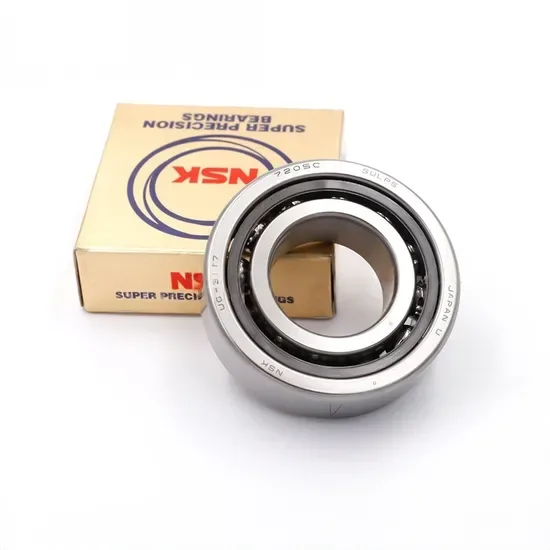
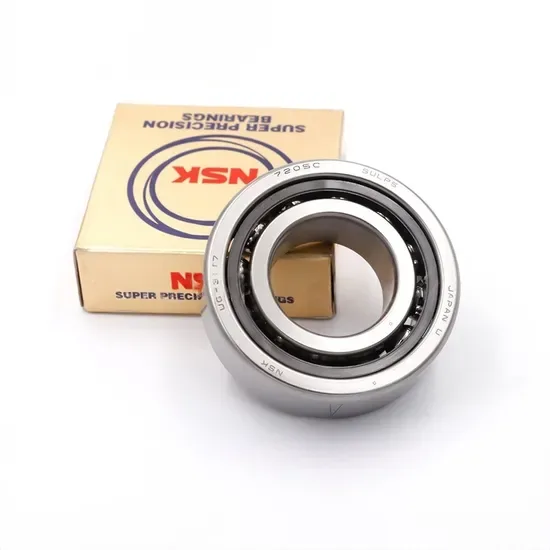
Description
Authorized Sourcing Verification — Every 7000A5SN24TRSUELP5 ships with Certificate of Conformity and batch traceability documentation from our verified distributor network.
Technical Specifications
| Parameter | Value |
|---|---|
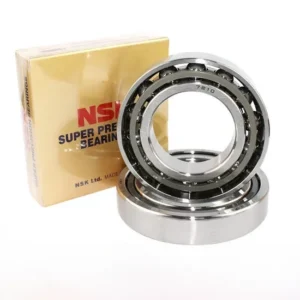
| Designation | NSK 7000A5SN24TRSUELP5 |
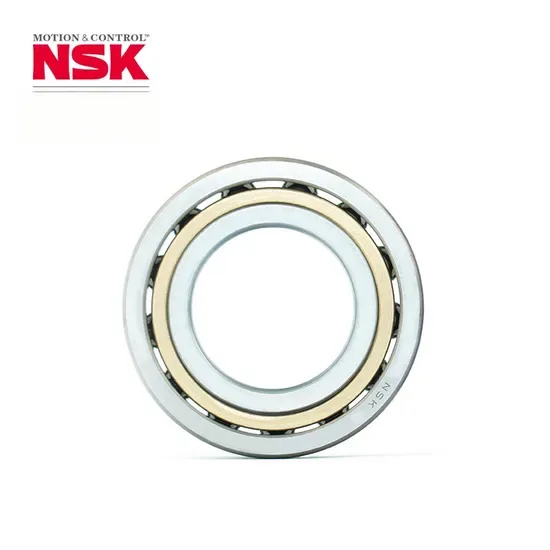
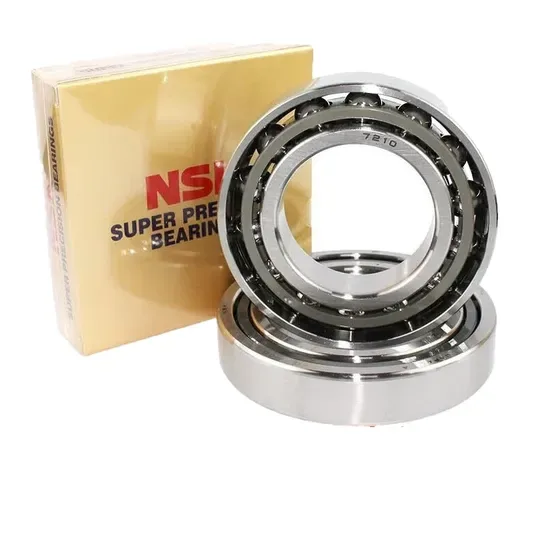
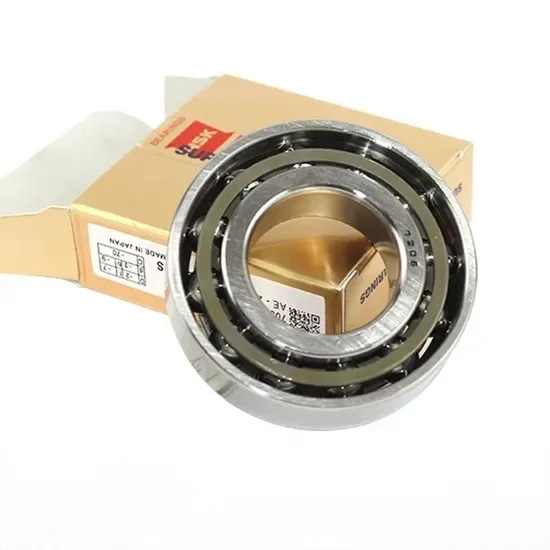
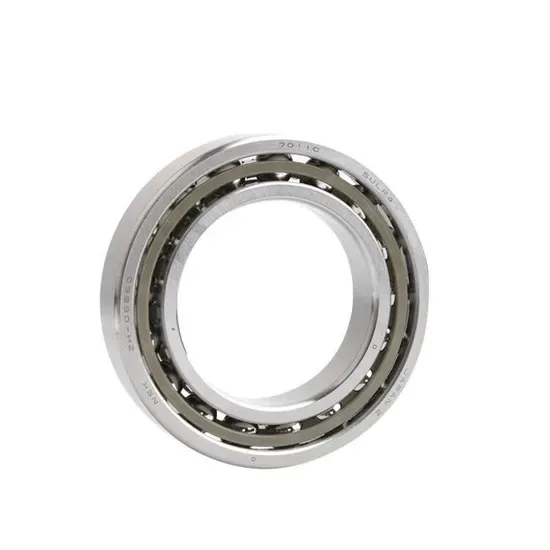
| Bearing Type | Angular Contact Ball Bearing |
| Number of Rows | Single |
| Contact Angle | 25° |
| Precision Class | P5 (ISO tolerance class 5) |
| Load Direction | Combined Radial and Axial Load |
| Material | Bearing Steel |
| Bore Type | Cylindrical |
| Aligning | Non-Aligning |
| Separated | Separated |
| Weight | 0.009 kg |
Certain suffix segments in this designation require manufacturer catalog confirmation before final procurement documentation.
Application Suitability
| Industry | Typical Applications |
|---|---|
| Industrial Machinery | High-speed spindle nose bearing assembly |
| Precision Equipment | Coordinate measuring machine rotary tables |
| Robotics | Articulated joint actuator positioning |
| Electric Motors | High-frequency motor shaft support |
What P5 Precision Actually Prevents on Spindle Applications
Precision class determines whether your spindle runs true or burns through a six-figure shaft within weeks.
On high-speed spindle applications running above 10,000 RPM, the difference between P5 and P0 tolerance classes becomes catastrophic quickly. I’ve seen what happens when a supplier quietly downgrades angular contact bearings without flagging it — thermal runaway, cage failure, and scrapped tooling that cost far more than the bearing itself. Counterfeit bearings now clone QR codes convincingly enough to pass casual inspection, and soft inner rings that don’t show up until thermal binding destroys the assembly [NEED_CITE: counterfeit bearing detection methods in precision applications].
How This Bearing Serves High-Speed Spindle Demands
The NSK 7000A5SN24TRSUELP5 angular contact ball bearing matches spindle applications requiring combined load handling with tight dimensional control. At P5 precision, it meets the running accuracy demands of precision grinding and milling spindles where radial runout directly affects surface finish quality. The 25° contact angle provides balanced axial support without generating excessive friction heat under predominantly radial loads typical in belt-driven spindle configurations.
For sourcing engineers evaluating multiple brands, our cross-reference process checks not just base designation matching but confirms that contact angle, cage material, and precision suffixes align across equivalent part numbers — because a mismatch in any of these parameters causes field failures that don’t appear until the spindle is under load.
Operating Environment and Performance Demands
Spindle bearings face simultaneous radial cutting forces and axial thrust from tool clamping mechanisms, creating complex load spectra that demand proper contact angle selection. The thermal environment matters significantly — friction heat from high-speed rotation causes inner ring expansion that reduces internal clearance, and if the original specification required thermal compensation that isn’t accounted for, the bearing seizes. Lubrication intervals on open-type precision bearings depend entirely on external greasing protocols, and contamination from coolant mist or metal particulates accelerates raceway wear far faster than fatigue calculations predict [NEED_CITE: bearing contamination impact on L10 life reduction].
Installation method directly affects whether P5 precision survives the mounting process — cold pressing with improper force application brinels the raceway, while induction heating beyond recommended temperatures anneals the bearing steel and destroys the heat treatment that provides load capacity.
Inside the Engineering Specifications
The 25° contact angle designation provides an intermediate position between 15° high-speed variants and 40° heavy axial load versions, making it suitable for applications where axial thrust exists but radial loads dominate the load spectrum. This angle generates lower friction heat than steeper contact angles while maintaining adequate axial stiffness for most spindle preload requirements.
P5 precision class means the bearing meets ISO 492 tolerance requirements for applications demanding tighter dimensional control than standard P6 grades but not reaching the cost premium of P4 spindle-class bearings. For many machining centers and grinding spindles, P5 provides the accuracy-to-cost balance that maintenance budgets require.
Single-row separated construction allows individual mounting and preload adjustment during assembly, which matters when spindle designers specify custom preload values rather than matched set configurations.
The True Cost of Wrong Selection
Correct precision specification backed by authentic documentation prevents unplanned downtime that halts production lines and voids equipment warranties. When precision class falls short of application requirements, the spindle exhibits chatter marks on workpieces that don’t appear until quality inspection catches out-of-tolerance parts — by then, hundreds of components are already scrapped. Counterfeit bearings with soft inner rings and cloned authenticity codes cause premature failures that standard ISO 281 life calculations cannot predict because the material properties don’t match specifications [NEED_CITE: ISO 15243 bearing failure mode classification].
Why Procurement Engineers Source Through Our Channel
Our authorized distributor sourcing provides batch-level traceability that connects each bearing back through the supply chain with Certificate of Conformity documentation. Cross-reference verification goes beyond base number matching to confirm that contact angle, precision class, and cage specifications align when substituting across SKF, FAG, or NTN equivalents. Origin documentation supports import compliance requirements in markets where country-of-origin verification affects customs clearance and tariff classification. Every shipment includes dimensional inspection capability and QR code verification pathways through official brand applications for authenticity confirmation before installation.
Documentation & Authenticity
- Certificate of Conformity with batch and lot traceability linking to NSK production records
- QR code verification pathway via NSK official mobile applications for field authenticity checks
- Country-of-origin documentation supporting customs clearance and import compliance requirements
- Material certificates confirming bearing steel composition and heat treatment specifications
- Dimensional inspection reports available for critical tolerance verification before mounting
Storage, Handling & Mounting
- Maintain original sealed packaging until installation to preserve P5 precision surfaces from contamination
- Store in climate-controlled environment below 60% humidity to prevent corrosion on exposed bearing steel races
- Use clean cotton gloves during handling — fingerprints on precision ground surfaces create stress concentration points
- Mount using induction heating limited to manufacturer-specified temperatures to preserve heat treatment integrity
- Apply specified preload during assembly using calibrated torque methods appropriate for separated single-row construction
Technical Inquiry Process
Share your spindle speed requirements, load spectrum, and operating temperature range so we can verify that the 7000A5SN24TRSUELP5 matches your application parameters. Provide OEM equipment numbers when available for cross-reference validation against original specifications. Request documentation packages including Certificate of Conformity and country-of-origin certification for your import requirements. Confirm current batch availability and lead time for your procurement timeline.
Frequently Asked Questions
Q: How do I verify NSK bearing authenticity through official channels?
A: NSK provides official mobile applications that scan QR codes on bearing packaging and the bearing itself, connecting to their authentication database to confirm the product is genuine and traceable through authorized distribution channels. We provide QR verification pathway documentation with every shipment.
Q: What does P5 precision mean compared to P4 or P6 in angular contact bearings?
A: P5 precision meets ISO 492 tolerance class 5 requirements, providing tighter dimensional control than standard P6 grades for applications requiring better running accuracy. P4 class offers even tighter tolerances for ultra-precision spindle applications but at significantly higher cost.
Q: When should I choose 25° contact angle versus 15° or 40° for spindle applications?
A: The 25° contact angle balances axial load capacity with lower friction heat generation, suitable for spindles with moderate axial thrust from tool clamping. Choose 15° for predominantly radial loads at very high speeds, or 40° when heavy axial loads dominate the application requirements.
Q: Why must clearance, cage material, and precision all match during cross-reference substitution?
A: Base designation matching alone misses critical specifications that affect field performance. Clearance affects thermal expansion compensation, cage material determines speed capability and vibration characteristics, and precision class controls running accuracy — mismatches in any of these cause premature failures even when the base number appears equivalent.
Q: What documentation supports import compliance for precision bearings?
A: We provide country-of-origin certificates, HS code classification support, Certificate of Conformity with batch traceability, and material certificates that customs authorities require for import documentation and tariff verification.
Confirm Your Spindle Specification
Send your application parameters or OEM equipment number for technical verification and cross-reference confirmation against the NSK 7000A5SN24TRSUELP5 angular contact ball bearing.
Contact our technical sourcing team through authorized distributor channels for genuine product verification and documentation packages.