Description
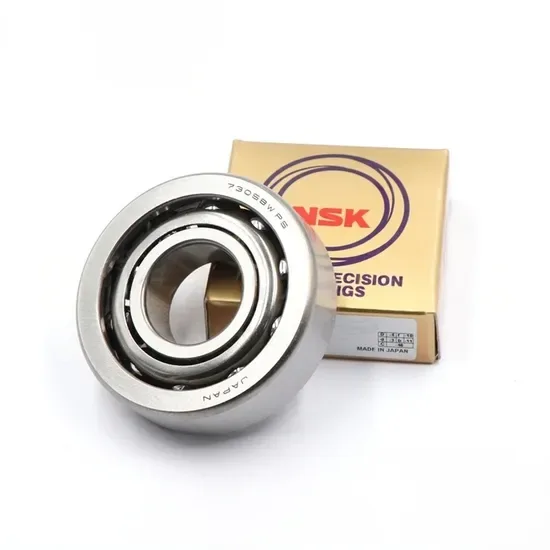
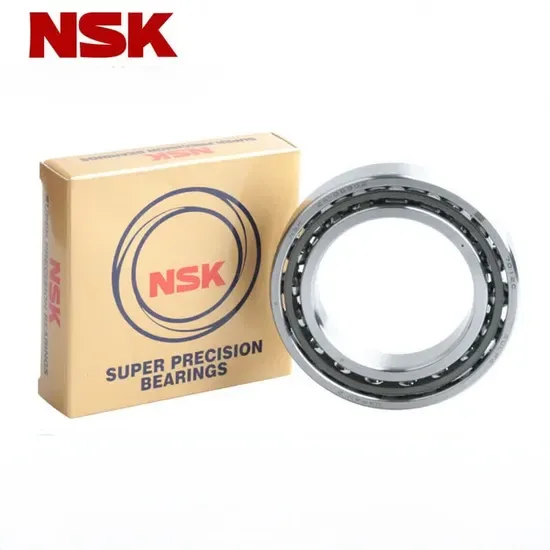
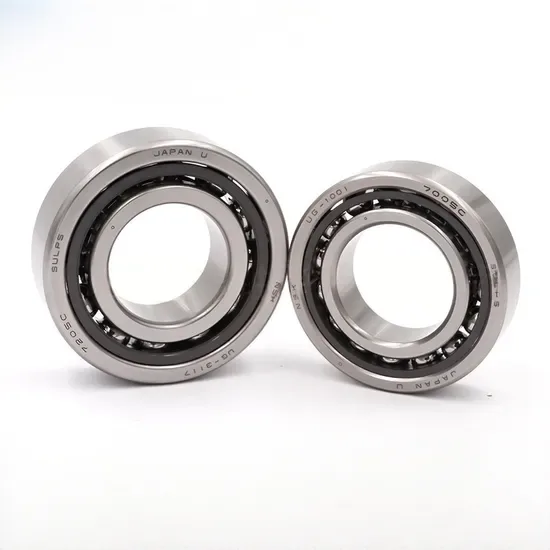
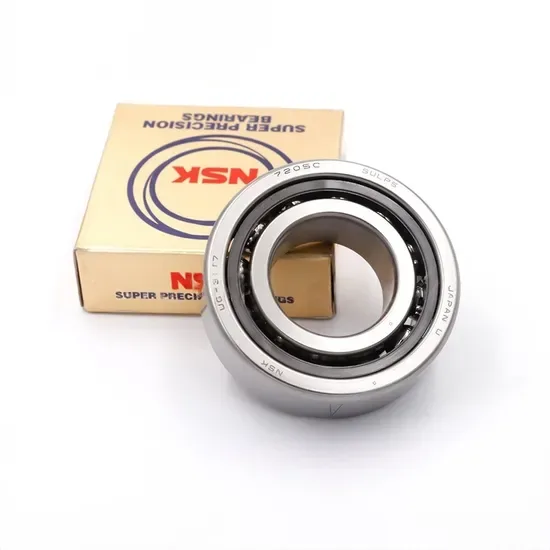
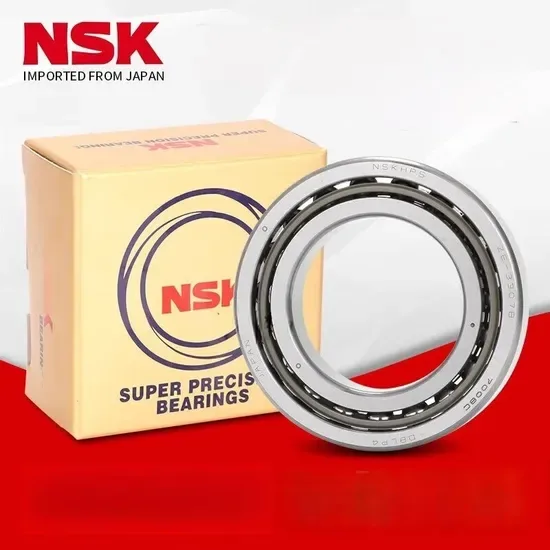
Authorized Channel Sourcing — Every NSK 7000A5SN24TRSUHP3 angular contact ball bearing we supply ships with batch-level traceability back to the manufacturer’s distribution network, ensuring the 25° contact angle and precision class you specify arrive exactly as engineered.
Technical Specifications
| Parameter | Value |
|---|---|
| Designation | NSK 7000A5SN24TRSUHP3 |
| Bearing Type | Angular Contact Ball Bearing |
| Bore Diameter (d) | 10 mm |
| Contact Angle | 25° |
| Number of Rows | Single |
| Load Direction | Combined Radial and Axial Load |
| Material | Bearing Steel |
| Weight | 0.009 kg |
| Aligning | Non-Aligning Bearing |
| Separated | Separated |
| Standards | ISO 15 / ISO 492 |
Note: The suffix segments 5SN24TRSUH and P3 in this NSK 7000A5SN24TRSUHP3 angular contact ball bearing are not listed in standard NSK public catalogs; their exact meaning — potentially involving cage material, preload class, or a proprietary precision code — must be confirmed directly against the manufacturer’s current technical documentation before final specification lock.
Application Suitability
| Industry | Typical Applications |
|---|---|
| Industrial Machinery | High-speed motorized spindle nose positions |
| Precision Equipment | Rotary table indexing mechanisms |
| Robotics | Joint actuator harmonic drive supports |
| Machine Tool | Internal grinding spindle front-bearing stations |
What a 10 mm Spindle Bearing Gets Wrong Before It Ever Spins
Most spindle seizures at 18,000 RPM trace back to a single overlooked suffix, not the bearing itself.
A CNC shop in the Middle East once received a batch of angular contact bearings for their spindle rebuild program. The base designation matched perfectly on the packing list, but the shipment carried a standard phenolic cage rated for half the operational speed the spindle demanded. Within weeks, cage fragmentation destroyed the spindle nose — a five-figure repair triggered by a suffix mismatch that no casual visual inspection could catch. Counterfeit high-precision bearings now routinely ship with cloned QR codes and soft inner rings that pass basic hardness checks but fail under sustained thermal loading [NEED_CITE: counterfeit bearing detection methods in industrial supply chains]. When procurement teams verify only the bore size and contact angle while ignoring cage material, precision class, and preload configuration, they leave the door open to catastrophic field failures that standard incoming inspection simply cannot intercept.
Matching a 25° Contact Angle to Spindle Load Profiles
The NSK 7000A5SN24TRSUHP3 angular contact ball bearing carries a 25° contact angle, which sits in the middle ground between the 15° variant favored for pure radial speed and the 40° variant built for heavy axial thrust. In practice, this makes it a practical fit for motorized spindles where cutting forces generate a mixed radial-and-axial load spectrum — the kind of duty cycle you see in milling and grinding operations where the tool engages and retracts repeatedly. We once cross-referenced a spindle OEM’s bill of materials for a buyer in Central Asia and found their existing supplier had been shipping 15° bearings where the original design specified 25°, causing axial drift under load that slowly degraded part surface finish over months. That kind of substitution error is invisible until you pull the bearing and measure the raceway wear pattern.
Thermal Growth, Cage Stress, and the Speed Envelope
At the small end of the bore range — 10 mm here — rotational speeds push well into the high-speed territory where cage centrifugal forces and lubricant shear heating dominate the failure equation. The separated single-row design means this bearing relies on its paired counterpart or an external preload mechanism to maintain axial rigidity, which in turn dictates how much heat the system generates at operating speed. Temperature gradients across the spindle housing will shift internal clearance, and if the original equipment designer specified a non-standard preload suffix, substituting a generic pairing can push the bearing from a controlled interference state into thermal binding within minutes of startup [NEED_CITE: spindle bearing preload and thermal displacement relationship]. Lubrication selection — oil-air mist versus grease-packed — further narrows the viable speed envelope, and the wrong choice accelerates cage wear long before the rolling elements show distress.
Decoding the 25° Contact Angle and Single-Row Architecture
A 25° contact angle generates an axial stiffness component that resists thrust loads from tool engagement while still allowing the high radial speed capability that precision spindles demand. The single-row, separated construction means installers have flexibility in arranging DB (back-to-back) or DF (face-to-face) pairs to tune moment rigidity and thermal compensation behavior across the spindle shaft. At 0.009 kg, the rotating mass is minimal, which reduces centrifugal loading on the cage pockets at elevated RPM — a factor that becomes critical when the spindle runs continuous shifts in a production environment. Bearing steel construction provides the raceway hardness and fatigue resistance needed to sustain repeated Hertzian contact stress cycles, though the actual service life hinges on whether the precision class and cage material encoded in those unverified suffix segments align with the spindle’s speed and runout requirements.
What a Wrong Suffix Really Costs a Production Floor
Correct specification backed by traceable sourcing keeps a spindle running through its planned maintenance window. A precision mismatch — installing a P0-grade bearing where the spindle demands P4 running accuracy — introduces radial and axial runout that degrades surface finish and accelerates tool wear across every part the machine produces. Counterfeit bearings with soft inner rings may seat correctly during assembly but develop brinelling under axial preload within the first hundred hours, triggering unplanned downtime that cascades through production scheduling [NEED_CITE: rolling bearing failure mode classification per ISO 15243]. When a spindle seizes catastrophically rather than degrading gradually, the repair scope expands from a bearing swap to a full shaft and housing rebuild, and warranty claims on the downstream workpiece quality start piling up.
How We Close the Gap Between Inquiry and Verified Shipment
Every inquiry that reaches our desk starts with a parameter review — load, speed, temperature, mounting envelope — not just a part number lookup. Our cross-reference database matches on clearance, cage material, and precision class simultaneously, so a substitution from NSK to an alternate brand never drops a suffix requirement silently. We source through authorized distributor channels with documentation that traces each batch back to the manufacturer’s production facilities, and we provide QR code verification pathways through the brand’s official application so receiving inspectors can confirm authenticity on the dock. For import buyers, we prepare country-of-origin documentation, HS code classification, and compliance paperwork alongside the shipment, reducing customs friction at destination. Our role as a multi-brand genuine bearing supplier means we routinely compare interchange options across SKF, FAG, NTN, and TIMKEN when availability or lead time pressures demand it — always with full suffix alignment verified before the quote goes out.
Documentation & Authenticity
- Supplier Certificate of Conformity referencing the batch and lot number for each NSK 7000A5SN24TRSUHP3 angular contact ball bearing shipped
- QR code verification pathway through NSK’s official mobile application for dock-side authenticity confirmation
- Third-party dimensional and runout inspection report verifying single-row angular contact geometry before release
- Country-of-origin certificate accompanying commercial invoice for customs clearance and import compliance
- Material test certificate confirming bearing steel composition for the inner ring, outer ring, and rolling elements
Storage, Handling & Mounting
- Retain original sealed packaging until the moment of spindle assembly; premature exposure risks contaminant ingress into the open raceways of this separated single-row design
- Store flat in a temperature-stable environment to prevent axial load distortion on the 10 mm bore thin-section rings
- Use lint-free gloves during handling; fingerprint moisture on the bearing steel surfaces initiates corrosion that compromises the 25° contact angle raceway finish
- Confirm the pairing arrangement and preload orientation marks before pressing into the spindle housing; this separated bearing requires a matched counterpart or spacer stack to establish axial rigidity
- Verify shaft and housing tolerances against the precision class encoded in the suffix before mounting; an undersized seat will collapse internal clearance and generate immediate thermal distress at speed
Ready to Specify This Bearing for Your Spindle?
Share your spindle speed, operating temperature range, and preload arrangement so we can confirm whether the suffix configuration on this NSK 7000A5SN24TRSUHP3 angular contact ball bearing aligns with your application parameters. If you are replacing an existing bearing, send us the OEM equipment number or the nameplate photo and we will run a full cross-reference check including cage material and precision class alignment. Request the documentation package and country-of-origin confirmation up front so your import team has what they need before the shipment leaves.
Frequently Asked Questions
Q: How can I verify that the NSK 7000A5SN24TRSUHP3 angular contact ball bearing I received is genuine?
A: Use the QR code printed on the product packaging and scan it through NSK’s official verification application. Cross-check the batch number on the bearing against the Certificate of Conformity supplied with your shipment. We source exclusively through authorized distributor channels and provide full batch traceability documentation with every order.
Q: What do the suffixes on this bearing designation mean, and why do some require catalog confirmation?
A: The A5 segment in NSK nomenclature typically references a 25° contact angle, consistent with the product specification. However, the segments 5SN24TRSUH and P3 are not found in NSK’s publicly available standard suffix tables and may relate to proprietary cage, preload, or precision designations — these should be confirmed against the manufacturer’s current catalog before locking them into your specification.
Q: Why does cross-referencing require more than just matching the base bearing number?
A: A base number match confirms bore, outside diameter, and width, but ignores clearance class, cage material, and precision grade. Substituting a standard-cage bearing into a high-speed spindle application, or installing a CN-clearance bearing where C3 was designed for thermal expansion, leads to premature failure even though the envelope dimensions fit perfectly. Our interchange checks align all three parameters before recommending a cross-brand alternative.
Q: What precision class should I specify for a machine tool spindle application?
A: Machine tool spindles typically require P4 or higher precision to control radial and axial runout at operating speed. Using a lower precision class introduces vibration and surface finish degradation that worsens as the spindle accumulates hours. Always confirm the precision suffix on the replacement bearing matches the original equipment specification before ordering.
Q: What documentation comes with the shipment for import clearance purposes?
A: Each shipment includes a Certificate of Conformity with batch traceability, country-of-origin documentation, material certificates, and the applicable HS code classification. We prepare these documents to support customs clearance at destination and can adjust formatting to meet specific regional import requirements.
Confirm Your NSK 7000A5SN24TRSUHP3 Angular Contact Ball Bearing Specification
Send us your spindle parameters or OEM equipment number and we will return a verified suffix breakdown, cross-reference options, and a complete documentation preview within one business day. Contact our technical sales team through your existing inquiry channel or request a quotation package directly.