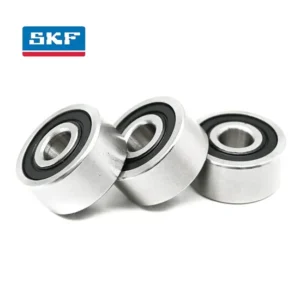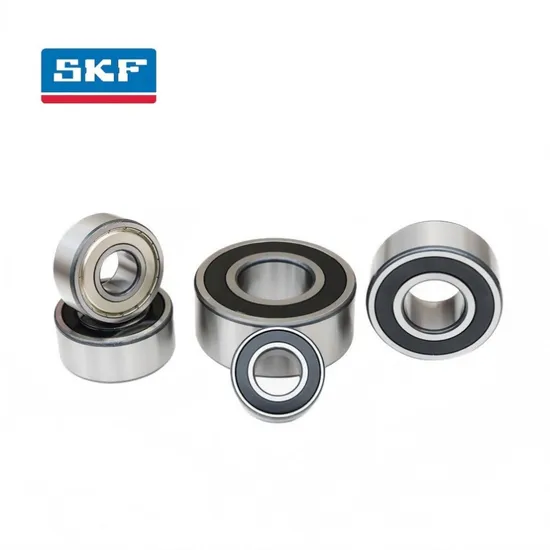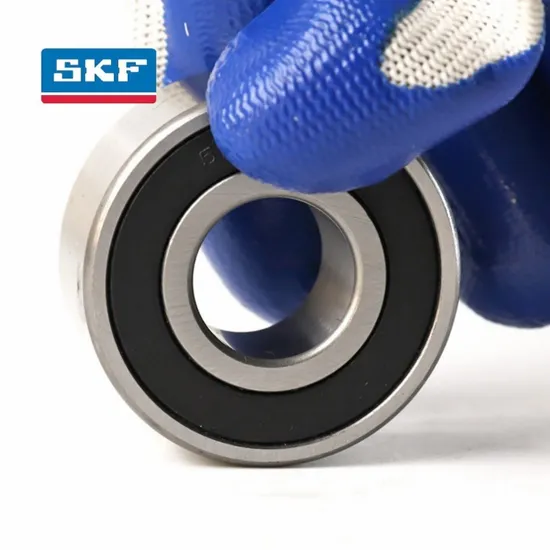
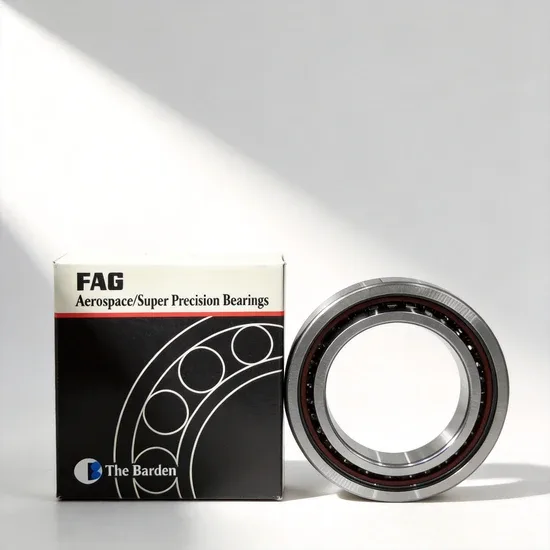
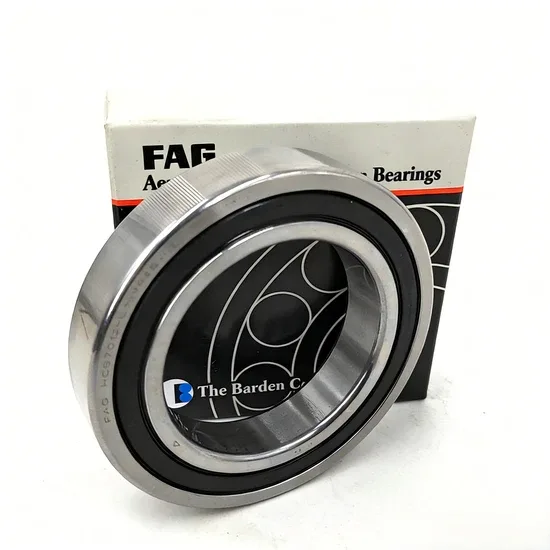
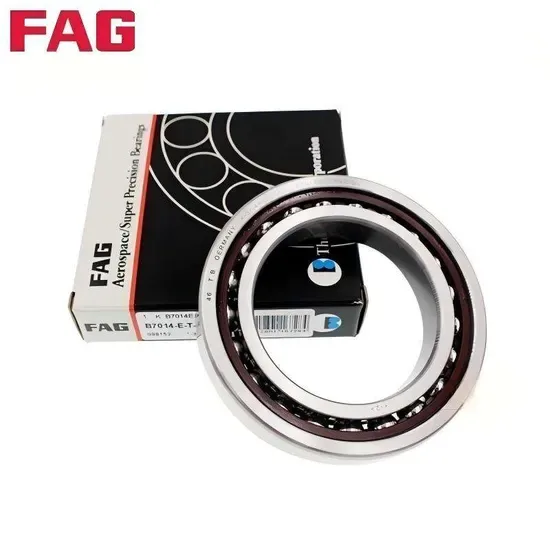
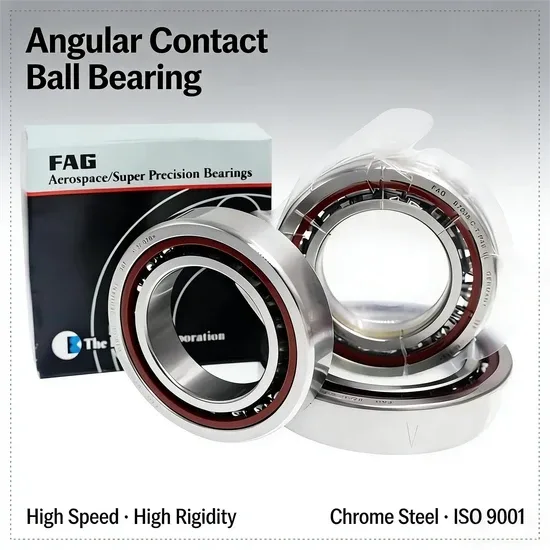
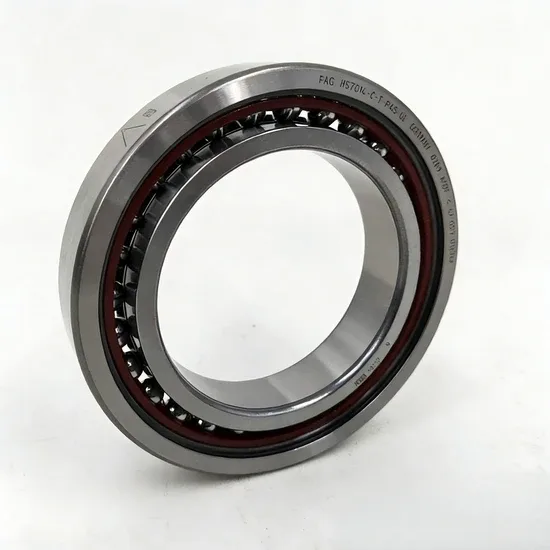
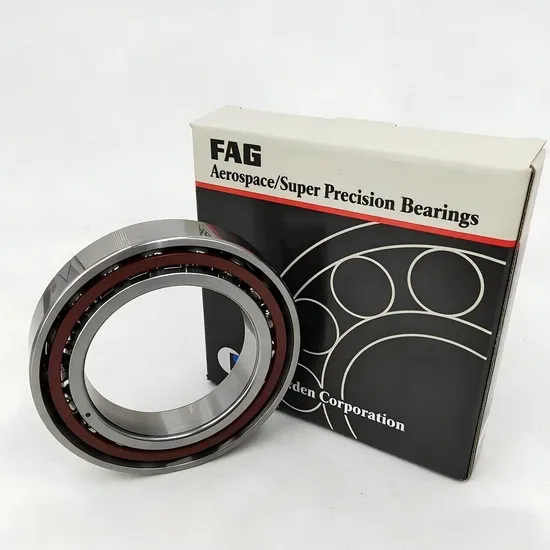
Description
Traceable Distributor Sourcing — Every PTB71909-E-2RSD angular contact ball bearing ships with supplier Certificate of Conformity linked to production batch records, enabling full lot traceability from raw material to finished inspection.
Technical Specifications
| Parameter | Value |
|---|---|
| Designation | PTB71909-E-2RSD |
| Bearing Type | Angular Contact Ball Bearing |
| Bore Diameter (d) | 45 mm |
| Outside Diameter (D) | 68 mm |
| Width (B) | Not specified in supplier content |
| Dynamic Load Rating (C) | Not specified in supplier content |
| Static Load Rating (C₀) | Not specified in supplier content |
| Limiting Speed | Not specified in supplier content |
| Weight | 0.126 kg |
| Cage Material | Not specified in supplier content |
| Seal or Shield Type | 2RSD (contact seal, both sides) |
| Clearance Class | Not specified in supplier content |
| Precision Class | P4 / P1p2 / P108 |
| Contact Angle | Not specified in supplier content |
| Bore Type | Cylindrical |
| Arrangement | Single |
| Number of Rows | Single |
| Origin | China |
Note: The prefix "PTB" and suffix "2RSD" on this designation do not match standard catalog conventions of the six major brands we cover; verify exact nomenclature against the producing manufacturer’s current catalog before finalizing cross-reference or interchange.
Application Suitability
| Industry | Typical Applications |
|---|---|
| Industrial Machinery | CNC machining center spindle nose bearings |
| Automotive & Heavy Vehicle Repair | Balancing machine spindle support bearings |
| Material Handling | Robotic arm joint positioning bearings |
| General MRO | High-speed pump shaft locating bearings |
What a Seal Substitution Costs on a Spindle Rebuild
Sealed precision angular contact bearings fail prematurely when open-type replacements bypass the contamination barrier the design intended.
Years ago, a workshop in Riyadh accepted an open-type P0 replacement for a sealed precision spindle bearing. Grinding dust infiltrated the raceway within weeks, the balls scored against the contaminated grease path, and the spindle seized mid-shift. That single substitution cost far more in downtime and rework than the original sealed bearing ever would have. When maintenance planners match only the base designation — ignoring seal type, precision class, and clearance — they expose the entire production line to unplanned stoppages. [NEED_CITE: rolling bearing failure mode classification per ISO 15243]
Spindle Loads and the 719 Series Thin-Section Advantage
The 719 series thin-section geometry keeps rotational mass low, which matters on high-speed spindle shafts where centrifugal forces on rolling elements compound rapidly. The PTB71909-E-2RSD angular contact ball bearing handles the combined radial and thrust loads typical of milling and grinding spindles, where cutting forces push axially while belt or direct-drive motors apply radial deflection. The reinforced internal design behind the E suffix spreads load across a larger contact ellipse, reducing Hertzian stress on raceways during heavy cuts.
Operating Environment and Performance Demands
Spindle bearings live in an environment of sustained high rpm, rising raceway temperatures, and constant exposure to fine particulate. The 2RSD contact seals on this bearing retain factory-charged grease and block coolant mist and metal fines from penetrating the ball path — a critical advantage over open-type bearings that rely entirely on external labyrinth seals. Thermal expansion of the shaft and housing at elevated running temperatures directly affects internal clearance; a C3 or CN clearance selection must account for the steady-state temperature gradient between inner and outer rings. Mounting practice matters too: induction heating to the recommended temperature range avoids uneven expansion that can distort raceways or damage cage pockets during press-fit assembly. [NEED_CITE: thermal expansion effects on bearing internal clearance in spindle applications]
Decoding the Specifications That Matter Here
The P4 precision class places this bearing well above standard P0 and P6 grades in both dimensional tolerance and running accuracy, meeting ISO 492 class 4 requirements for spindle applications where radial runout directly transfers to workpiece surface finish. The E suffix indicates a reinforced internal geometry — larger ball complement or optimized raceway curvature — that increases dynamic load capacity without enlarging the envelope dimensions. Single-row angular contact bearings must be paired or preloaded against another bearing to handle bidirectional thrust; the arrangement and preload level selected during spindle assembly determine the system’s axial stiffness and thermal behavior. The 2RSD seal designation points to low-friction contact seals on both sides, a configuration that balances contamination exclusion against the friction heat generated at high rotational speeds — a trade-off open-type bearings sidestep entirely but at the cost of depending on external sealing integrity.
The Hidden Cost of a Wrong Suffix
A procurement team matching only the base number 71909 — without verifying the E reinforcement, 2RSD seals, or P4 precision — can receive a bearing that fits the bore and OD perfectly yet fails within weeks. An open-type bearing installed where 2RSD seals were specified loses its grease charge to coolant washout. A P6 bearing substituted for P4 introduces excess radial runout that degrades surface finish on machined parts and accelerates vibration-induced cage wear. Counterfeit bearings with cloned QR codes and soft inner rings pass casual visual inspection but collapse under sustained spindle loads, triggering catastrophic raceway spalling. These failure modes all trace back to incomplete specification verification, not to the bearing design itself. [NEED_CITE: counterfeit bearing infiltration in industrial supply chains]
What Buyers Get When They Source Through Our Channel
We procure through authorized distributor networks, meaning every PTB71909-E-2RSD angular contact ball bearing carries documentation linking it back to the producing facility’s batch records. Our cross-reference database aligns clearance, cage material, seal type, and precision suffix — not just the base number — so an interchange recommendation from SKF, NSK, FAG, NTN, TIMKEN, or KOYO lines up dimensionally and functionally. We guide buyers through QR code verification using brand official apps where available, and we provide country-of-origin documentation that satisfies customs and import compliance requirements in Middle Eastern, African, and Latin American markets. Pre-shipment inspection covers dimensional and running accuracy checks against the declared precision class before anything leaves our warehouse.
Documentation & Authenticity
- Supplier Certificate of Conformity referencing production batch and lot number for this specific bearing shipment
- Material certificate confirming bearing steel grade and heat treatment compliance
- Third-party runout and dimensional inspection report verifying P4-class accuracy before dispatch
- Country-of-origin certificate supporting import documentation and customs clearance
- HS code classification guidance for angular contact ball bearings under applicable tariff schedules
- QR code verification pathway via brand official apps where the producing manufacturer supports digital authentication
Storage, Handling & Mounting
- Keep the 2RSD sealed bearing in its original packaging until the moment of mounting to preserve the factory grease fill and prevent moisture ingress into the contact seal lips
- Store sealed units in a clean, dry environment with stable temperature to prevent condensation from forming under the seal edges on the 68 mm outer ring
- Use lint-free gloves when handling the 45 mm bore to avoid transferring skin oils onto the precision-ground inner ring raceway before press-fit
- Apply induction heating for the inner ring mounting on spindle shafts, targeting the manufacturer’s recommended temperature to achieve slip fit without damaging the P4-tolerance raceway geometry
- Do not attempt to re-grease the 2RSD sealed bearing; the contact seals are designed for life-lubrication and prying them open compromises the seal lip integrity and introduces contamination
Sourcing the PTB71909-E-2RSD Angular Contact Ball Bearing
Share your spindle operating parameters — speed range, preload requirement, and sealing environment — so we can confirm this bearing’s suitability or recommend a cross-brand alternative with matching clearance and precision. Provide the OEM equipment number if you are replacing an existing spindle bearing, and we will cross-reference against our interchange database to verify suffix alignment. Request the documentation package including origin certification and inspection reports for your import compliance review. Confirm batch availability and typical lead times for your required quantity before placing the order.
Frequently Asked Questions
Q: How do I verify that the PTB71909-E-2RSD angular contact ball bearing is genuine and not a counterfeit?
A: Request the Certificate of Conformity with batch and lot traceability from your supplier. Where the producing manufacturer supports digital verification, scan the QR code using their official app to confirm authenticity. Our team guides buyers through this verification process and provides third-party inspection documentation as an additional layer of assurance.
Q: Why can’t I just match the base number 71909 and ignore the suffixes?
A: The base number defines bore, OD, and width — but the suffixes define clearance, seal type, precision class, and internal design. A 71909 with open shields, P6 precision, and standard clearance is a fundamentally different bearing from a 71909-E-2RSD at P4. Installing the wrong suffix combination in a spindle application leads to thermal binding, contamination ingress, or premature cage failure. [NEED_CITE: bearing suffix impact on application performance]
Q: What does the P4 precision class mean compared to P5 or P6 for spindle use?
A: P4 meets ISO 492 class 4 requirements, which specify tighter bore and OD tolerances plus stricter running accuracy than P5 or P6. For machine tool spindles, P4 precision limits radial runout to levels that maintain workpiece surface finish and minimize vibration at sustained high speeds. Using a lower precision class in a spindle designed for P4 introduces runout that degrades machining accuracy and accelerates bearing wear.
Q: Can I substitute an open-type bearing if 2RSD sealed versions have long lead times?
A: Only if the spindle housing provides equivalent external sealing — labyrinth seals, air purge systems, or contact seal cartridges — that block particulate and coolant from reaching the bearing raceway. An open-type bearing installed in an environment designed for 2RSD integrated seals will lose grease and ingest contamination, leading to premature failure regardless of how well the base specification matches.
Confirm Your Spindle Bearing Specification
Share your application parameters or OEM equipment number and receive a cross-referenced quotation with full documentation within one business day.