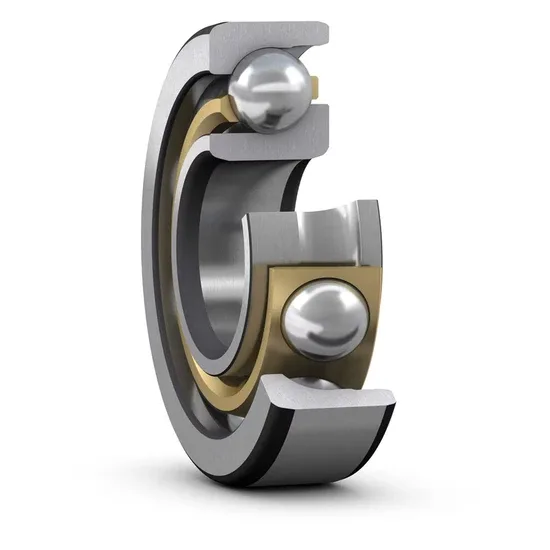

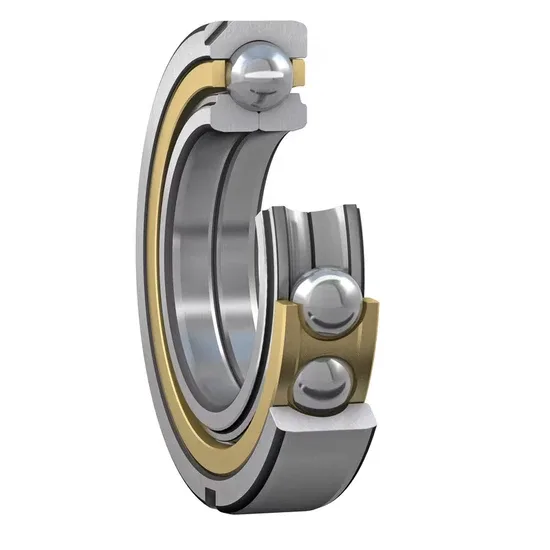

Description
Authorized Channel Sourcing — Every SKF 7012 ACE/HCP4AH1DT we supply ships with batch-traceable documentation from SKF’s authorized distribution network.
Technical Specifications
| Parameter | Value |
|---|---|
| Designation | SKF 7012 ACE/HCP4AH1DT |
| Bearing Type | Angular Contact Ball Bearing |
| Bore Diameter (d) | 60 mm |
| Outside Diameter (D) | 95 mm |
| Width (B) | 18 mm |
| Precision Class | P4A |
| Contact Angle | 25° |
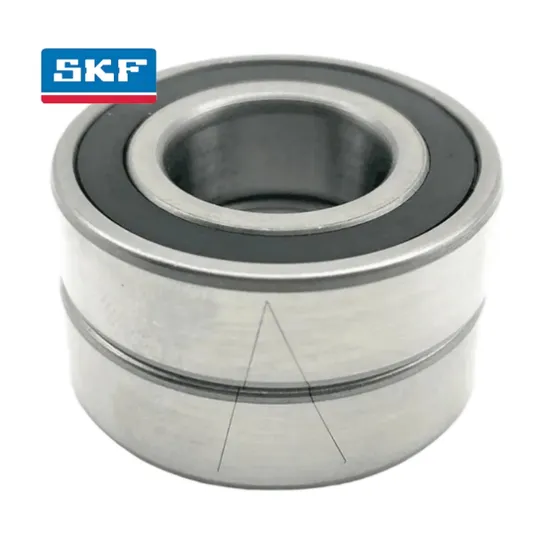
| Arrangement | Tandem (DT) |
| Number of Rows | Single Row (supplied as matched pair) |
| Origin | China |
| Weight | 0.100 kg |
Note: The suffixes "H", "CP", and "H1" within the HCP4AH1 string represent specific internal design and preload variations; exact parameters should be cross-referenced with the latest SKF super-precision catalog for application-critical verification.
Application Suitability
| Industry | Typical Applications |
|---|---|
| Machine Tool | High-speed CNC milling spindles, precision grinding headstocks |
| Robotics | Servo motor housings requiring high axial thrust capacity |
| Precision Equipment | High-speed centrifugal pumps, rotary indexing tables |
What a Suffix Oversight Costs on a CNC Spindle
A base-number match without verifying the ACE contact angle and DT tandem arrangement leads to rapid thermal binding under continuous axial thrust.
I remember a buyer who ordered 7012 angular contacts for a CNC spindle. They matched the base number but ignored the HCP4A suffix, going with standard P6 steel-ball units instead. The spindle overheated inside a week, and chatter marks ruined every workpiece. When procurement teams treat a super-precision spindle bearing like a standard replacement, the consequence is rarely just a delayed shipment—it is catastrophic spindle damage and scrapped inventory [NEED_CITE: thermal damage classification per ISO 15243].
Matching Axial Rigidity to High-Speed Thrust
The SKF 7012 ACE/HCP4AH1DT is engineered for applications where one-directional axial loads dominate at high rotational speeds. The 25° contact angle provides the necessary balance between radial support and axial thrust capacity, while the P4A precision ensures minimal runout in precision grinding or milling spindles. When sourcing replacements, our cross-reference checks go beyond the base designation to verify that the contact angle, cage material, and preload class align perfectly with your OEM equipment requirements.
The Reality of High-Speed Spindle Environments
In a high-speed machine tool spindle, thermal expansion is the primary enemy of bearing life. The DT (tandem) arrangement distributes heavy axial loads across the bearing set, reducing stress on individual rolling elements. However, this requires precise axial preload management. If the housing bore is out of round or the lubrication cycle is delayed, the localized friction heat will exceed the thermal expansion limits of a standard clearance bearing [NEED_CITE: relationship between preload, speed, and operating temperature]. Proper installation using induction heaters and verified housing tolerances is critical for these P4A-class components.
Decoding the P4A and ACE Suffixes
The "P4A" designation is not just a standard ISO class 4 tolerance; the "A" suffix indicates additional running accuracy specifications that are vital for high-speed spindle performance. This means the bearing has been sorted for tighter inner and outer ring runout, which directly reduces vibration at speeds exceeding 10,000 RPM. The ACE design utilizes a 25° contact angle, which is the industry standard for general-purpose high-speed spindles that face significant axial cutting forces. The hybrid ceramic balls (indicated by the HC prefix) further reduce centrifugal loads and friction heat, extending the L10 life in oil-air or oil-mist lubrication systems.
The Financial Impact of Counterfeit or Mismatched Spares
Using a counterfeit or a standard P0-grade bearing in a P4A application usually results in premature cage failure or spindle seizure within the first few hundred hours of operation. The cost of a single spindle rebuild often exceeds the value of the entire bearing inventory for a workshop. By insisting on genuine components with verified hybrid ceramic balls and correct tandem pairing, maintenance teams avoid the hidden costs of unplanned downtime and scrapped workpieces [NEED_CITE: economic impact of unplanned downtime in precision manufacturing].
Why Maintenance Engineers Source Through Our Network
We source the SKF 7012 ACE/HCP4AH1DT through authorized channels to ensure every set arrives with a Certificate of Conformity (COC) and batch traceability. Our technical team provides a complete cross-reference comparison to ensure the replacement matches the OEM specification for clearance, cage material, and precision. We also offer origin identification support to help buyers navigate import documentation and avoid counterfeit exposure. Every shipment includes a dimensional inspection report verifying the P4A running accuracy before it leaves the warehouse.
Documentation & Authenticity
- Supplier Certificate of Conformity (COC) linked to the specific manufacturing batch.
- Third-party runout inspection report confirming P4A running accuracy before shipment.
- Batch and lot traceability documentation with QR code verification pathways via SKF official apps.
- Country-of-origin documentation provided for customs compliance and buyer verification.
- Material certificates for hybrid ceramic ball sets and cage assemblies.
Storage, Handling & Mounting
- Keep the matched DT set sealed in its original packaging until the moment of mounting to preserve the factory pairing marks.
- Store in a climate-controlled environment to prevent condensation on the P4A precision raceways.
- Use clean, lint-free gloves when handling the hybrid ceramic balls to prevent surface contamination.
- Ensure the housing bore is verified for roundness before pressing the outer ring to maintain the 25° contact angle geometry.
- Follow OEM specifications for axial preload adjustment; the tandem arrangement requires precise spacing to distribute the load correctly.
Request a Technical Cross-Reference
Share your OEM equipment number or current application parameters (load, speed, and operating temperature) so our engineers can verify the suffix compatibility. We can provide a full documentation package including origin certificates and lead time confirmation for your next maintenance shutdown.
Frequently Asked Questions
Q: What does the DT arrangement mean for my spindle installation?
A: DT stands for "Tandem" arrangement. This means the bearings are matched so that the load lines are parallel, allowing them to share heavy axial loads acting in one direction. It is essential to install them in the orientation specified by the pairing marks on the outer rings.
Q: How does P4A differ from standard P4 precision?
A: P4A meets all ISO tolerance class 4 dimensional requirements but includes additional running accuracy specifications, particularly for inner and outer ring runout. This is critical for high-speed spindles where vibration must be minimized.
Q: Can I substitute a 15° contact angle bearing (CD) for this ACE (25°) model?
A: No. A 15° bearing has lower axial capacity and different stiffness characteristics. Substituting it in an application designed for a 25° contact angle will lead to premature failure under axial thrust loads.
Q: What documentation comes with the SKF 7012 ACE/HCP4AH1DT?
A: We provide a Certificate of Conformity, batch traceability records, and a pre-shipment dimensional inspection report. We also assist with country-of-origin documentation for import purposes.
Q: How do I verify the authenticity of the hybrid ceramic balls?
A: Genuine hybrid bearings from authorized channels come with specific packaging and batch codes that can be verified via the manufacturer’s official mobile applications or by requesting the original factory material certificates.
Secure Your Spindle Uptime with Verified Precision
Contact our technical desk today to confirm batch availability and request a cross-reference check for your specific machine tool application.