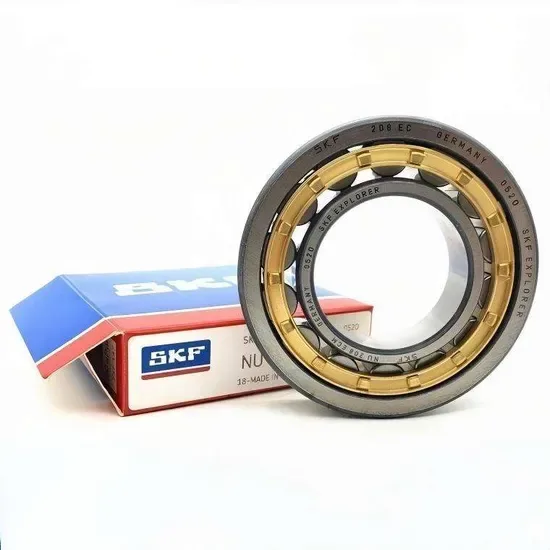
Description
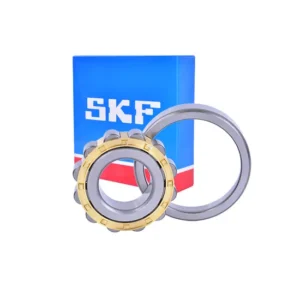
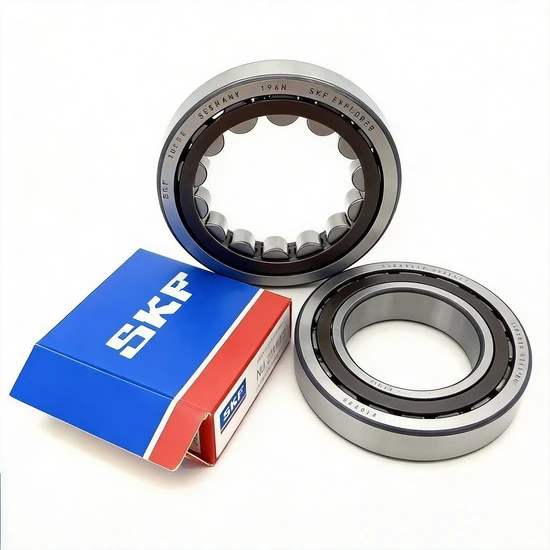
Authorized Channel Traceability — Every SKF NN3026 TN9/SPW33 leaving our warehouse is backed by distributor-chain paperwork that maps the batch back to its origin facility, so maintenance teams can verify provenance before the bearing ever reaches the spindle housing.
Technical Specifications
| Parameter | Value |
|---|---|
| Designation | SKF NN3026 TN9/SPW33 |
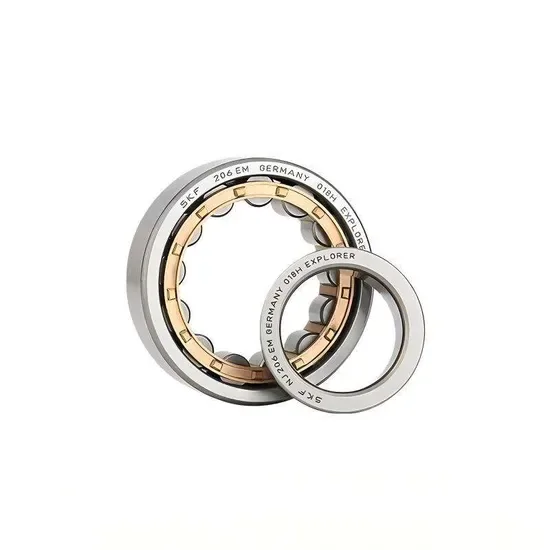
| Bearing Type | Double Row Cylindrical Roller Bearing |
| Bore Diameter (d) | 130 mm |
| Outside Diameter (D) | 200 mm |
| Width (B) | 52 mm |
| Number of Rows | Double Row |
| Cage Material | Glass fiber reinforced polyamide 6,6 (TN9) |
| Seal or Shield Type | Open |
| Precision Class | SP |
| Bore Type | Cylindrical |
| Lubrication Feature | W33 — annular groove and three lubrication holes in outer ring |
| Origin | China |
| Weight | 0.250 kg |
| Standards | ISO 15 / ISO 492 |
The SP precision class is confirmed; an additional UP classification was noted in supplier documentation but requires verification against the manufacturer catalog before quoting.
Application Suitability
| Industry | Typical Applications |
|---|---|
| Machine tool manufacturing | Lathe and grinding machine spindle rear support |
| Heavy-duty gearboxes | Main shaft radial support in industrial gear reducers |
| Steel and metallurgy | Rolling mill work roll and backup roll neck positions |
| Precision industrial equipment | Test rig transmission shafts and measurement fixtures |
What Happens When a Suffix Gets Ignored on a Spindle Bearing
Matching the base number alone is how workshops end up replacing the same bearing twice in one quarter.
A few years back, a transmission test rig in Riyadh went down after three weeks of operation. The replacement NN 3026 had the correct bore and outside diameter, but the cage was standard brass without the W33 lubrication groove. Oil starvation scored the rollers, and the rig shut down mid-cycle [NEED_CITE: rolling bearing failure mode classification per ISO 15243]. That failure was not a material defect — it was a suffix mismatch. When procurement teams treat TN9, SP, and W33 as optional decorations instead of functional requirements, the SKF NN3026 TN9/SPW33 double row cylindrical roller bearing cannot deliver what the application demands. Soft inner rings from unverified supply channels compound the problem, introducing dimensional drift that no amount of re-lubrication can correct.
How This Bearing Fits the Spindle and Gearbox Load Profile
The SKF NN3026 TN9/SPW33 double row cylindrical roller bearing handles heavy radial loads while permitting the axial displacement that spindle housings require during thermal growth cycles. Its separable inner and outer rings simplify press-fit installation on shafts where access is limited to one side. For gearbox applications running continuous duty at moderate speeds, the polyamide cage keeps friction low and operating temperatures stable, which directly supports longer re-lubrication intervals [NEED_CITE: polyamide cage operating temperature boundaries in cylindrical roller bearings].
Load, Speed, and Thermal Conditions at the Mounting Position
Spindle rear supports see predominantly radial loading with minor axial displacement from thermal shaft growth. Speeds in machine tool spindles can approach the grease limiting threshold, making cage weight and friction a deciding factor between standard brass and glass fiber reinforced polyamide. Temperature rise inside the housing affects internal clearance — a bearing installed with standard CN clearance in a high-speed spindle may lose its operating gap entirely once the shaft expands. The W33 annular groove lets maintenance crews inject fresh grease through the outer ring without pulling the bearing from its seat, which matters when the housing is buried inside a gearbox or spindle cartridge [NEED_CITE: W33 lubrication groove effectiveness in sealed housing applications].
Reading the Suffix Stack: TN9, SP, and W33
The TN9 cage is injection molded from glass fiber reinforced polyamide 6,6, chosen for its low mass and reduced sliding friction against the rollers — a combination that lowers operating temperature in continuous-run applications compared to heavier machined brass cages. SP precision class tightens dimensional and running accuracy beyond standard P0 tolerances, which translates to less radial runout and more consistent rotational behavior at the spindle nose. The W33 feature cuts an annular groove around the outer ring with three equally spaced lubrication holes, providing a direct path for grease to reach the roller-cage interface without disassembly. Together, these three suffixes address friction, accuracy, and maintenance access in a way the base NN 3026 designation alone never could.
The Hidden Cost of Skipping Suffix Verification
A bearing that matches only the base number may physically fit the bore and housing, but it will not replicate the original equipment designer’s intent for clearance, cage dynamics, or lubrication delivery. Wrong clearance under thermal load leads to roller skidding and premature cage wear. A missing lubrication groove forces maintenance teams to rely on splash or bath lubrication that may not reach the inner roller row in a double row configuration [NEED_CITE: lubrication starvation failure modes in double row cylindrical roller bearings]. Counterfeit bearings with cloned markings and soft inner rings add another layer of risk — they pass visual inspection but fail under load because the material hardness and raceway geometry do not meet the manufacturer’s specification. These failures are classified under ISO 15243 as material and lubrication-related damage, and they void equipment warranties the moment the root cause is traced back to an unverified part.
What We Check Before the Box Leaves the Warehouse
Every SKF NN3026 TN9/SPW33 double row cylindrical roller bearing we ship is sourced through authorized distributor channels with batch-level paperwork that traces back to the production facility. We cross-check the suffix stack against the application parameters — load, speed, temperature, and housing envelope — to confirm that TN9 cage material and SP precision are appropriate for the mounting position. Our cross-reference database aligns not just the base designation but also the clearance, cage, and precision suffixes across SKF, NSK, FAG, NTN, TIMKEN, and KOYO, so interchange decisions do not sacrifice a critical suffix. Country-of-origin documentation accompanies each shipment to satisfy import compliance requirements in Gulf, African, and Latin American markets.
Documentation & Authenticity
- Supplier Certificate of Conformity linking the batch number to the SKF NN3026 TN9/SPW33 production lot for full traceability
- Dimensional inspection report confirming radial runout and bore tolerance within SP precision boundaries
- QR code verification pathway via SKF official mobile apps to authenticate markings and packaging before installation
- Country-of-origin certificate and HS code documentation to clear customs in destination markets without delay
- Material test certificate available on request for buyers requiring metallurgical verification of bearing steel composition
Storage, Handling & Mounting
- Keep the SKF NN3026 TN9/SPW33 in its original sealed packaging until mounting day — the polyamide TN9 cage absorbs moisture if exposed to high-humidity storage, which can alter dimensional stability
- Store in a climate-controlled area away from direct sunlight, as UV exposure degrades polyamide cage material over time even through translucent packaging
- Use induction heating for the inner ring press-fit rather than open flame, keeping temperature below the threshold that would affect the TN9 cage’s glass fiber reinforcement
- Align the three W33 lubrication holes with the housing grease inlet port during outer ring installation to ensure the re-lubrication path functions from first startup
- For open-type bearings installed in dusty environments, confirm that the housing seals are intact and rated for the contamination level — the bearing itself carries no integral sealing
Start Your Technical Review
Send us the operating parameters — radial load, speed, housing temperature, and mounting envelope — or share the OEM equipment number from the nameplate. We will verify whether the SKF NN3026 TN9/SPW33 double row cylindrical roller bearing is the correct match or if a different suffix combination better suits your application conditions. Batch availability and lead times are confirmed against live distributor stock once the selection is finalized.
Frequently Asked Questions
Q: How do I verify the authenticity of a SKF NN3026 TN9/SPW33 after receiving it?
A: Scan the QR code on the packaging using the SKF official mobile application. The app cross-references the batch and lot number against the manufacturer’s production records. We also provide a Certificate of Conformity with each shipment that links the specific bearing to its authorized distributor chain, so you have two independent verification paths before installation.
Q: Why does the cage material matter when cross-referencing NN 3026 across brands?
A: The TN9 polyamide cage reduces friction and weight compared to a machined brass cage, which affects operating temperature and speed capability. If a cross-reference matches only the base designation but substitutes a brass cage, the bearing may run hotter in a high-speed spindle and require more frequent re-lubrication. Our interchange database aligns cage material alongside the base number so the substitution performs identically in the field.
Q: What does the W33 suffix actually change on this bearing?
A: The W33 adds an annular groove and three lubrication holes to the outer ring, creating a direct channel for grease to reach the roller rows without disassembling the housing. Without this feature, maintenance crews must rely on external splash or bath lubrication, which may not adequately supply the inner roller row in a double row cylindrical configuration.
Q: Is SP precision sufficient for machine tool spindle applications, or do I need UP?
A: SP precision provides tighter dimensional and running accuracy than standard P0, and it is the typical specification for machine tool spindle rear supports. UP offers even tighter tolerances for applications requiring minimal runout at very high speeds. Share your spindle speed and runout requirements, and we will confirm which class matches your design envelope.
Q: How should re-lubrication intervals be set for a bearing with the W33 feature?
A: The W33 groove simplifies grease delivery, but the interval depends on speed, load, and operating temperature. Follow the equipment manufacturer’s maintenance schedule as the baseline, and adjust based on grease condition analysis or temperature monitoring at the housing. The three lubrication holes ensure even distribution across both roller rows when grease is applied through the housing inlet.
Confirm Your Selection and Request Documentation
Share your application parameters or OEM equipment number, and we will return a verified selection with full traceability paperwork. Contact our engineering desk to begin the technical review.