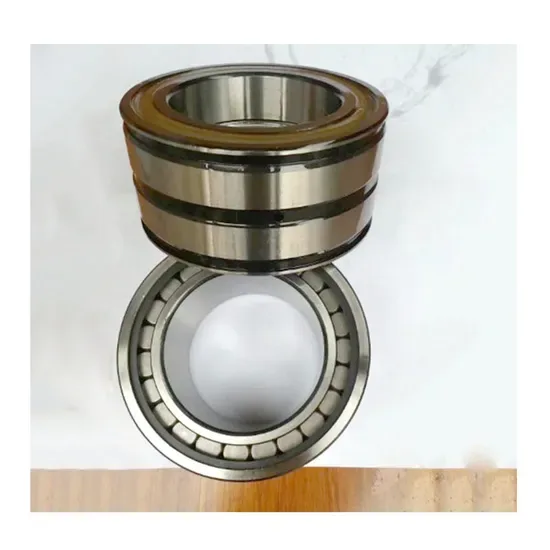
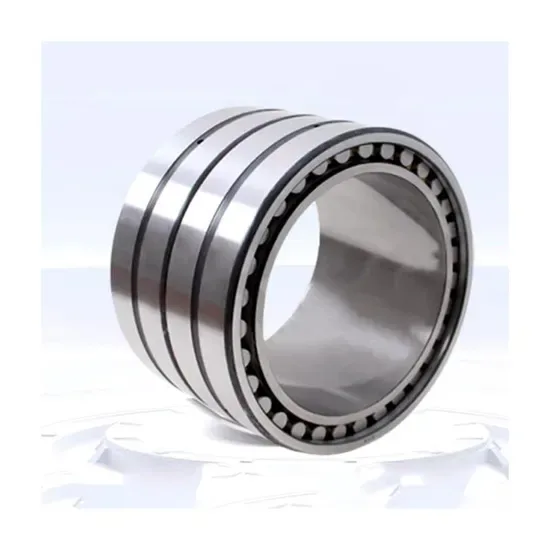
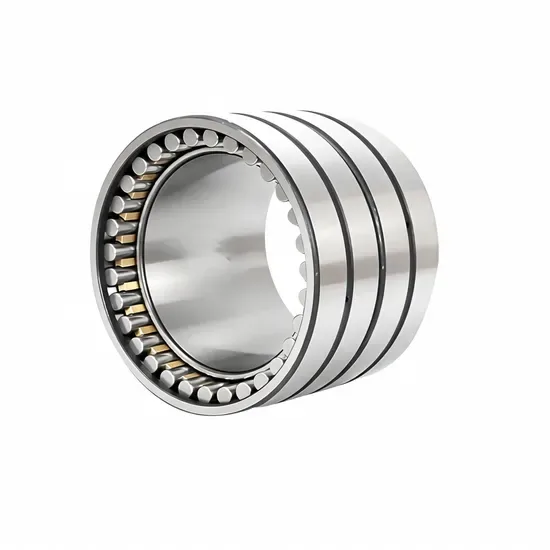
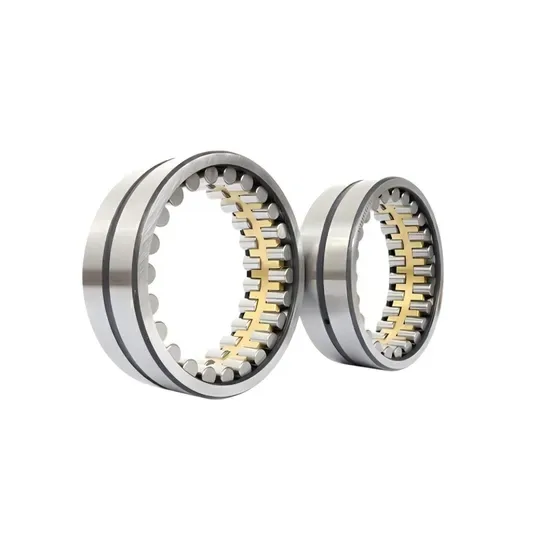
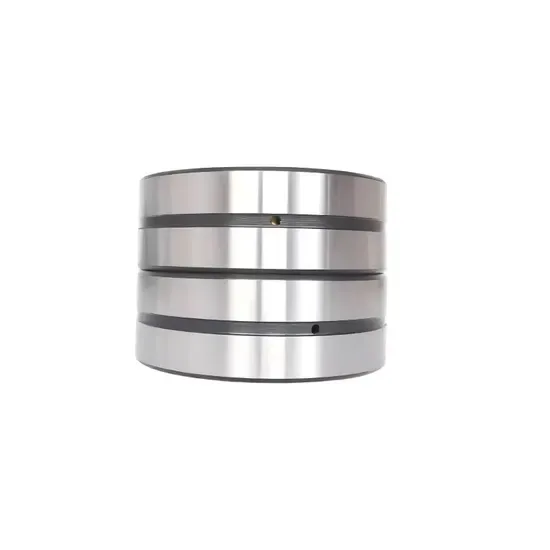
Description
Traceable Sourcing Channels — Every 24038SWRCo2E4 spherical roller bearing we dispatch ships with supplier Certificate of Conformity, batch-level traceability records, and country-of-origin documentation validated against authorized distributor invoices.
Technical Specifications
| Parameter | Value |
|---|---|
| Designation | Generic 24038SWRCo2E4 |
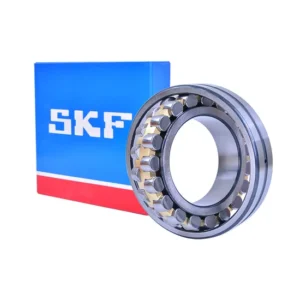
| Bearing Type | Spherical Roller Bearing |
| Bore Diameter (d) | 190 mm |
| Outside Diameter (D) | 290 mm |
| Width (B) | 75 mm |
| Seal or Shield Type | Sealed Type |
| Material | Bearing Steel |
Note: Suffixes SW, R, and Co2E4 within this identifier remain unverified against a specific manufacturer catalog and should be confirmed with the originating brand’s technical documentation prior to final specification.
Application Suitability
| Industry | Typical Applications |
|---|---|
| Steel and Metallurgy | Continuous caster roll segments, strand guide rollers |
| Mining and Crushing | Vibrating screen eccentric shafts, jaw crusher toggle seats |
| Industrial Machinery | Paper machine dryer cylinders, press section felt rolls |
What Happens When a Sealed Spherical Roller Bearing Fails Inside a Caster Segment
Sealed units eliminate relubrication access — a wrong selection becomes a full line stoppage, not a maintenance adjustment.
Continuous caster roll stands operate under extreme thermal gradients and heavy scale contamination. When an open bearing is specified but the maintenance schedule cannot sustain relubrication intervals, scale particles infiltrate the raceway and accelerate spalling. Conversely, when a sealed 24038SWRCo2E4 spherical roller bearing for continuous caster applications is sourced with mismatched internal clearance, thermal expansion at casting temperatures closes the remaining play, and the bearing seizes before the next scheduled segment swap. Either scenario triggers unplanned strand stops that cascade through the entire casting schedule [NEED_CITE: continuous caster bearing failure modes and downtime cost structure]. Procurement decisions made on base designation alone, without verifying the sealed configuration and clearance class, routinely produce these field failures.
How This Sealed Design Fits Caster Roll Demands
Continuous caster segments demand bearings that survive heavy radial loads, slow oscillating rotation, and persistent coolant and scale exposure. The sealed construction of this 24038SWRCo2E4 spherical roller bearing for continuous caster service keeps contaminants out of the raceway without depending on external seal housings that add envelope width. Spherical roller geometry absorbs the shaft deflection and misalignment inherent in loaded roll stacks, distributing stress across the full roller length rather than concentrating it at the edges. When we cross-reference this unit for a caster OEM number, we verify that the seal type, clearance class, and outer ring profile all align with the original segment design — not just the bore and outside diameter.
Thermal Loads, Scale Ingress, and Lubrication Barriers
Roll segments near the mold experience surface temperatures that drive significant thermal expansion in both shaft and housing. Internal clearance must accommodate this growth without collapsing under operating heat. Scale flakes and secondary cooling water create an abrasive, corrosive contamination profile that defeats standard lip seals quickly. The sealed design here addresses contamination directly at the bearing level, reducing reliance on segment housing seals that degrade between rebuilds. Slow rotational speeds typical of caster rolls mean elastohydrodynamic film thickness stays marginal, placing additional importance on surface finish and lubricant condition trapped inside the sealed envelope at assembly [NEED_CITE: elastohydrodynamic lubrication film thickness in slow-speed spherical roller bearings].
Reading the Specs That Actually Matter
The 190 mm bore and 290 mm outside diameter place this bearing in the heavy-section spherical roller range, where load capacity and misalignment tolerance are primary design drivers. Sealed construction means the factory-filled grease is the lifetime supply — there is no relubrication port, so grease selection and fill quantity at manufacture determine service life entirely. Bearing steel construction provides the rolling contact fatigue strength needed for the high Hertzian pressures found in caster roll loading zones. The spherical outer raceway allows the inner ring and roller assembly to pivot relative to the housing, compensating for roll deflection under strand weight without edge-loading the rollers.
The Hidden Expense of a Specification Shortcut
Specifying a replacement by base number alone and ignoring the sealed suffix means installing an open bearing in a housing not designed for external sealing, guaranteeing contamination ingress. Accepting a unit with standard CN clearance when the original design called for C3 or greater causes thermal seizure within hours at casting temperature. Counterfeit spherical roller bearings with soft inner rings and cloned markings pass visual inspection but collapse under caster loads, producing catastrophic roll surface damage that requires full segment replacement rather than a bearing swap. These outcomes fall squarely within the failure classifications defined by ISO 15243, and each one converts a planned component exchange into an extended, unplanned outage [NEED_CITE: rolling bearing failure classification ISO 15243 spalling and seizure categories].
What We Bring to the Table Before Shipment
Our sourcing model routes every order through authorized distributor channels with full invoice traceability back to the brand’s regional warehouse, so batch authenticity is documented, not just promised. We run cross-reference checks that align clearance class, cage material, and seal configuration — not just the base designation — before confirming interchangeability with SKF, NSK, FAG, TIMKEN, NTN, or KOYO equivalents. Origin documentation is prepared per shipment to support import clearance at destination, and third-party dimensional inspection can be arranged for large-bore spherical roller bearings before crating. Our engineering team reviews application parameters including load, speed, and thermal profile to confirm the selected unit matches the installation envelope.
Documentation & Authenticity
- Supplier Certificate of Conformity linking batch and lot number to the originating authorized distributor channel
- Country-of-origin documentation formatted for customs clearance in steel and mining import markets
- Third-party dimensional inspection report verifying bore, OD, and width against tolerance limits before dispatch
- Material certificate confirming bearing steel grade for the rings and rolling elements
- Batch and lot traceability records connecting the shipped unit to the manufacturer’s production date
Storage, Handling & Mounting
- Retain original sealed packaging until the moment of installation; premature opening exposes the factory grease fill to ambient moisture that compromises the sealed-for-life design of this 190 mm bore unit
- Store flat on a level surface in a dry environment to prevent Brinell marks on the raceway from the heavy roller set shifting under its own weight during prolonged upright storage
- Use clean gloves when handling the outer ring; fingerprint acids on the exposed steel surfaces of large-diameter spherical roller bearings initiate corrosion pits that propagate under load
- For induction heating during mounting, target the inner ring only and observe temperature ceilings appropriate for sealed units to avoid degrading the factory grease fill
- Verify shaft and housing seating dimensions against the 190 mm bore and 290 mm OD before pressing; out-of-round housings distort the outer ring and defeat the self-aligning capability of the spherical raceway
Request a Quotation With Full Technical Alignment
Share your caster segment drawing number or OEM equipment reference so we can confirm cross-reference compatibility including seal type and clearance class. If you need origin documentation tailored to your import requirements, specify the destination country at inquiry stage. We respond with a quotation covering unit price, batch availability, and lead time along with the documentation package that will accompany shipment.
Frequently Asked Questions
Q: How can I verify that a sealed spherical roller bearing is genuine before accepting delivery?
A: Authentic units from authorized channels carry batch traceability linking them to the manufacturer’s production records. We supply a Certificate of Conformity and support QR code verification through the brand’s official application where applicable. For sealed bearings, inspecting the seal lip quality and factory grease condition through the packaging window provides additional confidence before acceptance.
Q: What clearance class should I specify for continuous caster roll applications?
A: Caster rolls experience significant thermal gradients that demand clearance above standard CN. Most OEM caster designs call for C3 or C4 clearance to accommodate thermal expansion of the shaft and inner ring at operating temperature. We verify the required clearance class during the cross-reference stage, matching it across brands so the replacement performs identically to the original.
Q: Can I relubricate a sealed spherical roller bearing in service?
A: No. Sealed spherical roller bearings are filled with a calculated grease quantity at the factory and have no relubrication ports. Attempting to force grease past the seal lips damages them and introduces contamination. Service life is determined by the initial grease fill, which is why correct specification at the procurement stage is critical.
Q: How do you handle cross-brand interchange for this designation?
A: We compare the full specification envelope — bore, OD, width, seal type, clearance class, and cage material — against equivalent designations from SKF, NSK, FAG, TIMKEN, NTN, and KOYO. A base number match alone is insufficient; suffix alignment ensures the replacement bearing behaves identically in the installed application.
Q: What does the SWRCo2E4 suffix indicate on this bearing?
A: The individual suffix components SW, R, and Co2E4 within this identifier have not been independently verified against a single manufacturer’s catalog. We recommend confirming their exact meaning with the brand’s technical documentation or sharing the full application context so our engineering team can advise on specification alignment.
Get Your 24038SWRCo2E4 Specification Confirmed
Send us your OEM equipment number or caster segment drawing along with required origin documentation, and we will return a matched quotation with full traceability details.
Contact our technical sales team through your existing communication channel to initiate the inquiry.