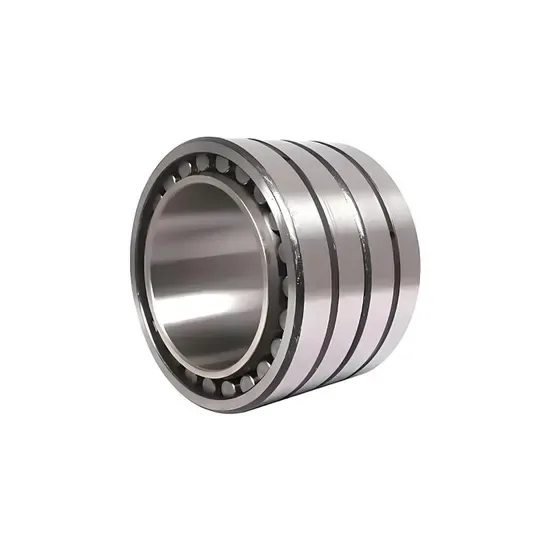
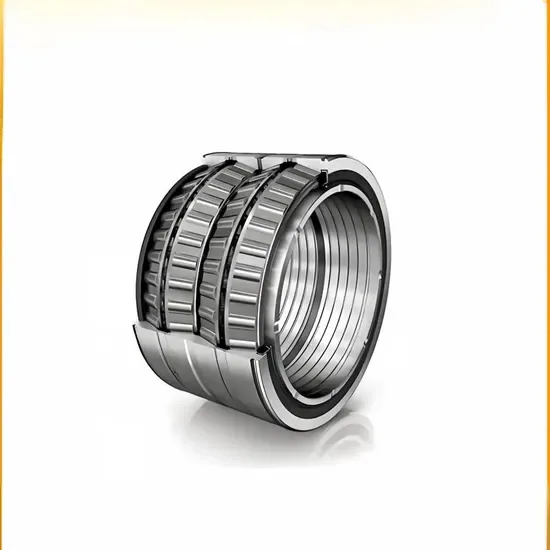
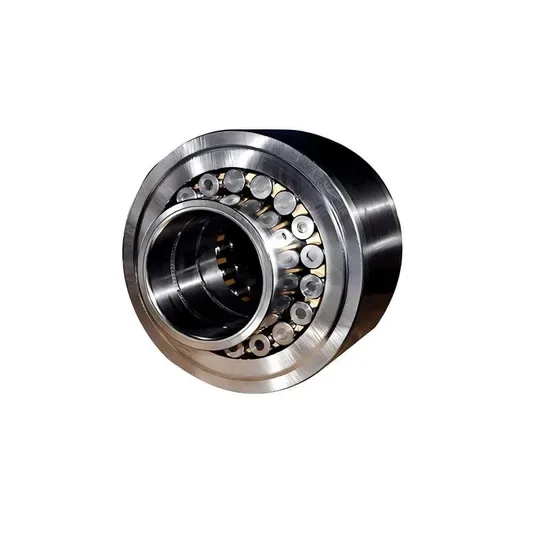
Description
Authorized Channel Sourcing — Every 900SLPT1251 split spherical roller bearing ships with traceable batch documentation and country-of-origin paperwork verified before dispatch.
Technical Specifications
| Parameter | Value |
|---|---|
| Designation | Generic 900SLPT1251 |
| Bearing Type | Spherical Roller Bearing (Split Type) |
| Bore Diameter (d) | 900 mm |
| Seal or Shield Type | Sealed |
| Style | Split design for converter trunnion service |
| Material | Bearing Steel |
| Suffix note: SLPT and 1251 are unverified designations requiring manufacturer catalog confirmation before final procurement. |
Application Suitability
| Industry | Typical Applications |
|---|---|
| Steel and Metallurgy | Converter trunnion bearings, ladle turret pivot points |
| Mining and Crushing | Rotary kiln support rollers, large-diameter shaft mounts |
| Heavy Industrial Machinery | Split-housing assemblies where full shaft disassembly is impractical |
What a Wrong Bore Clearance Decision Costs on a Converter Trunnion
A matched base number means nothing if the internal clearance was specified for ambient bench conditions instead of operating temperature.
I still remember a converter trunnion in the Gulf region where the replacement bearing matched the OEM designation perfectly on paper. What nobody caught was that standard CN clearance had been installed where C4 was required for the thermal expansion cycle of the vessel. Three weeks into production the inner ring expanded past its tolerance window, the rollers locked up, and the plant lost an entire heat cycle — not to mention the unplanned downtime that followed. That kind of failure never shows up in a catalog lookup. It only reveals itself under load, at temperature, weeks after the install. [NEED_CITE: thermal expansion effects on bearing internal clearance during converter operation]
The 900SLPT1251 split spherical roller bearing operates in exactly this environment: massive radial loads, slow oscillating rotation, and severe thermal gradients that demand clearance selection based on real operating conditions rather than catalog defaults.
Matching the 900SLPT1251 to Converter Trunnion Demands
Converter trunnion bearings carry the full weight of the vessel while accommodating slow tilting motion and extreme thermal cycling. The 900 mm bore on this split spherical roller bearing is sized for the large-diameter shafts typical in metallurgy converters, and the split construction means maintenance crews can replace it without dismantling the entire trunnion shaft assembly — a critical advantage when every hour of downtime translates to lost heats. We cross-check every sourcing request against the application’s actual load spectrum, thermal profile, and mounting envelope before confirming the order, because a catalog number alone never tells the full story.
Thermal Cycling, Contamination, and the Sealed Split Challenge
The operating environment around a converter trunnion combines slow oscillating rotation with radiant heat from the vessel shell and heavy particulate contamination from slag and dust. Sealed construction on a bearing of this diameter is a deliberate choice: it keeps contaminants out of the raceway during the months-long service intervals typical in steel mill maintenance schedules. However, sealed bearings also mean the grease fill must be correct from the start — there is no relubrication option once the unit is closed. Temperature swings across a full heat cycle can drive the shaft and housing through differential expansion rates, which is why clearance class selection must account for peak operating temperature, not just ambient conditions. [NEED_CITE: sealed bearing grease life degradation under thermal cycling in metallurgical applications]
Installation on a split design also demands careful attention to the split-line alignment — any mismatch at the joint creates a stress concentration that accelerates fatigue spalling on the rollers that cross that boundary.
Reading the Specifications That Actually Matter
The 900 mm bore diameter places this bearing in the ultra-large category where manufacturing tolerances, material homogeneity, and heat treatment consistency become critical differentiators. Bearing steel construction at this size must achieve through-hardening without residual stress gradients that could trigger subsurface cracking under heavy radial loads. The sealed configuration protects the raceway but introduces friction considerations at the seal lips — on a bearing this large, even small seal drag generates meaningful heat at the contact interface.
The split design itself requires precision machining at the joint faces. If the split line is not ground to match within tight flatness tolerances, the assembled bearing will have a localized geometry discontinuity that acts as an impact point every time a roller crosses it. This is why dimensional inspection reports on split bearings must include split-line alignment verification, not just standard bore and OD measurements. The SLPT and 1251 suffixes on this designation require confirmation against the specific manufacturer’s catalog to establish the exact cage type, clearance class, and precision grade before procurement is finalized.
The Hidden Expense Behind a Cheap Replacement
A counterfeit or mis-specified ultra-large bearing does not fail gracefully. On a converter trunnion, a soft inner ring will deform under load, shifting the load zone until adjacent rollers are overloaded and begin spalling — a cascade failure that can damage the shaft journal itself. ISO 15243 classifies these failure modes across fatigue, wear, corrosion, and electrical erosion categories, and in metallurgy applications the dominant risk is premature surface fatigue from clearance loss or material deficiency. [NEED_CITE: ISO 15243 rolling bearing damage classification for heavy industrial service]
The cost is never just the bearing. It is the lost production window, the emergency crane mobilization, the shaft inspection and possible regrind, and the credibility damage with the plant operations team. Sourcing through verified channels with full material and dimensional documentation is the only defense against this category of risk.
How Procurement Engineers Vet Our Supply Chain
We source large-diameter split spherical bearings through authorized distributor channels, which means every unit carries batch and lot traceability back to the manufacturer’s production facilities — not just a trading company invoice. Our cross-reference database covers SKF, NSK, FAG, TIMKEN, NTN, and KOYO interchange data, but for split types we go further: we verify clearance class, cage material, and precision grade alignment, not just the base designation. Country-of-origin documentation ships with every order to support import compliance, and our technical team reviews the application parameters with the buyer before confirming suitability. Material certificates confirming bearing steel grade, dimensional inspection reports that include split-line flatness checks, and supplier Certificates of Conformity are standard inclusions, not special requests.
Documentation & Authenticity
- Supplier Certificate of Conformity linking the 900SLPT1251 batch number to the manufacturer’s production records for full traceability
- Material certificate confirming bearing steel composition equivalent to GCr15 or 100Cr6 for through-hardening verification on this 900 mm bore
- Dimensional inspection report covering bore, OD, width, and split-line flatness alignment specific to this split-type construction
- Country-of-origin certificate and HS code documentation supporting import clearance for metallurgy-class large-diameter bearings
- Seal integrity verification confirming the sealed configuration was not compromised during transit or storage
Storage, Handling & Mounting
- Store the 900 mm split bearing horizontally on a flat, vibration-free surface to prevent outer ring ovalization before mounting — large-diameter rings are especially vulnerable to gravity-induced distortion
- Do not break the factory seal wrapping until the moment of installation; the sealed configuration of this 900SLPT1251 relies on the original grease fill, and early exposure to mill atmosphere contaminates the raceway
- Verify split-line mating surfaces are clean and free of debris before joining the two halves — any particulate trapped at the joint of this split spherical bearing creates an immediate stress riser
- Use calibrated lifting equipment with spreader bars to keep the split bearing level during trunnion mounting; uneven loading during installation can damage the split joint faces
- Confirm shaft and housing fit tolerances match the specified clearance class before pressing the 900 mm inner ring into position — thermal expansion allowances are critical on converter trunnion applications
Before You Commit to an Order
Share your converter trunnion operating parameters — vessel weight, oscillation frequency, peak shell temperature, and ambient conditions — so our engineering team can verify clearance class and confirm the 900SLPT1251 split spherical roller bearing is specified correctly for your duty cycle. If you have an OEM equipment number or an existing bearing designation from another manufacturer, we will run a full cross-reference check including cage type and clearance alignment. Request the documentation package and country-of-origin confirmation early in the process so your import team can review requirements before the order is placed.
Frequently Asked Questions
Q: How do I verify the authenticity of an ultra-large split bearing like the 900SLPT1251 when counterfeit documentation is common?
A: We provide batch-level traceability linking the bearing to the manufacturer’s production records, along with a supplier Certificate of Conformity and material certificate. For additional verification, we support QR code checks through the brand’s official application where applicable, and we guide buyers through physical inspection points specific to large-diameter split bearings — including split-line machining quality and cage construction details that counterfeiters typically fail to replicate accurately.
Q: What import documentation do I need for a 900 mm bore bearing of this type?
A: Country-of-origin certificates, HS code classification, and material certificates are standard inclusions with our shipments. We provide complete documentation packages tailored to the destination country’s customs requirements, and our team can advise on any additional certifications needed for metallurgy-class equipment imports in your region.
Q: How does the split design affect installation procedures on a converter trunnion?
A: The split construction allows bearing replacement without removing the trunnion shaft from the converter, which dramatically reduces maintenance downtime. However, the split-line joint must be assembled with exact alignment and clean mating surfaces. We provide installation guidance specific to split spherical roller bearings, including torque sequences for the clamping hardware and verification steps for post-assembly rotational checks.
Q: What cross-reference considerations apply beyond the base designation for split spherical bearings?
A: Base number matching is only the starting point. For converter trunnion applications, clearance class must match the thermal expansion profile, cage material must withstand the oscillating motion and load spectrum, and the split-line design must be compatible with the housing geometry. We verify all three parameters — not just the bore and OD — when running interchange comparisons across SKF, NSK, FAG, TIMKEN, NTN, and KOYO catalogs.
Q: What lead time should I expect for an ultra-large split bearing with specialized suffixes?
A: Large-diameter split bearings with specific suffix requirements typically involve multi-week procurement timelines through authorized channels. We confirm availability and estimated dispatch dates at the quotation stage, and we maintain communication with the distributor network to track production scheduling for non-stock designations.
Secure Your Converter Trunnion Bearing Specification
Send us your operating parameters and OEM reference number to initiate the technical review and documentation confirmation process.
Contact: Inquiry through authorized distributor channels with full traceability and authenticity verification support.