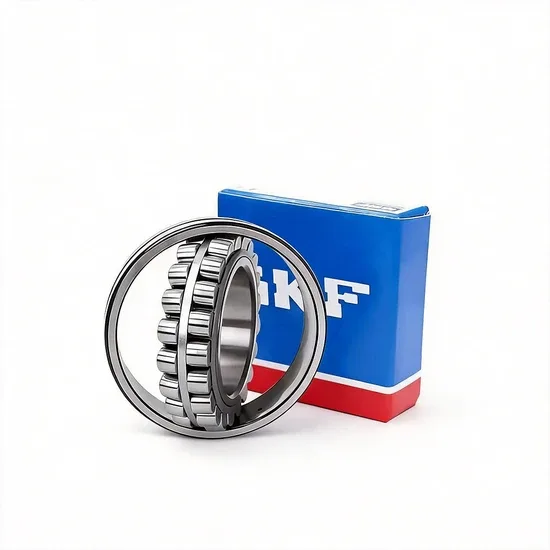
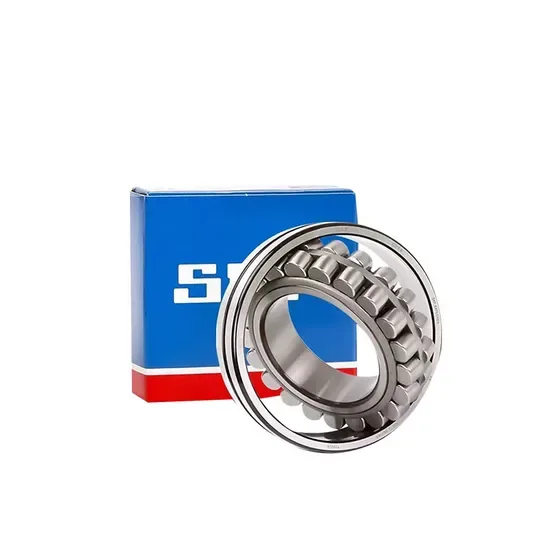
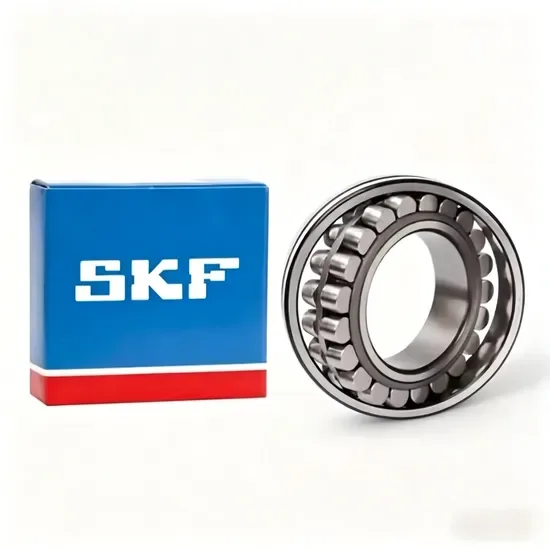
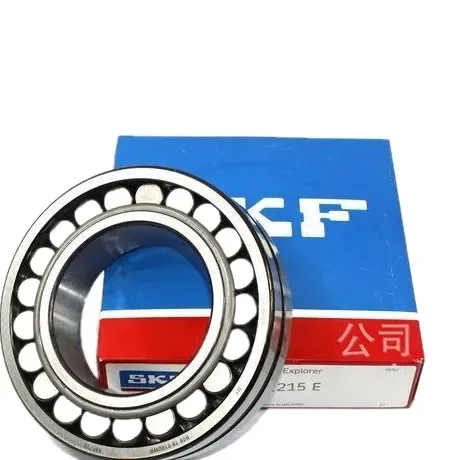
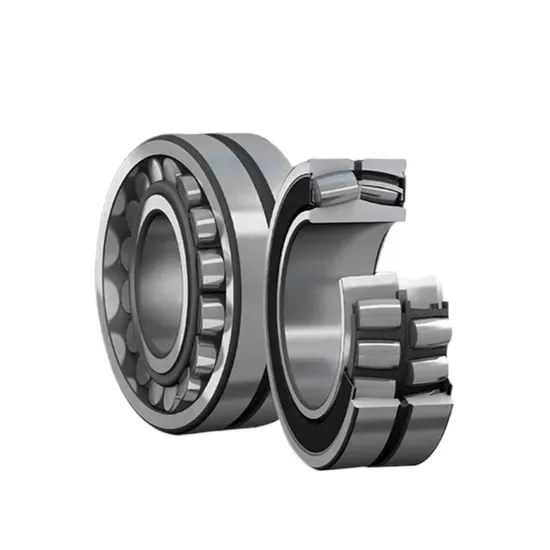
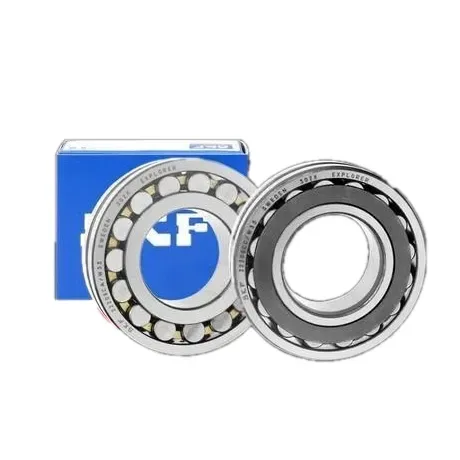
Description
Authorized Channel Sourcing — Every 21318E spherical roller bearing we ship originates from traceable distributor networks with verifiable batch documentation, not parallel gray-market stock.
Technical Specifications
| Parameter | Value |
|---|---|
| Designation | 21318E Spherical Roller Bearing |
| Bearing Type | Spherical Roller Bearing |
| Width (B) | 43mm |
| Internal Design | E — Reinforced roller complement and optimized raceway geometry |
| Bore Type | Cylindrical |
| Number of Rows | Two |
| Cage Material | Manufacturer standard (verify at order) |
| Seal or Shield Type | Open |
| Clearance Class | Standard (verify at order) |
| Precision Class | Standard (verify at order) |
| Origin | Varies by brand — confirm at inquiry |
Clearance, cage material, and precision class depend on the specific brand variant selected and must be confirmed against the manufacturer catalog before order placement.
Application Suitability
| Industry | Typical Applications |
|---|---|
| Mining and Crushing | Jaw crusher eccentric shaft, cone crusher main shaft, vibrating screen drive |
| Steel and Metallurgy | Continuous caster guide rollers, rolling mill work roll necks |
| Industrial Machinery | Paper machine dryer section rolls, heavy-duty conveyor drive pulleys |
Why the E Suffix Is the Difference Between Shifts and Shutdowns
A 21318E spherical roller bearing for mining equipment is not interchangeable with a base-number-only 21318 — the reinforced internal geometry is what keeps crushers running past week one.
Early in my career on the shop floor, we watched a Central Asian mining client lose four days of production because the bearings they received matched the base number perfectly — except for the cage. The vibration load on a jaw crusher eccentric doesn’t care about paperwork. When cages fracture underground, the cost isn’t the bearing; it’s the halted line, the emergency freight, and the crew standing idle. [NEED_CITE: rolling bearing failure mode classification per ISO 15243] The E suffix on the 21318E signals a reinforced internal design with an optimized roller complement that distributes load more evenly across the raceway — a detail that matters enormously when shock loads spike every time a boulder hits the jaw.
How the 21318E Handles the Loads Crushers Actually Deliver
Mining equipment doesn’t operate on clean load diagrams. A jaw crusher eccentric sees heavy radial shock loads, moderate axial displacement from shaft deflection, and constant misalignment as the frame flexes. The 21318E spherical roller bearing accommodates that misalignment inherently — the sphered outer ring raceway lets the inner ring and roller assembly pivot slightly without edge-loading the rollers. For vibrating screens, the reinforced E design sustains the continuous high-frequency oscillation that would accelerate fatigue on a standard-capacity variant. When we match this bearing for a client’s specific machine, we cross-check the actual operating envelope against the load ratios, not just the catalog rating.
What a Mining Shaft Demands Beyond the Catalog Page
The operating environment around a crusher eccentric is punishing: airborne rock dust, intermittent water ingress from washdowns, ambient heat compounded by friction, and shaft speeds that cycle between loaded and unloaded states. Temperature swings affect internal clearance directly — a bearing installed with standard CN clearance in a high-heat zone can lose all internal play once the shaft reaches operating temperature, binding the rollers against the cage. Lubrication intervals shorten dramatically when contamination breaches the seal boundary. [NEED_CITE: bearing internal clearance loss under thermal gradient in heavy machinery] Installation method matters too: pressing a cylindrical-bore spherical roller bearing onto a shaft with incorrect interference fit can collapse the residual clearance before the machine ever starts.
Decoding the E Suffix and Load Capacity Trade-offs
The E designation on a spherical roller bearing indicates a reinforced internal design — typically a larger or more numerous roller complement with optimized raceway profiles that increase the dynamic load rating over the non-E version. This comes with a practical trade-off: the reinforced design may have a slightly lower limiting speed due to increased roller mass and friction. For crusher and vibrating screen applications, where speeds are moderate but loads are extreme, that trade-off is exactly what the application demands. The open design of the 21318E means external sealing is the responsibility of the housing — a deliberate choice for heavy machinery where maintenance crews need access to re-grease the bearing cavity on their own schedule without fighting integrated contact seals that add friction heat.
The Hidden Expense of Ignoring the Suffix
Correct bearing selection from a verified source protects against costs that never show up on a purchase order: unplanned downtime during peak production, collateral damage to shafts and housings from catastrophic cage failure, warranty voidance when failure analysis reveals an out-of-spec replacement. ISO 281 establishes the framework for calculating L10 rating life, but that calculation assumes the correct internal geometry, clearance, and lubrication regime are all in place. [NEED_CITE: ISO 281 rating life assumptions for spherical roller bearings] A 21318E installed where a standard 21318 was needed — or vice versa — invalidates the life calculation entirely.
Why Procurement Engineers Source This Bearing Through Our Channel
We don’t manufacture bearings, and we don’t pretend to. What we do is source genuine 21318E spherical roller bearings through authorized distributor channels where batch traceability is real, not retrofitted. Every shipment carries documentation that ties back to the manufacturer’s production lot — QR codes you can verify through brand official apps, not just scan-and-hope. When a client needs to substitute across brands — SKF to NSK to FAG — our cross-reference comparison matches clearance class, cage material, and precision suffix simultaneously, so the replacement actually fits the application rather than just fitting the shaft. We also provide country-of-origin documentation upfront, which matters when your customs broker needs HS codes and provenance before the cargo clears port.
Documentation & Authenticity
- Supplier Certificate of Conformity tied to the specific production batch of the 21318E received
- QR code verification pathway via brand official apps to confirm authenticity before installation
- Country-of-origin documentation suitable for customs clearance and import compliance in your destination market
- Dimensional inspection report verifying bore diameter, OD, and width against tolerance class before dispatch
- Material certificate confirming bearing steel grade and heat treatment traceability for the supplied lot
Storage, Handling & Mounting
- Keep the 21318E in its original sealed packaging until the day of installation — the open design means exposed raceways attract moisture and particulate immediately upon unboxing
- Store horizontally in a climate-controlled area; temperature cycling in unheated warehouses can compromise the anti-corrosion coating on the exposed roller complement
- For cylindrical-bore mounting, use induction heating to the manufacturer-recommended temperature range rather than cold pressing — forcing the inner ring risks brinelling the reinforced roller paths
- Verify shaft and housing tolerances before mounting; incorrect interference fit on a mining crusher eccentric will consume the internal clearance before the first shift begins
- Apply the specified grease type and fill quantity immediately after mounting — the open design depends on external lubrication discipline to keep contaminants out of the roller zone
Before You Commit to a Purchase Order
Share your operating parameters — load spectrum, shaft speed, ambient and operating temperature, and the specific equipment model — so we can confirm the 21318E is the correct variant for your application, or identify a better-suited alternative. If you’re replacing an existing bearing, send us the OEM equipment number or the full designation from the nameplate, and we’ll run a cross-reference check that includes clearance, cage, and precision alignment. Request the documentation package in advance if your import process requires origin verification before shipment.
Frequently Asked Questions
Q: What does the E suffix actually change in the 21318 bearing design?
A: The E suffix indicates a reinforced internal design with an optimized roller complement and raceway geometry, yielding a higher dynamic load rating compared to the standard 21318 without the suffix. This makes the 21318E specifically suited for applications with sustained heavy radial loads like crusher eccentrics and vibrating screens.
Q: How do I verify that the 21318E I receive is genuine and not counterfeit?
A: Genuine bearings carry batch-specific QR codes that can be verified through the brand’s official mobile application. We supply a Certificate of Conformity linked to the production lot, and we recommend scanning and verifying the code upon receipt before installation. Counterfeit bearings often use cloned QR codes that fail when checked against the manufacturer’s database. [NEED_CITE: counterfeit bearing detection via QR verification in industrial supply chains]
Q: Why does cross-reference matching need to include clearance and cage, not just the base number?
A: Two bearings can share the same base designation but have entirely different internal clearances, cage materials, and precision classes. Installing a standard CN clearance bearing where C3 was specified for thermal expansion can lead to preload binding at operating temperature. Matching only the base number ignores these critical suffixes that determine whether the bearing survives in your specific application.
Q: What clearance class should I specify for a 21318E in a high-temperature mining application?
A: High-temperature environments typically require C3 or C4 clearance to compensate for thermal expansion of the shaft and inner ring during operation. The correct class depends on the actual temperature differential between installation and steady-state operation. Share your operating temperature range, and we can confirm the appropriate clearance specification for your equipment.
Q: What documentation will I receive for import and customs compliance?
A: We provide country-of-origin documentation, HS code references, and a supplier Certificate of Conformity with batch traceability. These documents support customs clearance in most import markets and satisfy procurement audit requirements for material provenance.
Verify Your 21318E Requirement With Our Technical Team
Send us your equipment model, operating conditions, or existing bearing designation — we’ll confirm the correct variant and return a quotation with full documentation and lead time.