Description
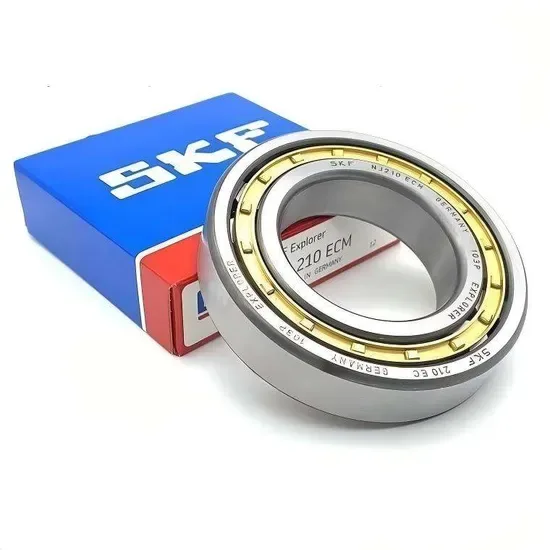
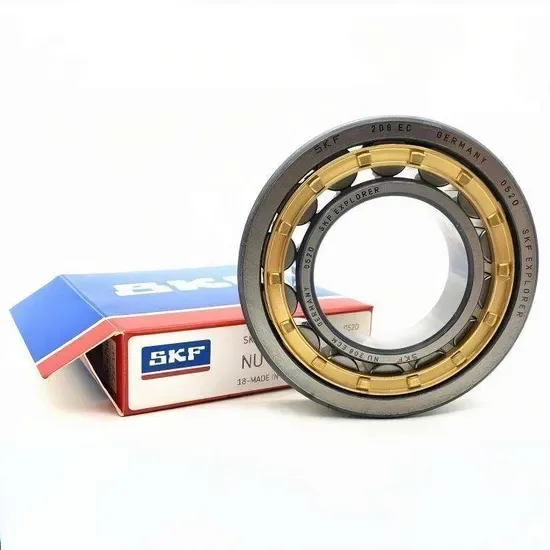
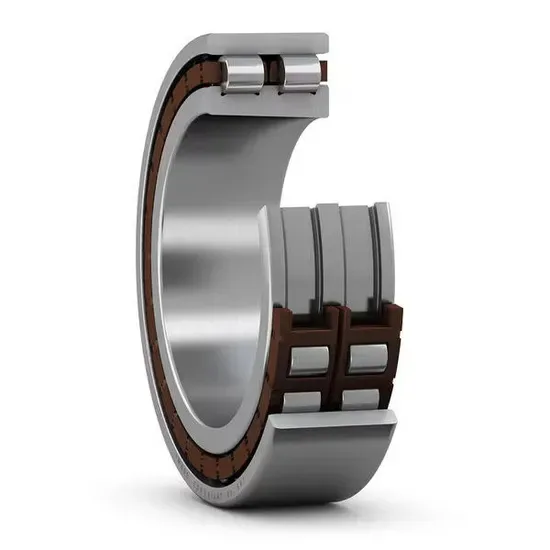
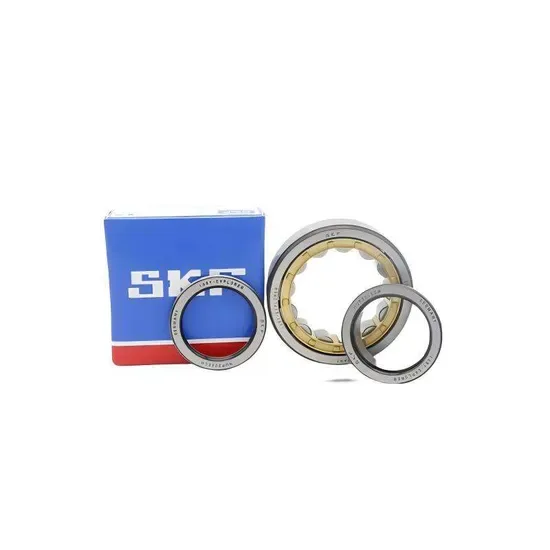
SKF NN3010 KTN/SPVR521 Double Row Cylindrical Roller Bearing
Authorized Channel Sourcing — Every SKF NN3010 KTN/SPVR521 leaving our warehouse ships with batch-matched documentation traced back through authorized distributor invoicing, so procurement teams can close the counterfeit exposure gap before the bearing reaches the spindle bay.
Technical Specifications
| Parameter | Value |
|---|---|
| Designation | SKF NN3010 KTN/SPVR521 |
| Bearing Type | Double Row Cylindrical Roller Bearing |
| Bore Diameter (d) | 50 mm |
| Outside Diameter (D) | 80 mm |
| Width (B) | 23 mm |
| Weight | 0.39 kg |
| Number of Rows | Double Row |
| Bore Type | Tapered (1:12 taper) |
| Cage Material | Injection molded glass fiber reinforced polyamide 6,6 (TN9) |
| Seal or Shield Type | Open |
| Precision Class | SP / UP (source value — verify against SKF catalog for suffix /SPVR521) |
| Arrangement | Separable inner and outer ring |
Note: The suffixes /SP and /VR521 appear on supplier documentation but require confirmation against the current SKF super-precision catalog to fully decode.
Application Suitability
| Industry | Typical Applications |
|---|---|
| Machine Tool Manufacturing | Lathe main spindle front support, milling spindle cartridge |
| Precision Equipment | High-speed grinding wheel head, internal grinding spindle |
| Industrial Gearboxes | High-speed pinion shaft support in speed increasers |
What the Wrong Suffix Costs on a 15,000 RPM Spindle
A single overlooked suffix can turn a precision spindle assembly into a thermal runaway event within hours of run-in.
I once watched a CNC builder install NN 30 series bearings that matched the base number perfectly. The buyer had ignored the tapered bore interference fit requirement and specified CN clearance where the application demanded a calculated residual clearance after mounting. Three hours into high-speed commissioning, the inner ring expanded beyond tolerance, preload spiked, and the polyamide cage cracked under centrifugal stress. [NEED_CITE: bearing failure modes related to clearance and fit errors per ISO 15243] That kind of field failure is not a warranty conversation — it is a production line shutdown with cascading delivery penalties. When procurement engineers cross-reference only the base designation and skip bore type, cage material, and precision suffix verification, the SKF NN3010 KTN/SPVR521 or any equivalent bearing becomes a liability rather than a solution.
How This Bearing Fits the Spindle Load and Speed Envelope
The 50 × 80 × 23 mm envelope of the SKF NN3010 KTN/SPVR521 places it squarely in the mid-range spindle support category where radial rigidity matters more than axial thrust capacity. Double row cylindrical roller bearings carry pure radial loads while permitting the angular contact pair elsewhere in the spindle to manage thrust independently. The TN9 polyamide cage keeps rolling element guidance light enough for high surface speeds, which is exactly what oil-air or oil-mist lubricated spindles demand. When we cross-reference an OEM spindle drawing, we verify that the bore taper, cage type, and precision class all align — not just the bore diameter and outside diameter.
Thermal Growth, Fit Calculation, and the Tapered Bore Advantage
Spindle operating temperatures routinely push the inner ring above ambient by a significant margin during sustained high-speed cuts. That differential expansion is why the K suffix — indicating a 1:12 tapered bore — is engineered into this bearing. The tapered seat allows the installer to drive the inner ring axially onto the shaft journal, controlling interference and residual radial clearance simultaneously. [NEED_CITE: tapered bore mounting methods for super-precision cylindrical roller bearings] Unlike cylindrical bore bearings that rely on press-fit calculations alone, the tapered interface gives the maintenance team a mechanical adjustment mechanism. Miss the drive-in distance target and you end up with either excessive preload causing cage failure or residual looseness introducing vibration at critical speed. Temperature profiling during commissioning is non-negotiable here.
Why the TN9 Cage and SP Precision Matter Together
The TN9 suffix signals an injection molded glass fiber reinforced polyamide 6,6 cage. For spindle speeds where surface velocity pushes brass cages toward their centrifugal limits, the lightweight polyamide alternative reduces cage inertia and keeps friction losses contained. Combined with SP precision — which sits above P4 in SKF’s super-precision hierarchy for radial and axial runout — the cage and accuracy pairing targets applications where chatter marks on the workpiece surface are unacceptable. The open design means the spindle builder selects the lubrication regime: oil-air for sustained high speed, oil mist for moderate duty, or grease for sealed cartridge designs where re-lubrication intervals are managed externally. Each of these choices interacts with cage material and clearance in ways that a base-number-only cross reference completely misses.
The Hidden Price of a Counterfeit or Mis-Specified Replacement
When an MRO manager sources a replacement bearing from an unverified middleman, the risk is not just a bad part — it is an undocumented deviation in metallurgy, dimensional tolerance, or cage composition. [NEED_CITE: counterfeit bearing infiltration in industrial supply chains] Soft inner rings that pass visual inspection but fail under load, cloned QR codes that redirect to fake verification pages, and brass cages substituted for specified polyamide cages are documented failure patterns. Under ISO 281 life calculation frameworks, even marginal deviations in material cleanliness or raceway geometry compress L10 life dramatically. A spindle bearing that was rated for extended service intervals may fail prematurely, triggering unplanned downtime, scrapped workpieces, and in severe cases, catastrophic shaft damage that extends repair scope far beyond the bearing itself.
What We Do Differently Before the Box Ships
Every SKF NN3010 KTN/SPVR521 we quote goes through a fit and clearance review matched to the buyer’s application parameters — shaft tolerance, housing fit, operating temperature range, and speed profile. We source through authorized distributor channels with full invoicing traceability, meaning the batch number on the bearing box connects back to a verifiable chain of custody. Our cross-reference database aligns bore type, cage material, and precision class simultaneously, so substituting between SKF, NSK, FAG, NTN, TIMKEN, or KOYO does not create a hidden mismatch. For import-sensitive markets, we prepare country-of-origin documentation and HS code support ahead of shipment, removing the customs friction that delays critical spares at the port.
Documentation & Authenticity
- Supplier Certificate of Conformity with batch and lot traceability linking each SKF NN3010 KTN/SPVR521 to its authorized channel invoice
- Third-party dimensional inspection report confirming bore taper angle and raceway geometry against SKF drawing tolerances
- QR code verification pathway via the SKF official app, enabling receiving inspectors to confirm authenticity before breaking the seal
- Country-of-origin documentation prepared for import compliance, including HS code classification for cylindrical roller bearings
- Material certificate available on request for buyers requiring metallurgical traceability on spindle-critical components
Storage, Handling & Mounting
- Keep the SKF NN3010 KTN/SPVR521 in its original sealed packaging until the spindle bay is prepped; early exposure to shop-floor humidity risks surface corrosion on the open raceways
- The tapered bore demands a clean, burr-free shaft seat — any debris trapped at the 1:12 interface will skew the drive-in distance and corrupt residual clearance
- For oil-air lubricated spindles, confirm the external lubrication system is primed and flowing before the bearing reaches operating speed; the open design means no internal grease reserve protects a dry start
- Use induction heating for the inner ring during mounting rather than mechanical force alone, controlling temperature to avoid annealing the precision-ground raceway surface
- Paired sets must be mounted in the factory-marked orientation; rotating one bearing relative to its match defeats the runout compensation built into the SP precision grading
Request a Spindle Fit Review Before You Commit
Share your spindle drawing or OEM equipment number with our technical team and we will return a cross-reference package that covers bore fit, residual clearance after mounting, and cage-speed compatibility. If your application involves unusual thermal profiles or non-standard lubrication, we will flag the suffix combination that matches — and the ones that will fail. Confirm batch availability, lead time, and documentation scope before the purchase order locks in.
Frequently Asked Questions
Q: How do I verify the authenticity of the SKF NN3010 KTN/SPVR521 using the official app?
A: SKF provides a QR code on the bearing packaging that links to their verification platform. Scan the code with the official SKF app to confirm the batch number, production origin, and authorized distribution path. We supply the packaging intact with all original labels so your receiving team can complete this check before installation.
Q: What does the K suffix mean for mounting this cylindrical roller bearing?
A: The K suffix indicates a tapered bore with a 1:12 taper ratio. This allows the bearing to be mounted directly onto a tapered shaft seat, where axial drive-in distance controls the interference fit and residual radial clearance. Proper mounting requires calculating the target drive distance based on shaft tolerance and operating temperature differential.
Q: Should I choose a TN9 polyamide cage or a brass cage for high-speed spindle use?
A: For high-speed spindle applications where surface velocity is a limiting factor, the TN9 polyamide cage offers lower weight and reduced centrifugal loading on the rolling elements. Brass cages handle higher temperatures and are preferred in applications with sustained thermal exposure, but they add rotational inertia. The choice depends on your speed profile and lubrication regime.
Q: What is the difference between SP and UP precision classes?
A: In SKF’s super-precision hierarchy for cylindrical roller bearings, SP denotes enhanced running accuracy and dimensional tolerances above standard P4. UP represents an even tighter tolerance band. Both are specified for machine tool spindles where workpiece surface finish depends on minimal radial runout.
Q: Why must I match bore type, cage, and precision together — not just the base number?
A: Matching only the base designation leaves critical variables undefined. A standard bore bearing installed where a tapered bore was specified will not achieve the correct interference fit. A brass cage substituted for polyamide may exceed speed limits. A P0 precision bearing in an SP application will introduce unacceptable runout. All three parameters must align with the application simultaneously.
Start with Your Spindle Parameters — Not Just a Part Number
Send us your OEM equipment number, shaft tolerance data, and operating speed range. Our technical team will return a complete fit review, cross-reference options, and the documentation package your procurement process requires — before you commit to a purchase order.