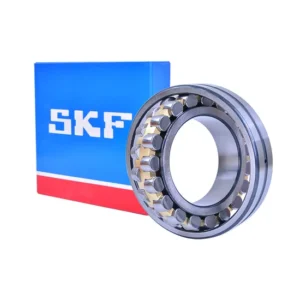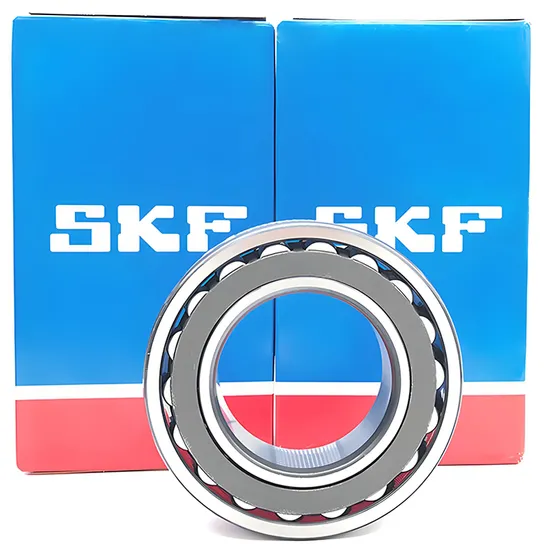
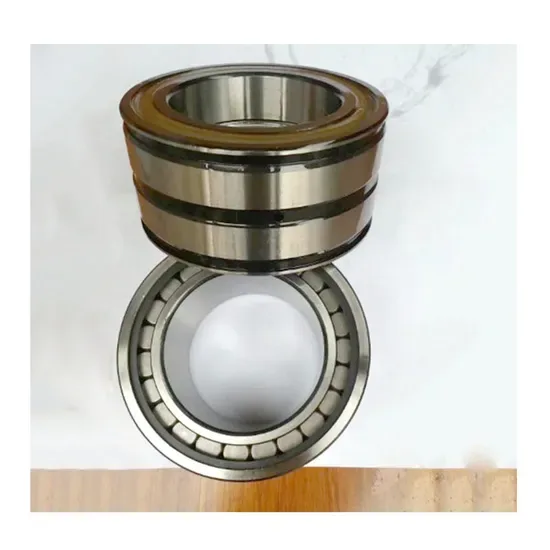
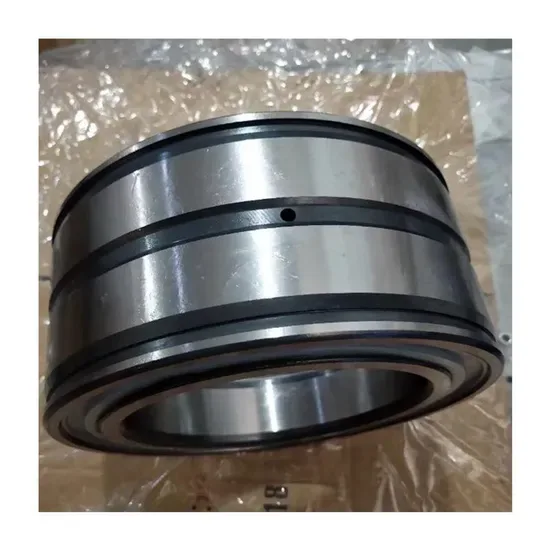
Description
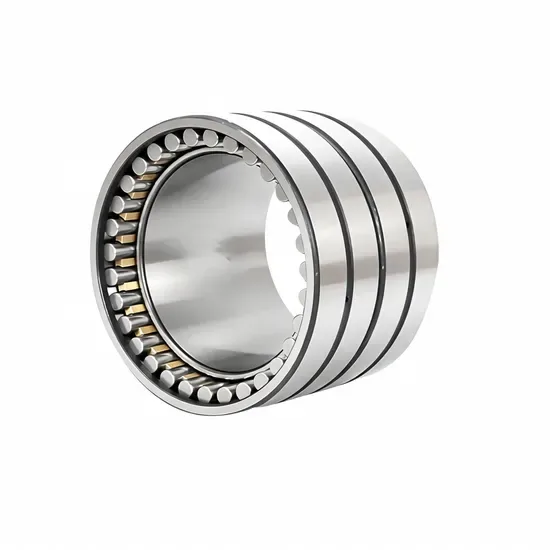
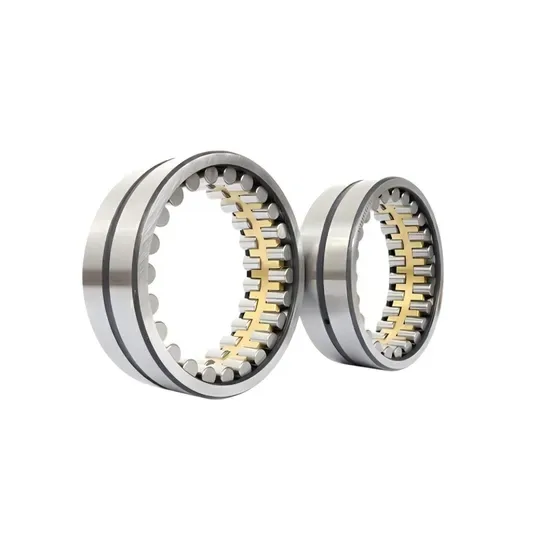
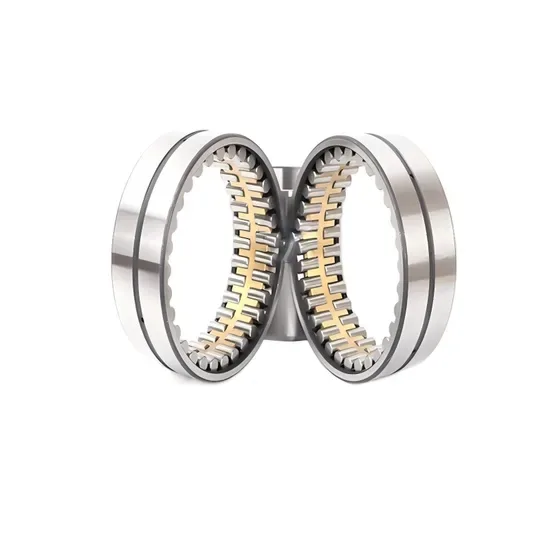
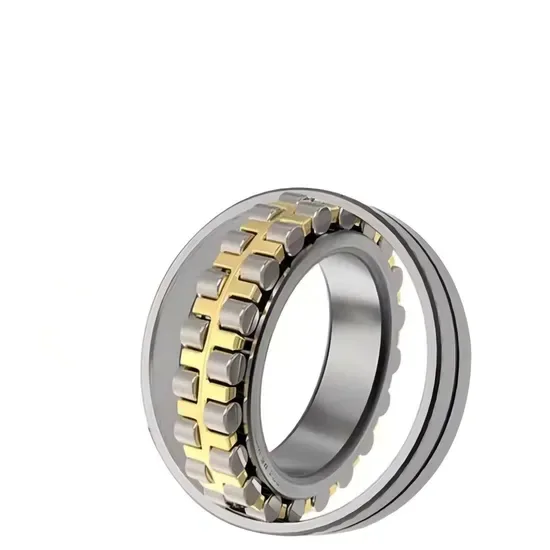
Authorized Channel Sourcing — every 23038SWRCAG2ME4 spherical roller bearing ships with distributor traceability and origin documentation for steel mill compliance audits.
Technical Specifications
| Parameter | Value |
|---|---|
| Designation | 23038SWRCAG2ME4 Spherical Roller Bearing |
| Bearing Type | Spherical Roller Bearing |
| Bore Diameter (d) | 190 mm |
| Outside Diameter (D) | 290 mm |
| Width (B) | 75 mm |
| Material | Bearing Steel |
| Feature | High Temperature, Sealed, Heavy-Load |
| Seal or Shield Type | Sealed |
| Customization | Available |
| Certification | ISO9001:2008, ISO9001:2000, RoHS, CE |
| Transport Package | Standard Wooden Case / as Per Customer Request |
Note: The suffix string SWRCAG2ME4 contains designation elements whose exact meanings require confirmation against the specific manufacturer’s catalog for cage material, clearance class, and precision grade.
Application Suitability
| Industry | Typical Applications |
|---|---|
| Steel and Metallurgy | Continuous caster segments, ladle turret pivots, roll guide bearings |
| Mining and Crushing | Vibrating screen eccentric shafts, jaw crusher pitman bearings |
| Industrial Machinery | Paper machine dryer rolls, kiln support rollers |
What a Clearance Mismatch Costs on a Continuous Caster
A wrong clearance class in radiant heat zones turns a scheduled rebuild into an emergency teardown.
I have seen a steel mill lose an entire pour when a 23038 variant seized on a caster segment. The supplier matched the base number but ignored that the radiant heat zone demanded a clearance wider than CN and a brass cage instead of stamped steel. The bearing cooked itself internally before the first strand inspection. That single oversight cost the mill more in unplanned downtime than the entire annual bearing budget for that line [NEED_CITE: thermal binding failure modes in continuous caster bearings]. When buyers treat suffix letters as optional decoration, the 23038SWRCAG2ME4 spherical roller bearing becomes a liability instead of a load carrier.
Matching the 23038SWRCAG2ME4 to Radiant Heat and Scale Dust
Continuous caster segments expose bearings to a combination most catalogs do not address in a single row: surface temperatures climbing well above ambient, fine iron oxide scale infiltrating every gap, and heavy radial loads from strand weight and roll pressure. The 23038SWRCAG2ME4 spherical roller bearing is specified with sealed construction and high-temperature capability precisely because open bearings in these positions require external sealing that maintenance crews rarely get right after a mid-shift replacement. Sealed designs shift the contamination barrier from the housing — which may have worn labyrinths — to the bearing itself. On a recent caster rebuild, switching from open to sealed spherical rollers on the lower segments reduced scale-related failures noticeably within the first campaign cycle.
Operating Loads, Thermal Expansion, and Lubrication Realities
The load profile on a continuous caster is predominantly radial with moderate axial components from strand curvature. Shock loads occur during breakout bar threading and during emergency stops when the strand solidifies mid-machine. Temperatures at the bearing position depend heavily on distance from the mold and the effectiveness of secondary cooling sprays, but thermal expansion of the shaft and housing remains a dominant design factor. A clearance class that is too tight allows thermal growth to eliminate the internal gap, forcing rollers against the raceway with no oil film to separate them [NEED_CITE: thermal expansion effects on spherical roller bearing internal clearance]. Grease selection matters equally — a standard lithium-complex grease will bleed and harden at caster segment temperatures, while a high-temperature polyurea or complex-soap formulation maintains film integrity through the campaign.
Decoding the Specification Stack
The bearing steel construction provides the fatigue strength foundation expected in heavy-load applications, with through-hardened races reaching the surface hardness necessary to resist spalling under repeated Hertzian contact stress. The sealed design choice represents a specific trade-off: contact seals add friction and generate their own heat, but in scale-laden environments the alternative — open bearings relying on housing seals — frequently results in contamination reaching the rollers within weeks. The high-temperature feature set points toward internal clearances wider than standard CN, allowing room for differential expansion between the inner ring mounted on a hot shaft and the outer ring sitting in a comparatively cooler housing bore. For the 23038SWRCAG2ME4 spherical roller bearing, confirming whether those wider clearances match C3 or C4 class is essential before installation, because a C3 installed where C4 was needed will still bind once the segment reaches operating temperature.
The Hidden Cost of Skipping Suffix Verification
Purchasing a 23038 by base number alone and ignoring the suffix string is how mills end up with bearings that fail before the first scheduled maintenance window. A cage material mismatch — stamped steel where the application demands machined brass for vibration resistance — leads to cage pocket wear and eventually roller skewing. A precision grade that does not match the position’s runout tolerance creates uneven load distribution across the two roller rows, concentrating stress until one row spalls while the other appears unworn [NEED_CITE: rolling bearing failure mode classification per ISO 15243]. Counterfeit bearings add another layer of risk: soft inner rings that deform under mounting pressure and cloned QR codes that pass a phone scan but trace back to unrelated batch numbers. These failures do not announce themselves at delivery — they surface three weeks into a campaign when replacement means a full line stoppage.
How Our Sourcing Process Closes the Verification Gap
Every 23038SWRCAG2ME4 spherical roller bearing we supply moves through authorized distributor channels with batch-level documentation, not spot-market sourcing where provenance ends at a trading company invoice. Our cross-reference database aligns clearance, cage material, and precision suffixes simultaneously — not just the base bore and OD — so substitution between SKF, NSK, FAG, TIMKEN, NTN, and KOYO happens with full parameter matching. When a buyer provides OEM equipment numbers instead of bearing designations, we trace back to the original specification to confirm whether the suffix stack on the replacement matches what the machine builder intended. Authenticity verification includes QR code pathways through brand official apps, and every shipment includes origin documentation that satisfies customs requirements for buyers in regions where import audits demand country-of-origin proof beyond a commercial invoice.
Documentation & Authenticity
- Supplier Certificate of Conformity referencing the specific batch number of the 23038SWRCAG2ME4 units in your shipment
- Material certificates confirming bearing steel composition and heat treatment records traceable to the production lot
- Third-party dimensional inspection reports covering bore, OD, width, and radial internal clearance measured before packing
- Country-of-origin documentation formatted for customs authorities requiring import compliance on steel mill components
- HS code classification support for spherical roller bearings to prevent tariff misclassification at destination ports
Storage, Handling & Mounting
- Retain the original sealed packaging until the moment of installation — the sealed construction of this bearing is designed to exclude contaminants, and opening it early in a dusty mill environment defeats that protection before the bearing reaches the housing
- For the 190 mm bore size, induction heating to the manufacturer’s recommended temperature range is preferred over press mounting to avoid brinelling the raceways during interference fit installation
- If the bearing will not be mounted immediately upon receipt, store horizontally in the wooden case with humidity below 60 percent to prevent condensation on the outer ring surface
- Verify shaft and housing seat dimensions against the 190 mm bore and 290 mm OD before mounting — a worn shaft seat will allow inner ring creep regardless of bearing quality
- Confirm the required clearance class against the caster segment operating temperature before unsealing; installing a unit with insufficient thermal expansion allowance is irreversible once the inner ring is heated and seated
Request the Full Specification Package
Share your continuous caster segment drawings, OEM equipment numbers, or the failed bearing’s complete designation including all suffixes so we can verify cross-reference compatibility. We will return a matched specification review covering clearance class, cage material, and seal type against your actual operating temperature and contamination exposure. If your procurement process requires sample units for new applications or pre-shipment dimensional verification on bulk orders, we structure quotations around those checkpoints.
Frequently Asked Questions
Q: What should I verify when substituting a 23038 variant from a different brand?
A: Base number matching is only the starting point. You must confirm that clearance class, cage material, seal type, and precision grade all align with the original specification. A 23038 from one manufacturer with standard clearance and a stamped steel cage is not interchangeable with a 23038 carrying wider clearance and a brass cage, even though the bore, OD, and width are identical. Our cross-reference checks all four parameters simultaneously.
Q: How do I decode the suffix string on a spherical roller bearing?
A: Suffixes encode cage type, clearance class, precision grade, internal design, and seal configuration. The 23038SWRCAG2ME4 suffix string contains elements that map to these categories, but exact meanings vary between manufacturers. We confirm each suffix against the specific producer’s catalog before quoting, so buyers know precisely what they are receiving.
Q: Why does clearance class matter in high-temperature continuous caster applications?
A: Thermal expansion of the shaft and housing reduces the bearing’s internal clearance during operation. A standard CN clearance may close completely at caster segment temperatures, causing rollers to bind against the raceway without a separating oil film. Wider clearance classes such as C3 or C4 preserve the necessary internal gap at operating temperature. Selecting the correct class requires knowing the actual temperature at the bearing position, not just the ambient air temperature near the machine.
Q: What is the typical lead time and minimum order for these bearings?
A: Lead times depend on stock positions within the authorized distributor network at the time of inquiry. Common designations are frequently available for immediate dispatch, while specialized suffix combinations may require allocation from regional warehouses. Minimum order quantities vary — single units are available for replacement needs, while trial batches and bulk orders are structured around project timelines.
Q: What support is available if a bearing fails prematurely after installation?
A: We provide post-delivery support that includes installation guidance review and failure pattern analysis. If a bearing shows unexpected wear or damage, we work through the failure mode — whether it traces to mounting damage, lubrication breakdown, contamination ingress, or a specification mismatch — and adjust the next order’s specification if the root cause points to an application condition not captured in the original selection.
Confirm Your 23038SWRCAG2ME4 Spherical Roller Bearing Specification
Send your OEM equipment number or the complete failed bearing designation. Our team will return a verified cross-reference with full suffix documentation.