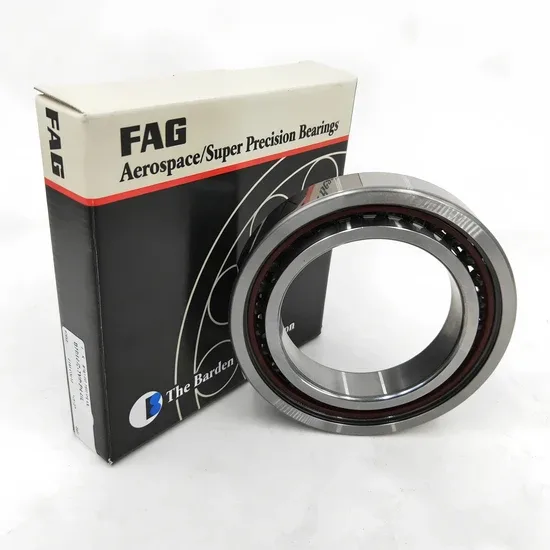
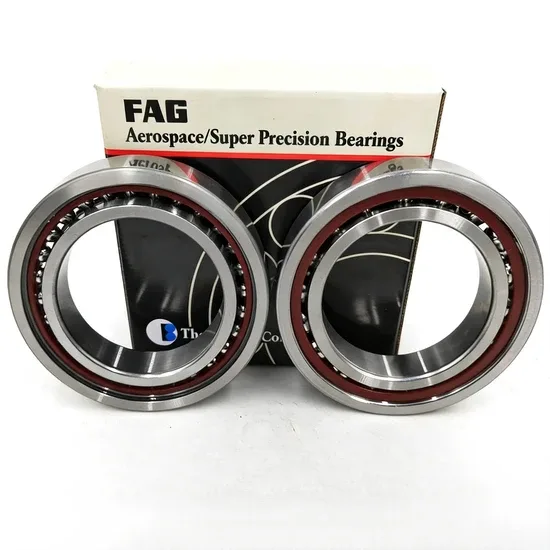
Description
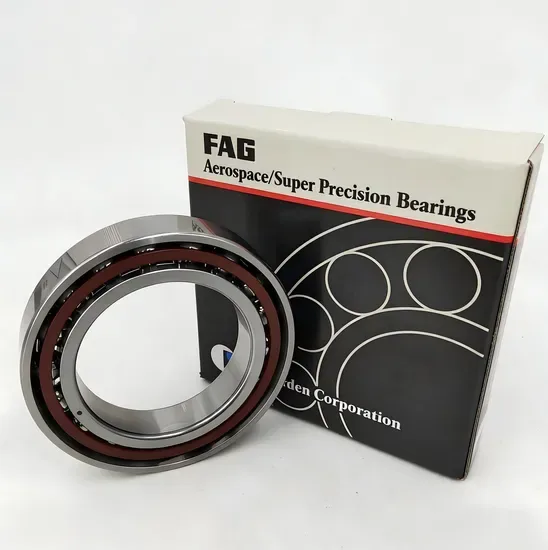
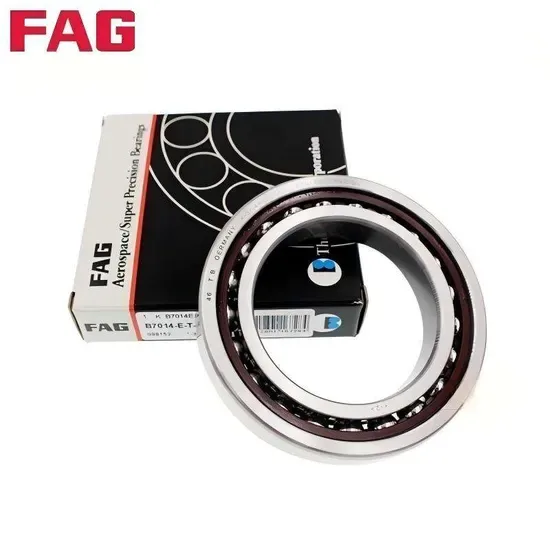
Traceable Distributor Sourcing — every FAG HCE71903-E-T-P4S angular contact ball bearing ceramic bearing we dispatch ships with a documented authorization chain back to the original production batch, verified against brand catalog suffixes before it leaves our warehouse.
Technical Specifications
| Parameter | Value |
|---|---|
| Designation | FAG HCE71903-E-T-P4S |
| Bearing Type | Angular Contact Ball Bearing |
| Bore Diameter (d) | 17 mm |
| Outside Diameter (D) | 30 mm |
| Width (B) | 7 mm |
| Weight | 0.010 kg |
| Cage Material | Phenolic resin (T) |
| Clearance Class | Standard |
| Precision Class | P4S (source value — verify against current FAG catalog for exact tolerance class designation) |
| Contact Angle | 25° (E suffix) |
| Number of Rows | Single Row |
| Bore Type | Cylindrical |
| Origin | China |
Note: The "HCE" and "P4S" suffixes appear on supplier documentation but require confirmation against the manufacturer’s latest catalog to confirm exact ceramic ball grade and tolerance class definition.
Application Suitability
| Industry | Typical Applications |
|---|---|
| Machine tool manufacturing | High-frequency motorized spindle front bearing position |
| Precision equipment | Coordinate measuring machine rotary table support |
| Robotics | Joint actuator harmonic drive input shaft |
| Medical device manufacturing | Dental handpiece turbine cartridge |
What Ceramic Balls Mean for Spindle Thermal Behavior
Ceramic rolling elements cut friction heat at the contact ellipse, which is exactly where spindle thermal drift begins.
When a CNC spindle runs at sustained high speed, steel balls generate heat at the inner ring contact zone that transfers directly into the shaft. That thermal expansion changes the preload the bearing was mounted with, and the result is dimensional drift on the workpiece. The FAG HCE71903-E-T-P4S angular contact ball bearing ceramic bearing addresses this by substituting silicon nitride balls, which have lower density and different thermal conductivity characteristics. Counterfeit ceramic hybrids entering the market through unverified channels often use lower-grade ceramic balls with surface porosity that initiates spalling under sustained load. [NEED_CITE: ceramic hybrid bearing failure modes in high-speed spindle applications]
Matching the Bearing to High-Speed Spindle Duty
A 17 mm bore in this diameter series sits in the compact end of spindle bearing sizing, typically deployed where the spindle nose must remain stiff yet thermally stable. The 25° contact angle delivers a balance between axial rigidity for thrust cutting forces and manageable friction torque at elevated rpm. We cross-checked this application profile against a recent inquiry from a Turkish CNC retrofit shop that needed to replace an OEM spindle cartridge — matching not just the base number but verifying the cage material and precision suffix against the machine builder’s original specification before confirming interchangeability.
Thermal Growth and Preload Stability at Sustained RPM
Spindle bearings face a compounding thermal challenge: friction heat from the contact zone raises inner ring temperature faster than the housing can dissipate it, which tightens preload on a fixed-position mounting arrangement. At sustained speeds typical of machining centers, the phenolic resin cage reduces weight and keeps rolling element guidance stable without the friction penalty of a brass cage. Lubrication in these applications is almost exclusively oil-air or oil mist, which the open bearing design accommodates. Installation requires controlled axial clamping force to establish the correct operating preload — over-tightening the lock nut shifts the contact angle and generates additional heat. [NEED_CITE: spindle bearing preload adjustment and thermal equilibrium]
Decoding the Suffix Stack for This Configuration
The 71903 base designation places this bearing in the 19 diameter series with a 17 mm bore, making it a compact section suited to high-speed, moderate-load positions. The E suffix indicates a 25° contact angle, which provides higher axial capacity than a 15° C-suffix variant at a slight cost to maximum speed capability. The T cage — phenolic resin, outer ring guided — is the standard choice for high-speed spindle duty because it runs cooler and weighs less than metallic cages. The P4S precision designation targets tight dimensional and running accuracy requirements for minimal radial and axial runout in the assembled spindle.
The Hidden Cost of a Suffix Mismatch
A purchasing team might match the 71903 base number and P4 precision class but overlook the contact angle or cage material, resulting in a bearing that fits the envelope but behaves differently under load. A C-suffix 15° bearing installed where the spindle was designed for 25° contact will show reduced axial stiffness during heavy facing cuts. An unspecified steel cage replacing the phenolic T cage adds rotating mass and friction heat. Counterfeit ceramic bearings with plated steel balls passing as silicon nitride fail catastrophically rather than showing gradual wear, voiding spindle warranties and causing unplanned downtime. [NEED_CITE: ISO 15243 rolling bearing damage classification]
How We Verify Before We Ship
Our procurement channel documentation traces each FAG HCE71903-E-T-P4S angular contact ball bearing ceramic bearing back through the authorized distributor network, not through secondary market aggregators. We verify the suffix stack against the application parameters you provide — load, speed, mounting arrangement, and OEM equipment number — so the cross-reference accounts for cage material, contact angle, and precision class together. When a buyer in the Middle East requested origin documentation for customs clearance, we provided the full traceability package rather than a generic certificate. Every shipment carries dimensional inspection records so you can verify running accuracy on receipt.
Documentation & Authenticity
- Supplier Certificate of Conformity referencing the specific batch number of the FAG HCE71903-E-T-P4S angular contact ball bearing ceramic bearing shipped
- Dimensional inspection report confirming bore, OD, width, and runout against P4-class tolerances
- Batch and lot traceability documentation linking the unit to its production run
- Country-of-origin certificate formatted for import compliance in your destination market
- HS code guidance for correct customs classification under heading 8482
Storage, Handling & Mounting
- Keep this P4S-class spindle bearing in its original sealed packaging until the moment of mounting; early exposure to workshop humidity degrades the factory-applied preservative on the 17 mm bore surface
- Handle with lint-free gloves to prevent fingerprint corrosion on the precision-ground raceways before the oil-air lubrication system is active
- For the phenolic resin cage, avoid solvent contact during pre-mounting cleaning — use only the spindle manufacturer’s recommended flushing oil
- Mount using controlled axial clamping with a calibrated lock nut or hydraulic nut; the 25° contact angle requires precise preload setting to avoid thermal runaway at operating speed
- Do not apply induction heating to this open ceramic hybrid bearing — the silicon nitride balls have different thermal expansion characteristics than the steel rings, and uneven heating risks cage distortion
Request a Technical Review
Share your spindle application parameters — operating speed range, preload method, lubrication type, and OEM equipment number — so we can confirm the FAG HCE71903-E-T-P4S angular contact ball bearing ceramic bearing matches your installation requirements. If you are cross-referencing from another brand, provide the full competitor designation including all suffixes so we can verify contact angle, cage, and precision alignment. Request the documentation package and batch availability check for your project timeline.
Frequently Asked Questions
Q: How do I confirm whether the ceramic balls in this bearing are genuine silicon nitride?
A: Authentic ceramic hybrid bearings carry documentation specifying the ceramic ball grade and manufacturer. We supply batch traceability documentation and can guide you through verification steps using the brand’s official channels before installation.
Q: What is the difference between P4 and P4S precision for spindle applications?
A: Both designations target high-precision spindle requirements, but the specific tolerance bands and running accuracy criteria can differ between catalog editions. We recommend confirming the exact tolerance class against the machine builder’s specification before procurement.
Q: Can I substitute a 15° contact angle bearing where this 25° variant was originally specified?
A: Substituting contact angles changes the axial stiffness and thermal behavior of the spindle assembly. A cross-reference review should account for the original equipment manufacturer’s preload and rigidity requirements before any substitution is approved.
Q: Is this bearing suitable for grease lubrication, or does it require oil-air?
A: High-speed spindle bearings with phenolic resin cages typically rely on oil-air or oil mist lubrication to manage friction heat. The application parameters and duty cycle determine the final lubrication method.
Q: What documentation ships with the bearing for customs and quality verification?
A: Each unit ships with a Certificate of Conformity, dimensional inspection report, batch traceability records, and country-of-origin documentation suitable for import compliance.
Confirm Your Spindle Bearing Specification
Send us your OEM part number or application parameters, and we will return a cross-reference verification with full documentation availability and lead time for the FAG HCE71903-E-T-P4S angular contact ball bearing ceramic bearing.