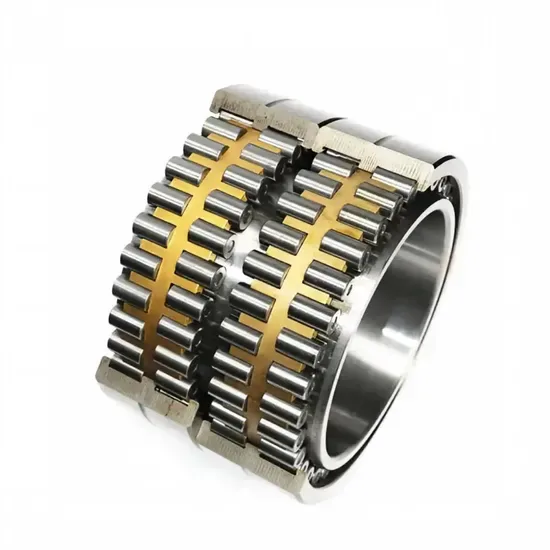
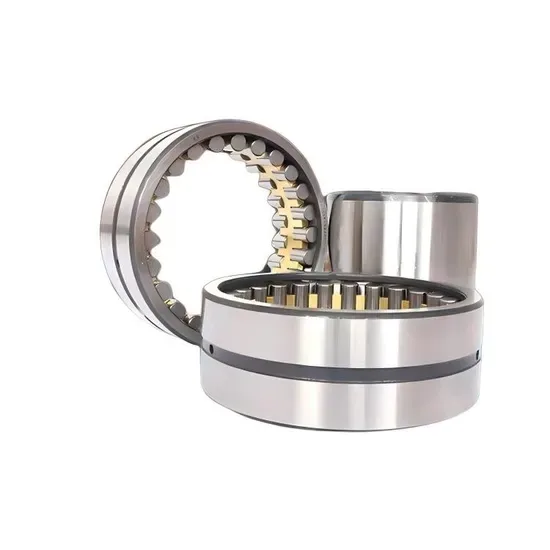
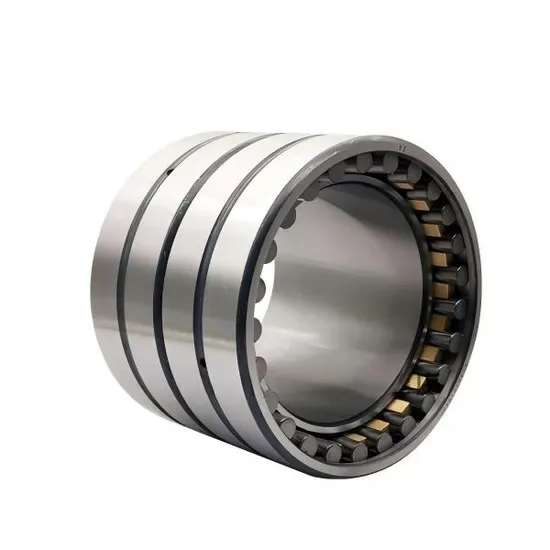
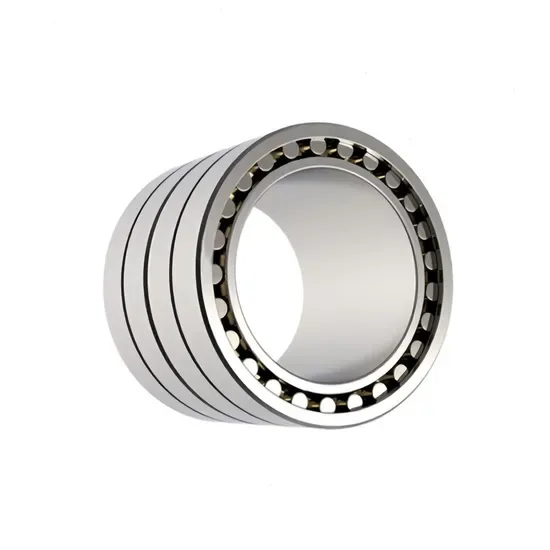
Description
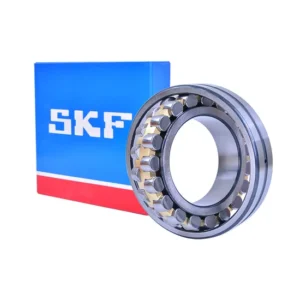
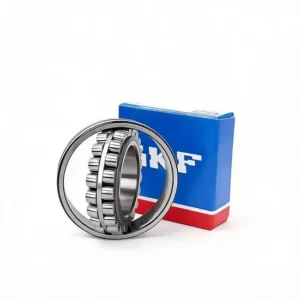
Authorized Channel Sourcing — Every 24024SWRCg2E4 spherical roller bearing we ship is backed by traceable procurement documentation from verified distributor networks, ensuring steel mill operators receive authentic components with full origin transparency.
Technical Specifications
| Parameter | Value |
|---|---|
| Designation | SKF 24024SWRCg2E4 |
| Bearing Type | Spherical Roller Bearing |
| Bore Diameter (d) | 120 mm |
| Outside Diameter (D) | 180 mm |
| Width (B) | 60 mm |
| Material | Bearing Steel |
| Feature | High Temperature, Sealed, Heavy-Load |
| Seal or Shield Type | Sealed Type |
| Clearance Class | Unverified suffix — requires confirmation against manufacturer engineering data |
| Cage Material | Unverified suffix — requires confirmation against manufacturer engineering data |
Note: The suffix string "SWRCg2E4" contains non-standard designations not immediately mapped to SKF’s published suffix tables. Final clearance, cage, and precision interpretation must be validated against the specific production batch documentation.
Application Suitability
| Industry | Typical Applications |
|---|---|
| Steel and Metallurgy | Continuous caster segment rolls, strand guide rollers, ladle turret slewing points |
| Mining and Crushing | Vibrating screen exciter shafts, jaw crusher toggle seats, gyratory crusher main shafts |
| Industrial Machinery | Paper machine dryer cylinders, kiln support rollers, heavy-duty conveyor pulleys |
What Happens When a Sealed Spherical Roller Bearing Fails at 800°C Ambient
A sealed spherical roller bearing that cannot survive strand-zone thermal soak will lock solid within weeks, not months.
Continuous casting operations expose bearings to radiant heat, molten scale ingress, and aggressive coolant sprays in alternating cycles. When open-type bearings are fitted in these zones without adequate external sealing, particulate contamination penetrates the cage pockets and accelerates roller wear. The 24024SWRCg2E4 spherical roller bearing for continuous caster applications addresses this failure mode through integrated sealing, yet the real risk lies in sourcing units with incorrect internal clearance. A standard CN clearance bearing installed where thermal expansion demands C3 or C4 will see its radial internal clearance collapse as the inner ring reaches equilibrium temperature [NEED_CITE: bearing internal clearance reduction under thermal gradient]. The rollers then skew, the cage sustains asymmetric loading, and catastrophic seizure follows — often during a critical casting sequence when downtime costs compound by the hour.
Matching Seal Design to Caster Zone Contamination Profiles
The sealed configuration of this 24024SWRCg2E4 spherical roller bearing for continuous caster service targets environments where external seals are compromised by roll cooling water and iron oxide scale. In continuous caster segments, maintenance access is restricted and re-lubrication intervals are difficult to honor. A factory-sealed bearing eliminates the dependency on auxiliary seal integrity and provides a defined lubricant volume for a predictable service campaign. Our technical review process checks whether the seal lip material is compatible with the specific coolant chemistry and ambient temperature range reported by the plant, because a nitrile seal that performs adequately at 80°C will degrade rapidly at sustained temperatures above 120°C.
Thermal Cycles, Load Spectra, and the Case for Correct Internal Geometry
Continuous caster roll bearings endure combined radial and axial loading from strand weight, roll bending forces, and misalignment caused by roll deflection under ferrostatic pressure. The spherical roller bearing design inherently accommodates the angular misalignment typical of deflected roll assemblies. However, the thermal profile is where selection errors concentrate [NEED_CITE: continuous caster bearing thermal operating conditions]. Bearings in the secondary cooling zone experience rapid temperature fluctuations as water sprays cycle, causing repeated expansion and contraction of the inner ring on the shaft seat. If the shaft fit is too tight and the internal clearance is already minimal, these thermal transients push the bearing into preload territory repeatedly — a condition that fatigues the cage and initiates surface distress on roller end faces. Installation practice matters equally: induction heating to the correct temperature range and controlled cooling prevent residual stresses that cold pressing introduces on a 120 mm bore component.
Reading the Suffix: What the Designation String Actually Tells You
For spherical roller bearings, the suffix carries the specifications that determine whether the unit survives or fails in service. The "SW," "R," and "Cg2E4" suffixes on this bearing require manufacturer catalog cross-reference to decode precisely, as they do not map directly to standard SKF published suffix conventions. In general spherical roller bearing nomenclature, suffix groups communicate seal type, cage material and design, internal clearance class, and special heat treatment or dimensional stabilization. A machined brass cage (typically designated CA or MB in SKF standard tables) offers higher rigidity under heavy load and vibration, while a pressed steel cage (J designation) suits higher-speed, moderate-load applications. For continuous caster service where strand vibration and shock loads are constant, cage material selection is a primary reliability variable. Similarly, if the "Cg2" portion of the suffix denotes a specific clearance class, confirming whether it equates to C3 or C4 is essential before installation — because thermal expansion on a 120 mm bore at elevated temperature can consume a significant portion of initial radial clearance [NEED_CITE: thermal expansion effect on bearing internal clearance calculation].
The Hidden Expense of Suffix Misinterpretation
Procuring a 24024 variant based on the base number alone, without verifying clearance, cage, and seal suffixes against the application requirements, generates costs that extend far beyond the bearing price. An incorrect clearance class leads to premature cage failure, which on a continuous caster means an unplanned strand stop, potential breakout risk, and extended downtime while the segment is removed and rebuilt. ISO 15243 classifies such failures under cage fracture and roller smearing — both indicative of lubrication breakdown and thermal overload [NEED_CITE: ISO 15243 bearing failure mode classification]. Warranty claims on such failures are typically voided because the root cause is selection error, not manufacturing defect. Sourcing through a supplier who performs cross-reference validation on clearance, cage, and precision before shipment converts this risk from a recurring operational cost into a managed engineering decision.
Why Plant Engineers Specify Through Our Supply Channel
We source the 24024SWRCg2E4 spherical roller bearing for continuous caster installations through authorized distributor channels, which means every unit ships with procurement documentation that traces back to the manufacturer’s distribution network. Our technical team reviews the application parameters — load magnitude and direction, operating temperature envelope, speed, and re-lubrication feasibility — before confirming the suffix configuration is appropriate. For cross-brand interchange situations where an OEM specified an alternative brand, we perform interchange matching on internal clearance, cage design, and dimensional tolerance rather than substituting on base number alone. Batch traceability documentation accompanies each shipment, and country-of-origin certification supports import compliance for facilities receiving bearings across borders.
Documentation & Authenticity
- Supplier Certificate of Conformity (COC) linked to the specific bearing batch, confirming the 24024SWRCg2E4 designation and production origin
- Material certification verifying bearing steel grade and heat treatment compliance for the high-temperature application requirement
- Dimensional inspection report confirming bore, OD, width, and radial internal clearance against the specification the suffix string denotes
- Country-of-origin documentation prepared for customs and import clearance at the destination facility
- QR code verification pathway guidance for authenticating units through brand official applications where applicable
Storage, Handling & Mounting
- Retain the sealed bearing in its original packaging until the moment of installation; premature exposure to humid storage conditions compromises the factory-applied grease charge inside the sealed 24024SWRCg2E4
- For induction heating mounting on the 120 mm bore, target the manufacturer-specified temperature range to achieve interference fit expansion without annealing the bearing steel rings
- Verify shaft seat diameter and roundness before mounting; a worn or out-of-round shaft will distort the inner ring of this heavy-load spherical roller bearing and eliminate internal clearance regardless of the suffix class
- Store horizontally in a temperature-stable environment; large-format spherical roller bearings are susceptible to brinelling from vibration if stored upright or subjected to floor-transmitted vibration over extended periods
- Do not wash or degrease the sealed type prior to installation — the internal lubricant is factory-metered for the expected service campaign and introducing foreign grease creates compatibility risk
Request a Technical Review Before You Commit
Share your continuous caster segment number, operating temperature data, and current failure interval so we can confirm whether the 24024SWRCg2E4 spherical roller bearing for continuous caster use matches your specific installation envelope. If you are substituting from another brand, provide the existing bearing part number including all suffixes so we can perform a complete cross-reference verification. We will return a technical assessment with the confirmed suffix interpretation, supporting documentation available, and a quotation with lead time and minimum order details.
Frequently Asked Questions
Q: How do I confirm what the SWRCg2E4 suffix means for internal clearance and cage type?
A: The suffix string on this bearing does not correspond to standard published SKF suffix tables. We request the manufacturer’s certificate or engineering data sheet for the specific production batch to decode the clearance class, cage material, and any special design features before shipping.
Q: Can I substitute a standard 24024 CC/W33 or 24024 CCK/W33 in place of this sealed variant?
A: Substituting an open-type bearing for a sealed application requires evaluation of external sealing effectiveness, re-lubrication interval feasibility, and contamination exposure. We review the installation environment before confirming interchange suitability on clearance, cage, and seal parameters together.
Q: What installation method is recommended for a 120 mm bore sealed spherical roller bearing?
A: Induction heating is the standard mounting method for this bore size. The heating temperature must achieve sufficient inner ring expansion for the specified shaft interference fit without exceeding the thermal limit of the seal material or the grease charge inside the sealed unit.
Q: What documentation ships with the bearing to support import and verification?
A: Each shipment includes a supplier COC, material certificate, dimensional inspection data, and country-of-origin documentation. QR verification guidance is provided where the brand’s authentication system supports it.
Q: How do I determine if my application requires C3 or C4 clearance for this bearing size at high temperature?
A: The required clearance depends on the shaft interference fit, the temperature differential between inner and outer ring, and the housing fit. Share your operating temperature and mounting specifications so we can calculate the residual operating clearance and recommend the correct class.
Confirm Your Application Parameters
Send us your equipment OEM number, operating conditions, and annual volume requirement so we can prepare a complete technical and commercial proposal. Contact our engineering team to begin the review process.