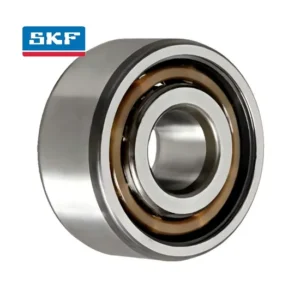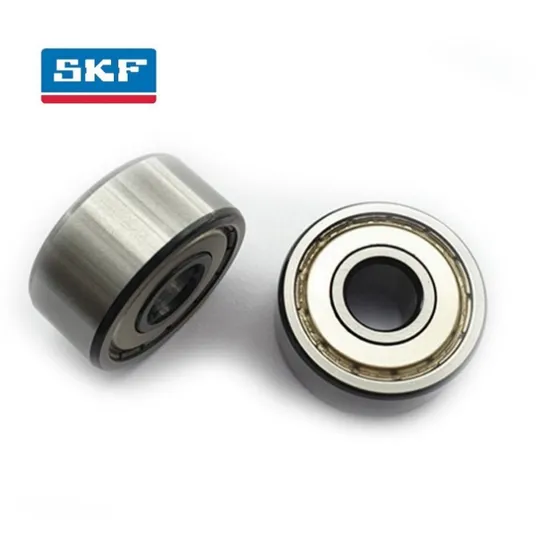

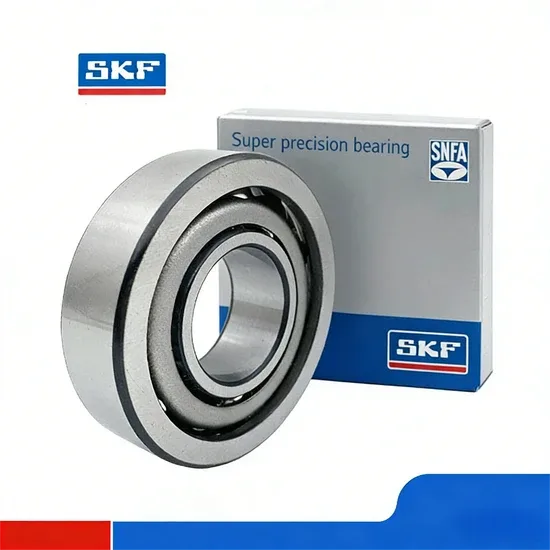
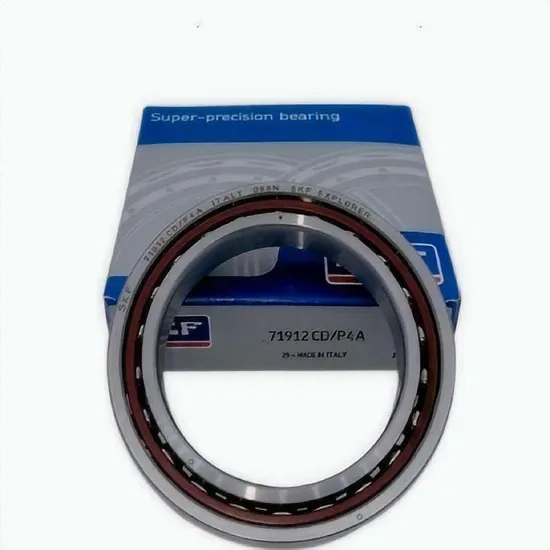
Description
Authorized Channel Sourcing — Every SKF 7014ACEGA/HCP4AL1 angular contact ball bearing ships with batch-level traceability linked to the manufacturer’s distribution records.
Technical Specifications
| Parameter | Value |
|---|---|
| Designation | SKF 7014ACEGA/HCP4AL1 |
| Bearing Type | Angular Contact Ball Bearing |
| Bore Diameter (d) | 70 mm |
| Outside Diameter (D) | 110 mm |
| Number of Rows | Single Row |
| Precision Class | P4 (ISO 492) |
| Contact Angle | 25° (ACE suffix) |
| Arrangement | Universal Matching, Light Preload (GA) |
| Origin | China |
| Weight | 0.100 kg |
Note: The /HCP4A and /L1 suffix segments could not be fully decoded from available catalog references and require confirmation against the manufacturer’s current documentation before specifying for critical applications.
Application Suitability
| Industry | Typical Applications |
|---|---|
| Machine Tool Manufacturing | High-speed spindle nose bearing, grinding wheel head |
| Robotics | Joint actuator support, harmonic drive input shaft |
| Precision Equipment | Coordinate measuring machine rotary table, optical inspection stage |
| General Industrial | High-speed pump shaft support, test rig spindle |
What Happens When a 25° Contact Angle Gets Swapped for 15° on a Spindle
The axial stiffness drops, thermal growth goes unchecked, and your spindle burns through a set of bearings before the first tool change.
I watched this happen at a toolmaker’s floor near Suzhou. The maintenance crew had sourced what they believed was an interchangeable angular contact bearing — same bore, same OD, same P4 precision tag. But the contact angle was 15° instead of the specified 25°. Under the combined radial and thrust loads of a milling spindle, the lower angle could not resist axial deflection. The shaft drifted, vibration spiked, and surface finish on hardened steel inserts fell out of tolerance within days [NEED_CITE: angular contact bearing stiffness versus contact angle relationship]. Mismatches like this are not rare. Procurement teams regularly match base designations across brands while the contact angle, preload class, and precision suffixes sit unexamined — and those hidden digits are exactly what separates a spindle that holds tolerance from one that scraps an entire batch.
Matching the SKF 7014ACEGA/HCP4AL1 to Spindle and Precision Shaft Loads
This bearing earns its place in machine tool spindles and robotic joint assemblies because the 25° contact angle provides meaningful axial rigidity without sacrificing speed capability — a balance that 15° variants struggle to maintain under thrust-heavy cutting cycles and that 40° variants over-deliver on friction for. When we cross-reference a spindle OEM number against the SKF 7014ACEGA/HCP4AL1 angular contact ball bearing, we verify not only the envelope dimensions but also the contact angle, preload pairing class, and precision grade to ensure the replacement behaves identically under load. That three-axis verification is how we keep a buyer’s existing preload stack valid without re-shimming the entire bearing set.
Thermal Growth, Speed Envelopes, and Why Preload Class Cannot Be Ignored
Spindle shafts expand as they heat up. A bearing with too heavy a preload will squeeze tighter as that growth closes the internal clearance, pushing contact stress past the raceway’s fatigue limit. A bearing with too light a preload will allow micro-displacement under cutting forces, degrading surface finish. The GA suffix on this model designates universal matching with light preload — engineered for arrangements where thermal expansion is moderate and shaft growth is managed through housing design or oil-air cooling circuits [NEED_CITE: preload selection for angular contact spindle bearings under thermal expansion]. At sustained high speeds, the 25° contact angle also keeps the ball-race contact ellipse in a zone that minimizes skidding, which matters when grease film thickness thins under centrifugal loading. Installation method matters equally: these single-row angular contact bearings must be mounted in defined pairs or stacks, and the axial positioning of the locking nut directly sets the achieved preload.
Decoding the Suffixes That Define Performance
The ACE segment tells you this is a 25° contact angle bearing with SKF’s optimized internal geometry — raceway groove radii and ball complement tuned for the load-sharing sweet spot between radial and axial components. The GA segment confirms universal matching with light preload, meaning any two bearings from the same production batch can be paired back-to-back or face-to-face without selective fitting, and they will achieve the specified preload when clamped together. The P4 precision class meets ISO 492 tolerance class 4 requirements, delivering tighter bore and OD tolerances plus reduced running accuracy deviations than P5 — essential for spindle nose positions where radial runout directly prints onto the workpiece. The single-row architecture means axial load is carried in one direction only, so a second bearing must always oppose it in the arrangement.
The Downtime Cost Nobody Budgets For
A counterfeit bearing with a soft inner ring might pass a hardness spot-check on the OD but fail at the raceway where contact stress concentrates. A mis-matched contact angle might hold for a week of light cuts but collapse under a heavy roughing pass. A wrong preload class might run quietly at idle but generate enough friction heat at operating speed to degrade the grease and accelerate cage wear. These are not theoretical risks — they map directly to failure modes catalogued under ISO 15243, from surface distress and smearing to cage fracture and raceway spalling [NEED_CITE: bearing failure mode classification per ISO 15243]. The cost is never just the replacement bearing. It is the scrapped workpiece, the missed delivery, the emergency air-freight reorder, and the confidence lost with the customer.
How We Keep Your Spindle Running on Verified Components
Every SKF 7014ACEGA/HCP4AL1 angular contact ball bearing we supply is sourced through authorized distributor channels, not grey-market aggregators. We provide the full documentation chain — Certificate of Conformity tied to the specific batch, dimensional inspection data, and the QR verification pathway through SKF’s official application so your receiving team can confirm authenticity before the bearing leaves the box. When a buyer needs to substitute this bearing with an equivalent from NSK, FAG, or NTN, our cross-reference process aligns contact angle, preload class, cage material, and precision grade simultaneously — not just the base number. We also supply country-of-origin documentation and HS code data to smooth customs clearance for import buyers in regions where bearing origin determines tariff treatment.
Documentation & Authenticity
- Supplier Certificate of Conformity referencing the specific production batch of this SKF 7014ACEGA/HCP4AL1
- Third-party runout inspection report confirming P4-class dimensional and running accuracy before dispatch
- QR code verification pathway enabling your QC team to authenticate via the manufacturer’s official mobile application
- Country-of-origin certificate and HS code documentation for import compliance at destination
- Material test certificate available upon request for incoming quality audit
Storage, Handling & Mounting
- Retain the factory-sealed packaging until the moment of mounting; early exposure risks contamination of the open raceways on this single-row angular contact design
- Store flat in a temperature-stable environment to prevent uneven thermal distortion that could affect the P4 running accuracy before installation
- When mounting paired GA universal-matched bearings, follow the marked pairing orientation to preserve the factory-established light preload relationship
- Use induction heating for the inner ring fit rather than press-force methods that risk brinelling the raceway through the balls
- After mounting, verify shaft axial position against the housing datum before tightening the locking nut, as over-clamping will exceed the GA light preload specification
Starting the Conversation on Your Next Spindle Build or Rebuild
Share your spindle speed range, cutting load profile, and housing cooling method so we can confirm whether the GA light preload and 25° contact angle suit your thermal envelope. If you are replacing an existing bearing, send us the OEM equipment number or the full designation from the nameplate — we will cross-reference against our database and flag any suffix discrepancies before quoting. For import orders, let us know your destination country so we can prepare the origin and customs documentation in advance.
Frequently Asked Questions
Q: How do I confirm this SKF 7014ACEGA/HCP4AL1 is genuine before accepting delivery?
A: Each bearing carries a traceable batch code. Your receiving team can scan the QR code using the manufacturer’s official app to verify authenticity against production records. We also supply a Certificate of Conformity tied to the specific batch number on your shipment.
Q: What does the GA suffix actually mean — is it a cage code or a preload class?
A: GA designates universal matching with light preload. It is not a cage material code. Universal-matched bearings are ground so that any two from the same batch can be paired back-to-back or face-to-face and will achieve the specified preload when axially clamped, without selective fitting.
Q: Why must contact angle, preload, and precision all match when cross-referencing to another brand?
A: A bearing with the same bore and OD but a different contact angle will have different axial stiffness, altering shaft deflection under load. A different preload class changes internal friction and thermal behavior. A lower precision grade introduces runout that degrades machining accuracy. All three parameters must align for the substitute to perform identically [NEED_CITE: cross-brand angular contact bearing interchangeability criteria].
Q: Is P4 precision sufficient for a machine tool spindle, or do I need P2 or SP?
A: P4 meets ISO 492 class 4 tolerances and is the standard specification for a wide range of general-purpose and mid-range precision spindles. Higher classes such as P2 or SP are typically reserved for ultra-precision grinding spindles or coordinate measuring equipment where sub-micron runout is required. If your current spindle design runs P4, substituting the same class maintains the original thermal and stiffness balance.
Q: How does the ACE 25° contact angle compare to a 15° variant for spindle use?
A: The 25° angle provides higher axial load capacity and stiffer thrust response than a 15° design, making it better suited to spindles that experience significant axial cutting forces. A 15° bearing offers marginally higher speed capability but sacrifices axial rigidity, which can lead to shaft drift under heavy cuts.
Verify Your SKF 7014ACEGA/HCP4AL1 Specification Before You Commit
Send us your application parameters or OEM reference number and we will return a full technical cross-check — contact angle, preload, precision, and documentation — within one business day.