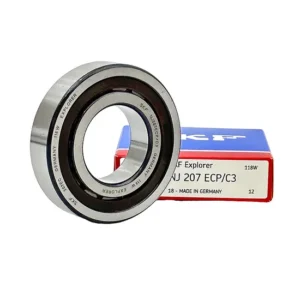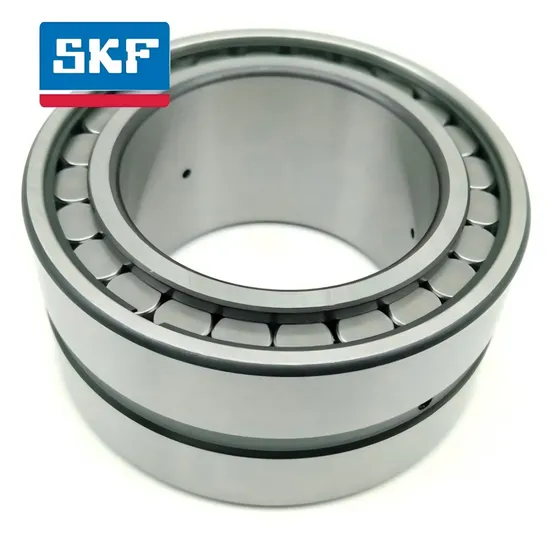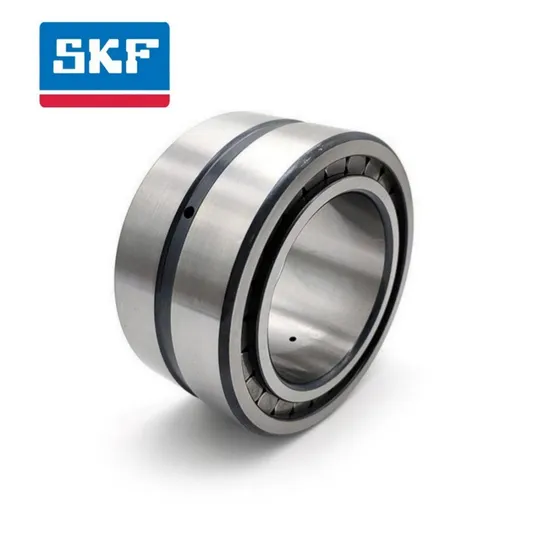


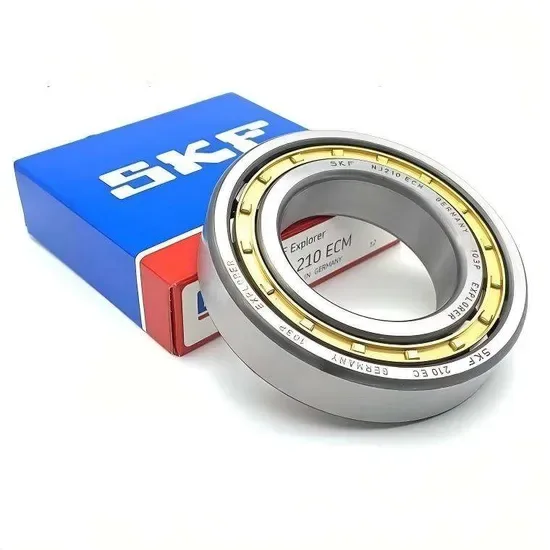
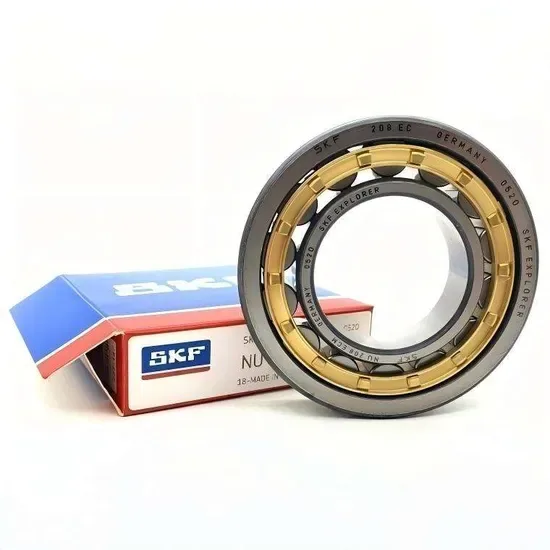

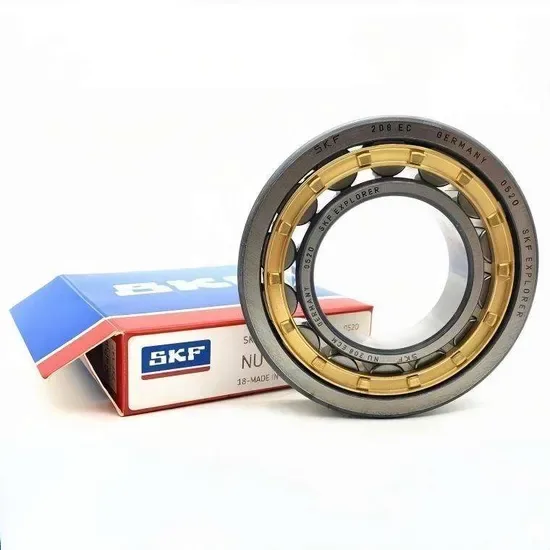
Description
Authorized-Channel Sourcing — Every SKF NN 3012 KTN/SPVR521 unit we dispatch carries batch-level documentation tracing back to the manufacturer’s authorized distributor network, ensuring procurement engineers receive verifiable origin data before the bearing reaches the site.
Technical Specifications
| Parameter | Value |
|---|---|
| Designation | SKF NN 3012 KTN/SPVR521 |
| Bearing Type | Double Row Cylindrical Roller Bearing |
| Bore Diameter (d) | 60 mm |
| Outside Diameter (D) | 95 mm |
| Width (B) | 26 mm |
| Dynamic Load Rating (C) | 73.7 kN |
| Static Load Rating (C₀) | 106 kN |
| Limiting Speed (Grease) | 9500 r/min |
| Weight | 0.660 kg (approx. 0.250 kg per unit in batch documentation) |
| Cage Material | Polyamide (TN suffix) |
| Seal or Shield Type | Open |
| Precision Class | SP |
| Bore Type | Tapered (1:12) |
| Number of Rows | Double Row |
| Origin | China |
Note: The suffixes "TN" and "/SPVR521" appear on the product identifier; while TN is widely recognized as a polyamide cage designation, the specific meaning of /SPVR521 should be confirmed against the manufacturer’s current catalog for the exact variant code.
Application Suitability
| Industry | Typical Applications |
|---|---|
| Mining and Crushing | Conveyor drive shafts, stacker/reclaimer slew bearings |
| Industrial Machinery | High-rigidity spindle supports, precision gearbox shafts |
| Material Handling | Bucket elevator head pulleys, heavy-duty roller tables |
| Steel and Metallurgy | Rolling mill guide rollers, continuous caster segments |
Why Suffix Accuracy Decides Field Survival for the SKF NN 3012 KTN/SPVR521
A stamped steel cage in a polyamide-cage slot will crack before the first maintenance window closes.
Cross-referencing a double row cylindrical roller bearing by base number alone is a gamble. In desert-ambient conveyor drives, I have seen replacement bearings fail within weeks because the cage material was swapped during substitution — the polyamide cage specified for thermal resilience was replaced by a pressed steel cage that could not handle continuous radial load under high ambient heat. The SKF NN 3012 KTN/SPVR521 double row cylindrical roller bearing carries a TN polyamide cage for a reason: it dampens roller-cage contact stress and tolerates the thermal cycling common in mining and material handling gearboxes. Missing that suffix detail turns a precision component into a liability. [NEED_CITE: bearing cage failure modes under thermal cycling per ISO 15243]
Matching the SKF NN 3012 KTN/SPVR521 to High-Rigidity Drive Shafts
This bearing is engineered for applications where shaft deflection must stay within tight tolerances under heavy radial loads. The double row cylindrical geometry distributes load across a wider contact line than single-row equivalents, making it suitable for conveyor drive shafts and rolling mill guide rollers that operate under continuous, unidirectional radial stress. The SP precision class holds tighter dimensional and running accuracy than standard P0, which matters when the bearing seat is machined to close tolerances and any runout translates directly into vibration at the roller or gear mesh. When we source the SKF NN 3012 KTN/SPVR521 double row cylindrical roller bearing for a regional distributor, we cross-check the application’s speed, load spectrum, and thermal envelope against the polyamide cage’s operating limits before confirming the quote — a step most catalog-only suppliers skip.
Thermal Expansion, Tapered Bore Fit, and Lubrication Access
The K suffix indicates a 1:12 tapered bore, which means mounting relies on driving the inner ring up a tapered shaft seat to achieve the correct residual clearance. Under continuous load in a hot environment — think a cement plant conveyor running at 50°C ambient — the inner ring expands against the shaft, and the interference fit must be calculated to prevent both creep and excessive preload. The open seal type is deliberate here: it allows maintenance teams to select a grease formulation matched to the site’s contamination level and re-lubricate on a scheduled interval without seal friction losses. For mining conveyors exposed to silica dust, the external sealing responsibility falls on the housing design, not the bearing itself. [NEED_CITE: tapered bore mounting drive-up distance and residual clearance calculation methods]
Cage Material, Precision Class, and Tapered Bore — The Three Specs That Matter
The TN polyamide cage is lighter than a machined brass alternative, which reduces centrifugal forces on the rollers at higher speeds — relevant when the grease-lubricated limiting speed reaches 9500 r/min. Polyamide also provides a degree of damping at roller-cage pocket contact points, lowering noise and surface wear in applications where the bearing runs under steady radial load without heavy shock. The SP precision class tightens both bore and outside diameter tolerances beyond standard grades, controlling radial runout at the inner and outer rings to levels that prevent vibration-induced fretting on the shaft seat. The 1:12 tapered bore allows the installer to set residual clearance by controlling axial drive-up distance during mounting — a critical adjustment that directly determines whether the bearing runs cool under load or overheats from preload binding.
The Hidden Cost of an Unverified Replacement
Sourcing a replacement bearing that matches the base designation but carries a different cage suffix, clearance class, or precision grade introduces failure modes that do not appear on the purchase order. A standard CN clearance installed where the original specification called for a tighter fit on a tapered seat can cause thermal binding once the shaft reaches operating temperature. A counterfeit bearing with a soft inner ring — a common finding in unverified supply chains — will score the shaft and destroy the housing bore before the cage itself fails. These failures follow patterns documented in ISO 15243, and they share a single root cause: the replacement was selected on the base number without verifying the suffix stack. [NEED_CITE: counterfeit bearing identification through hardness and metallurgical testing]
What We Verify Before the SKF NN 3012 KTN/SPVR521 Ships
We source the SKF NN 3012 KTN/SPVR521 double row cylindrical roller bearing through authorized distributor channels, which means each batch carries a traceable Certificate of Conformity linked to the manufacturer’s production lot. Our cross-reference database does not stop at the base number — it aligns cage material, precision class, and bore type across SKF, NSK, FAG, NTN, TIMKEN, and KOYO so that any substitution is validated at the suffix level, not just the dimension series. For import buyers, we provide country-of-origin documentation and HS code support to clear customs without delays. Every shipment includes a dimensional inspection report covering bore, OD, width, and radial runout, and we guide buyers through the manufacturer’s official QR code verification pathway on the SKF app before the bearing leaves our warehouse.
Documentation & Authenticity
- Supplier Certificate of Conformity with batch and lot traceability numbers linked to the SKF NN 3012 KTN/SPVR521 production run.
- Third-party dimensional inspection report confirming bore taper angle, outside diameter tolerance, and SP-class radial runout before dispatch.
- Country-of-origin certificate and HS code documentation prepared for import compliance in Middle East, African, and Latin American markets.
- QR code verification pathway walkthrough via the SKF official app, provided with each shipment for on-site authenticity confirmation.
- Material certificate confirming bearing steel grade consistent with the manufacturer’s specification for high-precision cylindrical roller bearing rings and rollers.
Storage, Handling & Mounting
- Keep the SKF NN 3012 KTN/SPVR521 in its original sealed packaging until the moment of mounting; early exposure to humid air risks surface corrosion on the open-type raceways that no amount of re-greasing will reverse.
- Store below 40°C and away from direct UV exposure — polyamide cages degrade under prolonged ultraviolet radiation, which is a real concern for open stock in un-climated warehouses near equatorial job sites.
- For the 1:12 tapered bore mounting, use a hydraulic nut or locknut with a calibrated drive-up measurement to set residual clearance; guessing the interference fit by hand is the fastest route to thermal binding on startup.
- Handle with clean, lint-free gloves — fingerprint acids on the precision-ground SP-class raceway surfaces initiate corrosion pits that propagate under load and register as vibration spikes during condition monitoring.
- After mounting, fill the housing with a grease formulation compatible with polyamide cage material; incompatible grease bases cause cage swelling and pocket distortion within the first operating cycle.
Inquiry and Technical Review
Share your application parameters — radial load, operating speed, ambient temperature range, and shaft envelope dimensions — so we can confirm whether the SKF NN 3012 KTN/SPVR521 double row cylindrical roller bearing matches your duty cycle or whether an alternative clearance or cage variant is required. If you are replacing an existing bearing, provide the OEM equipment number or the full designation stamped on the old bearing ring, and we will run a suffix-level cross-reference check before quoting. Request the documentation package and origin confirmation upfront so your import paperwork is ready before the shipment leaves.
Frequently Asked Questions
Q: How can I verify the authenticity of an SKF NN 3012 KTN/SPVR521 bearing on-site?
A: Use the SKF official mobile app to scan the QR code on the bearing packaging. The app cross-references the code against the manufacturer’s production database and returns batch and origin data. We supply the verification pathway guide with every shipment so your maintenance team can perform the check at the receiving dock.
Q: What does the K suffix mean for mounting this bearing?
A: The K suffix indicates a 1:12 tapered bore. Mounting requires driving the inner ring axially up a tapered shaft seat using a locknut or hydraulic tool. The drive-up distance determines the residual internal clearance — too little and the bearing overheats from preload; too much and it runs loose, accelerating roller skidding and cage wear.
Q: What is the difference between SP and UP precision classes?
A: SP and UP are both super-precision classes defined beyond standard P grades. UP holds tighter dimensional and running accuracy tolerances than SP. For the SKF NN 3012 KTN/SPVR521, the SP class provides the running accuracy needed for high-rigidity spindle and gearbox applications where radial runout must be tightly controlled.
Q: How do I ensure a cross-reference substitution is accurate for this double row cylindrical roller bearing?
A: Match the full suffix stack, not just the base number. The cage material (TN polyamide), bore type (K tapered 1:12), and precision class (SP) must all align across brands. We provide a cross-reference comparison covering SKF, NSK, FAG, TIMKEN, NTN, and KOYO that validates these parameters before confirming any substitution.
Q: What lubrication approach is recommended for this open-type bearing in a conveyor application?
A: Open-type bearings rely on the housing seal and the selected grease to manage contamination and re-lubrication intervals. Choose a grease with a base oil viscosity matched to the operating speed and temperature, and confirm compatibility with the polyamide cage. Re-lubrication frequency depends on the site’s dust ingress level and duty cycle.
Secure Your SKF NN 3012 KTN/SPVR521 Sourcing With Verified Documentation
Send your application parameters or OEM equipment number today to initiate the technical selection review and receive a quotation with confirmed lead time and full documentation package. Contact our engineering team at sales@bearing-source.com for cross-reference verification and origin documentation support.