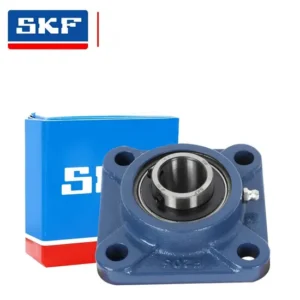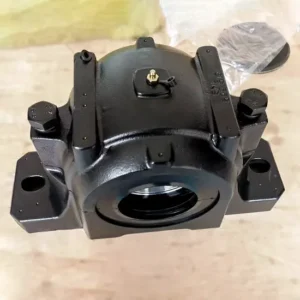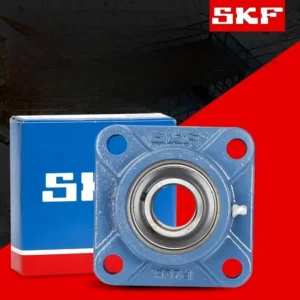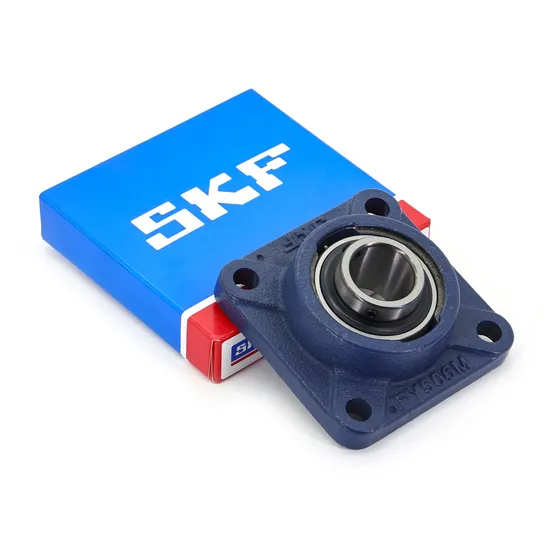
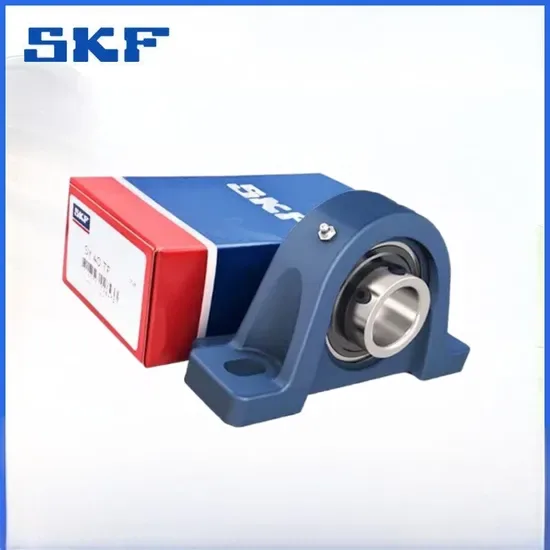
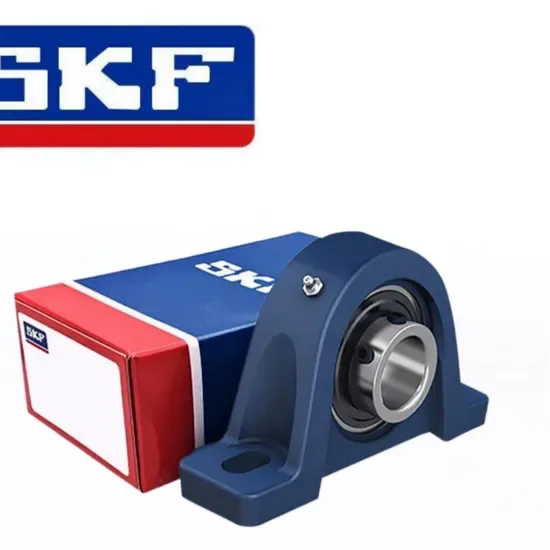
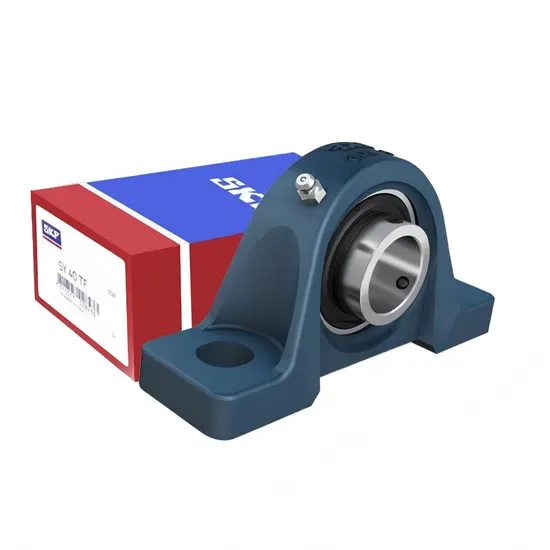
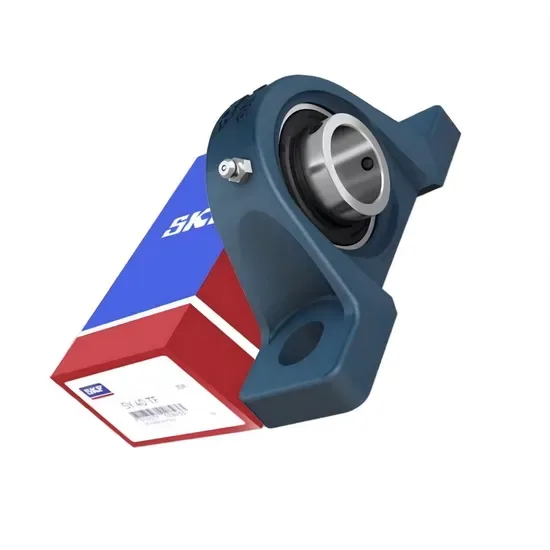
Description
Authorized Sourcing Channels — UCPX20 pillow block units traced from brand-certified distribution networks with verifiable batch documentation and full interchange validation across major manufacturers.
Technical Specifications
| Parameter | Value |
|---|---|
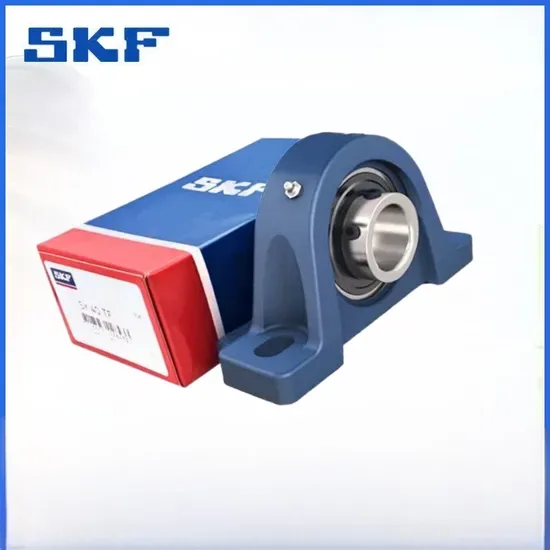
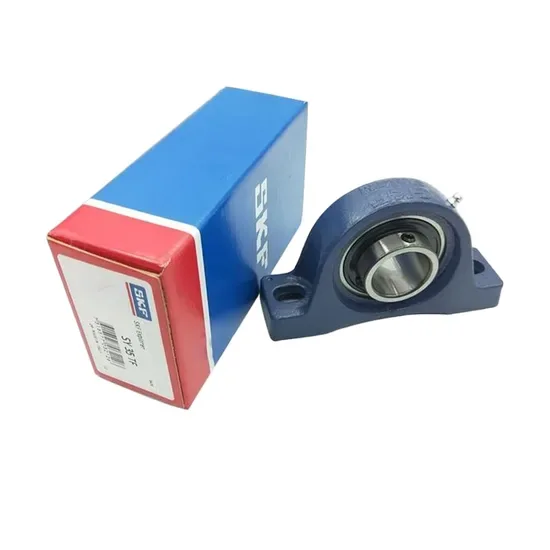
| Designation | UCPX20 Pillow Block Unit (Multi-Brand Supply: Timken, Koyo, NSK, SKF) |
| Bearing Type | Pillow Block Unit (Insert Bearing with Housing) |
| Bearing Block Model | F |
| Number of Rows | Single |
| Raceway | Spherical Raceway |
| Seal or Shield Type | Set-screw locking insert (seal configuration application-dependent) |
| Features | Corrosion Resistant, High Temperature, High Speed |
| Bore Type | Cylindrical with Set-Screw Locking |
| Transport Package | Carton + Wooden Pallet / Export Standard Packing |
X20 suffix designation requires manufacturer catalog confirmation to verify exact dimensional and performance specifications against the specific brand selected.
Application Suitability
| Industry | Typical Applications |
|---|---|
| Material Handling | Conveyor drive and tail pulley shafts, transfer line idler rollers |
| Agricultural Machinery | Grain elevator auger supports, combine harvester feeder house shafts |
| Mining and Crushing | Vibrating screen side plate bearings, belt conveyor return rollers |
| General Industrial | Fan shaft supports, mixer agitator bearings, packaging line rollers |
When a Spherical Raceway Isn’t Optional — It’s Survival
Misalignment kills pillow block bearings faster than overload.
Conveyor frames settle. Agricultural equipment twists under field loads. Steel structures deflect when thermal gradients shift across a 12-hour production cycle. A standard rigid bearing housing cannot compensate for these realities, and the result is predictable: edge loading on the raceway, localized heat buildup, cage stress concentrations, and premature seizure. [NEED_CITE: self-aligning bearing performance in misaligned conveyor applications]
The UCPX20 pillow block bearing with spherical raceway addresses this by allowing the inner ring to pivot relative to the housing bore. This self-alignment capability absorbs static misalignment from housing mounting surfaces and dynamic shaft deflection under load, distributing contact stress evenly across the full width of the rolling elements rather than concentrating it at the edges.
How Self-Alignment Solves Real Field Problems
A grain conveyor operator in West Africa once received a batch of pillow blocks with the wrong seal configuration — ZZ shields instead of the required 2RS contact seals. Dust ingress was rapid, and within three weeks the shafts had seized during peak harvest operations, costing a full day of production. That failure was not about the bearing’s load capacity or speed rating; it was about matching the sealing solution to the contamination level of the actual working environment.
The UCPX20 pillow block bearing with spherical raceway requires the same precision in specification. The spherical raceway handles misalignment, but the sealing arrangement, clearance class, and lubrication interval must all align with the specific contamination level, operating temperature, and speed range of the installation. Cross-referencing across Timken, Koyo, NSK, and SKF channels means verifying these parameters against each manufacturer’s catalog, not just matching the base designation.
Load, Speed, and Contamination: The Operating Triangle
Radial loads on conveyor pulley shafts are typically steady-state with moderate shock from material loading impacts. The single-row insert bearing configuration in the UCPX20 pillow block bearing with spherical raceway provides adequate radial capacity for these duty cycles. However, axial loads from belt tracking forces or inclined conveyor geometry require verification that the set-screw locking mechanism and bearing internal design can sustain the thrust component without inner ring creep on the shaft. [NEED_CITE: set-screw locking effectiveness under combined loading conditions]
Temperature influences are twofold. High ambient temperatures in steel mill or foundry environments reduce grease service life and may require high-temperature lubricant specifications. Thermal expansion of the shaft relative to the housing also affects internal clearance, making the correct clearance class selection critical — a standard CN clearance that is appropriate at room temperature may close entirely under operating thermal gradients, leading to preload and rapid thermal failure.
Sealing effectiveness determines service interval and bearing life in contaminated environments. Contact seals provide superior particle exclusion but generate friction and heat at higher speeds. Shield arrangements reduce friction but allow fine dust infiltration. The choice depends on the specific speed and contamination profile of each installation point.
What the Specifications Actually Mean in Practice
The spherical raceway design is the defining feature of this pillow block unit. Unlike cylindrical outer surfaces that require precise housing alignment, the spherical interface permits angular adjustment between the insert bearing and the cast or pressed steel housing. This capability is measured in degrees of permissible misalignment, and exceeding this limit negates the self-aligning benefit and reintroduces edge loading.
Single-row construction means the bearing handles primarily radial loads with limited axial capability from the internal geometry and set-screw locking. Applications with significant thrust components require verification that the axial capacity is adequate, or consideration of alternative bearing arrangements.
Corrosion resistance and high-temperature capability indicate material and heat treatment specifications suited for harsh environments — typically chrome steel with specialized surface treatments or stainless steel construction for washdown applications in food processing or chemical exposure. [NEED_CITE: bearing material selection for corrosive industrial environments]
The Hidden Costs Behind a Wrong Specification
Correct bearing selection from a verified supply chain costs what it costs. Incorrect selection costs exponentially more through mechanisms that are not always immediately visible.
A clearance mismatch — installing CN where C3 was specified for thermal expansion accommodation — produces gradual preload buildup as the bearing reaches operating temperature. The result is elevated friction, accelerated grease degradation, and eventual thermal seizure that may be misdiagnosed as a lubrication failure rather than a specification error.
Counterfeit pillow blocks with soft inner rings and cloned markings pass visual inspection but fail catastrophically under load. The inner ring deforms, the set screws lose clamping force, and the bearing spins on the shaft, destroying both the shaft journal and the housing bore. This damage pattern requires replacement of the entire assembly rather than just the bearing insert, multiplying both parts cost and downtime duration. [NEED_CITE: counterfeit bearing failure modes per ISO 15243 classification]
Sourcing Verification That Actually Matters
Authorized distributor channel sourcing means every UCPX20 unit ships with traceability documentation linking the specific batch to the manufacturer’s production records. This is not a certificate that can be cloned or falsified after the fact; it is a verification chain that begins at the factory and extends through each handoff in the distribution network.
Cross-brand interchange matching goes beyond base designation equivalence. When substituting between Timken, Koyo, NSK, and SKF equivalents, the verification includes clearance class, seal configuration, housing material, and dimensional tolerances — parameters that differ between manufacturers even when the base model number appears interchangeable.
Country-of-origin documentation supports import compliance requirements in markets where customs authorities require specific origin declarations. This documentation accompanies each shipment and is prepared in accordance with the destination country’s import regulations.
Pre-shipment inspection includes dimensional verification of bore diameter, outside diameter, and housing mounting dimensions against the manufacturer’s published tolerances, with inspection reports available as part of the documentation package.
Documentation & Authenticity
- Supplier Certificate of Conformity linking each UCPX20 shipment batch to the authorized distributor purchase record and manufacturer lot number
- Third-party dimensional inspection reports verifying bore, OD, and housing mounting dimensions against published tolerance specifications for the selected brand variant
- Country-of-origin certificates prepared to destination market requirements, supporting customs clearance and import documentation compliance
- Authenticity verification guidance including QR code pathways through brand official applications for independent validation of genuine product status
- Material certificates documenting bearing steel grade and heat treatment specifications for the insert bearing component
- HS code classification support and export documentation package for international shipping compliance
Storage, Handling & Mounting
- Maintain UCPX20 units in original sealed packaging until installation; the corrosion-resistant features depend on factory-applied preservative coatings that degrade when exposed to ambient humidity prematurely
- Store pillow block assemblies horizontally on shelving rather than stacked, preventing housing deformation that could compromise the spherical raceway alignment interface
- Inspect set-screw threads and housing mounting bolt holes before installation; thread damage from improper handling compromises the locking mechanism that prevents inner ring creep under load
- For high-temperature applications, verify that the selected lubricant specification matches both the bearing’s temperature rating and the relubrication interval requirements of the specific installation
- During mounting, use appropriate drift tubes on the inner ring only; driving force applied through the outer ring or housing transmits impact loads through the rolling elements and damages the spherical raceway surface
- Verify shaft diameter and surface finish before pressing the insert bearing onto the journal; undersized shafts cause set-screw locking failure even when the screws are torqued to specification
Ready to Verify Your UCPX20 Requirements?
Share your application parameters — load conditions, speed range, operating temperature, and contamination environment — for technical selection review and cross-reference matching across available brand channels.
Provide your OEM equipment number or existing bearing designation for interchange verification, including clearance and seal configuration confirmation to ensure the replacement unit matches your specific installation requirements.
Request documentation packages including country-of-origin certificates and authenticity verification pathways before placing bulk orders.
Get Technical Selection Support
Send your UCPX20 pillow block bearing with spherical raceway inquiry with application details and we will respond with cross-reference options, documentation availability, and lead time confirmation.