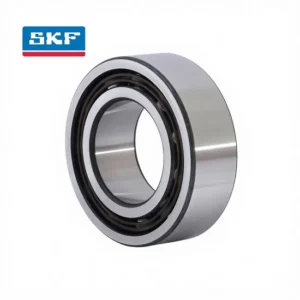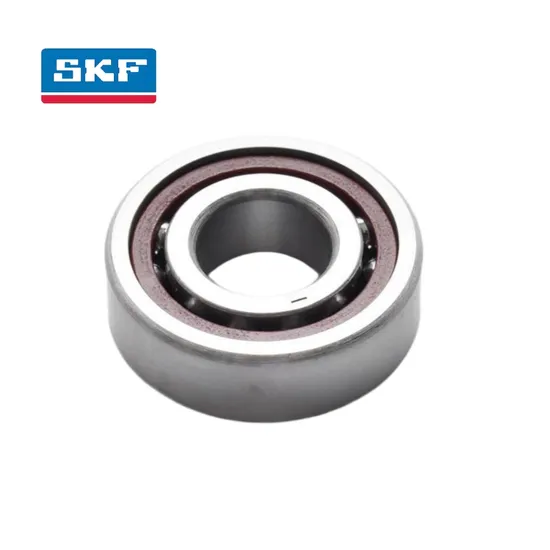
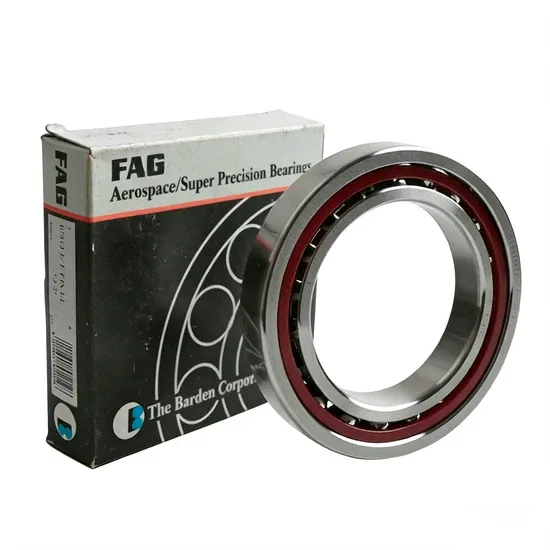

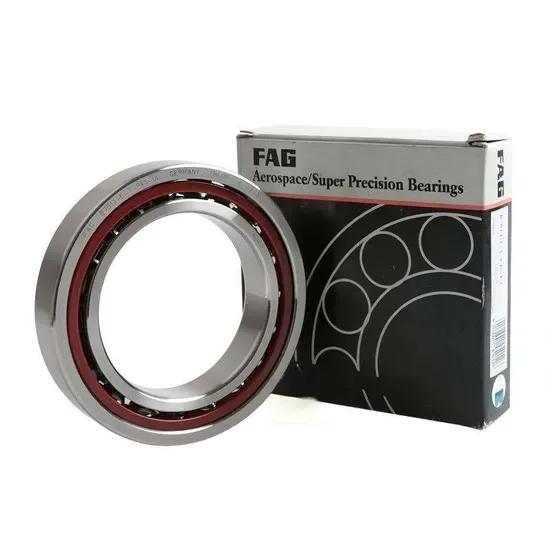
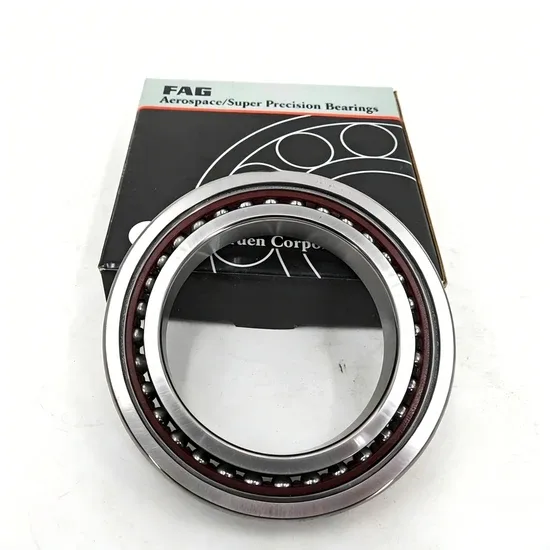
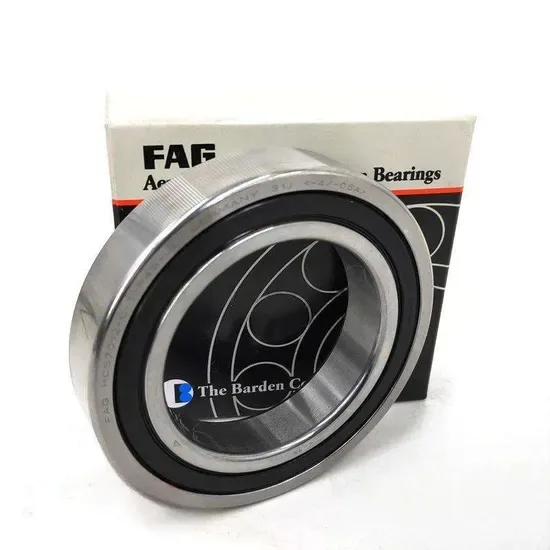

Description
Batch Traceability — Every FAG B71904-C-T-P4S leaving our warehouse ships with lot-level documentation traceable back to the manufacturer’s authorized distributor network, so procurement teams can verify origin before the spindle ever sees a cleanroom.
Technical Specifications
| Parameter | Value |
|---|---|
| Designation | FAG B71904-C-T-P4 |
| Bearing Type | Angular Contact Ball Bearing |
| Bore Diameter (d) | 20 mm |
| Outside Diameter (D) | 37 mm |
| Width (B) | 9 mm |
| Number of Rows | Single Row |
| Contact Angle | 15° (C suffix) |
| Precision Class | P4 (ISO 492 class 4) |
| Cage Material | Phenolic resin, outer ring guided (T suffix) |
| Seal or Shield Type | Open |
| Clearance Class | Standard |
| Bore Type | Cylindrical |
| Arrangement | Single bearing, universal pairing capable |
| Origin | China |
Note: The suffixes C and T in this identifier follow FAG nomenclature conventions for 15° contact angle and phenolic cage respectively; any additional pairing or preload suffixes on your specific order should be confirmed against the manufacturer’s current catalog before procurement.
Application Suitability
| Industry | Typical Applications |
|---|---|
| Machine tool manufacturing | High-frequency motorized spindle front bearing position |
| Robotics | Joint axis precision pivot points requiring low runout |
| Precision equipment | Coordinate measuring machine rotary tables |
| High-speed pump assembly | Impeller shaft support in close-coupled centrifugal units |
What Happens When a 15° Spindle Bearing Arrives with a 25° Contact Angle Instead
The contact angle is the single most consequential suffix on a B71904-C-T-P4 — and it is the one most frequently substituted without disclosure.
Early in my export logistics career, a compressor OEM received a batch of B71904 angular contacts where the supplier matched the base designation but shipped 25° contact angle variants in place of the specified 15° C-type P4. The spindle reached operating temperature within weeks, vibration readings climbed outside tolerance, and the entire production run was scrapped on the shop floor. A mismatch this small is invisible to a caliper but catastrophic under sustained axial load at high RPM [NEED_CITE: angular contact bearing contact angle substitution failure modes per ISO 15243]. Counterfeit bearings with cloned QR codes and soft inner rings now circulate through unverified middlemen, making physical suffix verification a non-negotiable step before any FAG B71904-C-T-P4 angular contact ball bearing enters a precision assembly.
Matching the Spindle Load Spectrum at Speed
The B719-series dimensional envelope is engineered specifically for the front position of high-speed motorized spindles, where radial cutting forces combine with axial thrust from tool clamping mechanisms. A genuine FAG B71904-C-T-P4 angular contact ball bearing delivers the low-friction, high-rigidity behavior these applications demand, particularly when preloaded in a back-to-back or face-to-face arrangement against a mating bearing. We regularly support procurement engineers who are replacing OEM-specified bearings and need confirmation that the replacement matches not only the base number but the full suffix string — contact angle, cage material, and precision class together.
Thermal Growth, Lubrication Envelope, and Mounting Realities
At sustained speeds approaching the limiting threshold, internal friction in a 15° angular contact bearing generates measurable heat that propagates through the shaft and housing. This thermal expansion directly affects operating clearance and preload force, which is why the P4 tolerance band exists — tighter dimensional control means predictable behavior across the temperature curve. Oil-air or oil-mist lubrication is standard for this class of spindle bearing, and the open design requires external sealing responsibility to fall on the housing design rather than the bearing itself [NEED_CITE: spindle bearing lubrication methods and thermal equilibrium in high-speed applications]. Cold mounting with controlled axial force or induction heating at moderate temperatures preserves the precision raceway geometry, while careless press-fitting can distort the thin-section rings typical of the 19-series bore-to-OD ratio.
Decoding the Suffixes That Define Performance
The C suffix designates a 15° contact angle, which balances radial load capacity with moderate axial stiffness — the standard choice for high-speed spindle front positions where radial cutting forces dominate. The phenolic resin cage (T suffix) is lighter than brass alternatives, reducing centrifugal loading on the outer ring at extreme RPM while maintaining ball separation stability. P4 precision class, governed by ISO 492, constrains both bore and OD tolerances along with running accuracy to levels that prevent vibration-induced chatter marks on machined surfaces. The 20 mm bore and 37 mm OD place this bearing in the extra-light 19-series cross-section, which trades load capacity for the speed capability demanded by modern high-frequency spindles. Together, these specifications define a bearing that performs predictably only when every suffix is correct — substituting a 40° B-type contact angle, for example, would increase axial stiffness but generate excessive friction heat at the same operating speed.
The Downtime Cost That Never Appears on an Invoice
A single unplanned spindle teardown in a production cell costs far more than the bearing itself — lost throughput, scrapped workpieces, emergency freight for replacements, and the labor hours of a specialist technician on standby. When the root cause traces back to an incorrectly specified contact angle or a counterfeit inner ring with inadequate hardness, the purchasing decision that saved a marginal amount upfront becomes the most expensive line item in the quarter [NEED_CITE: unplanned downtime cost modeling for precision spindle failures in CNC operations]. ISO 281 life calculations assume correct specification, proper mounting, and adequate lubrication; none of those assumptions hold when the bearing arrived with the wrong suffix or questionable metallurgy.
How We Keep the Suffix String Intact from Inquiry to Delivery
Our sourcing model operates through authorized distributor channels rather than single-brand distributorship, which means every FAG B71904-C-T-P4 angular contact ball bearing we supply carries traceable lot documentation from the manufacturer’s network. We cross-verify the full suffix string — contact angle, cage material, precision class, and any preload or pairing designations — against the application parameters before issuing a quotation. For buyers managing regional distribution, we provide the same documentation package your end users expect: certificate of conformity with batch and lot numbers, dimensional inspection data confirming P4 running accuracy, and QR code verification pathways through brand official applications. Country-of-origin documentation accompanies every shipment to clear import compliance without delay.
Documentation & Authenticity
- Supplier Certificate of Conformity referencing the specific batch and lot numbers for each FAG B71904-C-T-P4 angular contact ball bearing shipped
- Third-party runout inspection confirming P4 running accuracy meets ISO 492 class 4 requirements before dispatch
- QR code verification pathway documented so receiving inspection can authenticate via the manufacturer’s official application
- Country-of-origin certificate and HS code classification included in the shipping documentation package for customs clearance
- Material certificate confirming bearing steel composition consistent with the manufacturer’s standard specification
Storage, Handling & Mounting
- Retain original sealed packaging until the moment of mounting; early exposure to shop-floor humidity risks corrosion on the precision-ground P4 raceways of this 20 mm bore bearing
- Handle with clean lint-free gloves to prevent fingerprint acidity from etching the open bearing surfaces before oil-air lubrication is established
- Mount using controlled axial force or moderate induction heating only; excessive press-fit force on the thin-section 19-series outer ring can distort the 37 mm OD and compromise the 15° contact angle geometry
- Verify shaft and housing seat tolerances match P4 requirements before installation — a housing bore that is out-of-round will transmit vibration directly through the phenolic cage
- If ordering paired arrangements, keep factory preload pairing marks intact and do not separate the matched set until the spindle housing is prepared for immediate assembly
Request a Specification Review Before Your Next Spindle Build
Share your spindle speed range, expected axial and radial loads, and lubrication method so we can confirm the FAG B71904-C-T-P4 angular contact ball bearing is the correct specification for your application — or identify the suffix variant that better matches your operating envelope. If you are replacing an OEM-specified bearing, provide the equipment nameplate number and we will cross-reference the full suffix string against the manufacturer’s database. Request the complete documentation package including origin confirmation and inspection reports before placing your bulk order.
Frequently Asked Questions
Q: How can I verify the authenticity of a FAG B71904-C-T-P4 before installation?
A: Use the manufacturer’s official mobile application to scan the QR code on the bearing packaging and cross-reference the batch number. We provide the verification pathway documentation with every shipment, along with a supplier Certificate of Conformity that traces the bearing back through our authorized distributor channel.
Q: What does P4 precision class mean in practical terms compared to P5 or P0?
A: P4, defined under ISO 492, specifies tighter bore, outside diameter, and running accuracy tolerances than P5 or P0. In spindle applications, this translates to lower vibration amplitude at high speed and reduced risk of chatter marks on finished workpieces.
Q: How does the 15° contact angle affect my spindle design compared to 25° or 40° alternatives?
A: A 15° contact angle provides a balance favoring radial load capacity and lower friction at high speed, which suits front spindle positions where cutting forces are primarily radial. A 25° or 40° angle increases axial stiffness but generates more friction heat, requiring careful thermal management [NEED_CITE: contact angle selection criteria for high-speed angular contact ball bearings].
Q: What cross-reference checks should I perform when substituting this bearing from another brand?
A: Beyond matching the base dimensional envelope, verify that the replacement bearing specifies the same 15° contact angle, phenolic resin cage material, and P4 precision class. Mismatches in any of these three parameters can alter preload behavior, speed capability, and thermal equilibrium in the spindle.
Q: Can this open bearing be used in environments with coolant mist or fine particulate?
A: The open design requires external sealing to be provided by the housing. We recommend discussing your contamination environment during the inquiry stage so we can advise on whether a sealed variant or external labyrinth seal design is more appropriate for your application.
Secure Your Spindle Specification Before Production Starts
Send your application parameters or OEM equipment number, and we will return a confirmed suffix string with full documentation and lead time.