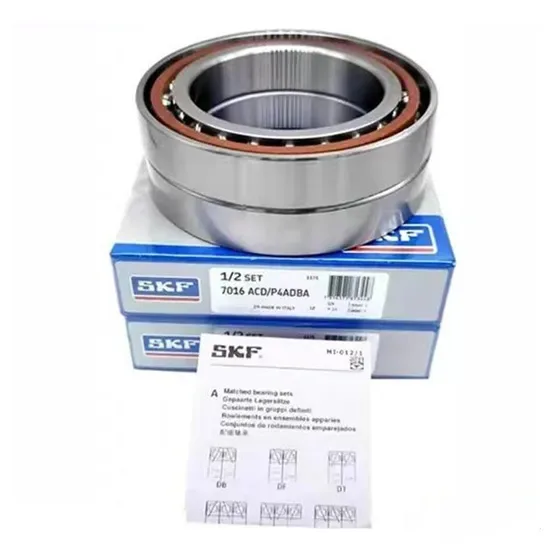
Description
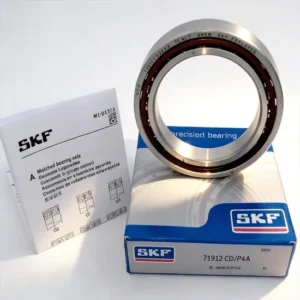
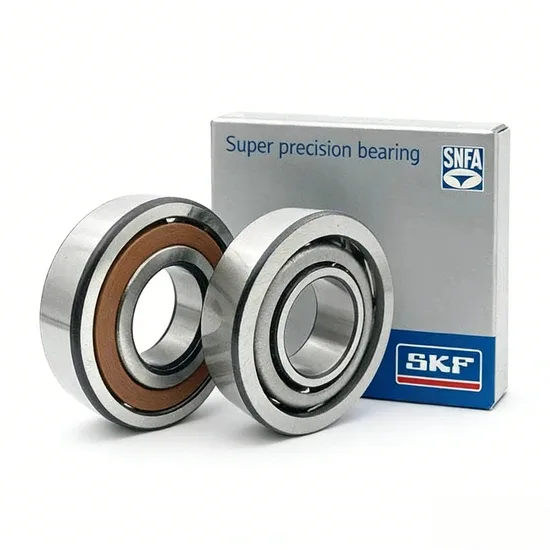
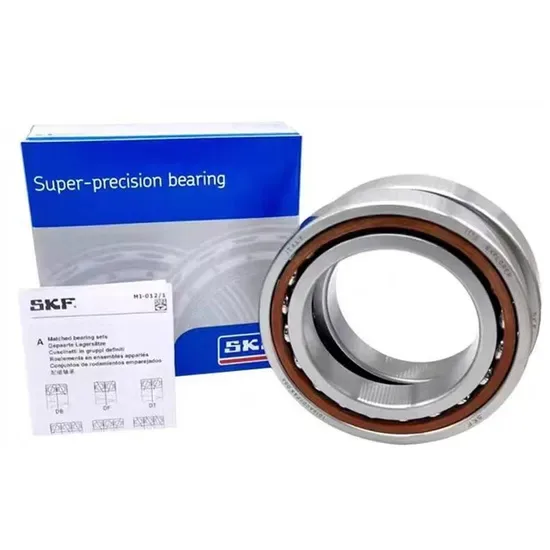
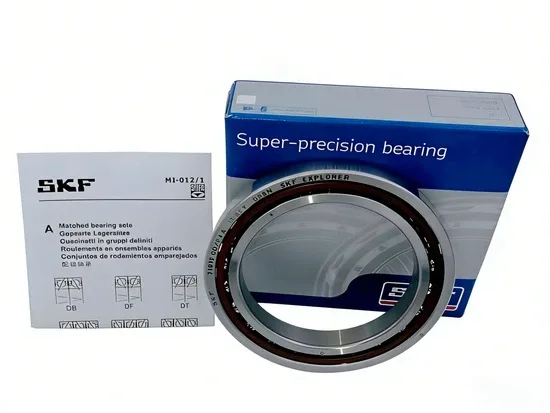
Authorized Channel Sourcing — Traceable SKF 7013 ACD/P4AQBTB angular contact ball bearing supplied through verified distributor networks with batch-level documentation for import and spindle applications.
Technical Specifications
| Parameter | Value |
|---|---|
| Designation | SKF 7013 ACD/P4AQBTB |
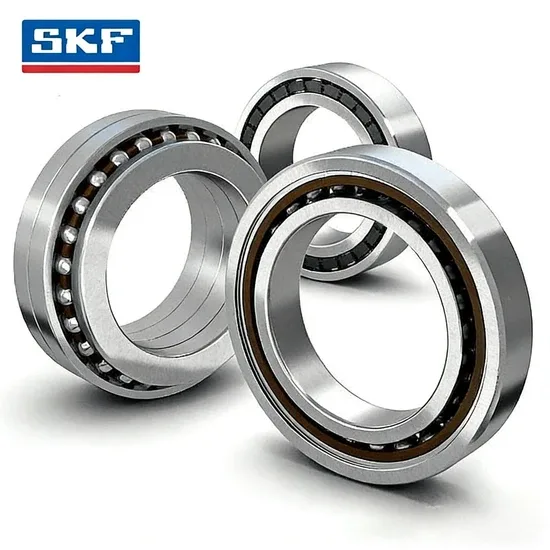
| Bearing Type | Angular Contact Ball Bearing |
| Bore Diameter (d) | 65 mm |
| Outside Diameter (D) | 100 mm |
| Width (B) | 18 mm |
| Contact Angle | 25° |
| Precision Class | P4A |
| Arrangement | QBTB (unverified suffix — requires manufacturer catalog confirmation) |
| Number of Rows | Single Row (paired set) |
| Cage Material | Manufacturer standard (verify on order) |
| Seal or Shield Type | Open |
| Origin | China |
| Weight | 0.100 kg |
Note: The QBTB arrangement suffix is not found in standard SKF pairing code references. Confirm exact preload class and mounting orientation with the manufacturer catalog before installation.
Application Suitability
| Industry | Typical Applications |
|---|---|
| Machine Tool Manufacturing | CNC lathe main spindle, machining center spindle cartridge |
| Precision Equipment | High-speed servo motor shaft, optical grinding head |
| Robotics | Joint actuator precision shaft, articulated arm drive |
When a 25° Contact Angle Meets the Wrong Preload on a Spindle
A single overlooked suffix can push a precision spindle from sub-micron runout to scrap-producing vibration within days.
The SKF 7013 ACD/P4AQBTB angular contact ball bearing is designed for applications where combined radial and axial loads demand tight control over shaft displacement. Yet procurement teams frequently match the base 7013 designation while treating the ACD, P4A, and QBTB suffixes as optional detail. In one field case, a replacement set sourced on base number alone arrived with 15° contact angle and P5 tolerance. The spindle reached operating temperature within minutes, axial preload collapsed, and the resulting chatter marks ruined a batch of aerospace turbine blisks before the operator noticed [NEED_CITE: spindle bearing preload loss and vibration signature in precision machining]. That single mismatch cost more in scrapped parts than a year’s worth of bearing spend.
Matching Bearing Geometry to Spindle Load Spectra
CNC spindles impose a demanding combination of sustained radial cutting forces and intermittent axial thrust, particularly during plunging and contouring cycles. The 25° contact angle in the ACD design provides higher axial stiffness than a 15° variant, keeping tool tip deflection within tolerance during heavy side-milling passes. For this SKF 7013 ACD/P4AQBTB angular contact ball bearing, the paired arrangement further multiplies axial rigidity in one direction while sharing radial load across multiple raceway contact lines. When we cross-check spindle requirements against available suffix combinations, we verify contact angle, precision class, and preload pairing as a single package — not as independent line items.
Thermal Growth and Preload Stability Under Continuous Operation
Spindle housings heat unevenly during prolonged cutting, expanding the outer ring seat faster than the shaft. A bearing with inadequate internal clearance management will see preload climb as the housing grows, eventually squeezing the lubricant film below critical thickness. The P4A tolerance class controls bore and outside diameter variation tightly enough that fitted dimensions remain predictable across thermal gradients, while the paired arrangement must be matched to the machine builder’s specified preload class to prevent either slack or over-clamping. Lubrication choice — oil-air mist versus grease pack — further dictates achievable speed, and open bearings like this one rely on the machine’s external lubrication circuit delivering clean, metered oil to each raceway [NEED_CITE: effect of thermal expansion on spindle bearing preload and lubricant film breakdown]. Ambient temperature swings in the workshop also influence the thermal equilibrium point, making installation environment documentation part of the selection process.
Decoding the Suffix Stack: ACD, P4A, and Pairing Logic
The ACD suffix confirms a 25° contact angle with an optimized internal geometry that balances load capacity against friction heat generation — a deliberate trade-off favoring stiffness in spindle applications. P4A precision goes beyond standard P4 by adding running accuracy constraints on inner and outer ring raceway runout, directly governing the radial and face displacement visible at the tool tip. In practical terms, reaching P4A running accuracy means the bearing contributes minimal excitation force to the spindle system, reducing chatter tendency at high peripheral speeds. The pairing arrangement, once confirmed against the manufacturer catalog, dictates whether the set mounts back-to-back for moment load resistance, face-to-face for misalignment tolerance, or in tandem for pure axial capacity in one direction. Getting this wrong reverses the load-sharing geometry and concentrates stress on a single row of balls.
The Downtime Arithmetic of a Specification Shortcut
Correct selection backed by traceable documentation protects against failures classified under ISO 15243 as geometrically induced — raceway smearing, cage fracture from abnormal loading, and premature fatigue spalling. A bearing installed with the wrong contact angle transfers axial load to the high shoulder of a raceway not designed to carry it, accelerating subsurface crack initiation well before calculated L10 life. Counterfeit or relabeled sets introduce uncontrolled material hardness and raceway finish, collapsing the fatigue life curve entirely [NEED_CITE: rolling bearing failure mode classification per ISO 15243]. Unplanned spindle teardowns on a production CNC machine carry costs in lost shift output, emergency freight for replacement cartridges, and re-certification of the spindle assembly after rebuild — consequences that dwarf any unit price savings on the bearing itself.
How Verification and Cross-Reference Expertise Protect Your Spindle
Every SKF 7013 ACD/P4AQBTB angular contact ball bearing we supply is sourced through authorized distributor channels, meaning the chain of custody from manufacturer to your receiving dock carries documented provenance. Batch and lot numbers are recorded at each transfer point, and QR code verification through SKF’s official application confirms the physical set matches the shipping documentation. When a spindle OEM specifies a competing brand, our cross-reference database aligns not only the base envelope dimensions but also the contact angle, precision class, cage design, and preload pairing — preventing suffix-level mismatches that a simple bore-and-OD lookup would miss. We also provide country-of-origin documentation formatted for customs clearance, eliminating delays at import for buyers operating across multiple regulatory jurisdictions.
Documentation & Authenticity
- Supplier Certificate of Conformity referencing the exact batch number of your SKF 7013 ACD/P4AQBTB set, linking it back to the manufacturer’s production lot.
- Third-party runout inspection confirming P4A running accuracy on both inner and outer rings before the set leaves our facility.
- Material certificate documenting the bearing steel grade and heat treatment condition of the matched pair.
- QR code verification pathway through the SKF official app, allowing your receiving team to confirm authenticity on the dock.
- Country-of-origin documentation and HS code support prepared for import clearance in your destination market.
Storage, Handling & Mounting
- Keep the matched QBTB set sealed in its original factory packaging until the moment of spindle assembly; premature opening risks contamination and loss of pairing orientation marks critical to correct preload direction.
- Store the 65 mm bore P4A precision set in a climate-controlled area below 60% relative humidity to prevent micro-corrosion on the exposed raceway surfaces of this open bearing design.
- Handle with lint-free cleanroom gloves — fingerprints on P4A-finished raceways leave acidic residues that initiate corrosion pits under oil film, visible only after the spindle has been running for weeks.
- Use induction heating for the inner ring mounting on the 65 mm shaft journal, controlling temperature to avoid exceeding the dimensional stability limit of the heat-treated raceway and altering the interference fit that maintains preload.
- Verify shaft and housing seat dimensions against ISO 492 tolerance zones before pressing the outer rings into the spindle cartridge, as P4A precision delivers full benefit only when the mating surfaces match the bearing’s own geometric accuracy [NEED_CITE: ISO 492 tolerance classes and their influence on mounted bearing performance].
Requesting a Technical Quotation
Share your spindle operating parameters — sustained radial load, peak axial thrust, maximum RPM, and lubrication method — so we can verify the ACD contact angle and P4A precision class against your application’s stiffness and speed requirements. If you are replacing an OEM-specified bearing from a different manufacturer, provide the full original designation including all suffixes so our cross-reference team can confirm equivalent pairing and preload class. We will respond with a formal quotation covering unit pricing, confirmed lead time, and the complete documentation package available for your import and receiving records.
Frequently Asked Questions
Q: How do I verify the authenticity of my SKF 7013 ACD/P4AQBTB bearing set?
A: Each set carries a QR code on the packaging that links to SKF’s official verification application. Scanning confirms the batch number, manufacturing facility, and product designation match the physical bearing. We also supply a Certificate of Conformity with full lot traceability linking back through our authorized distributor channel.
Q: What does the ACD suffix mean on SKF angular contact ball bearings?
A: ACD designates a 25° contact angle with optimized internal geometry. Compared to a 15° contact angle (suffix CD), the 25° design provides greater axial stiffness at the cost of slightly higher friction, making it the preferred choice for spindle applications where axial cutting forces dominate.
Q: What is the difference between P4A and standard P4 precision?
A: Both meet ISO tolerance class 4 for dimensional accuracy. P4A adds tighter running accuracy specifications — specifically controlling raceway runout beyond what standard P4 requires. This additional constraint reduces vibration excitation in high-speed spindle applications where even minor geometric deviations translate to chatter at the cutting edge.
Q: How should I handle cross-referencing this bearing from another brand?
A: A reliable cross-reference must match more than bore, outside diameter, and width. The contact angle (25°), precision class (P4A with running accuracy), cage material, and pairing arrangement must all be equivalent. Submit the full original designation to our team and we will verify alignment across all these parameters before proposing a substitute.
Q: What preload class should I specify for my spindle application?
A: Preload selection depends on your spindle’s stiffness requirement, speed range, and thermal profile. The machine tool builder typically specifies a preload class (light, medium, or heavy) in the spindle manual. Share that specification with us and we will confirm the SKF 7013 ACD/P4AQBTB set matches or advise on the correct variant if a different preload is required.
Confirm Your Spindle Bearing Specification
Send us your full OEM part number or operating parameters — our team will verify cross-reference compatibility, confirm documentation availability, and quote with traceable lead time.