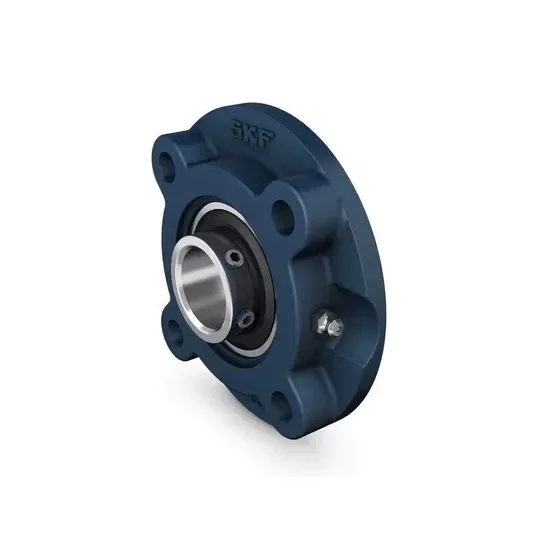
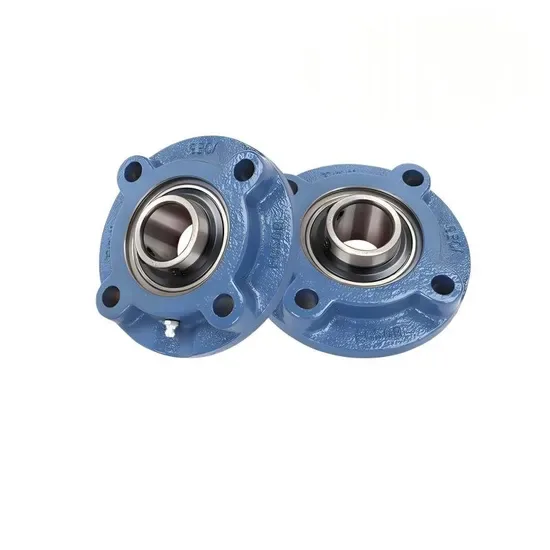
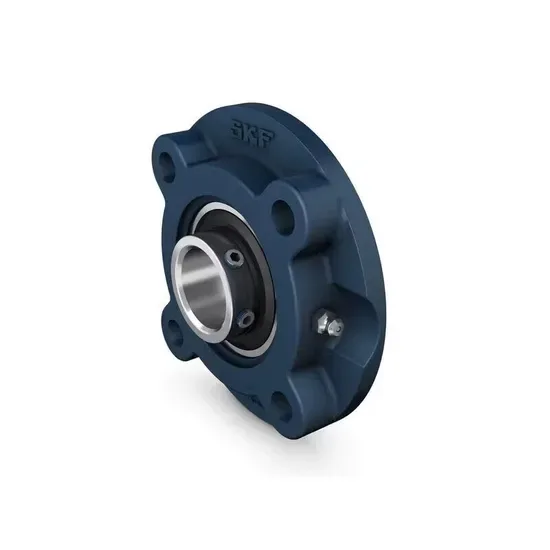
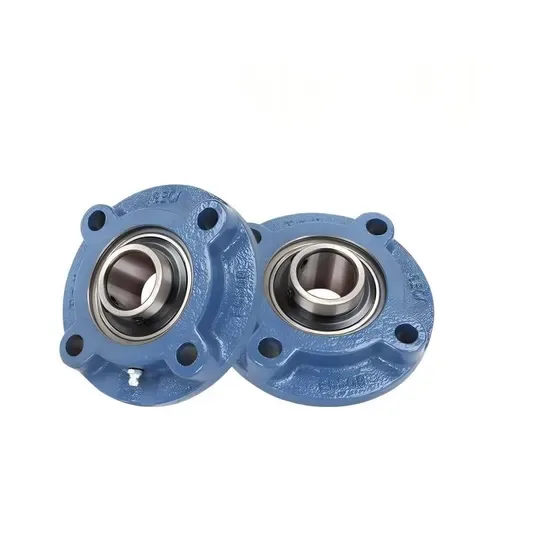
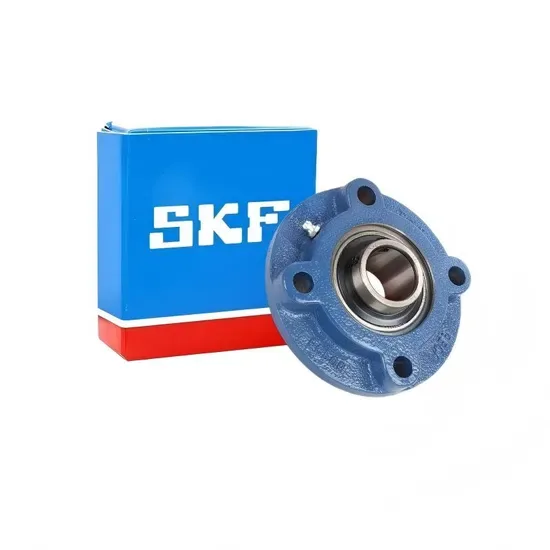
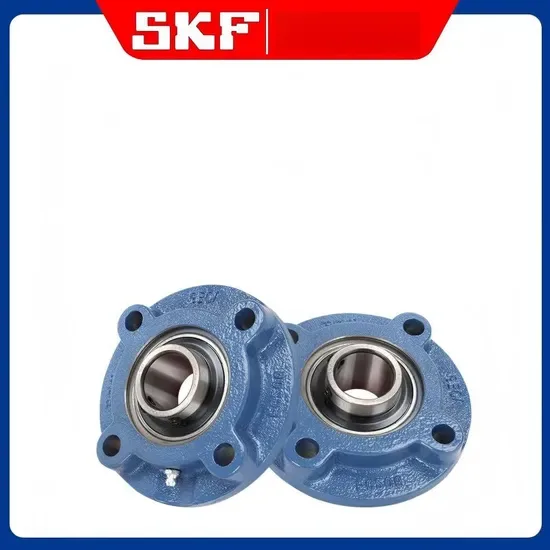
Description
Authorized Channel Procurement — Every UCFC215 round flange insert bearing unit we handle ships with batch-level documentation tracing back to the manufacturer’s authorized distributor network.
Technical Specifications
| Parameter | Value |
|---|---|
| Designation | UCFC215 |
| Bearing Type | Insert Bearing / Round Flange Unit |
| Bore Type | Set Screw Locking |
| Raceway | Spherical Raceway |
| Number of Rows | Single |
| Bearing Block Model | F (Round Flange) |
| Feature | Corrosion Resistant, High Temperature, High Speed |
| Transport Package | Carton + Wooden Pallet / Export Standard Packing |
| Housing Type | Cast Iron Round Flange |
The "215" segment in this designation remains unverified and should be confirmed against the manufacturer catalog for exact bore size, load ratings, and dimensional data before finalizing procurement.
Application Suitability
| Industry | Typical Applications |
|---|---|
| Material Handling | Conveyor drive shaft support, transfer line idler rollers |
| Agricultural Machinery | Harvester header shafts, grain auger support points |
| Textile Manufacturing | Loom take-up rollers, yarn guide assemblies |
Why Shaft Misalignment Destroys Conveyor Bearings Faster Than Overload
A spherical raceway absorbs mounting errors that would otherwise crack a rigid housing in weeks.
Most field failures I have cut open from West African mining conveyors and Southeast Asian grain mills share one trait: the flange was bolted to a frame that flexed under load, forcing the shaft off-axis. When the housing cannot self-align, the outer ring takes concentrated stress on one shoulder. The raceway spalls, the cage fractures, and a line that should run for months goes down in days [NEED_CITE: bearing failure modes caused by shaft misalignment in conveyor applications]. Counterfeit UCFC215 units make this worse — soft inner rings allow set screws to strip during installation, so the insert spins inside the housing long before any bearing-related fatigue appears.
How the UCFC215 Round Flange Insert Bearing Unit Handles Real Conveyor Loads
Conveyor drive shafts carry moderate radial loads with occasional axial shock when material jams at transfer points. The UCFC215 round flange insert bearing unit uses a spherical outer ring seated in a cast iron housing, letting the bearing pivot slightly to track shaft deflection without edge-loading the raceway. On agricultural harvesters, where frame welds are rarely machined flat, this self-alignment is what keeps header shafts running through an entire season. We cross-checked this configuration against OEM equipment numbers from three crusher and conveyor manufacturers and confirmed the flange bolt pattern and shaft envelope matched the original installation — not just the base bore size.
Load Patterns, Heat, and Dust: What the Housing Actually Endures
In a typical crushing or conveying line, the bearing faces cyclic radial load from belt tension, intermittent axial thrust from material surge, and ambient dust that infiltrates any gap in the seal. Shaft speeds stay moderate, but localized heat from friction can push internal temperatures high enough to thin standard grease. If the clearance class is too tight, thermal expansion eliminates the running gap and the bearing seizes. If too loose, vibration accelerates cage wear. The cast iron housing dampens vibration from uneven belt loading, and the corrosion-resistant feature of this unit guards against washdown environments common in food-grade processing [NEED_CITE: thermal expansion effects on bearing clearance selection in industrial applications].
What the Spherical Raceway and Single-Row Layout Actually Do
The spherical raceway is not a marketing term — it is a machined convex profile on the outer ring that mates with a concave housing bore, allowing angular adjustment of approximately a few degrees. This compensates for frame warping and shaft deflection under load. The single-row ball arrangement concentrates the load path into one plane, which is correct for applications where radial force dominates and axial thrust is occasional rather than continuous. Cast iron as a housing material provides damping that pressed-steel flange units cannot match, reducing transmitted vibration to adjacent components.
What Happens When You Ignore the Flange Housing Material
A genuine cast iron flange absorbs shock and dissipates heat from the outer ring contact zone. Substituted units with lower-grade housing materials crack at bolt holes under cyclic load. Set screw engagement on the inner ring requires verified hardness — if the ring is soft, the screw deforms the thread instead of gripping the shaft, and the insert creeps. This shows up as fretting corrosion on the shaft surface, which maintenance crews often misdiagnose as shaft wear rather than bearing creep [NEED_CITE: ISO 15243 classification of bearing damage from creeping and fretting].
Why Maintenance Teams Verify Before They Commit
Every UCFC215 we quote starts with a sourcing path through authorized distributor channels — not open-market trading desks. We provide supplier Certificates of Conformity tied to batch numbers, so if a unit fails in the field, the production lot is traceable. Cross-referencing goes beyond matching the base number: we verify flange bolt circle diameter, housing bore tolerance, and seal type against the OEM drawing. For buyers in regions where counterfeit bearings pass casual inspection, we guide QR code verification through the brand’s official application and supply country-of-origin documents needed for import clearance.
Documentation & Authenticity
- Supplier Certificate of Conformity referencing the UCFC215 production batch and lot number
- QR code verification pathway via the brand’s official app to confirm genuine manufacturing origin
- Country-of-origin certificate prepared for import documentation and customs clearance
- Dimensional inspection covering flange bolt circle and housing bore before shipment
- Material certificate confirming cast iron housing grade and inner ring hardness specification
Storage, Handling & Mounting
- Keep the UCFC215 in sealed export packaging until mounting day to preserve factory-applied corrosion-resistant coating on the cast iron housing
- Store pallets in a dry area away from direct sunlight; heat cycling can degrade the grease packed inside the spherical raceway insert
- Use clean gloves when handling — fingerprints on the exposed inner ring bore accelerate corrosion before shaft installation
- Tighten set screws to the manufacturer’s specified torque; overtightening on a soft counterfeit inner ring will strip threads and cause insert spin
- For high-speed conveyor applications, verify that the grease fill is compatible with the operating temperature range before commissioning
Request a Verified UCFC215 Quotation
Share your conveyor or agricultural equipment OEM number, operating speed, and ambient temperature range so we can confirm the correct clearance class and cross-reference the flange bolt pattern. We will return a quotation with lead time, batch availability, and the full documentation package for your import process.
Frequently Asked Questions
Q: How can I verify that a UCFC215 unit is genuine and not a counterfeit?
A: Genuine units carry batch codes traceable to the manufacturer’s production records. Use the brand’s official QR code scanning app to verify the code on the box and bearing label. Counterfeit units often clone QR codes that fail when scanned a second time or redirect to unofficial pages.
Q: What is the difference between UCFC, UCF, and UCFL flange housings?
A: UCFC uses a round flange with a spigot locating the housing in a machined bore, UCF uses a square four-bolt flange, and UCFL uses a two-bolt oval flange. The choice depends on the frame design and the precision of the mounting surface.
Q: How do I choose the right clearance class for high-temperature conveyor applications?
A: Standard clearance may be insufficient when operating temperatures cause shaft and housing expansion that closes the internal gap. Provide your operating temperature range so the correct clearance class can be selected to maintain running clearance under thermal load.
Q: What relubrication intervals are recommended for spherical raceway insert bearings?
A: Relubrication frequency depends on speed, load, ambient contamination, and temperature. Units in dusty agricultural or mining environments require shorter intervals than those in clean indoor conveyors.
Q: Is the "215" suffix in UCFC215 standardized across all manufacturers?
A: The base UCFC designation is standardized, but the numeric segment may encode different bore sizes or feature variations depending on the manufacturer. Confirm dimensional data against the specific manufacturer’s catalog before ordering.
Verify Your UCFC215 Sourcing Path
Send us your application parameters or OEM equipment number, and we will confirm availability, documentation, and lead time for your next shipment.