
SKF Bearings for Hawaii Sugar & Pineapple Machinery | Wholesale Supplier
Most bearing failures in sugar and pineapple processing lines have nothing to do with load capacity — they stem from seal-media mismatch and lubricant breakdown in high-humidity, corrosive environments.
Selecting SKF bearings for sugar and pineapple machinery requires a three-pillar approach: matching seal suffixes to washdown frequency, upgrading materials for corrosive juice exposure, and shortening lubrication intervals well beyond standard recommendations. Standard catalog selection alone will not survive a Hawaiian cane season.
Early in my purchasing career, I sourced a batch of SKF spherical roller bearings for a sugarcane crushing roll at a Hawaiian mill. We specified standard seals based on load and speed calculations, treating the environment as secondary. Within a single wet season, the grease emulsified, the bearing seized, and the entire extraction line sat idle for days. When the maintenance crew pulled the unit apart, the outer ring looked like it had been dredged from the ocean floor. That failure reshaped how I evaluate every agricultural processing inquiry — the first question I ask is never about load, but about juice exposure, washdown pressure, and ambient humidity. [NEED_CITE: root cause distribution per ISO 15243 for bearings in corrosive agricultural environments]
Since transitioning to the supply side, I have watched this pattern repeat across pineapple washing lines, sugar centrifuges, and cane conveyors. The cross-reference tables are freely available, but a 22320 used in a cane crusher demands a fundamentally different specification logic than the same basic number in a fan or conveyor pulley.
Why Do Sugar & Pineapple Machinery Bearings Fail Prematurely?
Environmental media ingress and seal degradation account for the majority of premature failures in tropical crop processing — not dynamic load exhaustion.
Tropical agricultural processing presents a hostile triad: high ambient humidity, acidic crop juices, and frequent high-pressure washdowns. Cane juice is mildly acidic and rich in suspended abrasive particles; pineapple wash lines expose bearings to chlorinated water at elevated temperatures multiple times per shift. Standard lip seals designed for general industrial use simply cannot withstand this combination over meaningful service intervals. [NEED_CITE: bearing failure mode analysis in food and agricultural processing per ISO 15243 damage categories]
In a pineapple sorting facility I audited, the original equipment specification called for standard rubber-sealed bearings on the wash-line conveyor rollers. The maintenance team replaced them on a monthly cycle, believing this was normal wear. When we switched to bearings with reinforced contact seals and corrosion-resistant grease fills, the replacement interval extended by a factor of several times — not because the bearing steel was stronger, but because the seal geometry prevented water and pulp ingress at the contact lip.
Sugar centrifuges present a different thermal challenge. The basket operates at elevated temperatures during spinning, and standard lithium-based greases can soften and migrate out of the cavity. I reviewed one case where a centrifuge bearing suffered cage deformation after the lubricant thinned beyond its effective viscosity range. The bearing model was correct; the grease specification was not. [NEED_CITE: lubricant thermal stability requirements for high-speed agricultural centrifuge bearings]
| Failure Mode | Typical Root Cause | Observable Symptom |
|---|---|---|
| Outer ring corrosion | Seal-media mismatch in humid environment | Rust pitting, dimensional drift |
| Grease emulsification | Water ingress through inadequate seal | Milky residue, increased friction |
| Cage deformation | Lubricant thermal breakdown | Metallic debris, abnormal noise |
| Premature spalling | Abrasive particle ingress | Surface fatigue on raceways |
The pattern is consistent: buyers specify the correct bearing geometry and then under-specify the sealing and lubrication package. The bearing number is only half the answer.
How to Select SKF Bearings for High-Humidity Processing Lines?
Seal suffix selection, material upgrade paths, and lubricant compatibility must be treated as a unified specification — not afterthoughts to the basic bearing number.
The SKF suffix system carries critical information for agricultural applications, yet many procurement specifications stop at the basic model number. For sugar and pineapple machinery, three suffix categories demand close attention: seal type, internal clearance, and special grease fills. [NEED_CITE: SKF designation system interpretation for agricultural and food processing applications]
Seal selection follows washdown intensity. For cane crushing rolls where juice splash is constant but pressure is moderate, contact seals designated with the 2RS suffix provide adequate lip interference. For pineapple wash lines where high-pressure spray directly impinges on bearing housings, the seal material compound and lip geometry become decisive — standard nitrile compounds can degrade under chlorinated exposure, requiring fluoroelastomer alternatives where available.
Internal clearance matters more in tropical environments than many buyers realize. The C3 clearance suffix accommodates thermal expansion during operation, which is essential in sugar centrifuges and continuous pans where bearing temperature rises significantly above ambient. Specifying standard clearance in these positions invites premature preload and accelerated fatigue.
Material upgrades become necessary when corrosive media contact is unavoidable. Stainless steel variants and ceramic ball options exist within the SKF range for positions where moisture ingress cannot be fully sealed out. These carry cost premiums, but the total cost calculation must include downtime for replacement — a seized bearing in a continuous cane crusher during harvest represents losses measured in days of idle capacity.
Lubricant selection requires matching the grease dropping point and water resistance to the specific exposure. High-temperature positions in sugar centrifuges need greases with elevated dropping points and strong adhesion characteristics. Wash-line positions need greases with high water washout resistance, measured by standardized test methods. [NEED_CITE: grease water washout resistance standards for food processing bearing applications]
A buyer in the Pacific islands once received a shipment of standard-suffix bearings for a pineapple processing expansion. The bearings were technically correct in geometry and load rating, but without the appropriate seal and grease suffixes for the washdown environment, they required replacement within weeks. The lesson was expensive but clear: the suffix is not optional detail — it is the specification.
What Are the Common SKF Bearing Models for Sugar Mills?
Self-aligning roller bearings and tapered roller bearings dominate sugar mill applications, but each position demands suffix customization for tropical service.
Sugar mills concentrate heavy loads, shock loading from cane feeding, and corrosive juice exposure in a compact machinery footprint. The bearing positions cluster around a few recurring types: crusher roll necks, mill spindle bearings, centrifuge baskets, and conveyor idlers. [NEED_CITE: typical bearing arrangement in sugar mill crushing and extraction equipment]
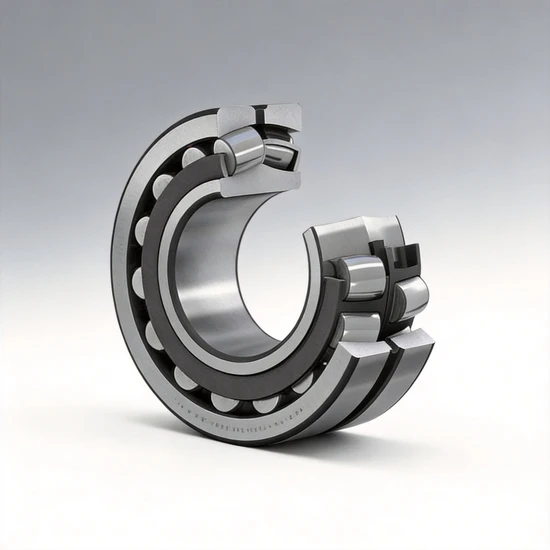
The 22320 spherical roller bearing appears frequently in crusher roll positions. Its self-aligning capability accommodates the deflection and misalignment inherent in heavy crushing loads. However, the standard catalog version of this bearing will not survive a Hawaiian cane season without seal and lubrication upgrades. The suffix package — contact seals, C3 clearance, and high-water-resistance grease — transforms a general-purpose bearing into an application-specific solution.
Tapered roller bearings such as the 32218 series serve in positions where combined radial and axial loads are present, including certain conveyor drives and gearbox outputs. The separable design facilitates maintenance, but the exposed rolling elements during relubrication create vulnerability to contaminant ingress. Seal arrangements at the housing interface become as important as the bearing itself.
For centrifuge applications, precision-class bearings with controlled internal geometry handle the high-speed rotation and thermal gradients. These positions often require specialized grease fills rated for elevated temperature operation and resistance to sugar residue accumulation.
| Bearing Type | Common Model | Typical Position | Critical Suffix Requirement |
|---|---|---|---|
| Spherical Roller | 22320 | Crusher roll neck | 2RS/C3/special grease |
| Tapered Roller | 32218 | Conveyor drive, gearbox | Seal arrangement at housing |
| Spherical Roller | 22308 | Smaller conveyor idlers | Contact seal, water-resistant grease |
| Deep Groove Ball | 6206, 6305 | Auxiliary drives, pumps | C3 clearance, corrosion protection |
Cross-referencing these models against other major brands — NSK, FAG, TIMKEN, NTN, KOYO — is straightforward at the basic number level. The interchange tables align dimensionally. But the suffix interpretation requires care: a C3 clearance from one manufacturer may carry slightly different tolerance bands than another, and seal compound specifications are not always equivalent across brand lines. Verification against the specific operating environment remains essential regardless of brand origin.
How to Cross-Reference SKF with Other Brands for Agricultural Use?
Dimensional interchange is immediate; environmental suffix equivalence requires verification against the specific corrosive and washdown conditions.
Procurement teams managing multi-brand inventories need reliable cross-reference capability. The basic bearing numbers across SKF, NSK, FAG, TIMKEN, NTN, and KOYO align dimensionally for the vast majority of standard types. A 22320 from any of these manufacturers will fit the same housing and accept the same shaft. [NEED_CITE: dimensional interchange standards for rolling bearings per ISO 15]
However, agricultural processing applications expose the limits of basic-number interchange. The suffix codes that define seal type, clearance, cage design, and grease fill vary between manufacturers in naming convention and sometimes in technical detail. A 2RS suffix from one brand may use a different seal lip geometry or compound than the 2RS from another. C3 clearance bands are standardized at the ISO level, but the actual measured values can differ slightly between production facilities.
For sugar and pineapple machinery, this means that a direct brand swap based solely on the basic number risks introducing seal or lubricant mismatches. The cross-reference must extend through the full suffix designation, with verification that the replacement bearing meets the same environmental protection requirements as the original specification.
I worked with a distributor in Latin America who maintained a cross-reference chart for agricultural bearings across six major brands. The chart covered basic numbers comprehensively but omitted suffix-level detail. When a customer substituted a sealed bearing from one brand with the same basic number but different seal compound from another, the replacement failed within weeks in a pineapple wash line. The dimensional fit was perfect; the environmental resistance was not.
The solution is to treat cross-referencing as a two-step process: first confirm dimensional interchange against ISO standards, then verify suffix equivalence against the specific operating environment. Documentation from the supplier should confirm both levels of match, not just the basic number. This approach eliminates the false economy of dimensionally correct but environmentally inadequate substitutions.
Where to Source Verified SKF Bearings at Wholesale Pricing?
Authenticity verification, complete documentation, and application-specific technical support distinguish reliable supply from specification risk.
The bearing supply chain for agricultural processing equipment spans manufacturers, authorized distributors, independent stockists, and trading companies. Price differentials exist across these channels, but the cost of counterfeit or mis-specified bearings in corrosive environments far exceeds any initial purchase savings. A seized crusher bearing during harvest represents losses measured in idle days, not just the replacement part cost.
ISO 9001 certification provides a baseline quality management framework, but verification extends beyond the certificate itself. Complete documentation chains — including mill test reports, conformity declarations, and traceability records — confirm that the supplied bearings match the specified suffix packages and have not been substituted during the supply process. [NEED_CITE: documentation requirements for industrial bearing procurement under ISO quality standards]
Full-category supply capability matters for agricultural processors who source across multiple bearing types and brands. A supplier maintaining comprehensive stock of spherical roller bearings, tapered roller bearings, deep groove ball bearings, and associated types enables single-source procurement with consistent quality standards. This reduces the administrative burden of managing multiple vendors and the risk of specification drift across orders.
Wholesale pricing structures with volume-based discounts support the procurement economics for distributors and large maintenance operations. Private-label options and territory arrangements serve distributors building regional brand presence. These commercial terms should complement, not replace, the technical verification of product authenticity and specification accuracy.
Technical selection support based on application parameters — load, speed, environment, washdown frequency — closes the specification loop. A supplier capable of reviewing the operating conditions and recommending the appropriate bearing type, model, and suffix package adds value beyond transaction fulfillment. This capability becomes critical when cross-referencing between brands or when original equipment specifications prove inadequate for the actual service environment.
Conclusion
Bearing specification for sugar and pineapple machinery succeeds or fails at the intersection of seal design, material selection, and lubricant compatibility — not at the basic number level.
The tropical processing environment exposes every shortcut in bearing specification. Correct geometry and load rating provide the foundation, but survival through a cane season or continuous pineapple wash operation demands attention to the suffix details that define environmental resistance. Cross-reference capability across major brands supports procurement flexibility, but suffix verification remains essential to maintain performance standards. Authentic supply with complete documentation and application-specific technical guidance protects both the equipment investment and the operational continuity of the processing facility.
SKF bearings mentioned here
These are the SKF bearing types covered in this article. Open a product to check its designation, category and details before you add it to your list.
 Spherical Roller Bearing 22320EK Spherical Roller Bearing 73mm Width for Heavy-Duty Industrial Machinery View product 02
 Deep Groove Ball Bearing 22320E Spherical Roller Bearing 73mm Width for Wind Power Generation Machinery View product 03
 Spherical Roller Bearing High Precision SKF Spherical Roller Bearing 22320 E-K/C4 for Conveyor Systems Chrome Steel Gcr15 View product 04
 Spherical Roller Bearing 22320E Zv3 Roller Bearing 73mm Width for Wheel Hub with 100% Original SKF Quality View product
Related applications
The equipment and duties this article applies to. Each one links to the SKF bearing types used there.
Quote every model in this article, line by line
Send the SKF models from this article together with your internal stock codes. Each bearing, housing and accessory is quoted on its own line, with its own quantity and specification, and nothing is substituted without your approval.
- Models plus internal codes
- Quantities per line
- Housings and accessories
