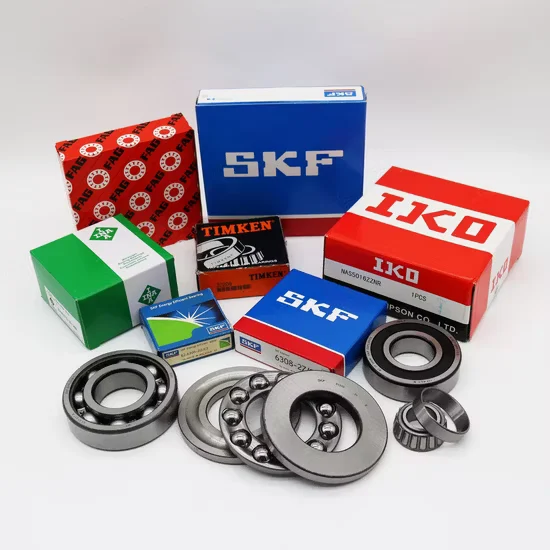
SKF to Fafnir Bearing Interchange Guide | Wholesale Supplier for US Refurbishment Shops
Assuming identical bearing numbers mean identical fit is the most expensive mistake a refurb shop can make.
SKF and Fafnir (Timken) bearings share the same ISO 15 boundary dimensions, but they diverge on internal clearance codes, chamfer radii, and cage design—meaning a direct number-to-number swap without verifying these hidden variables will lead to seal interference, abnormal noise, or premature cage failure.
I first learned this the hard way. A mining equipment refurbisher in northern Mexico ordered a batch of deep groove ball bearings from us to replace worn SKF units on a vibrating screen. The model numbers matched perfectly. The outer dimensions matched. But when their technicians pressed the bearings into the housing, the shaft seals jammed. The inner ring chamfer on our units was slightly different from what the SKF originals had, and that fractional difference was enough to distort the seal lip during press-fit. The entire batch was rejected, and the return air freight cost several times the original order value. That single incident pushed me to stop treating interchange charts as simple number-matching exercises and start treating them as engineering verification protocols. [NEED_CITE: ISO 15 defines boundary dimensions but permits manufacturer-specific internal geometry variations]
Let me walk you through the actual interchange logic we now use for every cross-brand request that lands on our desk.
Why Do SKF and Fafnir Numbers Not Always Match?
The root cause is that both manufacturers operate within ISO standards, but each applies its own internal design philosophy to clearance, cage geometry, and suffix definitions.
When you see an SKF 6206-2RS1/C3 next to a Fafnir 206KDD1TT2, the basic bore and OD are identical. But the suffixes tell very different stories. SKF’s C3 denotes a specific radial internal clearance range, while Fafnir’s TT suffix indicates a particular grease fill and seal configuration that does not map one-to-one with SKF’s 2RS1. [NEED_CITE: ABMA Std 20 defines radial clearance classes; manufacturer suffix mappings vary]
The cage design adds another layer. SKF commonly uses sheet steel cages in standard deep groove series, while Fafnir historically favored polyamide cages in certain motor-grade variants. At high rotational speeds, a polyamide cage behaves differently from a steel cage—thermal expansion, lubricant compatibility, and speed limits all shift. A shop swapping a steel-caged SKF unit into a position originally designed for a polyamide-caged Fafnir bearing may not notice a problem on the bench, but the bearing could overheat within weeks of continuous operation.
Then there is the chamfer dimension. ISO 15 specifies a minimum chamfer radius, but it does not lock a maximum. SKF and Fafnir each produce to slightly different center values within that tolerance band. In a loose housing, this difference is irrelevant. In a tightly sealed arrangement where the seal lip rides on a specific chamfer profile, that difference becomes a fitment failure.
Critical Dimension Check: Where Interchange Fails
Before approving any SKF-to-Fafnir swap, you must verify four parameters beyond bore, OD, and width: chamfer radius, seal groove depth, internal clearance class, and cage type.
Here is the verification matrix we use internally for every interchange request:
| Check Point | SKF Typical | Fafnir Typical | Interchange Risk |
|---|---|---|---|
| Chamfer Radius | ISO 15 minimum, center value varies | ISO 15 minimum, center value varies | Seal lip interference if mismatch exceeds design allowance |
| Internal Clearance | C2/CN/C3/C4 system | Standard/Light/Extra clearance codes | Thermal expansion mismatch in motor applications |
| Seal Design | 2RS1 rubber contact seal | DD/TDU contact seal with different lip geometry | Seal rub or inadequate contamination protection |
| Cage Material | Sheet steel standard, brass optional | Polyamide common in motor grades | Speed limit and thermal behavior divergence |
| Grease Fill | SKF-specific grease codes | Fafnir TT grease codes | Lubricant incompatibility at elevated temperature |
[NEED_CITE: Manufacturer engineering handbooks provide detailed suffix-to-specification mapping tables]
A motor repair shop in the US Midwest once sent us a set of Fafnir bearings pulled from a failed pump motor. They wanted SKF equivalents. The basic number was a standard 200-series deep groove. We measured the originals and found the Fafnir units used a specific seal groove depth that was shallower than the SKF equivalent. If they had simply pressed SKF 2RS1 seals into that housing, the seal would have sat proud of the groove and worn prematurely against the shaft. We supplied SKF bearings with matched seal dimensions and verified groove depth before shipping. The motor ran for an extended service interval without a single warranty claim.
Interchange Matrix: Popular Models
For the most commonly requested deep groove and spherical roller bearings, here is the cross-reference logic we apply—not a simple number translation, but a specification-by-specification match.
| Application | SKF Reference | Fafnir Reference | Key Swap Notes |
|---|---|---|---|
| General industrial motor | 6205-2RS1/C3 | 205KDD1TT2 | Verify cage material; Fafnir polyamide may need SKF steel cage substitute for high-temp duty |
| Conveyor idler | 6305-2Z | 305KDD | Shield type difference; confirm grease compatibility if re-greasing in field |
| Mining vibrating screen | 22320 CC/C3 | 22320YMB | Spherical roller; check cage type (CC vs MB) and ensure C3 clearance matches operating temperature |
| Gearbox output shaft | 32218 | 32218 | Tapered roller; verify cup and cone dimensional tolerances against ABMA standards |
| Agricultural PTO shaft | 6206-2RS1 | 206KDD1 | Seal lip geometry must be checked against shaft surface finish |
[NEED_CITE: Cross-reference data compiled from ISO 15 boundary dimensions and ABMA Std 20 clearance classes]
Notice that the taper roller bearing entry looks like a direct match—same number, same series. But even here, the internal contact angle and roller count can differ between manufacturers. A gearbox rebuilt with a taper roller bearing that has a different contact angle will experience shifted load zones, leading to uneven wear and reduced service life. We always ask the customer for the operating load and speed before confirming a taper roller interchange, rather than simply matching the number.
Our factory maintains full interchange documentation across SKF, Fafnir, Timken, FAG, NSK, and NTN product lines. Every cross-reference request goes through a dimensional verification step, and we can issue inspection reports confirming that the supplied bearing matches the required clearance class, cage type, and seal geometry. ISO 9001 certification backs our documentation process, so you have traceable quality evidence for every shipment.
Application-Specific Swap Rules
Blind substitution works in light-duty applications but fails under high speed, high temperature, or heavy vibration—each of these conditions demands a tailored interchange decision.
High-temperature environments: If the original Fafnir bearing used a polyamide cage, and the replacement SKF unit also has a polyamide cage, you must confirm the grease fill is rated for the operating temperature. Polyamide cages lose structural integrity above certain thresholds, and a grease that works at moderate temperatures may break down and accelerate cage wear. In these cases, we recommend switching to a steel-caged variant regardless of the original cage material. [NEED_CITE: Polyamide cage temperature limits per manufacturer engineering specifications]
High-speed motor applications: A Latin American fan manufacturer once replaced Fafnir motor bearings with SKF equivalents without checking the clearance class. The original Fafnir units used a specific internal clearance optimized for their motor’s thermal growth. The SKF replacements had a different clearance code, and the motors ran noticeably hotter. Noise levels exceeded the customer’s specification, and the fan manufacturer faced warranty claims from their end users. We now always request the motor’s operating temperature range and expected thermal shaft expansion before confirming a high-speed interchange.
Vibration-intensive mining equipment: In vibrating screen applications, the bearing experiences constant impact loading. A standard clearance bearing may develop false brinelling if the internal clearance is too tight for the oscillation amplitude. We specify C3 or C4 clearance for these positions and verify that the cage design can withstand the vibration spectrum. A spherical roller bearing with an incorrect cage type in this application will show fatigue spalling well before its rated life.
Agricultural gearboxes: These operate in contaminated environments with infrequent re-lubrication. The seal design becomes more critical than the bearing type itself. A Fafnir DD seal and an SKF 2RS1 seal have different lip contact pressures and dust exclusion characteristics. Swapping one for the other without checking the seal’s contamination resistance rating can lead to premature grease degradation and bearing failure in the field.
Conclusion
SKF-to-Fafnir interchange is never a simple number match—it is a multi-parameter engineering verification covering clearance, chamfer, cage, and seal compatibility. Skipping any of these checks risks fitment failure, abnormal operating conditions, and costly field returns. Treat every interchange request as a technical project, not a catalog lookup, and the bearing will perform as intended regardless of which manufacturer’s number is on the box.
SKF bearings mentioned here
These are the SKF bearing types covered in this article. Open a product to check its designation, category and details before you add it to your list.
 Deep Groove Ball Bearing Single Row Deep Groove Ball Bearing 6206-2RS1/C3 30x62x16mm Sealed for Industrial Machinery View product 02
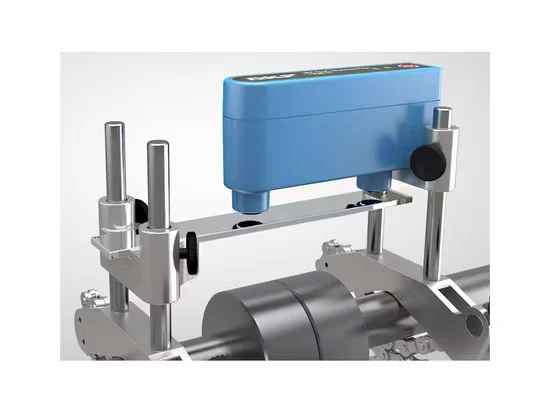 Uncategorized SKF TKSA 11 Shaft Alignment Tool Genuine Industrial Maintenance View product 03
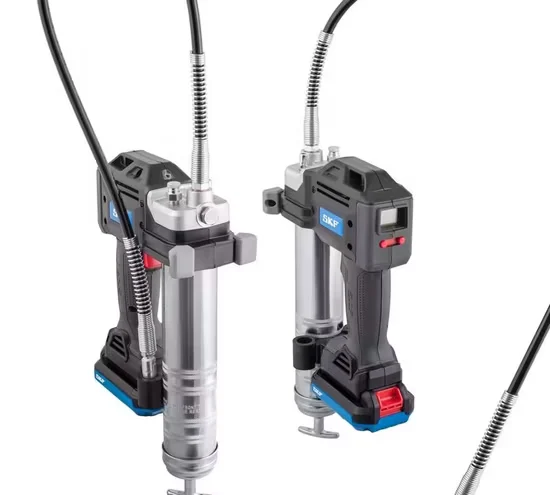 Uncategorized SKF TLGB 20/110V Battery Powered Grease Gun View product 04
 Deep Groove Ball Bearings SKF 16001 16002 16003 16004 16005 Deep Groove Ball Bearing for Winder Worldwide Use View product
Related applications
The equipment and duties this article applies to. Each one links to the SKF bearing types used there.
Quote every model in this article, line by line
Send the SKF models from this article together with your internal stock codes. Each bearing, housing and accessory is quoted on its own line, with its own quantity and specification, and nothing is substituted without your approval.
- Models plus internal codes
- Quantities per line
- Housings and accessories