SKF vs Amsted Rail Bearings for US Freight Rail | Wholesale Supplier
Most buyers assume identical model numbers mean drop-in interchangeability. In railway axle box applications, that assumption can idle a maintenance yard for weeks.
SKF and Amsted Rail bearings share AAR-standard boundary dimensions for mainstream freight rail classes, making them physically interchangeable. However, internal clearance classes, seal configurations, and grease specifications must be verified against AAR M-1003 before substitution. Lead time differentials between European-imported SKF units and North American-stocked Amsted Rail alternatives often decide emergency MRO outcomes, while total cost of ownership favors bulk-sourced interchange options when verified through proper cross-reference documentation.
Walking through the Chicago Railway Supply Expo a few seasons back, I stood next to a fleet maintenance supervisor from a Class I railroad who was flipping between two spec sheets—one from SKF, one from Amsted Rail. He kept tapping the same bearing class number on both pages, muttering that the dimensions matched perfectly. I asked him whether his shop had run the internal clearance check. He looked at me like I’d asked about his mother’s health. That moment crystallized something I’d been seeing repeatedly across freight yards and MRO procurement desks: the physical envelope matches, but the internal geometry tells a different story. [NEED_CITE: AAR M-1003 internal clearance and seal specification requirements for Class E and F freight bearings]
Let’s break this down the way a procurement team actually needs to evaluate it—not by brand loyalty, but by interchange reality, supply chain exposure, and what the total cost picture looks like when a locomotive is sitting in a shop bay burning labor hours.
Can SKF and Amsted Rail Railway Bearings Be Directly Interchanged?
The short answer is conditional yes—boundary dimensions align under AAR standards, but internal specifications require individual verification before deployment.
When you pull up a cross-reference chart for a standard Class E or Class F freight car bearing, the outer diameter, bore, and width will match between SKF and Amsted Rail equivalents. That’s because both manufacturers design to the same AAR-defined envelope dimensions. [NEED_CITE: AAR standard boundary dimension tables for Class E and F railway roller bearings] But here’s where the interchange story gets complicated.
| Parameter | SKF Specification | Amsted Rail Specification | Interchange Status |
|---|---|---|---|
| Boundary Dimensions (OD/ID/Width) | AAR-compliant | AAR-compliant | Direct match |
| Internal Clearance Class | C3/C4 typical | C3 standard | Requires verification |
| Seal Configuration | Contact seal design | Contact seal design | Configuration-dependent |
| Cage Material | Machined steel or polymer | Steel or bronze | Material-dependent |
| Grease Fill Specification | Manufacturer-specific | Manufacturer-specific | Requires re-greasing protocol |
The internal clearance class is where substitutions fail in the field. A C4 clearance bearing from SKF will run noticeably different thermal profiles compared to a C3 clearance Amsted Rail unit under identical axle load conditions. [NEED_CITE: Effect of internal clearance class on operating temperature in railway axle box bearings] I’ve seen replacement bearings seized within weeks because the maintenance shop swapped without checking whether the original spec called for C3 or C4.
Cage material matters too. Some SKF units use polymer cages for weight reduction and noise suppression, while Amsted Rail traditionally favors machined steel or bronze cages for heavy-haul applications. Under high-impact loading typical of unit coal trains, polymer cages can show accelerated wear if the application wasn’t originally designed for them.
Seal design represents another hidden variable. Both manufacturers offer contact seals, but the lip geometry and spring tension differ. In contaminated environments—think bulk commodity routes through dusty terminals—seal performance directly determines grease life and bearing survival. [NEED_CITE: Railway bearing seal contamination ingress testing per AAR protocols]
A Midwest shortline operator I worked with learned this the hard way. They ordered what they believed were direct SKF replacements from a distributor, received Amsted Rail equivalents based on model number matching, and installed them without internal inspection. Within a single quarter, their hotbox detector alerts tripled. Root cause analysis revealed grease degradation from incompatible seal friction characteristics. The bearings themselves weren’t defective—the application match was wrong.
For procurement teams evaluating interchange, the non-negotiable step is requesting AAR-compliant documentation that specifies internal clearance class, seal type, and cage material for both the original and proposed replacement. Any supplier providing cross-reference support should supply this documentation without prompting.
How Do Lead Times Compare Between European SKF Imports and North American Amsted Rail Stock?
European-imported SKF bearings typically carry lead times measured in months during supply-constrained periods, while North American-stocked Amsted Rail alternatives can compress emergency response to days.
This isn’t a commentary on manufacturing quality—it’s a geography and inventory positioning reality. SKF’s primary railway bearing production facilities serving the North American market are located in Europe. [NEED_CITE: SKF railway bearing manufacturing facility locations and regional distribution networks] When global supply chains tighten, as they did repeatedly over recent years, transatlantic shipping slots become contested and production allocation prioritizes European rail operators over export orders.
I remember a conversation with a procurement manager at a Gulf Coast freight operator during a period when European lead times had stretched to what he called "embarrassing" lengths. He had a set of locomotives pulled from service awaiting bearing replacements. The SKF quote came back with a delivery window measured in months. His maintenance superintendent was practically living in the shop because every idle locomotive represented cascading schedule disruptions across the entire division.
The alternative? Amsted Rail units sitting in a domestic warehouse, available for same-day dispatch. The cross-reference verification took a few hours—the maintenance engineering team confirmed internal clearance and seal compatibility for their specific axle load conditions. The bearings arrived within days, not months. Those locomotives returned to service while competitors were still waiting on transatlantic container bookings.
| Supply Chain Factor | European SKF Import | North American Amsted Rail |
|---|---|---|
| Typical Lead Time (Normal Conditions) | Extended | Noticeably shorter |
| Lead Time (Supply-Constrained Periods) | Substantially extended | Moderately affected |
| Emergency Stock Availability | Limited regional inventory | Domestic warehouse presence |
| Customs/Import Clearance | Required | Not applicable |
| Freight Transit Time | Transatlantic shipping | Domestic ground transport |
This doesn’t mean SKF availability is universally poor. During stable supply periods, European production delivers reliably. But freight rail MRO doesn’t operate in stable periods—derailments, traffic surges, and seasonal peaks create unpredictable demand spikes. The question isn’t whether SKF bearings are excellent; they are. The question is whether your supply chain can absorb multi-month lead times when a locomotive needs to return to service.
For MRO buyers building contingency strategies, maintaining a qualified cross-reference list that includes both SKF and Amsted Rail part numbers—verified against AAR specifications—provides optionality when primary supply channels constrict. Suppliers maintaining domestic inventory of both brands, with complete interchange documentation, effectively de-risk your maintenance scheduling.
Does Total Cost of Ownership Justify Brand Premium for Railway Bearing Applications?
When factoring bulk procurement pricing, inventory carrying costs, and downtime avoidance, verified interchange alternatives can reduce total bearing cost substantially compared to single-brand dependency.
Brand premium in railway bearings is real. SKF commands pricing that reflects a century of bearing engineering heritage and global specification dominance. That engineering value is legitimate—SKF’s research facilities and material science capabilities are unmatched. [NEED_CITE: SKF bearing research and development investment in railway applications] But procurement decisions based solely on unit price miss the total cost picture.
Consider the cost components that actually determine what you spend:
- Unit purchase price multiplied by annual consumption volume
- Inventory carrying cost for safety stock to buffer lead time uncertainty
- Downtime cost when bearings aren’t available during maintenance windows
- Expediting freight charges when emergency orders require air shipment
- Engineering time spent validating interchange compatibility
A heavy-haul operator in the western United States ran an analysis comparing their historical SKF-only procurement against a dual-source strategy incorporating verified Amsted Rail equivalents. The unit price differential was noticeable—Amsted Rail carried a discount relative to SKF list pricing. But the more significant savings came from reduced safety stock requirements. With domestic inventory availability, they could carry lower buffer stock while maintaining service levels.
| Cost Component | Single-Brand Strategy | Dual-Source Strategy |
|---|---|---|
| Unit Purchase Price | Premium baseline | Noticeably reduced |
| Safety Stock Carrying Cost | Elevated | Noticeably reduced |
| Emergency Expedite Costs | Frequent | Substantially reduced |
| Downtime Risk Cost | Elevated | Noticeably reduced |
| Engineering Validation Cost | Minimal | Moderate (one-time) |
The one-time engineering cost of validating interchange specifications—confirming internal clearance, seal compatibility, and cage material suitability—amortizes across years of procurement optionality. Once your maintenance engineering team has documented which Amsted Rail part numbers cross-reference to which SKF specifications for your specific axle load and route conditions, future procurement decisions become straightforward.
Bulk procurement discounts further improve the economics. Suppliers offering full-category bearing inventory can consolidate orders across multiple bearing types—axle box bearings, traction motor bearings, gearbox bearings—creating volume leverage that single-brand purchasing cannot match.
The key discipline is never substituting based on model number alone. The cost savings come from verified interchange, not assumed interchange. Require documentation. Confirm specifications. Then leverage the competitive tension between qualified sources.
How Should MRO Buyers Verify Replacement Bearing Suitability for Railway Service?
Require AAR-compliant documentation, application-specific engineering validation, and supplier quality certification before approving any brand substitution in freight rail service.
The verification process isn’t complicated, but it’s non-negotiable. Railway bearings operate in safety-critical applications where failure consequences include derailment, hazmat release, and fatality risk. [NEED_CITE: AAR safety-critical bearing application requirements and failure consequence classification] Cutting corners on verification isn’t just technically irresponsible—it exposes the railroad to regulatory and liability exposure.
Follow this validation sequence:
Step 1: Obtain Complete AAR Specification Documentation
Request from the supplier a documentation package that includes AAR M-1003 compliance certification for the proposed replacement bearing. This should specify bearing class, internal clearance, seal type, cage material, and grease fill quantity. [NEED_CITE: AAR M-1003 bearing specification documentation requirements]
Step 2: Cross-Reference Against Original Specification
Compare the replacement bearing documentation against the original OEM specification for your specific application. Pay particular attention to internal clearance class—this is the parameter most likely to differ between manufacturers while boundary dimensions match.
Step 3: Validate Application Suitability
Confirm that the replacement bearing’s load ratings, speed capabilities, and temperature limits meet or exceed your application requirements. For freight rail, this means verifying adequacy for maximum axle load, maximum operating speed, and extreme ambient temperature conditions on your routes.
Step 4: Review Supplier Quality Certification
Verify that the supplier holds ISO 9001 certification and can provide standard quality documentation with each shipment. [NEED_CITE: ISO 9001 quality management system requirements for bearing supply] This isn’t just paperwork—certified suppliers maintain traceability, inspection records, and controlled distribution that protects you from counterfeit or substandard product entering your maintenance pipeline.
Step 5: Conduct Trial Installation with Monitoring
For initial substitutions, install replacement bearings on a controlled sample of equipment and monitor operating temperature, vibration, and inspection findings during the first service interval. Document performance against historical data from the original brand.
A Southeastern freight operator followed this process when evaluating Amsted Rail replacements for their SKF-equipped freight car fleet. Their maintenance engineering team spent several weeks compiling documentation, running cross-reference checks, and obtaining application validation from their bearing supplier. The result was a qualified alternate source list that gave their procurement team flexibility without compromising safety or reliability.
The critical mistake is skipping Step 4. ISO certification matters because the bearing supply chain has documented counterfeit problems. [NEED_CITE: Railway bearing counterfeit product incidents and detection methods] A supplier who cannot provide quality documentation is a supplier you cannot trust, regardless of how attractive their pricing appears.
Conclusion
SKF and Amsted Rail railway bearings offer legitimate interchange potential when validated against AAR specifications, with supply chain resilience and total cost considerations often favoring dual-source strategies over single-brand dependency.
Physical interchange under AAR standards provides the foundation, but internal clearance, seal configuration, and cage material verification determine whether substitution succeeds in service. Lead time differentials between European imports and domestic stock create meaningful maintenance scheduling advantages during supply-constrained periods. Total cost of ownership analysis reveals that bulk procurement combined with verified interchange options reduces spending meaningfully below single-brand premium pricing. The discipline lies in requiring complete documentation and supplier quality certification before approving any substitution—never assuming interchange based on model number matching alone.
SKF bearings mentioned here
These are the SKF bearing types covered in this article. Open a product to check its designation, category and details before you add it to your list.
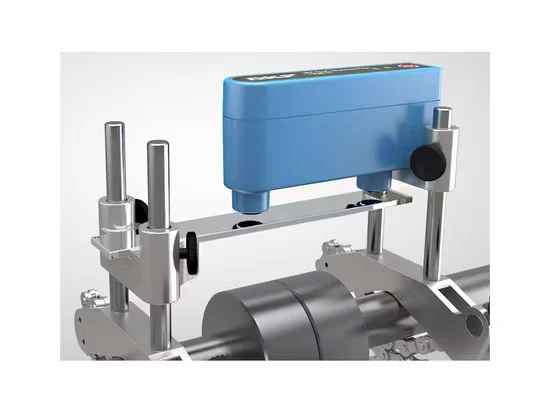 Uncategorized SKF TKSA 11 Shaft Alignment Tool Genuine Industrial Maintenance View product 02
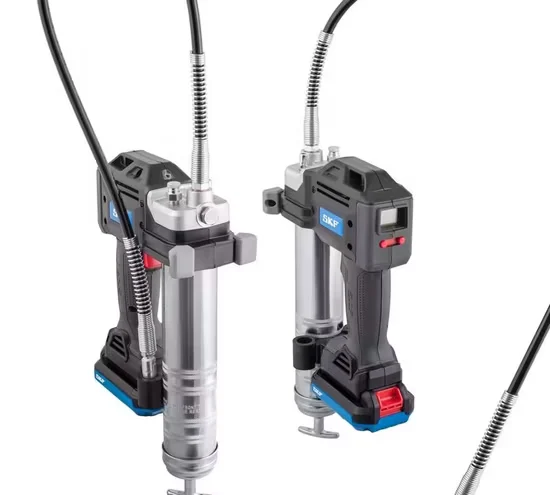 Uncategorized SKF TLGB 20/110V Battery Powered Grease Gun View product 03
 Deep Groove Ball Bearings SKF 16001 16002 16003 16004 16005 Deep Groove Ball Bearing for Winder Worldwide Use View product 04
 Deep Groove Ball Bearings Genuine SKF 6022 6021 6020 6019 6018 Deep Groove Ball Bearing for Cars Tractors View product
Related applications
The equipment and duties this article applies to. Each one links to the SKF bearing types used there.
Quote every model in this article, line by line
Send the SKF models from this article together with your internal stock codes. Each bearing, housing and accessory is quoted on its own line, with its own quantity and specification, and nothing is substituted without your approval.
- Models plus internal codes
- Quantities per line
- Housings and accessories