

Description
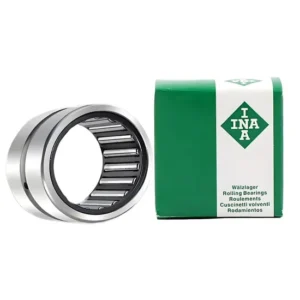
Batch-Traceable Sourcing — Every INA NKS50-XL needle roller bearing ships with Certificate of Conformity tied to production lot documentation for full import and verification compliance.
Technical Specifications
| Parameter | Value |
|---|---|
| Designation | INA NKS50-XL |
| Bearing Type | Needle Roller Bearing |
| Bore Diameter (Fw) | 50 mm |
| Outside Diameter (D) | 65 mm |
| Width (B) | 22 mm |
| Weight | 0.16 kg |
| Load Direction | Radial |
| Inner Ring | Without |
| Outer Ring | Without |
| Material | Bearing Steel |
| Type | Open |
The XL suffix on this designation remains unverified against the current INA catalog and should be confirmed with manufacturer documentation prior to final specification.
Application Suitability
| Industry | Typical Applications |
|---|---|
| Industrial machinery | Cam follower assemblies, textile loom rocker shafts |
| Electric motors | Rotor shaft support in compact motor housings |
| Automotive and heavy vehicle repair | Transmission intermediate shafts, steering column joints |
| Material handling | Conveyor roller end supports, lift mast guide carriages |
| General MRO | Replacement for OEM needle sets in gearboxes and pumps |
What a Cage Material Substitution Really Costs on Oscillating Shafts
Matching the base number is not engineering — matching the cage, clearance, and needle complement is.
A packaging line near Dongguan ran through needle bearings on cam followers every few weeks. The cross-reference matched the bore and OD perfectly, but the substitute carried a stamped steel cage where the original specification called for a polymer retainer. High-speed oscillation shattered the cage, needles scattered and scored the shaft. The repair bill dwarfed the bearing cost many times over. That kind of failure repeats across industries when procurement treats a needle roller bearing as a commodity defined only by its dimensions. [NEED_CITE: rolling bearing failure mode classification per ISO 15243]
How the INA NKS50-XL Fits Compact Radial Load Envelopes
This INA NKS50-XL needle roller bearing operates without an inner or outer ring, meaning the shaft journal and housing bore themselves serve as raceways. That design choice eliminates the radial space that ring-type bearings consume, which matters in gearboxes and electric motor assemblies where envelope dimensions are already constrained. The 50 mm bore diameter and 65 mm outside diameter deliver substantial radial load capacity within a 22 mm width, a ratio that engineers in material handling and automotive drivetrain applications specifically seek out when redesigning for weight or space reduction.
Operating Conditions That Push Needle Sets Beyond Their Limits
Radial loads on this bearing type tend to be steady rather than axial, but oscillating applications introduce edge-loading risks that static calculations overlook. Temperature swings affect shaft expansion directly against the needle rollers since there is no inner ring to buffer the fit — an interference that is too tight starves the contact zone of lubricant film, while one too loose lets needles skid and brinell the shaft surface. Open-type construction means lubrication choice falls entirely to the equipment designer: grease for sealed housings at moderate speed, circulating oil where thermal management demands it. [NEED_CITE: needle roller bearing shaft and housing tolerance requirements per ISO 1206]
Decoding the Dimensions and Construction Choices
The Fw/D/B dimensions — 50/65/22 mm — define the bearing envelope, but the ringless architecture shifts responsibility for raceway hardness and surface finish onto the mating components. Shaft journals typically need to reach HRC 58-62 with ground surface finish to match the bearing steel needles and avoid differential wear. The open design removes seal friction from the equation entirely, which benefits high-speed or high-temperature applications where contact seals would overheat, but it also means external sealing responsibility sits with the housing designer. In dusty environments like mining conveyors or agricultural gearboxes, that distinction determines whether needles survive a season or a week.
The Hidden Expense of Unverified Substitutions
Sourcing a needle roller bearing purely on price or base-number match exposes the equipment to unplanned downtime that compounds quickly. A cage material mismatch under oscillation leads to roller shedding and shaft scoring. A counterfeit bearing with soft inner-ring-equivalent hardness on the shaft surface accelerates spalling across the entire needle set. ISO 281 defines the L10 fatigue life framework, but that framework assumes correct material, correct lubrication, and correct mounting — none of which apply when the part in the box is not what the box claims. [NEED_CITE: bearing fatigue life calculation per ISO 281]
How We Reduce Procurement Risk on Every Shipment
We source the INA NKS50-XL through authorized distributor channels, which means each batch arrives with a Certificate of Conformity traceable to the manufacturer’s production lot. Our cross-reference database does not stop at matching bore and outside diameter — it verifies needle complement count, cage material, and dimensional tolerances across SKF, NSK, FAG, TIMKEN, NTN, and KOYO equivalents so substitutions perform identically in the field. Country-of-origin documentation accompanies every shipment for import clearance, and we guide buyers through QR code verification via INA’s official tools to confirm authenticity before the bearing ever leaves the warehouse.
Documentation & Authenticity
- Supplier Certificate of Conformity with production batch and lot traceability tied to this INA NKS50-XL needle roller bearing
- Material certificate confirming bearing steel composition and hardness compliance
- Third-party dimensional inspection report verifying Fw, D, and B against INA published tolerances before shipment
- Country-of-origin documentation supporting customs clearance and buyer import records
- QR code verification pathway through INA official apps for end-user authenticity confirmation
- HS code and tariff classification support for international shipping documentation
Storage, Handling & Mounting
- Keep the INA NKS50-XL in original sealed packaging until the moment of assembly; the ringless design exposes needle rollers directly to ambient moisture and handling damage
- Store in a climate-controlled environment below 60% relative humidity to prevent corrosion on the bearing steel surfaces that serve as functional raceways
- Use clean lint-free gloves during handling — fingerprint acids on the needle rollers can initiate contact corrosion before the bearing ever sees load
- Shaft journal hardness must be verified at HRC 58-62 before pressing the needle set into position; a soft shaft will brinell under radial load within hours of operation
- Apply the specified lubricant to both the shaft raceway and housing bore before assembly, as the open type design relies entirely on external lubrication at startup
- Inspect housing bore roundness and surface finish against INA specifications; any out-of-round condition transfers directly to needle loading and reduces L10 life
Requesting Technical Verification and Quotation
Share your application parameters — radial load, operating speed, temperature range, and lubrication method — so we can review whether the INA NKS50-XL is the correct specification or whether an alternative clearance or cage type better suits your duty cycle. If you are replacing an existing bearing, provide the OEM equipment number and we will cross-reference the full specification including needle complement and cage material. Request the documentation package and batch availability for your target delivery window.
Frequently Asked Questions
Q: How can I verify that the INA NKS50-XL needle roller bearing I received is genuine?
A: INA provides QR code verification through their official mobile applications. We supply each bearing with batch and lot traceability documentation from authorized distributor channels, and we guide buyers through the verification process before shipment so there is no doubt about authenticity upon delivery.
Q: What should I check when cross-referencing this bearing to another brand?
A: Beyond matching the 50 mm bore, 65 mm outside diameter, and 22 mm width, you must verify needle complement count, cage material, and tolerance class. A base-number match with a different cage type — stamped steel versus polymer, for example — can cause premature failure under oscillating or high-speed conditions.
Q: What are the shaft and housing requirements for a ringless needle roller bearing like this?
A: Since there is no inner or outer ring, the shaft journal and housing bore act as raceways. The shaft must be hardened to HRC 58-62 with a ground surface finish. Housing bore roundness and surface finish must meet INA specifications to prevent uneven needle loading and premature fatigue.
Q: How should I lubricate an open-type needle roller bearing?
A: Lubrication selection depends on your application speed and operating temperature. Grease works well in sealed housings at moderate speeds, while circulating oil systems suit high-speed or high-temperature environments. The open design means the housing must provide adequate sealing to retain lubricant and exclude contaminants.
Secure Your INA NKS50-XL Specification Review
Submit your load, speed, and temperature parameters or OEM equipment number to initiate technical verification and receive a quotation with confirmed lead time.
[NEED_CITE: authorized bearing distributor verification protocols]